


Strainer 0.2 Mm
In industrial filtration, the precision of a strainer is often the deciding factor between a smooth-running process and costly equipment failure. A strainer 0.2 mm (200 microns) represents a critical threshold in fine filtration. It sits at the intersection where coarse straining ends and fine filtration begins, making it a versatile choice for protecting downstream equipment such as spray nozzles, heat exchangers, and high-pressure pumps.
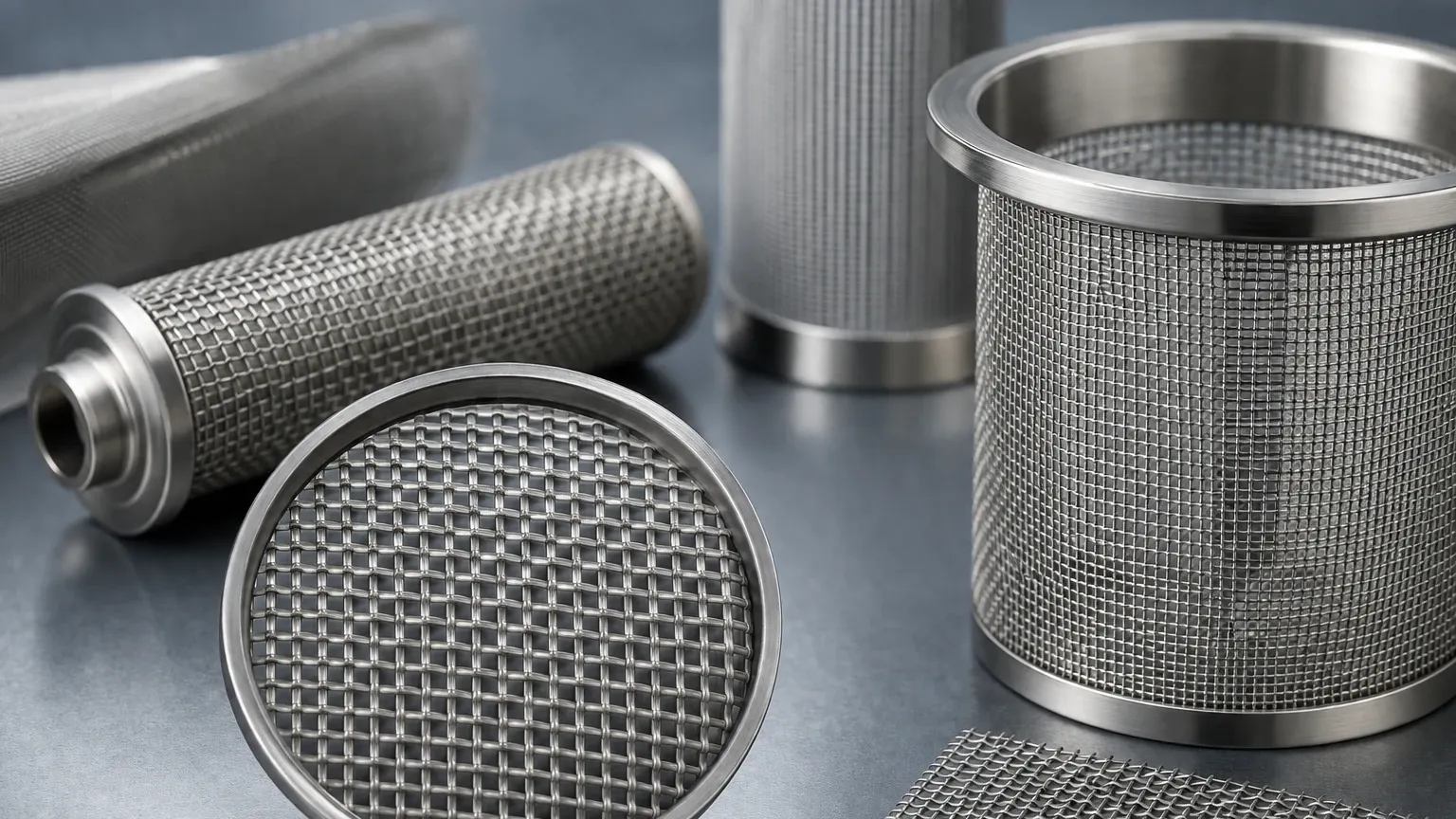
Selecting the right Strainers & Baskets requires an understanding of how 0.2 mm mesh interacts with fluid dynamics, particle morphology, and structural pressure. At Kaifil, we specialize in engineering these precision components to meet the rigorous demands of chemical processing, food production, and hydraulic systems.
Technical Specifications of 0.2 mm Filtration
A strainer 0.2 mm is typically constructed using stainless steel wire mesh. In the industry, 0.2 mm is equivalent to 200 microns. To achieve this level of filtration, a mesh count of approximately 75 to 80 mesh (wires per linear inch) is standard.
Mesh Construction and Open Area
The performance of a 0.2 mm strainer is largely dictated by its open area percentage. For a standard 80-mesh screen with a wire diameter of 0.12 mm, the open area is roughly 38%. This percentage is a vital calculation for engineers because it determines the initial pressure drop across the filter. A higher open area allows for higher flow rates but may compromise the structural integrity of the mesh if not properly supported by a perforated metal backup or a reinforced frame.
Material Grades
For most industrial applications, stainless steel is the material of choice due to its mechanical strength and resistance to oxidation.
- SS304: Suitable for general-purpose applications, water treatment, and non-corrosive chemicals.
- SS316/316L: Recommended for environments involving chlorides, acids, or food-grade requirements where high corrosion resistance is mandatory.
Engineering Considerations: Flow Rate and Pressure Drop
When specifying a strainer 0.2 mm, engineers must account for the "clean pressure drop" and the "terminal pressure drop." Because 0.2 mm is a relatively fine aperture, the mesh is more susceptible to "blinding" or clogging than coarser strainers.
Calculating Velocity
To prevent premature clogging and mechanical stress on the mesh, the fluid velocity through the strainer should be kept within specific limits. For liquids, a velocity of 0.5 to 1.5 meters per second (m/s) through the clean mesh is often targeted. If the velocity is too high, particles may be forced through the mesh (deforming the wires) or become deeply embedded, making cleaning difficult.
Structural Support for Fine Mesh
A 0.2 mm wire mesh is relatively thin. In high-pressure systems or applications with high-viscosity fluids, the mesh alone cannot withstand the differential pressure. Kaifil designs custom Strainers & Baskets that utilize a multi-layer construction. This usually involves a fine 0.2 mm inner mesh bonded to or supported by a heavy-duty perforated metal basket. This configuration ensures the filtration accuracy of the fine mesh while providing the physical strength of a thick metal plate.
Key Applications for 0.2 mm Strainers
The 0.2 mm (200 micron) rating is a standard benchmark for several critical industrial processes. Its primary role is to remove suspended solids that are invisible to the naked eye but large enough to cause mechanical wear.
Protection of Spray Nozzles
In coating, cleaning, and cooling systems, spray nozzles often have very small orifices. Particles larger than 0.2 mm can easily clog these nozzles, leading to uneven spray patterns or complete system shutdowns. A 0.2 mm strainer acts as the final line of defense before the fluid reaches the nozzle assembly.
Heat Exchanger Efficiency
Plate heat exchangers are highly efficient but have narrow flow channels. Solid contaminants can settle in these channels, leading to scaling and reduced thermal efficiency. Utilizing a strainer 0.2 mm in the intake line prevents these solids from entering the exchanger, significantly extending the time between maintenance cycles.
Pre-filtration for Membrane Systems
In water treatment and desalination, 0.2 mm strainers serve as effective pre-filters for more sensitive membrane systems or fine cartridge filters. By removing the bulk of the larger suspended solids, the 0.2 mm strainer reduces the load on expensive downstream filters, lowering the total cost of ownership (TCO) for the filtration system.
Customization and OEM Solutions
Every industrial environment has unique constraints, from piping layouts to specific chemical compatibilities. Off-the-shelf strainers often fail to meet the exact requirements of specialized machinery. Kaifil provides comprehensive OEM and customization services for Strainers & Baskets to ensure optimal fit and function.
Design Variations
- Slant-Top Baskets: Designed for easy removal in tight spaces.
- Reinforced Handles: For heavy-duty baskets that collect significant amounts of debris, ergonomic and reinforced handles are essential for safe manual cleaning.
- Magnetic Inserts: For applications involving metal machining or hydraulic fluids, adding magnetic rods to a 0.2 mm strainer can capture sub-micron ferrous particles that would otherwise pass through the mesh.
Precision Welding and Assembly
The integrity of a 0.2 mm strainer depends on the quality of its seams. Kaifil utilizes advanced welding techniques, such as TIG or plasma welding, to ensure that there are no gaps or bypass points. In fine filtration, even a 1 mm gap in a weld can render the 0.2 mm mesh ineffective, as the fluid will naturally follow the path of least resistance.
Maintenance Protocols and Cleaning Efficiency
The longevity of a strainer 0.2 mm is directly related to how it is maintained. Because the apertures are small, the buildup of a "filter cake" happens faster than with coarser strainers.
Monitoring Differential Pressure
Systems should be equipped with differential pressure gauges. A common rule of thumb is to clean or replace the strainer basket when the pressure drop reaches 10-15 psi (0.7-1.0 bar) above the clean pressure drop. Ignoring this can lead to mesh deformation or "bursting" if the differential pressure exceeds the structural limit of the basket.
Cleaning Techniques
- Manual Cleaning: For baskets, this involves removing the element and using a soft brush or high-pressure water spray from the outside in (backwashing). It is crucial not to use hard scrapers that could snag or tear the 0.2 mm wires.
- Ultrasonic Cleaning: For heavily fouled 0.2 mm mesh, ultrasonic baths are highly effective at dislodging particles trapped within the weave of the wire mesh without causing mechanical damage.
- Chemical Soaking: In industries like food processing or chemical manufacturing, organic buildup may require soaking the strainer in a compatible cleaning agent to dissolve fats or polymers.
Choosing the Right Partner for Filtration
Selecting a strainer 0.2 mm involves more than just picking a micron rating. It requires a partner who understands the nuances of metallurgy, fluid mechanics, and industrial manufacturing. Kaifil’s expertise in producing custom stainless steel filtration solutions ensures that each component is engineered for the specific stresses of its intended application.
Whether you are designing a new hydraulic system or upgrading a chemical processing line, the quality of your Strainers & Baskets will determine your system's reliability. By focusing on high-grade materials, precision manufacturing, and application-specific designs, Kaifil delivers filtration components that provide consistent performance and long-term durability in the most demanding industrial environments.
