


Strainer 1 4
In industrial fluid handling, precision is often dictated by the smallest components in the system. A strainer 1 4 (referring to the 1/4 inch connection size) serves as a critical line of defense for sensitive downstream equipment. While larger pipelines handle bulk flow, 1/4 inch lines are frequently found in instrumentation, sampling systems, chemical injection skids, and pilot plant operations. At this scale, the primary objective is to remove particulate matter that could clog small orifices, damage solenoid valves, or interfere with analytical sensors.
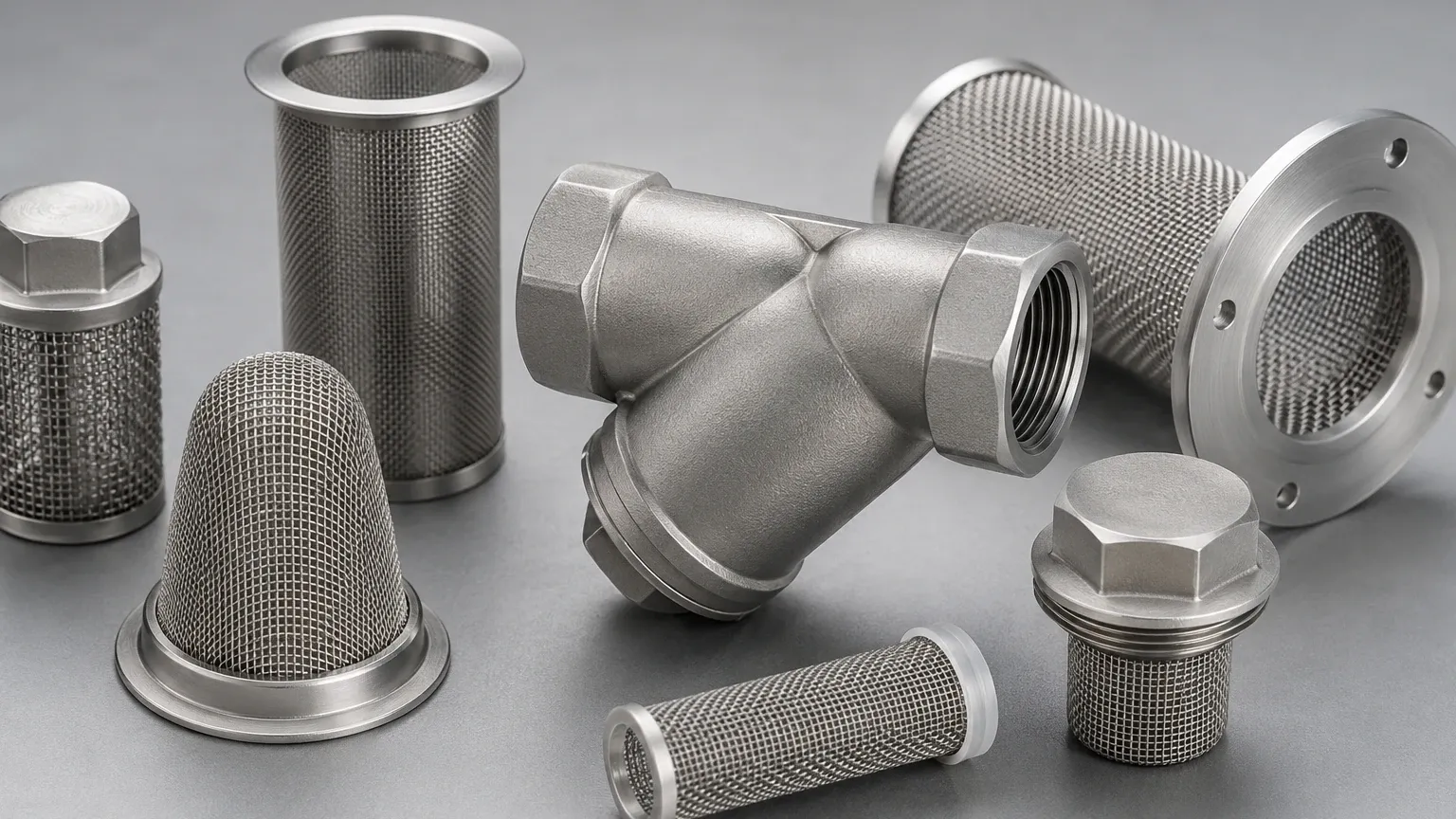
Selecting the right filtration component requires an understanding of fluid dynamics at low flow rates, material compatibility, and the mechanical limits of small-bore piping. For engineers and procurement teams, evaluating a Strainers & Baskets solution involves more than just matching a thread size; it requires a deep dive into the technical specifications that ensure long-term reliability and process integrity.
Technical Specifications of 1/4 Inch Strainers
The designation "1/4" typically refers to the nominal pipe size (NPS) or the thread size of the inlet and outlet ports. In industrial environments, these are most commonly found with NPT (National Pipe Tapered) or BSP (British Standard Pipe) threads. Because these strainers are often used in high-pressure or high-precision environments, the housing design and wall thickness are paramount.
Pressure and Temperature Ratings
Small-bore strainers are often subjected to higher pressures than their larger counterparts. A stainless steel strainer 1 4 might be rated for 3,000 PSI or higher, depending on the wall thickness and the type of seal used (e.g., PTFE, Viton, or metal-to-metal). When specifying these components, engineers must account for the maximum operating pressure (MOP) and the maximum allowable working pressure (MAWP) of the entire system. Temperature also plays a role; as temperatures rise, the pressure rating of the housing material may de-rate, and the integrity of the internal mesh or basket must be verified.
Flow Coefficients (Cv)
In 1/4 inch systems, the flow coefficient (Cv) is a vital metric. It represents the volume of water in gallons per minute that will flow through the strainer with a pressure drop of 1 PSI. Because the internal volume of a 1/4 inch strainer is limited, the design of the internal basket or screen significantly impacts the Cv. A well-engineered strainer minimizes turbulence and pressure drop while maximizing the effective filtration area.
Material Selection: The Case for Stainless Steel
While strainers can be manufactured from various materials, stainless steel remains the standard for industrial B2B applications due to its mechanical strength and chemical resistance. Kaifil specializes in custom stainless steel filtration, focusing on grades that withstand demanding environments.
304 vs. 316L Stainless Steel
* Grade 304: Suitable for general-purpose applications, including water treatment and non-corrosive chemical handling. It offers excellent strength and cost-effectiveness.
* Grade 316L: The preferred choice for pharmaceutical, food and beverage, and marine applications. The addition of molybdenum provides superior resistance to chlorides and pitting corrosion. The "L" (low carbon) designation ensures better weldability and resistance to intergranular corrosion in the heat-affected zones of the filter structure.
In many 1/4 inch applications, such as chemical dosing, the fluid may be highly aggressive. Using 316L stainless steel for both the housing and the internal mesh ensures that the strainer does not become a point of failure due to chemical degradation.
Filtration Media: Wire Mesh and Perforated Metal
The internal element of a strainer 1 4 is what determines its filtration efficiency. Depending on the particle size that needs to be captured, engineers can choose between different types of media.
Stainless Steel Wire Mesh
Wire mesh is used for fine filtration. It is characterized by the number of wires per inch (mesh count). For a 1/4 inch strainer, mesh sizes often range from 20 mesh (approx. 900 microns) for coarse protection to 500 mesh (approx. 25 microns) for fine instrumentation protection.
* Plain Weave: The most common and cost-effective, providing a straight-through path.
* Dutch Weave: Offers higher strength and finer filtration by using a denser packing of wires, which is ideal for high-pressure differential applications.
Perforated Metal Baskets
For applications involving larger debris or where high mechanical strength is required to resist collapsing under pressure, perforated metal is used. In a 1/4 inch configuration, these are often used as a "roughing" filter or as a support structure for a finer mesh lining. The open area percentage is a critical calculation here; if the open area is too low, the pressure drop will be unacceptably high.
Engineering Considerations for Installation and Performance
When integrating a 1/4 inch strainer into a system, several engineering factors must be addressed to ensure the component performs as expected.
Orientation and Flow Direction
Most strainers are uni-directional. Installing a strainer 1 4 in the wrong direction can lead to the internal element collapsing or the debris being trapped in a way that makes cleaning impossible. For Y-strainers, the "leg" containing the screen should point downward in horizontal lines to allow gravity to help collect the debris. In vertical lines, the flow must be downward so that debris is captured in the basket and does not fall back into the upstream piping during maintenance.
Pressure Drop (Delta P)
Every filter introduces a pressure drop. In small systems, a high Delta P can starve downstream pumps or cause inaccuracies in sensor readings. Engineers must calculate the "clean pressure drop" and establish a "dirty pressure drop" threshold at which the strainer must be cleaned or replaced. If the pressure drop across a 1/4 inch strainer exceeds 5-10 PSI, it usually indicates that the element is significantly loaded.
Seal Compatibility
The seals and gaskets within the strainer must be compatible with the process fluid. For high-purity applications, such as those in the pharmaceutical industry, USP Class VI compliant seals may be required. In oil and gas applications, explosive decompression-resistant (EDR) seals might be necessary.
Maintenance and Total Cost of Ownership
In a B2B context, the purchase price of a strainer is only a fraction of the total cost of ownership (TCO). Reliability and ease of maintenance are the primary drivers of long-term value.
Cleaning vs. Replacement
Stainless steel strainers are generally cleanable and reusable, which provides a significant advantage over disposable cartridge filters. For a strainer 1 4, cleaning often involves removing the plug or cap, extracting the basket, and using ultrasonic cleaning or backflushing to remove trapped particles.
Replacement Cycles
The lifespan of the internal element depends on the solids loading of the fluid and the frequency of pressure spikes. In abrasive applications, the wire mesh may eventually suffer from erosion, leading to "bypass," where particles pass through the worn areas. Regular inspection of the mesh integrity is essential to prevent downstream damage.
Customization Options for Specialized Applications
Standard off-the-shelf strainers do not always meet the rigorous requirements of specialized industrial processes. This is where custom manufacturing becomes essential. Kaifil provides OEM and customized filtration solutions that allow engineers to specify exact parameters for their 1/4 inch filtration needs.
Custom Mesh Combinations
In some cases, a single layer of mesh is insufficient. Custom strainers can be designed with multi-layer sintered mesh, which combines the fine filtration of a thin mesh with the mechanical strength of a thicker support mesh. This is particularly useful in high-velocity 1/4 inch lines where mesh vibration could lead to fatigue failure.
Unique Geometry and Connections
While NPT and BSP are standard, some systems require compression fittings (like Swagelok or Parker compatible ends), socket weld connections, or even sanitary tri-clamp fittings for the food and beverage industry. Customizing the housing to fit specific spatial constraints in a compact skid design is also a common requirement for OEM projects.
Confirming Requirements Before Purchase
Before finalizing a purchase for a strainer 1 4, technical professionals should confirm the following data points with their supplier:
1. Fluid Properties: Viscosity, density, and chemical composition.
2. Particulate Profile: What is the smallest particle size that must be removed, and what is the expected solids loading?
3. Operating Conditions: Normal and maximum operating pressure and temperature.
4. Compliance Standards: Are there specific certifications required, such as FDA, 3A, or ASME?
5. Maintenance Access: Is there sufficient clearance in the system layout to remove the strainer basket for cleaning?
By addressing these factors, engineers can ensure that the selected Strainers & Baskets provide the necessary protection without becoming a bottleneck in the process. Whether for a pilot plant or a critical instrumentation line, the right 1/4 inch strainer is a small investment that prevents costly downtime and equipment failure.
Conclusion
The strainer 1 4 may be small in size, but its role in industrial process control is significant. By focusing on high-quality materials like 304 and 316L stainless steel, understanding the nuances of mesh selection, and considering the total cost of ownership, B2B buyers can optimize their filtration systems for maximum efficiency. As a manufacturer dedicated to precision and durability, Kaifil continues to support global industries with reliable, custom-engineered filtration components designed to meet the most demanding specifications.
