


1 2 Strainers
In industrial fluid handling systems, the protection of sensitive downstream equipment is a primary engineering concern. Small-bore piping systems, specifically those utilizing 1/2-inch (often referred to as 1 2) nominal pipe sizes, require precise filtration solutions to prevent particulate contamination from damaging valves, pumps, and instrumentation. The selection of 1 2 strainers involves more than simply matching a pipe diameter; it requires a deep understanding of fluid dynamics, material compatibility, and the specific mechanical requirements of the application.
As a specialized manufacturer, Kaifil provides high-performance Strainers & Baskets designed to meet the rigorous demands of chemical processing, pharmaceutical production, and hydraulic systems. This guide examines the technical parameters, engineering considerations, and selection criteria essential for integrating 1/2-inch strainers into industrial workflows.
Understanding the Application of 1/2 Inch Strainers
The designation "1 2 strainers" typically refers to filtration components designed for 1/2-inch NPS (Nominal Pipe Size) lines. These are commonly found in pilot plants, sampling lines, chemical injection skids, and high-pressure hydraulic circuits. Despite their small physical footprint, these strainers play a critical role in maintaining system integrity.
In many industrial environments, debris such as pipe scale, weld slag, or gasket fragments can enter the flow stream. In a 1/2-inch line, even small particles can cause significant blockages or abrasive wear on precision components like solenoid valves or flow meters. By installing a robust strainer at the inlet of these components, engineers can significantly extend the mean time between failures (MTBF) and reduce unplanned downtime.
Material Engineering: Stainless Steel Alloys for Small-Bore Filtration
Material selection is the first technical hurdle in specifying 1 2 strainers. Because these components are often exposed to corrosive chemicals or high temperatures, the durability of the housing and the internal element is paramount. Kaifil specializes in stainless steel constructions, offering several grades to suit different environmental stressors:
304 Stainless Steel
This is the standard grade for general industrial applications. It offers excellent strength and basic corrosion resistance, making it suitable for water treatment, air lines, and non-corrosive oil applications. It is a cost-effective choice for systems where chemical exposure is minimal.
316 Stainless Steel
For more demanding environments, 316 stainless steel includes molybdenum, which enhances resistance to pitting and crevice corrosion in chloride-rich environments. This is the preferred material for marine applications, chemical processing, and any system where the fluid chemistry is aggressive.
316L Stainless Steel
The "L" denotes low carbon content, which is essential for components that require welding. 316L minimizes carbide precipitation during the welding process, ensuring that the heat-affected zones remain as corrosion-resistant as the rest of the strainer. This is critical for high-purity applications in the food, beverage, and pharmaceutical sectors.
Technical Performance: Flow Dynamics and Pressure Management
When integrating 1 2 strainers into a system, engineers must account for the impact on flow characteristics. Every filtration element introduces a degree of resistance, known as pressure drop (ΔP). Managing this resistance is vital to ensure the system operates within its designed parameters.
The Cv Factor
The flow coefficient (Cv) represents the volume of water (in gallons per minute) that will flow through the strainer with a pressure drop of 1 psi. For 1/2-inch strainers, the Cv is relatively low compared to larger pipe sizes, meaning that the internal geometry of the strainer must be optimized to prevent excessive flow restriction. A well-designed basket or Y-strainer will maximize the open area ratio—the ratio of the total area of the holes in the screen to the internal cross-sectional area of the pipe.
Differential Pressure Monitoring
As the strainer captures debris, the pressure drop across the element increases. In critical systems, it is common to install differential pressure gauges. For 1 2 strainers, a common rule of thumb is to initiate a cleaning cycle when the pressure drop reaches 5-10 psi above the clean-start pressure. Exceeding recommended differential pressures can lead to "blow-by," where the mesh element deforms or ruptures, allowing contaminants to bypass the filter entirely.
Comparing Structural Designs: Y-Type vs. Basket Configurations
In the category of 1 2 strainers, two primary designs dominate the market: the Y-strainer and the Basket (or Simplex) strainer. Each offers distinct advantages depending on the installation environment and maintenance requirements.
Y-Strainers for 1/2" Lines
Y-strainers are characterized by their compact, cylindrical shape and a "Y" branch that houses the filtration element.
- Orientation: They can be installed in either horizontal or vertical (downward flow) pipelines.
- Pressure Capacity: Due to their robust design, they are often used in high-pressure steam or gas applications.
- Maintenance: Cleaning usually requires the removal of a threaded cap or a bolted flange, which may lead to some fluid loss. They are best suited for systems with low levels of particulate matter where frequent cleaning is not required.
Basket Strainers for 1/2" Lines
Basket strainers feature a larger, vertical chamber that houses a removable basket element.
- Capacity: They typically have a larger dirt-holding capacity than Y-strainers of the same size.
- Ease of Service: The top-loading design allows for easier access to the basket without necessarily draining the entire line. This makes them ideal for liquid applications where debris levels are higher.
- Flow Path: They are generally limited to horizontal pipe installations.
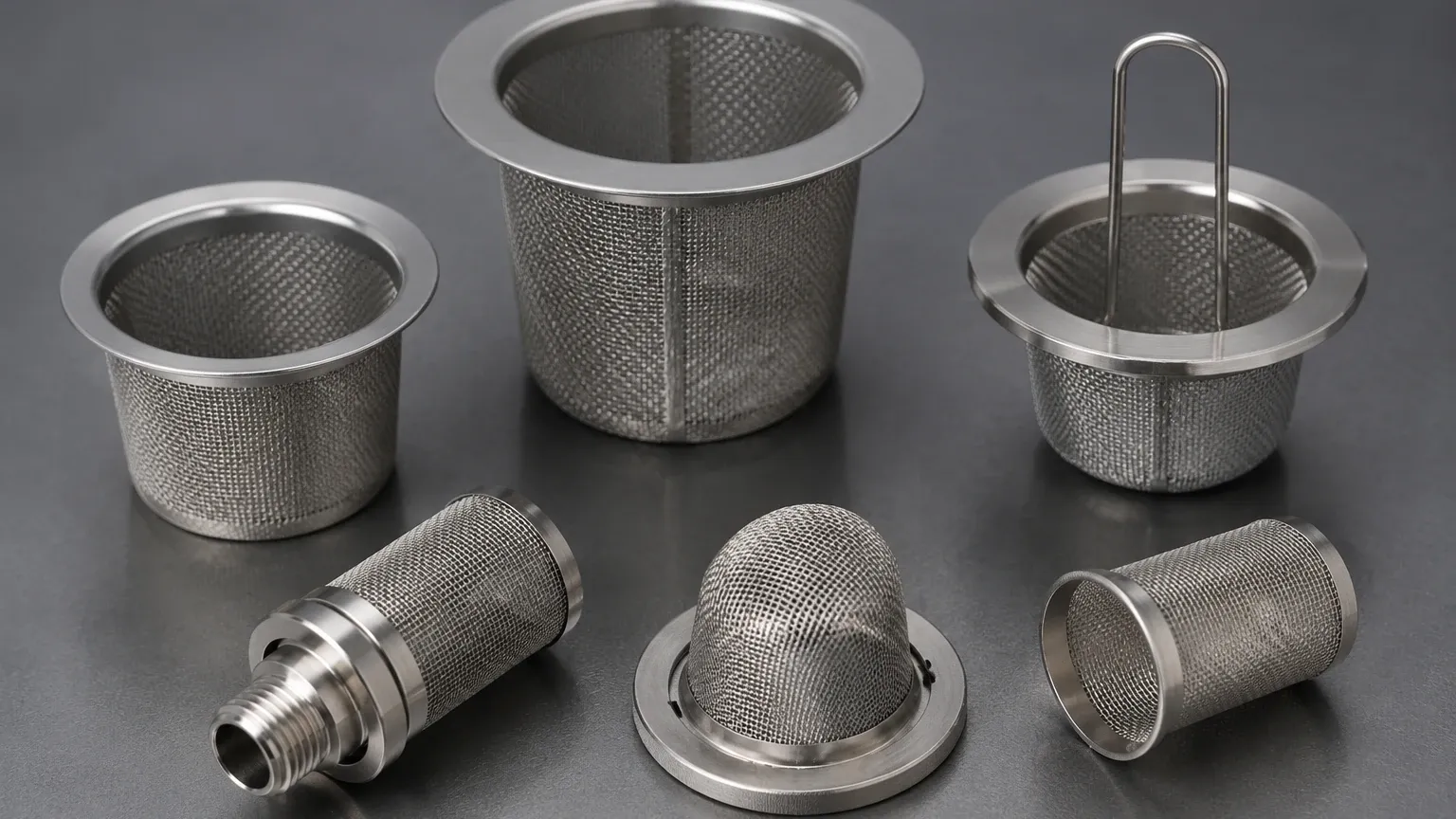
Customization and OEM Capabilities in Strainers & Baskets
Standard off-the-shelf solutions do not always meet the specific needs of specialized industrial equipment. This is where Kaifil’s manufacturing expertise in Strainers & Baskets becomes a strategic advantage for engineers. Customization options for 1 2 strainers include:
1. Mesh and Perforation Selection: Depending on the target particle size, strainers can be fitted with coarse perforated plate liners or fine Dutch weave wire mesh. For 1/2-inch lines, filtration levels can range from 40 mesh (approx. 400 microns) down to 5 microns or finer.
2. Connection Types: While NPT (National Pipe Thread) is common for 1/2-inch fittings, many industrial applications require BSP threads, socket weld connections, or even small-diameter flanges to match existing piping standards.
3. Specialized Coatings and Finishes: For pharmaceutical or food-grade applications, the internal and external surfaces may require electropolishing to reach a specific Ra (Roughness Average) value, preventing bacterial growth and facilitating CIP (Clean-in-Place) processes.
4. Reinforced Elements: In high-viscosity or high-velocity flows, the internal mesh may require a perforated metal backup to prevent collapsing under pressure.
Operational Maintenance and Replacement Strategies
The longevity of 1 2 strainers depends heavily on a proactive maintenance schedule. Because these components are smaller, their holding capacity is limited, and they can reach saturation faster than larger industrial filters if the process fluid is heavily contaminated.
Cleaning Procedures
For 1/2-inch stainless steel strainers, cleaning usually involves removing the element and using a soft brush or ultrasonic bath to dislodge trapped particles. It is vital to avoid using carbon steel brushes on stainless steel elements, as this can embed iron particles into the surface, leading to localized rusting (galvanic corrosion).
Seal and Gasket Integrity
Every time a strainer is opened for cleaning, the seals or gaskets should be inspected. In 1 2 strainers, O-rings or flat gaskets made of Viton, EPDM, or PTFE are common. Hardened or cracked seals must be replaced immediately to prevent external leaks, which can be hazardous in chemical or high-temperature steam applications.
Replacement Cycles
While the stainless steel housing of a strainer can last for decades, the internal baskets or screens are considered wear parts. Factors that necessitate replacement include:
- Mechanical Fatigue: Repeated pressure cycles causing wire breakage in the mesh.
- Irreversible Clogging: Fine particles becoming permanently wedged in the mesh (blinding).
- Chemical Erosion: Thinning of the wire diameter over time due to aggressive fluid chemistry.
Selection Criteria for Industrial Procurement
When sourcing 1 2 strainers, purchasing teams and engineers should confirm several key data points to ensure the product is fit for purpose:
- Maximum Allowable Working Pressure (MAWP): Does the strainer housing meet the system’s peak pressure requirements, including potential surges?
- Temperature Limits: Are the housing, element, and seals rated for the maximum operating temperature?
- Filtration Micron Rating: Is the mesh fine enough to protect the most sensitive downstream component without causing an unacceptable pressure drop?
- Fluid Compatibility: Has the material (e.g., 316L vs 304) been validated against the chemical composition of the process fluid?
- Space Constraints: In compact skid designs, does the Y-strainer or basket strainer have enough clearance for the element to be removed for cleaning?
By focusing on these technical boundaries, industrial professionals can select 1 2 strainers that provide reliable, long-term protection for their critical infrastructure. Kaifil remains committed to delivering precision-engineered filtration components that meet these exacting standards through advanced manufacturing and dedicated technical support.
