


1 1 2 Disc Filter
In the landscape of industrial filtration, precision is often measured in increments of an inch. The 1 1/2" (1.5-inch) disc filter represents a critical standard for compact filtration systems, providing a high-performance solution for applications ranging from plastic extrusion to hydraulic fluid purification. As a specialized component within the broader category of Filter Discs & Packs, the 1 1/2 disc filter is engineered to withstand high pressures, corrosive environments, and extreme temperatures while maintaining consistent micron-level accuracy.
For engineers and procurement specialists, selecting the correct 1 1 2 disc filter involves more than just verifying the diameter. It requires a deep understanding of wire mesh metallurgy, weave patterns, and structural reinforcement. This guide examines the technical specifications, engineering considerations, and selection criteria essential for integrating these components into industrial workflows.
Understanding the 1 1/2" Disc Filter in Industrial Systems
A 1 1 2 disc filter, typically measuring 38.1mm in diameter, is a circular filtration element usually fabricated from stainless steel wire mesh. Despite its relatively small surface area, its role in industrial machinery is pivotal. These discs are frequently utilized in "last-chance" filtration scenarios, where they protect sensitive downstream components from particulate contamination that could cause mechanical failure or product defects.
In plastic and polymer extrusion, these filters are often stacked into "packs" to remove impurities from the molten resin. In hydraulic systems, they serve as barrier filters to prevent metal shavings or environmental debris from entering high-pressure valves. The effectiveness of a 1 1 2 disc filter is determined by its ability to balance two competing factors: filtration fineness (micron rating) and flow resistance (pressure drop).
Material Selection and Chemical Compatibility
The performance of a 1 1 2 disc filter is fundamentally tied to its material composition. Because these filters often operate in harsh chemical environments or at elevated temperatures, selecting the right alloy is the first step in the engineering process.
Stainless Steel 304
This is the most common material for general-purpose industrial filtration. It offers excellent mechanical strength and good corrosion resistance for water-based applications and mild chemicals. It is a cost-effective choice for environments where extreme acidity or high chloride concentrations are not present.
Stainless Steel 316L
For pharmaceutical, food processing, and aggressive chemical applications, SS 316L is the industry standard. The addition of molybdenum provides superior resistance to pitting and crevice corrosion, particularly in chloride-rich environments. The "L" denotes low carbon content, which is essential for components that require welding, as it prevents carbide precipitation and ensures the integrity of the filter edge.
Specialty Alloys
In specialized sectors like aerospace or petrochemical processing, materials such as Monel, Inconel, or Hastelloy may be required. These alloys are selected for their ability to maintain structural integrity at temperatures exceeding 500°C or in highly oxidative environments where standard stainless steel would fail.
Weave Types and Filtration Precision
The geometry of the wire mesh determines how the 1 1 2 disc filter interacts with the fluid stream. Different weave patterns offer varying levels of mechanical stability and pore size consistency.
Plain Weave
The most straightforward pattern, where each warp wire crosses over and under each shute wire. This weave provides a high percentage of open area, making it ideal for high-flow applications with relatively coarse filtration requirements (typically 50 microns and above).
Dutch Weave (Plain and Twilled)
Dutch weaves utilize wires of different diameters in the warp and shute directions. This results in a much tighter, denser mesh that can achieve filtration ratings down to 5 microns or less. The "tortuous path" created by the Dutch weave is highly effective at capturing irregularly shaped particles, making it a preferred choice for high-precision Filter Discs & Packs.
Twill Weave
In a twill weave, each shute wire passes over and under two warp wires. This allows for the use of heavier wires for a given mesh count, increasing the mechanical strength of the disc without significantly sacrificing the micron rating. This is particularly useful for 1 1 2 disc filters that must endure high-pressure pulsations.
Multi-Layer Filter Packs: Enhancing Performance
While a single-layer 1 1 2 disc filter may suffice for simple straining, most industrial applications require multi-layer configurations, known as filter packs. These packs are engineered to provide depth filtration and structural support.
Layering Strategy
A typical multi-layer pack consists of a fine filtration mesh sandwiched between coarser support meshes. The support layers protect the delicate fine mesh from being deformed by the pressure of the fluid flow. Additionally, a coarse "drainage" layer can be added to help distribute the fluid evenly across the entire surface of the disc, preventing localized clogging and extending the service life of the filter.
Binding and Edging
To ensure the layers remain aligned and to prevent bypass (where fluid escapes around the edges of the filter), 1 1 2 disc filters are often spot-welded or bound with a metal rim. Aluminum, copper, or stainless steel edging can be crimped around the circumference. This not only provides a better seal within the filter housing but also makes the discs easier to handle during installation and replacement.
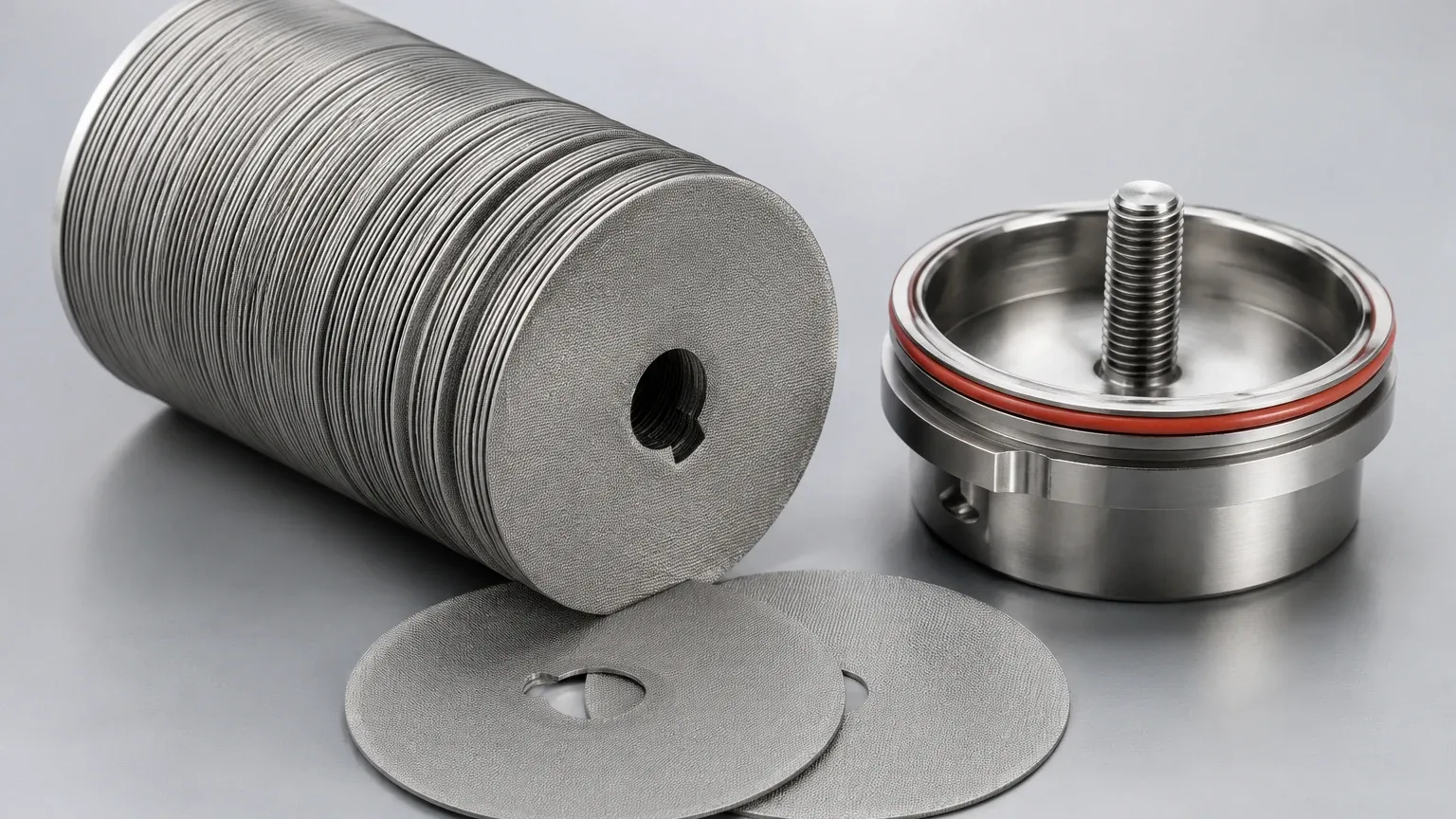
Evaluating Flow Dynamics and Pressure Drop
For an engineer, the primary challenge when implementing a 1 1 2 disc filter is managing the pressure drop (ΔP). As the pore size of the mesh decreases, the resistance to flow increases. If the pressure drop is too high, it can lead to pump cavitation, reduced system efficiency, or even the mechanical failure of the filter mesh itself.
Calculating Effective Filtration Area (EFA)
With a nominal diameter of 1.5 inches, the total surface area is approximately 1.76 square inches. However, the Effective Filtration Area (EFA) is often less due to the space occupied by the sealing gaskets or the metal edging. When calculating flow rates, engineers must use the EFA to ensure the velocity of the fluid through the mesh remains within acceptable limits to prevent "particle breakthrough," where high pressure forces contaminants through the pores.
Dirt Holding Capacity
The longevity of a 1 1 2 disc filter is determined by its dirt holding capacity. Multi-layer packs significantly improve this metric by trapping larger particles in the outer layers while the inner layers focus on fine particulates. This graduated filtration prevents the surface from blinding prematurely.
Customization Options for OEM Applications
Every industrial system has unique constraints, and standard off-the-shelf components may not always provide the optimal balance of performance and cost. Customization of Filter Discs & Packs allows for precise alignment with equipment specifications.
* Custom Micron Ratings: Beyond standard sizes, mesh can be woven to meet specific particulate retention targets.
* Variable Thickness: By adjusting the number of layers and the wire diameter of the support mesh, the overall thickness of the disc can be controlled to fit existing housing tolerances.
* Surface Treatments: Processes such as passivating or ultrasonic cleaning ensure that the discs are free from manufacturing oils and contaminants, which is critical for food-grade or medical applications.
* Sintered Construction: For the most demanding environments, layers of mesh can be sintered (diffusion-bonded) together. This creates a monolithic structure that will not fray or migrate, providing the highest level of mechanical security for a 1 1 2 disc filter.
Maintenance, Cleaning, and Replacement Cycles
The total cost of ownership (TCO) for filtration components is heavily influenced by their maintenance requirements. Stainless steel 1 1 2 disc filters offer a significant advantage over disposable synthetic filters because they are often cleanable and reusable.
Cleaning Methods
* Ultrasonic Cleaning: High-frequency sound waves create cavitation bubbles that dislodge deeply embedded particles from the mesh. This is the most effective method for restoring Dutch weave filters.
* Backwashing: Reversing the flow of fluid through the filter can remove surface cakes, though this is less effective for depth-loading packs.
* Chemical Cleaning: Soaking the discs in compatible solvents or acids can dissolve organic or mineral deposits without damaging the stainless steel structure.
When to Replace
Despite their durability, 1 1 2 disc filters eventually reach a point of "permanent fouling" where cleaning no longer restores an acceptable pressure drop. Furthermore, repeated cleaning cycles or high-pressure stress can lead to wire fatigue. Engineers should establish replacement intervals based on differential pressure triggers rather than time-based schedules to optimize both system safety and operational costs.
Conclusion: Selecting the Right Partner for Filtration Solutions
The 1 1 2 disc filter is a small but vital component in the machinery of modern industry. Whether it is ensuring the purity of a polymer melt or protecting a hydraulic actuator, the quality of the filter directly impacts the reliability of the entire system. By focusing on material integrity, weave precision, and structural design, Kaifil provides the technical expertise necessary to deliver high-performance filtration solutions tailored to specific industrial needs.
When specifying Filter Discs & Packs, engineers should look for manufacturers who provide transparent data on material grades, micron ratings, and pressure tolerances. A well-engineered 1 1 2 disc filter does more than just trap dirt; it provides the peace of mind that comes from knowing your process is protected by a component designed for the rigors of the industrial environment.
