


1 Y Strainers
In industrial fluid handling systems, the protection of sensitive downstream equipment is a primary engineering concern. The 1-inch Y strainer, often referred to in procurement as 1 y strainers, serves as a critical mechanical component designed to remove unwanted solids from liquid, gas, or steam lines by means of a perforated or wire mesh straining element. While larger piping systems often command significant attention, the 1-inch line size is ubiquitous in chemical dosing, pilot plants, hydraulic power units, and food processing secondary lines. Selecting the correct configuration for these strainers is essential for maintaining system integrity and minimizing operational downtime.
As a specialized manufacturer of stainless steel filtration solutions, Kaifil provides high-performance Strainers & Baskets that meet the rigorous demands of industrial environments. Understanding the technical nuances of 1 y strainers—from material selection to pressure drop calculations—allows engineers to specify components that offer the best balance of filtration efficiency and structural longevity.
The Engineering Design of 1 Y Strainers
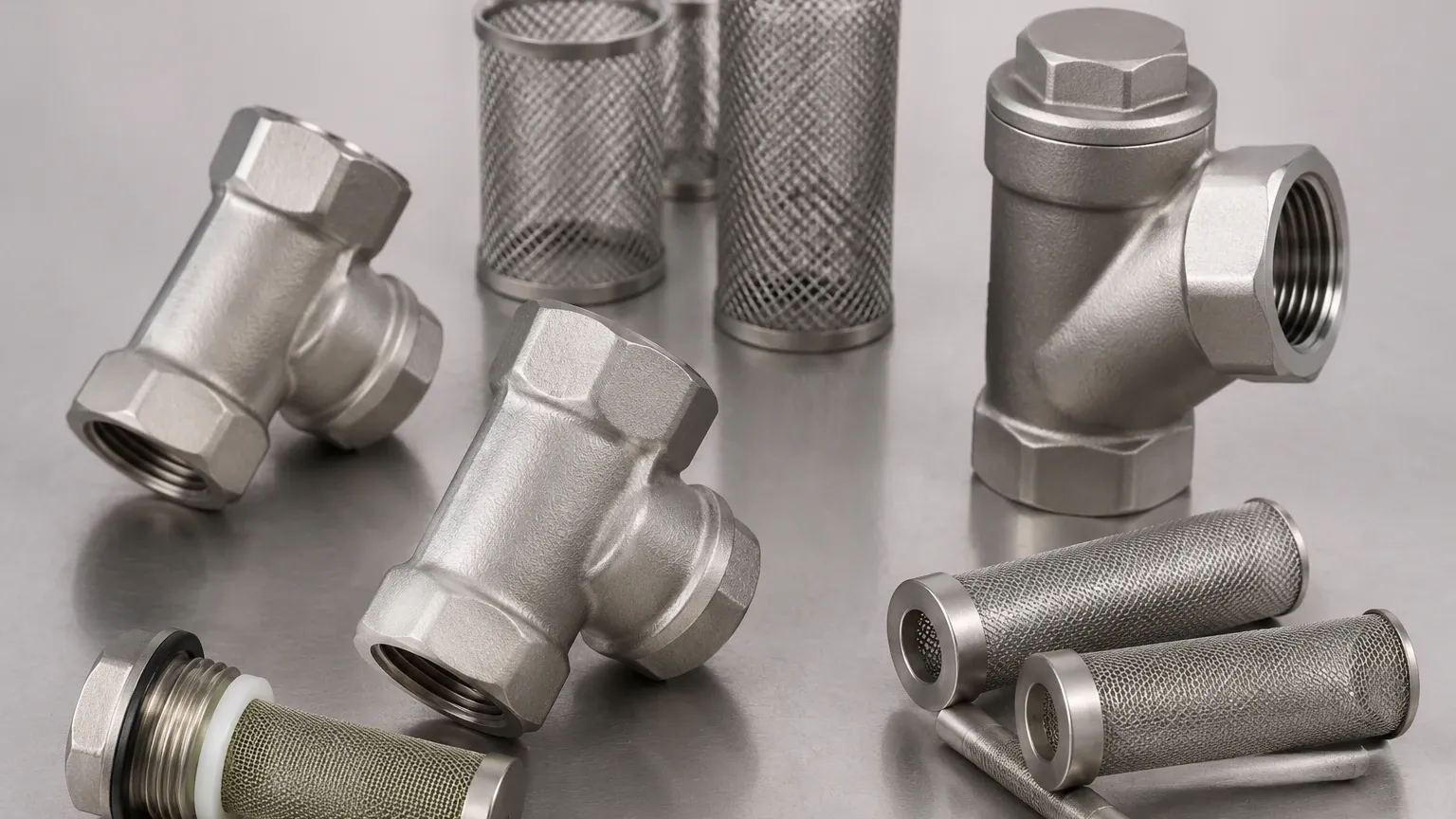
The "Y" configuration is named for its shape, where the straining leg intersects the main flow path at an angle. This design is particularly advantageous for 1-inch piping because it provides a relatively large filtration surface area compared to the compact footprint of the valve body. In a 1-inch system, space is often at a premium, and the Y-pattern allows for effective debris collection without requiring the extensive clearance needed by T-type or basket strainers.
Flow Dynamics and Debris Collection
In a standard 1 y strainer, the fluid enters the inlet and is directed into the cylindrical straining element housed in the diagonal leg. As the fluid passes through the mesh or perforated screen, solids are trapped on the interior of the element. The cleaned fluid then exits through the outlet. The angle of the leg is engineered to minimize turbulence and pressure loss while maximizing the volume of the collection chamber. For 1-inch lines, which often operate at higher velocities than larger headers, managing this turbulence is vital to prevent erosion of the strainer body and the mesh itself.
Pressure Ratings and End Connections
Industrial 1 y strainers are typically rated by their pressure-temperature capabilities, often following ASME or DIN standards. Common ratings include Class 150, 300, or 600, as well as PN16 or PN40. The choice of end connection is equally critical. For 1-inch systems, the most common connections include:
* NPT/BSPT Threaded: Ideal for quick installation in low to medium pressure applications.
* Socket Weld: Preferred in high-pressure or high-temperature systems where leak prevention is paramount.
* Flanged (RF/RTJ): Used when the strainer must be frequently removed for off-line cleaning or in systems following strict piping specifications.
Material Selection for Corrosive and High-Temperature Environments
The durability of 1 y strainers is largely dictated by the metallurgy of the body and the internal screen. In B2B industrial sectors, stainless steel is the standard due to its resistance to oxidation and chemical attack.
Stainless Steel Grades: 304 vs. 316L
Kaifil specializes in custom stainless steel filtration, emphasizing the importance of matching the alloy to the process fluid.
1. Grade 304 Stainless Steel: Suitable for general industrial use, water treatment, and less aggressive chemical applications. It offers excellent mechanical properties and cost-effectiveness.
2. Grade 316/316L Stainless Steel: The addition of molybdenum provides enhanced resistance to chlorides and pitting. This is the preferred choice for 1 y strainers used in marine environments, pharmaceutical manufacturing, and the chemical processing of acidic media.
Gasket and Seal Compatibility
While the metal body provides structural strength, the integrity of the strainer depends on the seals at the blow-off or cover plate. For 1-inch strainers, engineers must specify gasket materials based on the temperature and chemical nature of the fluid. Common options include PTFE (Teflon) for broad chemical resistance, EPDM for steam and water applications, and Viton (FKM) for high-temperature hydrocarbon service.
Filtration Media: Mesh and Perforation Selection
The heart of any product in the Strainers & Baskets category is the internal element. For 1 y strainers, the choice between a perforated plate and a wire mesh lining depends on the required filtration fineness.
Perforated Screens
Perforated screens are typically used for coarse straining, where the goal is to remove large particles such as pipe scale, welding slag, or pebbles. In a 1-inch strainer, standard perforation sizes might range from 1/32" to 1/8". These screens are structurally robust and can withstand significant differential pressure without collapsing.
Wire Mesh Linings
When finer filtration is required—often to protect precision instruments like 1-inch flow meters or spray nozzles—a fine wire mesh is layered over a perforated support basket. Mesh counts can range from 20 mesh (approx. 900 microns) down to 400 mesh (approx. 35 microns).
Engineers must consider the "open area ratio" when selecting mesh for 1 y strainers. A higher mesh count increases filtration efficiency but decreases the total open area, leading to a faster increase in pressure drop as the screen becomes loaded with debris. Kaifil’s engineering team works with clients to optimize this ratio, ensuring that the 1-inch strainer does not become a bottleneck in the system.
Performance Evaluation: Pressure Drop and Cv
One of the most common mistakes in specifying 1 y strainers is overlooking the impact on system hydraulics. Every strainer introduces a pressure drop ($ΔP$), which is a function of the fluid's velocity, viscosity, and the strainer's flow coefficient ($Cv$).
Calculating Flow Resistance
The $Cv$ value represents the flow of water in gallons per minute (GPM) that will pass through the strainer with a pressure drop of 1 psi. For a standard 1-inch Y strainer, the $Cv$ is typically lower than that of a 1-inch ball valve but higher than a globe valve.
When 1 y strainers are used in viscous fluid applications (such as heavy oils or syrups), the pressure drop increases significantly. In these cases, it may be necessary to oversize the strainer or select a high-capacity basket design to maintain the required flow rate. Engineers should always request the clean pressure drop curve from the manufacturer to ensure the pump head is sufficient to overcome the resistance of a partially clogged screen.
Installation and Maintenance Protocols
Proper installation is vital for the functional success of 1 y strainers. In 1-inch piping, the strainer must be oriented so that the collection leg points downward. This allows gravity to assist in trapping debris within the leg and prevents it from falling back into the main pipe during flow fluctuations.
Horizontal vs. Vertical Installation
* Horizontal Lines: The strainer leg should point downward. This is the most common and effective orientation.
* Vertical Lines: Y strainers can be installed in vertical lines only if the flow is downward. If the flow is upward, the debris will collect at the bottom of the pipe rather than in the strainer leg, rendering the device ineffective.
The Blow-Off Valve
Most industrial 1 y strainers feature a plugged hole in the screen cover. This can be replaced with a "blow-off" ball valve. Opening this valve while the system is under pressure allows the fluid to flush out the collected debris without requiring a system shutdown. This is a major advantage for 1-inch lines in continuous processes where downtime is costly.
Customization and OEM Solutions
While off-the-shelf 1 y strainers are available, many industrial applications require customized features to meet specific engineering standards. Kaifil provides extensive OEM capabilities for the Strainers & Baskets market, including:
* Custom Mesh Composites: Sintered wire mesh or multi-layer screens for high-pressure durability.
* Specialty Coatings: Such as PTFE lining for highly corrosive chemical handling.
* Magnetic Inserts: To capture fine iron or steel particles that might pass through a standard mesh.
* Differential Pressure Tappings: Pre-drilled ports for the installation of DP gauges, allowing operators to monitor the clogging status of the 1-inch strainer in real-time.
Total Cost of Ownership (TCO) Considerations
When procuring 1 y strainers, the initial purchase price is only one component of the total cost. Engineers and purchasing teams must also consider:
1. Maintenance Labor: How easily can the screen be removed and cleaned? A poorly designed 1-inch strainer may require frequent gasket replacements or may be difficult to reseal.
2. Energy Costs: A strainer with a high pressure drop forces pumps to work harder, increasing energy consumption over the life of the plant.
3. Equipment Protection: The cost of a 1-inch Y strainer is negligible compared to the cost of repairing a damaged high-pressure pump or a precision control valve that was fouled by debris.
By choosing high-quality stainless steel components from a manufacturer like Kaifil, industrial users ensure that their 1 y strainers provide reliable protection with minimal maintenance requirements. Whether for a standard water line or a complex chemical reactor feed, the right 1-inch strainer is a fundamental investment in system reliability.
For technical specifications and to explore the full range of custom filtration components, engineers are encouraged to consult professional resources and manufacturer data sheets to align product capabilities with their specific application needs.
