


Strainer 3 4
In industrial fluid handling, the integrity of downstream equipment often depends on the efficiency of primary filtration components. A strainer 3 4 (referring to a 3/4-inch pipe size) serves as a critical mechanical barrier designed to remove larger particulates, debris, and foreign matter from liquid or gas streams. While seemingly a standard component, the selection of a 3/4-inch strainer requires a deep understanding of material compatibility, pressure ratings, and the specific filtration media required to protect sensitive components like pumps, flow meters, and spray nozzles.
Industrial systems utilize 3/4-inch lines frequently in chemical dosing, pilot plants, hydraulic power units, and small-scale processing lines. At this scale, the balance between compact design and high-flow efficiency is paramount. For engineers and procurement teams, selecting the right Strainers & Baskets involves more than just matching pipe sizes; it requires a technical evaluation of the process environment and the physical properties of the media being filtered.
Understanding the Role of 3/4" Strainers in Industrial Systems
The primary function of a strainer 3 4 is the protection of mechanical equipment from damage caused by solids. In a 3/4-inch piping system, flow rates are typically lower than in main process lines, but the sensitivity of the equipment is often higher. For example, a 3/4-inch line feeding a precision cooling nozzle or a chemical injector cannot tolerate even small amounts of scale or sediment.
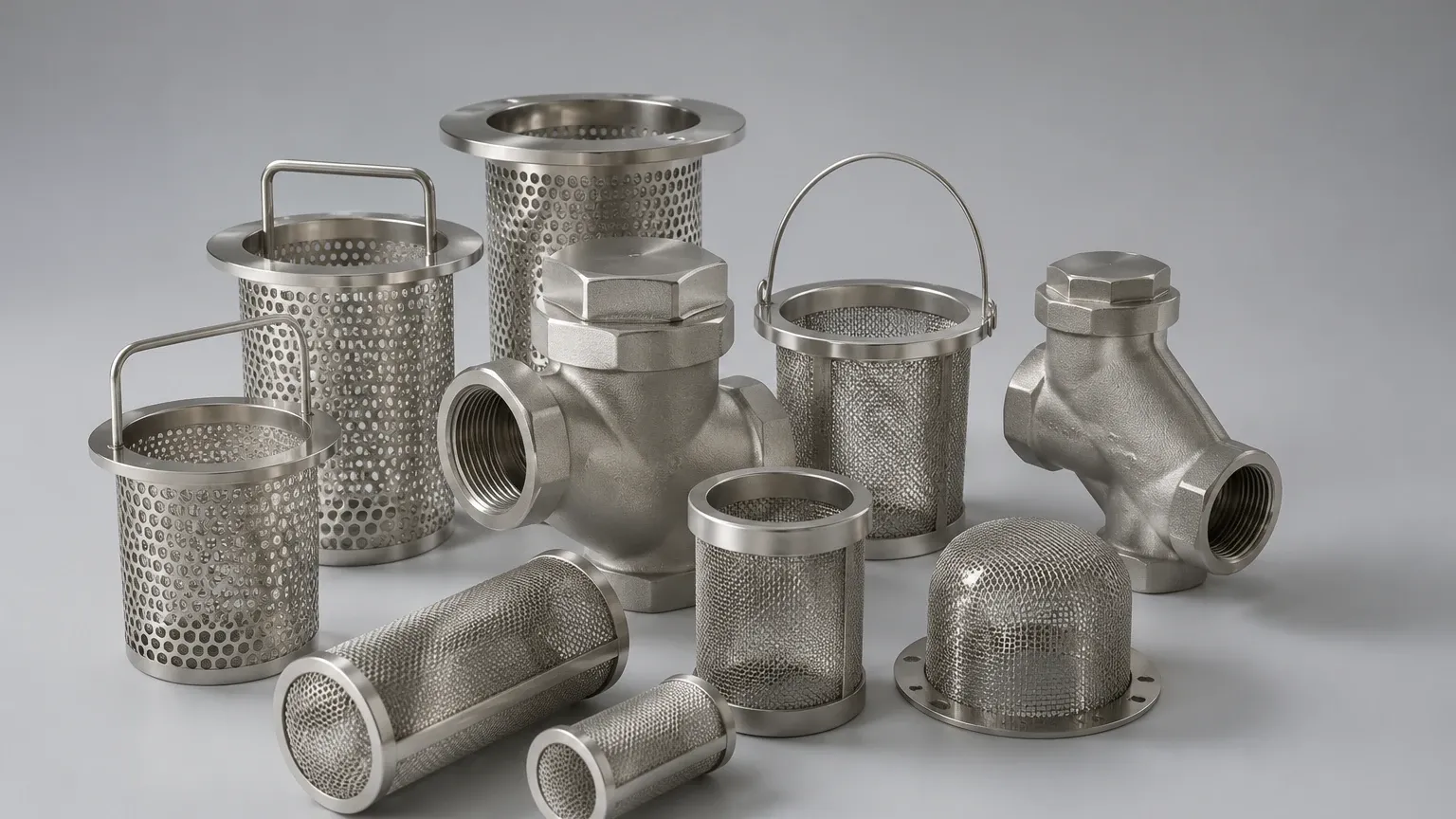
These strainers are categorized by their housing configuration, with the most common being Y-strainers and basket strainers. A Y-strainer is often preferred for 3/4-inch applications where space is limited and the amount of debris is relatively low. Its compact shape allows for installation in both horizontal and vertical pipelines. Conversely, a basket strainer in a 3/4-inch size provides a larger holding capacity for solids, making it ideal for batch processes where the fluid contains a higher concentration of particulates and requires less frequent cleaning.
Material Selection for Durability and Chemical Compatibility
When specifying a strainer 3 4, the choice of material is the most significant factor influencing the component's service life. In industrial environments, stainless steel is the standard for high-performance applications.
Stainless Steel 304 vs. 316
Stainless steel 304 is widely used for general industrial applications, including water treatment and mild chemical processing. It offers excellent strength and basic corrosion resistance. However, for more demanding environments, such as those involving chlorides, high-salinity fluids, or aggressive chemicals (e.g., in pharmaceutical or marine applications), Stainless Steel 316 or 316L is required. The addition of molybdenum in SS316 provides superior resistance to pitting and crevice corrosion, ensuring the strainer housing and the internal mesh remain intact under harsh conditions.
Gasket and Seal Considerations
The housing material is only part of the equation. The seals used in a 3/4-inch strainer must be compatible with the process fluid and the operating temperature. Common materials include:
* Buna-N (Nitrile): Suitable for oil, water, and general-purpose applications at moderate temperatures.
* Viton (FKM): Preferred for high-temperature applications and resistance to a wide range of chemicals and oils.
* PTFE (Teflon): Used for maximum chemical inertness, though it lacks the elasticity of elastomers.
* EPDM: Ideal for steam and water applications where oil resistance is not required.
Evaluating Filtration Media: Wire Mesh vs. Perforated Baskets
The internal element of a strainer 3 4 is where the actual filtration occurs. Depending on the required filtration accuracy, the element may consist of perforated metal, woven wire mesh, or a combination of both.
Perforated Metal Elements
Perforated metal is typically used for "coarse" straining, where the goal is to remove large chunks of debris, such as weld slag or pebbles. In a 3/4-inch strainer, a perforated basket might feature hole diameters ranging from 1/32" to 1/8". These are robust and easy to clean but are not suitable for removing fine particulates.
Woven Wire Mesh
For finer filtration, a wire mesh liner is added to the perforated support. Wire mesh is defined by its "mesh count" (the number of openings per linear inch). A 3/4-inch strainer can be fitted with mesh ranging from 20 mesh (approx. 840 microns) to 400 mesh (approx. 37 microns). When selecting a mesh size, engineers must balance the need for fine filtration with the risk of rapid clogging. A mesh that is too fine will lead to excessive pressure drops and frequent maintenance intervals.
Engineering Considerations: Flow Rate and Pressure Drop
One of the most common mistakes in selecting a strainer 3 4 is ignoring the pressure drop ($ΔP$) across the unit. Every strainer introduces a restriction to the flow. The "clean pressure drop" is the resistance offered by the strainer when the internal element is completely free of debris.
Calculating the Cv Value
The flow coefficient (Cv) is a critical metric that represents the flow rate in gallons per minute (GPM) of water at 60°F that will pass through the strainer with a pressure drop of 1 psi. For a 3/4-inch strainer, the Cv value will vary based on the housing design (Y-type vs. Basket) and the mesh size. Engineers should ensure that the calculated pressure drop at the maximum system flow rate does not exceed the allowable limits of the pump or the process requirements.
The Impact of Viscosity
If the fluid being filtered is more viscous than water (such as heavy oils or syrups), the pressure drop will increase significantly. In these cases, it may be necessary to oversize the strainer or select a specialized high-surface-area basket to maintain an acceptable $ΔP$.
Maintenance Protocols and Service Life Optimization
To ensure the long-term performance of a strainer 3 4, a regular maintenance schedule must be established. A clogged strainer not only reduces flow but can also lead to structural failure of the internal element due to the increased pressure differential.
Differential Pressure Monitoring
The most effective way to determine when a 3/4-inch strainer needs cleaning is by monitoring the differential pressure. By installing pressure gauges upstream and downstream of the strainer, operators can see exactly when the debris buildup has reached a critical level. Typically, a strainer should be cleaned when the pressure drop reaches 5-10 psi over the clean reading.
Cleaning Procedures
For Y-strainers, cleaning often involves removing the "blow-off" plug or opening a ball valve connected to the drain port to flush out debris without stopping the flow (if a blow-down valve is installed). For basket strainers, the system must usually be depressurized, the cover removed, and the basket manually cleaned. It is essential to inspect the mesh for signs of fraying or corrosion during each cleaning cycle. Even high-quality stainless steel elements eventually wear out and require replacement to prevent "bypass," where contaminants leak through holes in the mesh.
Customization Options for Specialized Applications
Standard off-the-shelf strainers may not meet the needs of every industrial application. Customization is often required for unique fluid properties or specific installation constraints. As a manufacturer, Kaifil specializes in tailoring the internal components of Strainers & Baskets to meet precise engineering specifications.
Customization options for a strainer 3 4 include:
* Magnetic Inserts: Adding magnets to the basket to capture fine iron or steel particles that might otherwise pass through the mesh.
* Reinforced Baskets: For high-pressure applications where the risk of pressure surges could collapse a standard mesh element.
* Specialized Coatings: Applying PTFE or other coatings to the housing for enhanced chemical resistance.
* Custom Connection Types: While NPT (threaded) is standard for 3/4-inch lines, custom units can be manufactured with flanged, socket-weld, or sanitary tri-clamp connections to match existing piping infrastructure.
Total Cost of Ownership vs. Initial Purchase Price
When evaluating a strainer 3 4, B2B buyers should look beyond the initial purchase price and consider the total cost of ownership (TCO). A lower-cost strainer made from inferior materials or with a poorly designed internal element will lead to higher costs over time due to:
1. Frequent Replacements: Low-grade stainless steel may corrode prematurely in chemical service.
2. Increased Energy Costs: A poorly designed strainer with a high pressure drop forces pumps to work harder, increasing electricity consumption.
3. Downtime: If a strainer fails or clogs too quickly, it can shut down an entire production line.
Investing in a high-quality, precision-engineered 3/4-inch strainer ensures that the filtration system remains a reliable asset rather than a maintenance bottleneck. By selecting the correct materials, mesh sizes, and housing configurations, engineers can optimize their fluid systems for maximum uptime and equipment protection.
