


Strainer 3 4 Inch
In industrial fluid handling systems, the efficiency of downstream equipment is often dictated by the quality of upstream protection. The use of a strainer 3 4 inch is a standard requirement for small-to-medium diameter piping systems where the removal of particulate matter is essential to prevent damage to pumps, control valves, meters, and heat exchangers. While the 3/4 inch size is common across residential and commercial plumbing, industrial applications demand a higher level of engineering precision, material integrity, and filtration accuracy.
Selecting the correct Strainers & Baskets involves more than simply matching a pipe diameter. It requires a comprehensive understanding of fluid dynamics, material compatibility, and the specific nature of the contaminants being filtered. For engineers and procurement teams, the challenge lies in balancing initial flow requirements with long-term maintenance cycles and the total cost of ownership.
Understanding the Role of a Strainer 3 4 Inch in Industrial Systems
A 3/4 inch strainer serves as the primary defense mechanism in localized piping loops. Whether utilized in chemical processing, hydraulic systems, or food and beverage production, these components are designed to intercept solids that could otherwise cause mechanical failure or product contamination.
In a typical industrial setup, the 3/4 inch line is frequently used for pilot lines, sampling ports, or chemical injection systems. Because these lines often feed sensitive instrumentation, the filtration component must be robust. A strainer in this size range must handle the velocity of the fluid without creating an excessive pressure drop that could starve downstream processes. The internal geometry of the strainer body and the open area ratio of the internal basket are the two most critical factors in maintaining this balance.
Furthermore, the "3/4 inch" designation refers to the nominal pipe size (NPS). In industrial contexts, this usually implies a threaded (NPT or BSP) or socket-weld connection. The choice of connection type is dictated by the system pressure and the need for leak-proof seals in high-vibration or high-temperature environments.
Key Engineering Considerations for 3/4 Inch Strainer Selection
When specifying a strainer 3 4 inch, engineers must evaluate several technical parameters to ensure the component survives the operational environment.
Material Compatibility
Industrial fluids range from inert water to highly corrosive acids and caustic cleaning agents. Stainless steel, specifically grades 304 and 316L, is the industry standard for high-performance strainers. Grade 316L offers superior resistance to pitting and crevice corrosion, making it the preferred choice for pharmaceutical and chemical applications. For food and beverage lines, the material must also meet sanitary standards, ensuring that the internal surfaces are smooth enough to prevent bacterial growth.
Pressure and Temperature Ratings
The housing of a 3/4 inch strainer must be rated for the maximum allowable working pressure (MAWP) of the system. In hydraulic applications, pressures can exceed several thousand PSI, requiring heavy-duty forged or cast housings. Conversely, in steam applications, the temperature rating becomes the primary concern, as thermal expansion can affect the seal integrity of the strainer cap or cover.
Flow Rate and Pressure Drop (Delta P)
Every strainer introduces a degree of resistance to the flow. This is measured as the pressure drop. A well-designed 3/4 inch strainer will have a high "Cv" value (flow coefficient), indicating that it allows a high volume of fluid to pass with minimal resistance. Engineers must calculate the clean pressure drop and account for the inevitable increase in resistance as the internal basket collects debris.
Filtration Media and Precision
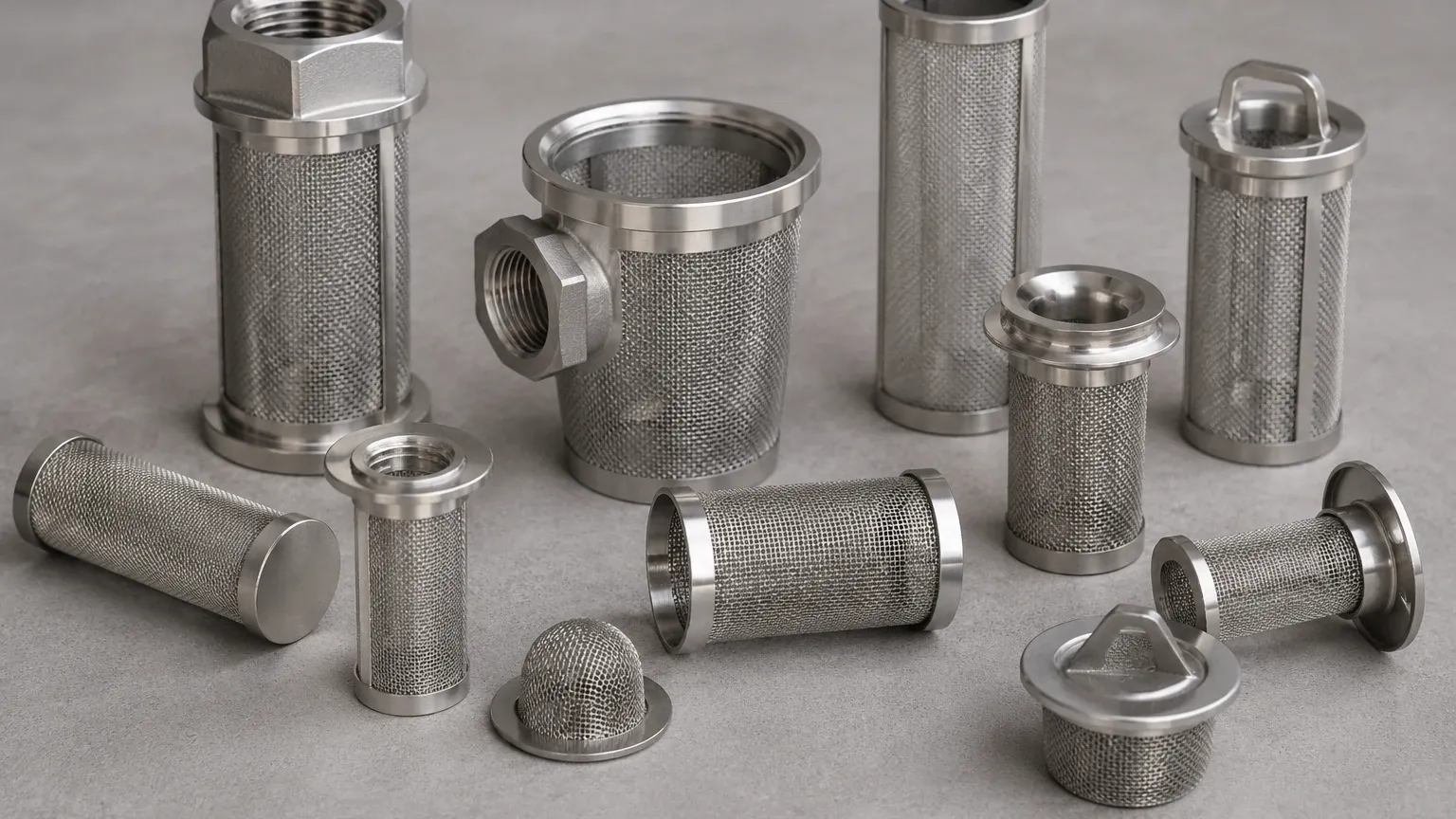
The performance of a strainer 3 4 inch is ultimately defined by its internal element. This is where the expertise in manufacturing Strainers & Baskets becomes vital. The internal media generally falls into two categories: perforated metal and wire mesh.
Perforated Metal Screens
Perforated screens are typically used for "coarse" straining. They are made from a solid sheet of metal with punched holes. These are ideal for removing large debris like scale, welding slag, or pebbles. In a 3/4 inch strainer, a perforated screen provides high structural strength but limited surface area for fine filtration.
Stainless Steel Wire Mesh
For finer filtration requirements—ranging from 20 mesh down to 400 mesh (approx. 37 microns)—wire mesh is the standard. In high-pressure 3/4 inch systems, the mesh is often supported by a heavier perforated metal backup to prevent the mesh from collapsing under the force of the fluid flow. The choice of weave (plain, twilled, or dutch weave) affects both the filtration accuracy and the ease with which the basket can be cleaned.
Micron vs. Mesh
Engineers must be precise when defining filtration levels. While "mesh" refers to the number of openings per linear inch, "micron" refers to the actual size of the particles that can pass through. For a 3/4 inch strainer protecting a precision nozzle, a 100-micron rating might be necessary, whereas a simple pump suction line might only require a 1/8-inch perforation.
Types of Strainers & Baskets for 3/4 Inch Connections
The physical configuration of the strainer impacts how it is installed and maintained. There are three primary designs used for 3/4 inch lines:
1. Y-Strainers: These are the most common for 3/4 inch sizes. The "Y" shape allows for a compact design that can be installed in either horizontal or vertical pipelines. They are typically used for applications with low levels of contamination, as the holding capacity of the Y-leg is relatively small. They are favored for their low initial cost and ease of installation in tight spaces.
2. Basket Strainers (Simplex): These feature a vertical cylinder that houses a larger basket. A 3/4 inch basket strainer offers a much higher dirt-holding capacity than a Y-strainer. This results in longer run times between cleanings. Because the basket is removed from the top, these are strictly for horizontal pipe runs.
3. T-Strainers: Often used in larger pipe sizes but available in 3/4 inch for specific high-velocity gas or steam applications, T-strainers provide a straight-through flow path and are often easier to service in certain piping layouts.
Maintenance and Operational Efficiency
A strainer 3 4 inch is not a "set and forget" component. Its efficiency is tied to a rigorous maintenance schedule. The most common failure point in filtration systems is not the strainer itself, but the failure to clean it.
Differential Pressure Monitoring
In sophisticated industrial setups, 3/4 inch strainers are equipped with pressure gauges on both the inlet and outlet sides. The difference between these two readings (differential pressure) indicates the loading of the filter basket. A common rule of thumb is to clean the basket when the differential pressure reaches 5-10 PSI over the clean drop. Waiting too long can lead to "media migration," where the pressure forces the basket to deform or bypass, allowing contaminants into the downstream system.
Cleaning Cycles and Replacement
Stainless steel baskets are designed to be reusable. Cleaning typically involves ultrasonic baths or high-pressure washing, depending on the nature of the contaminant. However, over time, the wire mesh may fatigue or the seals may degrade. For critical 3/4 inch lines, keeping spare Strainers & Baskets on-site is essential to minimize downtime during scheduled maintenance.
Customization and OEM Solutions for Specialized Applications
Standard off-the-shelf 3/4 inch strainers often fall short in specialized industrial environments. Customization is frequently required to meet specific engineering challenges.
For instance, in the pharmaceutical industry, a strainer 3 4 inch may require an electro-polished finish to meet stringent hygiene requirements. In the oil and gas sector, the strainer might need to be manufactured from exotic alloys like Monel or Hastelloy to withstand aggressive sour gas environments.
Customization also extends to the internal basket design. If a standard 3/4 inch Y-strainer fills up too quickly, a custom-engineered basket with pleated wire mesh can be used to increase the effective filtration surface area without changing the external housing dimensions. This type of engineering solution allows for improved performance within the existing physical footprint of the machinery.
Confirming Specifications Before Purchase
Before finalizing the procurement of a strainer 3 4 inch, technical teams should confirm the following data points with their manufacturer:
* Fluid Properties: Viscosity and density at operating temperatures significantly affect pressure drop calculations.
* Contaminant Profile: Is the debris hard and angular, or soft and fibrous? This determines the mesh type and the need for a reinforced basket.
* Seal Material: Ensure that O-rings or gaskets (Viton, PTFE, EPDM) are compatible with the process fluid.
* Certification Requirements: Does the application require ASME, PED, or FDA compliance?
By focusing on these technical details, engineers can ensure that the selected 3/4 inch strainer provides reliable protection, maintains system pressure, and contributes to the overall longevity of the industrial process. For those managing complex systems, selecting high-quality Strainers & Baskets is a fundamental step in achieving operational excellence.
