


Strainer 3d Model
In modern industrial engineering, the transition from conceptual design to physical installation relies heavily on the accuracy of digital assets. For engineers designing complex piping systems in the chemical, pharmaceutical, or food and beverage sectors, a strainer 3d model is more than just a visual representation; it is a critical data component that ensures spatial compatibility, maintenance accessibility, and hydraulic integrity. As systems become more compact and performance requirements more stringent, the integration of high-fidelity 3D models into Building Information Modeling (BIM) and Computer-Aided Design (CAD) workflows has become a standard requirement for procurement and project management.
When specifying Strainers & Baskets, technical professionals must look beyond basic geometry. The digital model must reflect the precise physical dimensions, connection points, and clearance requirements of the actual hardware. Failure to account for these variables during the design phase can lead to costly field modifications, interference with adjacent equipment, and compromised filtration efficiency.
The Strategic Importance of 3D Modeling in Filtration Engineering
The use of a strainer 3d model within a larger assembly allows engineers to perform interference checking (clash detection) long before any components arrive at the job site. In industrial environments where stainless steel piping is often pre-fabricated, even a few millimeters of deviation in a strainer’s face-to-face dimension can cause significant delays.
Beyond simple spatial fit, 3D models facilitate a better understanding of fluid dynamics and system ergonomics. For instance, in a hydraulic system or a chemical processing line, the orientation of the strainer—whether it is a Y-strainer, T-strainer, or a basket strainer—dictates the flow path and the location of debris accumulation. By utilizing an accurate 3D representation, designers can optimize the layout to minimize pressure drops and ensure that the drain ports are positioned for easy gravity-fed cleaning. This proactive approach reduces the total cost of ownership by preventing design errors that manifest as operational inefficiencies.
Key Technical Parameters in a Strainer 3D Model
A comprehensive strainer 3d model should encapsulate several layers of technical data. When evaluating a model for inclusion in a project, engineers should confirm that the following parameters are accurately represented:
1. Envelope Dimensions and Face-to-Face Lengths
The most fundamental aspect of the model is the envelope dimension. This includes the overall height, width, and the critical face-to-face length between flanges or threaded ends. For custom-manufactured stainless steel filtration solutions, these dimensions must match the manufacturer's shop drawings exactly to ensure the piping spools are fabricated correctly.
2. Connection Specifications
The model must specify the type of connection, whether it is ANSI/ASME flanged, NPT threaded, socket weld, or sanitary tri-clamp. The thickness of the flanges and the bolt circle diameter should be included to ensure that mating hardware (bolts, gaskets, and counter-flanges) fits without obstruction.
3. Maintenance Clearance (The "Swing Zone")
One of the most overlooked aspects of filtration design is the space required to service the unit. A high-quality strainer 3d model will often include a secondary "ghost" volume representing the clearance needed to remove the internal basket or screen. For basket strainers, this involves the vertical height required to lift the basket out of the housing. For Y-strainers, it involves the diagonal space needed to unscrew the cap and slide out the mesh element.
4. Porting for Instrumentation and Drains
Industrial strainers often require auxiliary ports for differential pressure gauges or blow-down valves. The 3D model should clearly show the location and size of these NPT or flanged taps. This allows engineers to route instrument tubing or drainage piping without clashing with structural supports or other process lines.
Customization: Moving Beyond Standard Strainers & Baskets
While generic 3D models are available for standard commodity valves, industrial applications often require specialized Strainers & Baskets tailored to specific process conditions. Kaifil specializes in custom stainless steel filtration solutions where the internal components—the mesh or perforated metal—are engineered for specific micron ratings and flow rates.
When a project requires a custom-built strainer, the strainer 3d model becomes a collaborative tool between the manufacturer and the lead engineer. Customizations might include:
* Reinforced Baskets: For high-pressure applications where the differential pressure might collapse a standard screen, the 3D model will reflect the added structural supports or heavier gauge perforated metal.
* Multi-Stage Filtration: Some housings contain multiple layers of wire mesh or nested baskets to achieve progressive filtration. The digital model helps confirm that the internal volume is sufficient to house these components without restricting flow.
* Specialty Materials: While the 3D model primarily conveys geometry, the associated metadata should specify the material grade, such as 304 or 316L stainless steel, which is vital for pharmaceutical and food-grade applications where corrosion resistance and surface finish (Ra) are paramount.
File Formats and Compatibility for Industrial CAD Software
For a strainer 3d model to be useful, it must be provided in a format that is compatible with the engineering team's software suite. Common formats include:
* STEP (.stp/.step): The industry standard for 3D CAD exchange. It is a neutral format that retains precise geometry and is readable by almost all professional software, including SolidWorks, AutoCAD, and Catia.
* IGES (.igs): An older neutral format primarily used for surface geometry. While still common, it is often less robust than STEP for complex assemblies.
* Revit (.rfa): Essential for BIM projects in the construction and water treatment sectors. These models often include "intelligent" data, such as flow coefficients (Cv) and pressure ratings.
* DWG/DXF: While traditionally 2D, 3D DWG files are still used in many piping design packages like Plant 3D.
Engineers must also consider the Level of Detail (LOD). A model that is too detailed (e.g., showing every individual wire in a fine mesh) can significantly slow down the performance of a large plant model. Conversely, a model that is too simplified may miss critical external features like lifting lugs or support legs. The ideal strainer 3d model provides an accurate external envelope and connection points while simplifying internal complexities that do not affect the external layout.
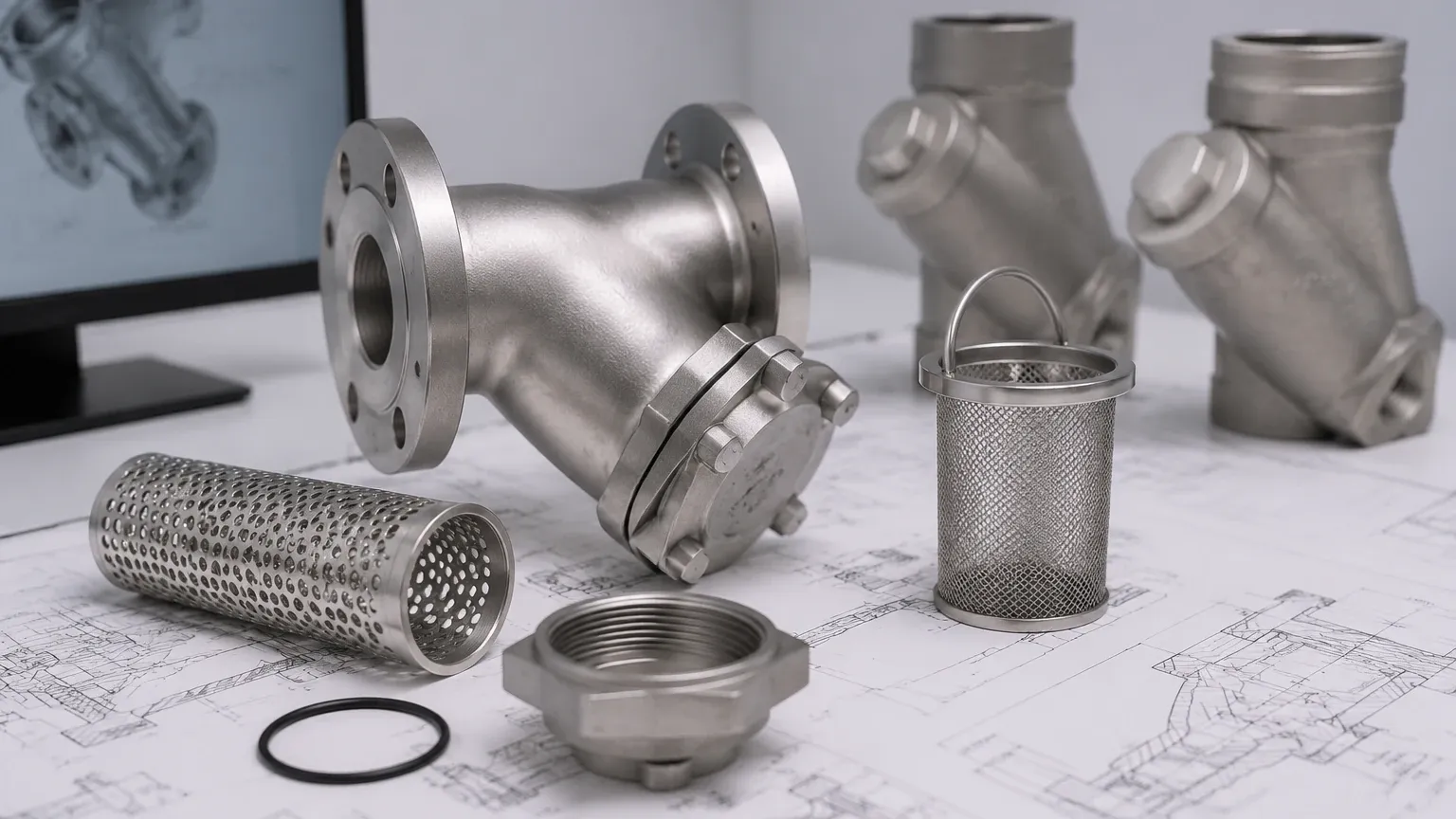
Maintenance Planning and Spatial Constraints
In the pharmaceutical and chemical industries, equipment is often installed in skids or tight mechanical rooms where space is at a premium. Using a strainer 3d model allows for the simulation of maintenance tasks. For example, can a technician reach the bolts on the strainer cover with a standard torque wrench? Is there enough room to place a bucket or drain line under the blow-down port?
By integrating the Strainers & Baskets into a virtual walkthrough, plant managers can identify potential safety hazards or ergonomic issues before the equipment is even built. This is particularly important for large-diameter strainers where the internal basket may be heavy and require an overhead hoist for removal. The 3D model helps determine if there is adequate structural clearance for such lifting equipment.
Mitigating Risks: Ensuring Digital and Physical Alignment
The primary risk in using a strainer 3d model is the discrepancy between the "as-designed" and "as-built" states. This often occurs when designers use a placeholder model from a different manufacturer or a generic library. Even if the pipe size is the same (e.g., a 4-inch flange), the body of the strainer can vary significantly in length and height between different brands.
To mitigate this risk, procurement teams should confirm the following with their filtration partner:
1. Version Control: Ensure the 3D model corresponds to the latest revision of the manufacturer's product line.
2. Weight Data: The model should include the dry weight and the operating weight (filled with fluid). This is critical for calculating pipe stress and designing supports.
3. Pressure and Temperature Ratings: This data should be embedded in the model's properties to ensure the component is not used outside of its engineered limits.
4. Seal and Gasket Compatibility: For high-temperature or corrosive environments, the model metadata should specify the O-ring or gasket material (e.g., Viton, EPDM, PTFE) to ensure it matches the rest of the system.
Selecting the Right Filtration Partner for Technical Support
Choosing a manufacturer that understands the technical needs of engineers is as important as the quality of the filter itself. A professional manufacturer like Kaifil provides more than just a physical product; they provide the technical documentation and engineering support required to integrate their components into a larger system.
When evaluating providers for Strainers & Baskets, engineers should look for companies that offer:
* Custom Design Capabilities: The ability to modify standard designs to fit unique spatial constraints or filtration requirements.
* Material Expertise: Guidance on selecting the right grade of stainless steel or wire mesh for specific chemical compatibilities.
* Accurate Technical Assets: Providing high-quality 3D models and 2D drawings that reflect the exact product being purchased.
* Proven Track Record: Experience in demanding industries such as hydraulic systems, water treatment, and food processing, where reliability is non-negotiable.
Conclusion: The Value of Precision in the Digital Twin
As industrial processes move toward the "Digital Twin" concept—where every physical asset has a corresponding digital counterpart—the accuracy of the strainer 3d model becomes paramount. It is no longer sufficient to treat a strainer as a simple pipe fitting. It is a functional piece of process equipment that requires careful integration into the plant's digital architecture.
By focusing on precise geometry, maintenance clearances, and detailed technical metadata, engineers can ensure that their filtration systems are efficient, easy to maintain, and perfectly suited to their application. Whether you are designing a new pharmaceutical cleanroom or upgrading a chemical processing plant, utilizing accurate 3D data for your Strainers & Baskets is a fundamental step in achieving engineering excellence and operational reliability.
