


Strainer 3 in 1
In the landscape of industrial fluid handling and pump protection, the concept of a "strainer 3 in 1" represents a significant shift toward system integration and space optimization. Traditionally, a pump suction line or a critical process branch required multiple discrete components: a strainer to remove debris, a check valve to prevent backflow, and an isolation or balancing valve to control flow. The 3-in-1 configuration integrates these functions into a single housing, streamlining installation and reducing the total footprint of the piping assembly.
For engineers and procurement teams, understanding the technical nuances of these multifunctional units is essential. While the valve body provides the structural framework, the performance of the system is fundamentally dictated by the internal filtration element. At Kaifil, our focus on precision-engineered Strainers & Baskets ensures that these integrated systems maintain high flow efficiency while providing the rigorous protection required for downstream equipment like pumps, heat exchangers, and sensitive instrumentation.
The Engineering Rationale Behind 3-in-1 Integration
The primary driver for adopting a strainer 3 in 1 design is the reduction of "piping complexity." In industrial environments—ranging from chemical processing plants to large-scale HVAC systems—space is often at a premium. By combining a strainer, a check valve, and a shut-off/balancing valve, engineers can eliminate several flanged connections, reducing the number of potential leak points and simplifying the mechanical support structure.
Beyond space savings, the 3-in-1 design often provides better hydraulic performance than three separate components. When components are spaced closely together in a traditional setup, the turbulence generated by one valve can negatively impact the performance of the next. An integrated unit is designed to manage fluid dynamics internally, often incorporating flow-straightening vanes that ensure a laminar flow profile enters the pump suction. This is critical for preventing cavitation and extending the service life of pump impellers.
Core Components of the Strainer 3 in 1
To evaluate a strainer 3 in 1 effectively, one must look at the three distinct functional zones within the unit and how they interact with the process media.
1. The Filtration Zone (The Basket)
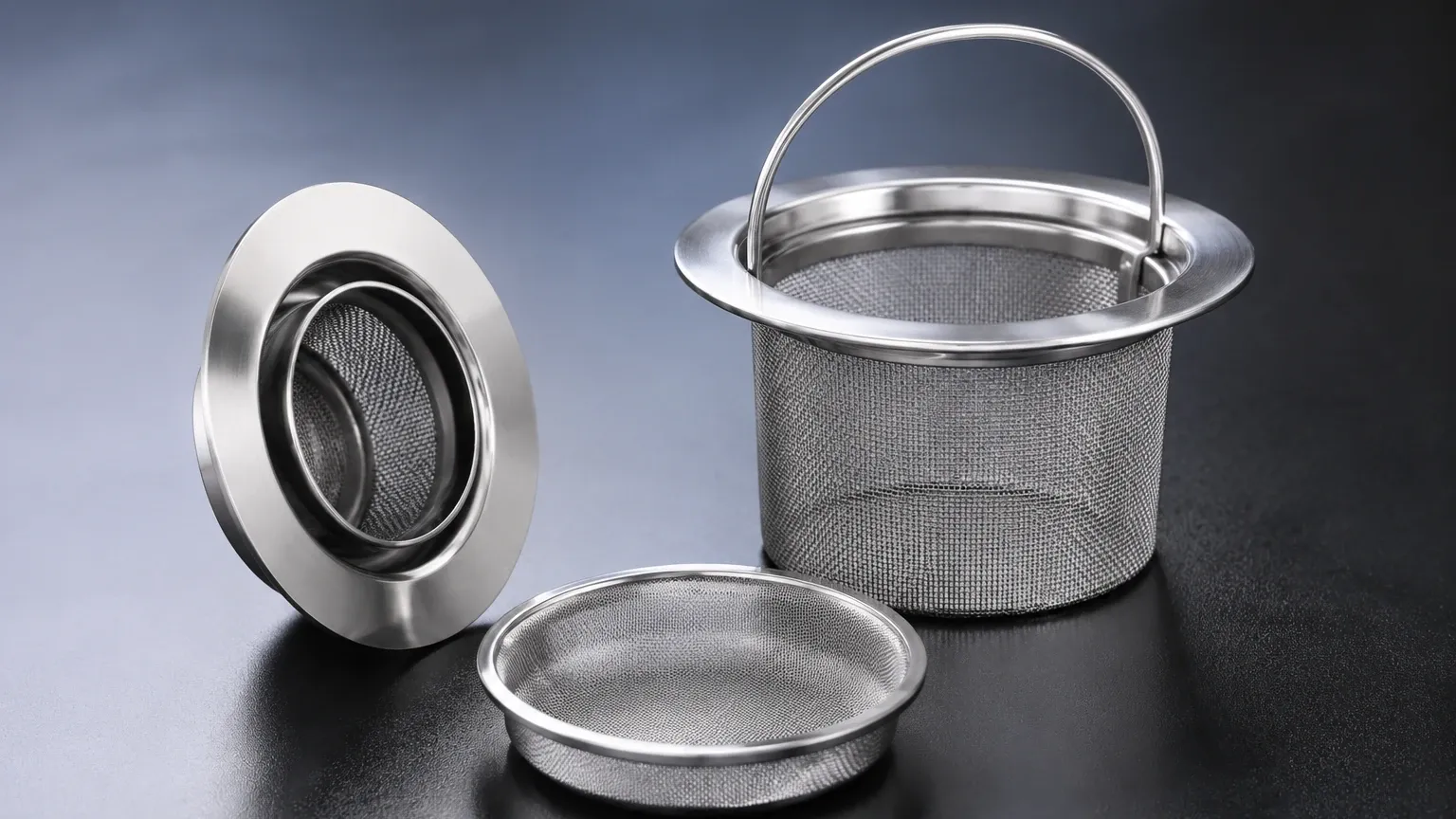
The heart of the unit is the strainer basket. This component is responsible for capturing particulate matter that could damage downstream hardware. Depending on the application, this may consist of a perforated stainless steel support cylinder lined with a fine wire mesh. The choice of mesh size is a balance between protection and pressure drop; a finer mesh provides better protection but requires more frequent cleaning and increases resistance to flow.
2. The Backflow Prevention Zone (The Check Valve)
The integrated check valve is typically spring-loaded to ensure positive closure. In a 3-in-1 suction diffuser or strainer, this prevents the fluid column from draining back through the pump when the system is shut down, maintaining prime and preventing water hammer. The reliability of this valve depends on the quality of the seat and the spring tension, which must be calibrated to the system's operating pressure.
3. The Flow Control Zone (The Balancing/Shut-off Valve)
The third function allows operators to throttle the flow or isolate the line for maintenance. In many designs, this is achieved through a calibrated orifice or a plug-style valve. This integration allows for precise system balancing without the need for an additional globe or butterfly valve further down the line.
Technical Considerations for Strainer Baskets
When specifying a strainer 3 in 1, the internal basket is the component that requires the most frequent technical assessment. Because these units are often used in high-demand industrial sectors, the material and construction of the basket must be robust.
Material Selection
Stainless steel is the industry standard due to its corrosion resistance and structural integrity.
- Type 304 Stainless Steel: Suitable for general industrial applications, water treatment, and non-corrosive chemical environments.
- Type 316 Stainless Steel: Essential for pharmaceutical, food and beverage, and marine applications where resistance to chlorides and organic acids is required.
Open Area Ratio (OAR)
The efficiency of a strainer is often measured by its Open Area Ratio—the ratio of the total area of the holes in the basket to the cross-sectional area of the inlet pipe. A high OAR (typically 4:1 or higher) is preferred because it allows for a lower initial pressure drop and provides more "dirt-holding capacity." This means the system can operate longer between cleaning cycles, reducing maintenance labor and downtime.
Performance Evaluation: Pressure Drop and Flow Dynamics
One of the most critical metrics for any engineer is the pressure drop ($ΔP$) across the strainer 3 in 1. An excessive pressure drop can lead to reduced system efficiency and may even starve a pump, leading to cavitation.
The total pressure drop in a 3-in-1 unit is the sum of the losses through the strainer mesh, the check valve mechanism, and the balancing valve. When selecting a unit, it is vital to review the $C_v$ (flow coefficient) values provided by the manufacturer. A higher $C_v$ indicates less resistance to flow.
Furthermore, the "clean pressure drop" is only one part of the equation. Engineers must also consider the "dirty pressure drop"—the point at which the accumulated debris significantly restricts flow. Installing differential pressure gauges across the unit is a standard best practice, allowing maintenance teams to monitor the state of the internal basket in real-time.
Application-Specific Requirements
The versatility of the strainer 3 in 1 makes it applicable across various sectors, but each industry has unique demands:
* Chemical Processing: Requires high chemical compatibility and often specialized gaskets (such as PTFE or Viton) to ensure the integrity of the 3-in-1 housing seals.
* Food and Beverage: Demands sanitary designs where the internal basket and the housing have smooth surface finishes (low Ra values) to prevent bacterial growth and facilitate Clean-in-Place (CIP) procedures.
* HVAC and Cooling Towers: Focuses on high-volume water filtration and the removal of scale and environmental debris. In these applications, the 3-in-1 unit is often used as a suction diffuser for chilled water pumps.
* Hydraulic Systems: Requires high-pressure ratings and fine filtration to protect precision valves and actuators from metallic wear particles.
Maintenance and Operational Longevity
While the integrated design of a strainer 3 in 1 reduces installation labor, it does centralize maintenance tasks. If the check valve fails or the strainer basket clogs, the entire unit must be addressed.
To ensure longevity, the following maintenance protocols should be established:
1. Regular Basket Inspection: Depending on the fluid cleanliness, the basket should be removed and cleaned. Using a spare basket can minimize downtime; the dirty basket is removed, a clean one is inserted, and the unit is put back into service immediately.
2. Spring and Seal Replacement: The moving parts of the check valve and the balancing valve are subject to wear. Periodic inspection of the spring tension and the integrity of the elastomer seals is necessary to prevent internal bypass or external leaks.
3. Debris Blow-down: Many 3-in-1 units include a blow-down port at the bottom of the strainer section. Regularly opening this port allows for the removal of heavy sediments without opening the housing.
Customization for OEM and Specialized Projects
In many industrial OEM scenarios, a standard off-the-shelf strainer 3 in 1 may not meet specific performance or dimensional requirements. This is where customized filtration components become vital. Whether it is a non-standard flange connection, a specific micron rating for the mesh, or a reinforced basket design for high-viscosity fluids, Kaifil works closely with engineering teams to develop tailored solutions.
Customization options often include:
- Reinforced Baskets: For applications with high differential pressures, baskets can be reinforced with internal or external skeletons to prevent collapsing.
- Magnetic Inserts: For systems where fine metallic particles (fines) are a concern, magnetic rods can be integrated into the strainer basket to capture ferrous debris that might pass through the mesh.
- Multi-Layer Sintered Mesh: For high-precision applications, sintered wire mesh provides superior strength and precise pore size control compared to standard woven mesh.
Conclusion: Making an Informed Selection
Selecting a strainer 3 in 1 involves more than just matching pipe sizes. It requires a deep dive into the fluid characteristics, flow rates, and the specific protection needs of the downstream equipment. By focusing on the quality of the internal Strainers & Baskets, engineers can ensure that their integrated filtration units provide reliable, long-term service.
Before finalizing a purchase, technical professionals should confirm the following:
- The required micron rating based on the smallest orifice in the downstream system.
- The maximum allowable pressure drop at peak flow conditions.
- Material compatibility with the process fluid, including any cleaning chemicals used in the system.
- The availability of replacement baskets and internal seals to support a proactive maintenance schedule.
By addressing these factors, industrial facilities can leverage the space-saving and efficiency benefits of the 3-in-1 design without compromising on the rigorous filtration standards necessary for modern process engineering.
