


3 Metal Strainers
In the landscape of industrial fluid handling, the selection of filtration components is a critical engineering decision that directly impacts the longevity of downstream equipment such as pumps, valves, and heat exchangers. Among the various options available, 3 metal strainers—referring to the three most prevalent configurations: Simplex, Duplex, and Y-type—form the backbone of coarse filtration and debris removal in pressurized systems. These components are not merely passive barriers; they are precision-engineered tools designed to manage flow dynamics while protecting multi-million dollar industrial assets.
For engineers and procurement teams, understanding the nuances of these Strainers & Baskets is essential. Whether the application involves chemical processing, pharmaceutical manufacturing, or high-pressure hydraulic systems, the choice of strainer configuration and material grade determines the total cost of ownership and the operational efficiency of the entire plant. This guide examines the technical specifications, material considerations, and engineering criteria for selecting and implementing metal strainers in demanding industrial environments.
The Critical Role of 3 Metal Strainers in Industrial Filtration
Industrial strainers are categorized as "coarse filters," typically designed to remove larger particles that could cause mechanical failure or clogging. Unlike fine membrane filters, metal strainers are built for durability and high flow rates. The term 3 metal strainers often highlights the three primary architectural designs used to house metal filter baskets. Each design serves a specific operational requirement based on the necessity of continuous flow and the physical layout of the piping system.
In a B2B context, the primary goal of a strainer is to prevent "catastrophic bypass," where debris enters a sensitive component. For example, in a food and beverage production line, a stainless steel basket strainer ensures that no metallic fragments or large particulates reach the final bottling stage. In chemical processing, these strainers must withstand aggressive solvents while maintaining structural integrity under fluctuating pressures. By focusing on the three core designs—Simplex, Duplex, and Y-type—engineers can address almost any filtration challenge presented by liquid or gas media.
Comparing the 3 Metal Strainers: Simplex, Duplex, and Y-Strainers
Selecting the correct configuration among the 3 metal strainers requires an analysis of the system's downtime tolerance and flow requirements. Each type offers distinct advantages and limitations.
1. Simplex Basket Strainers
Simplex strainers are the standard choice for batch processes where the system can be temporarily shut down for cleaning. These feature a single basket chamber. When the pressure drop across the strainer reaches a predetermined limit, the flow is stopped, the cover is removed, and the basket is cleaned or replaced. They are favored for their simplicity, ease of maintenance, and lower initial capital expenditure. In applications like water treatment or non-critical cooling loops, the Simplex configuration is often the most cost-effective solution.
2. Duplex (Twin) Basket Strainers
For operations that require 24/7 continuous flow, Duplex strainers are indispensable. These units consist of two separate strainer chambers connected by a diverter valve. When one basket becomes clogged, the operator can switch the flow to the clean chamber without interrupting the process. This allows for the maintenance of the first chamber while the system remains fully operational. Duplex 3 metal strainers are common in oil and gas, marine fuel systems, and chemical plants where a shutdown would result in significant financial loss or safety risks.
3. Y-Type Strainers
Y-strainers are characterized by their compact, "Y" shaped body. They are typically used for steam, gas, or liquid applications where the amount of debris is relatively low. Because of their shape, they can be installed in either horizontal or vertical piping runs. Y-strainers are often preferred for high-pressure environments due to their robust construction. However, their dirt-holding capacity is generally lower than that of basket-style strainers, making them more suitable for protecting sensitive instruments rather than primary bulk filtration.
Material Selection: Stainless Steel and Specialized Alloys
The performance of 3 metal strainers is heavily dependent on the metallurgy of both the housing and the internal basket. As a professional manufacturer, Kaifil emphasizes the use of high-grade materials to ensure chemical compatibility and mechanical strength.
* 304 Stainless Steel: This is the most common material for industrial strainers. It offers excellent corrosion resistance for water and mild chemical applications. It is widely used in the food and beverage industry due to its ease of cleaning and resistance to oxidation.
* 316/316L Stainless Steel: For more aggressive environments, 316 stainless steel includes molybdenum, which significantly enhances resistance to chlorides and pitting. This is the standard for pharmaceutical and marine applications. The "L" (low carbon) version is utilized when welding is required to prevent carbide precipitation.
* Specialized Alloys: In extreme cases involving high temperatures or highly corrosive acids, strainers may be fabricated from Monel, Hastelloy, or Titanium. These materials ensure that the filtration system does not become a point of failure in the process loop.
Beyond the housing, the internal mesh or perforated metal must be selected based on the specific particulate size. Kaifil provides custom wire mesh filters and precision metal filter components that can be integrated into these strainer bodies to meet exact micron ratings.
Technical Specifications and Engineering Parameters
When specifying 3 metal strainers, engineers must look beyond the physical dimensions and consider the hydraulic performance of the unit. Several key parameters dictate the success of the installation:
Pressure Drop (Delta P)
The pressure drop is the difference in pressure between the inlet and outlet of the strainer. A high initial pressure drop indicates that the strainer may be undersized for the flow rate, leading to increased energy costs for pumps. Engineers should aim for a clean pressure drop of less than 2 PSI in most liquid applications.
Open Area Ratio (OAR)
The Open Area Ratio is the relationship between the internal cross-sectional area of the pipe and the total open area of the strainer basket. A higher OAR (typically 4:1 or 6:1) means the strainer can collect more debris before the pressure drop becomes critical, thereby extending the time between cleaning cycles.
Micron and Mesh Ratings
The filtration accuracy is determined by the size of the openings in the metal basket. This can range from coarse perforated plates (1/8" or 1/16" holes) to fine stainless steel wire mesh capable of capturing particles down to 5 microns. Selecting the correct rating is a balance: a mesh that is too fine will clog rapidly, while a mesh that is too coarse will allow damaging particles to pass through.
Customization and OEM Manufacturing for Strainer Baskets
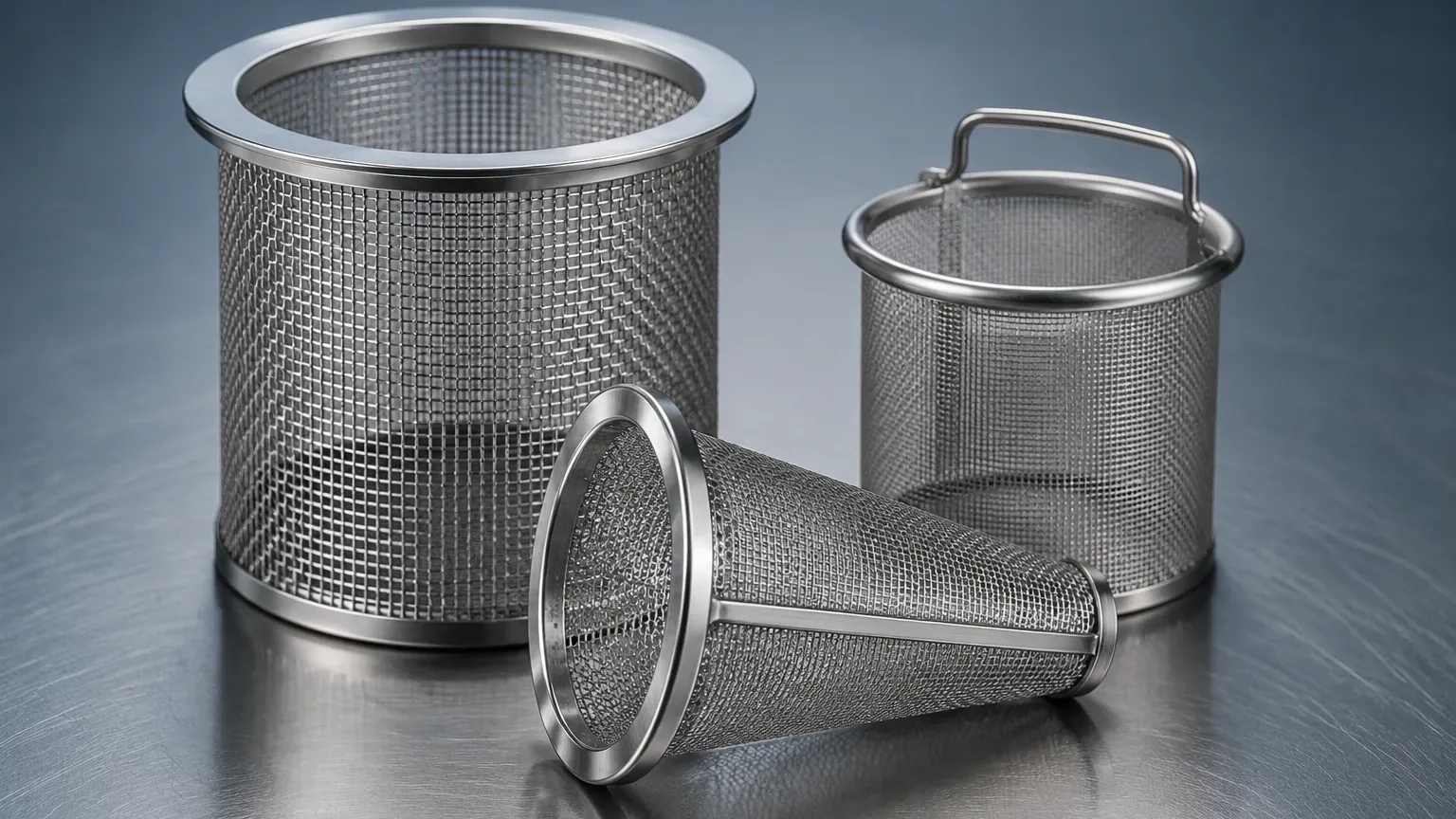
Standard off-the-shelf strainers often fail to meet the unique requirements of specialized industrial equipment. This is where custom manufacturing becomes vital. Kaifil specializes in providing OEM solutions for Strainers & Baskets, allowing engineers to specify unique dimensions, connection types (flanged, NPT, or socket weld), and reinforced basket designs.
Customization often involves adding structural support to the filter media. For high-pressure applications, a fine wire mesh may be pleated to increase surface area and then backed by a heavy-duty perforated metal cylinder to prevent collapsing. Furthermore, specialized coatings or surface finishes, such as electropolishing, can be applied to meet the stringent hygiene standards of the pharmaceutical and biotechnology sectors.
By working closely with a manufacturer during the design phase, purchasing teams can ensure that the 3 metal strainers they procure are optimized for their specific flow media, whether it is high-viscosity oil, abrasive slurries, or sterile water.
Operational Maintenance and Performance Evaluation
The total cost of ownership for 3 metal strainers is largely influenced by maintenance practices. Even the best-engineered strainer will fail if it is not serviced correctly. Modern industrial systems often incorporate differential pressure gauges to alert operators when a basket needs cleaning.
Cleaning Cycles
Establishing a regular cleaning schedule is essential. For Simplex strainers, this involves a full system bypass or shutdown. For Duplex units, the process is streamlined but still requires the operator to follow strict safety protocols when opening the pressurized chamber. Using ultrasonic cleaning for stainless steel mesh baskets can help remove deeply embedded particles that manual rinsing cannot reach.
Inspection for Wear and Corrosion
During every cleaning cycle, the basket and seals should be inspected. In high-velocity systems, "erosion-corrosion" can occur at the inlet point of the strainer. If the metal mesh shows signs of fraying or the perforated plate shows thinning, the component must be replaced immediately to avoid downstream contamination. Keeping a stock of replacement baskets is a standard B2B best practice to minimize unplanned downtime.
Conclusion: Selecting the Right Solution
Navigating the complexities of industrial filtration requires a deep understanding of how 3 metal strainers interact with the broader system. Whether you are implementing a Simplex strainer for a simple water line or a complex Duplex system for a chemical refinery, the focus must remain on material integrity, hydraulic efficiency, and ease of maintenance.
Kaifil remains committed to providing the technical expertise and manufacturing precision needed to support these critical applications. By focusing on high-quality stainless steel construction and customized engineering, we help our global partners achieve reliable, long-term filtration performance. When evaluating your next project, consider the specific demands of your flow media and the long-term benefits of a precision-engineered strainer solution. Proper selection today prevents costly mechanical failures tomorrow.
