


Strainer 40 Mesh Size
In industrial fluid handling, the selection of filtration media is a critical engineering decision that directly impacts equipment longevity and process efficiency. Among the various specifications available for Strainers & Baskets, the strainer 40 mesh size represents a versatile middle ground, often serving as the primary line of defense for pumps, valves, and heat exchangers. Understanding the technical nuances of this specific mesh count—including its micron rating, open area percentage, and structural limitations—is essential for engineers tasked with optimizing filtration systems.
Technical Definition of 40 Mesh in Industrial Strainers
The term "mesh" refers to the number of openings per linear inch of the wire cloth. A 40 mesh screen contains 40 openings in one inch, measured from the center of one wire to the center of the next. However, the mesh count alone does not fully define the filtration capability; the wire diameter used in the weaving process determines the actual aperture size (the clear space between wires).
For a standard industrial strainer 40 mesh size, a typical wire diameter is approximately 0.010 inches (0.25 mm). This results in an opening size of approximately 0.015 inches, which translates to 381 to 400 microns. In the hierarchy of filtration, this is considered a medium-coarse grade. It is significantly finer than standard perforated plate strainers (which often start at 1/16" or 1.5mm) but coarser than the fine 100 or 200 mesh screens used for polishing fluids.
The Relationship Between Wire Diameter and Open Area
Engineers must balance filtration fineness with flow capacity. The open area percentage is a calculation of the total area of the holes divided by the total area of the screen. For a standard 40 mesh stainless steel screen:
* Mesh Count: 40 x 40
* Wire Diameter: 0.010" (0.25 mm)
* Width of Opening: 0.015" (0.38 mm)
* Percentage of Open Area: Approximately 36% to 38%
If a thinner wire is used to increase the open area and reduce pressure drop, the structural integrity of the basket may be compromised. Conversely, a thicker wire increases durability but restricts flow. When specifying Strainers & Baskets, it is vital to confirm these dimensions with the manufacturer to ensure the component can withstand the intended differential pressure.
Material Selection for 40 Mesh Strainers
While various materials can be woven into a 40 mesh configuration, stainless steel remains the industry standard due to its mechanical strength and resistance to corrosion. Kaifil specializes in utilizing high-grade alloys to ensure that the strainer 40 mesh size performs reliably in demanding environments.
Type 304 Stainless Steel
This is the most common material for general industrial applications. It provides excellent strength and good corrosion resistance for water treatment, hydraulic oils, and basic chemical processing. It is a cost-effective choice for non-acidic environments.
Type 316 Stainless Steel
For applications involving chlorides, marine environments, or pharmaceutical processes, Type 316 is preferred. The addition of molybdenum enhances resistance to pitting and crevice corrosion. In food and beverage applications, 316 stainless steel is often mandated to ensure sanitary compliance and resistance to cleaning chemicals.
Specialized Alloys
In highly corrosive chemical processing or high-temperature steam applications, exotic materials like Monel, Hastelloy, or Inconel may be required. These materials maintain the 40 mesh geometry while providing the necessary chemical stability that standard stainless steels cannot offer.
Engineering Considerations for Flow and Pressure Drop
One of the most common mistakes in strainer selection is over-specifying the filtration fineness. Choosing a strainer 40 mesh size when a 20 mesh would suffice can lead to excessive pressure drop (Delta P) and frequent maintenance cycles.
Clean Pressure Drop
Every strainer assembly introduces a restriction to the flow. The initial "clean" pressure drop must be calculated based on the fluid's viscosity, specific gravity, and flow rate. Because a 40 mesh screen has an open area of roughly 36%, the housing must be sized appropriately to ensure the velocity through the mesh does not cause cavitation or mechanical deformation of the basket.
Dirt Holding Capacity
As debris accumulates on the 40 mesh surface, the effective open area decreases, and the pressure drop increases. A well-designed basket strainer should have a high "burst pressure" rating. For 40 mesh applications, the mesh is often supported by a heavier perforated metal backup cylinder. This reinforcement allows the fine mesh to capture particles as small as 400 microns while the perforated metal provides the structural rigidity to handle high differential pressures as the strainer becomes loaded with contaminants.
Common Applications for 40 Mesh Filtration
The 40 mesh specification is found across a broad spectrum of industries, acting as a versatile barrier against particulate matter that could damage downstream equipment.
1. Pump Suction Protection: 40 mesh is frequently used in suction strainers to protect pumps from large scale, welding slag, and pebbles. It is fine enough to protect the internal tolerances of centrifugal pumps without causing the excessive suction head loss that finer meshes might induce.
2. Nozzle Protection: In spraying systems (such as agricultural or industrial coating lines), a 40 mesh strainer prevents the clogging of nozzles. Since many industrial nozzles have orifices in the 0.5mm to 1.0mm range, the 400-micron protection offered by 40 mesh is ideal.
3. Heat Exchanger Protection: To prevent the fouling of plate heat exchangers, 40 mesh strainers are installed to capture debris that could settle in the narrow channels between plates, which would otherwise reduce heat transfer efficiency.
4. Pre-filtration for Fine Filters: In water treatment, a 40 mesh basket often serves as a pre-filter before 5-micron or 1-micron cartridge filters. By removing the "heavy lifting" particles, the 40 mesh strainer extends the life of more expensive, disposable downstream elements.
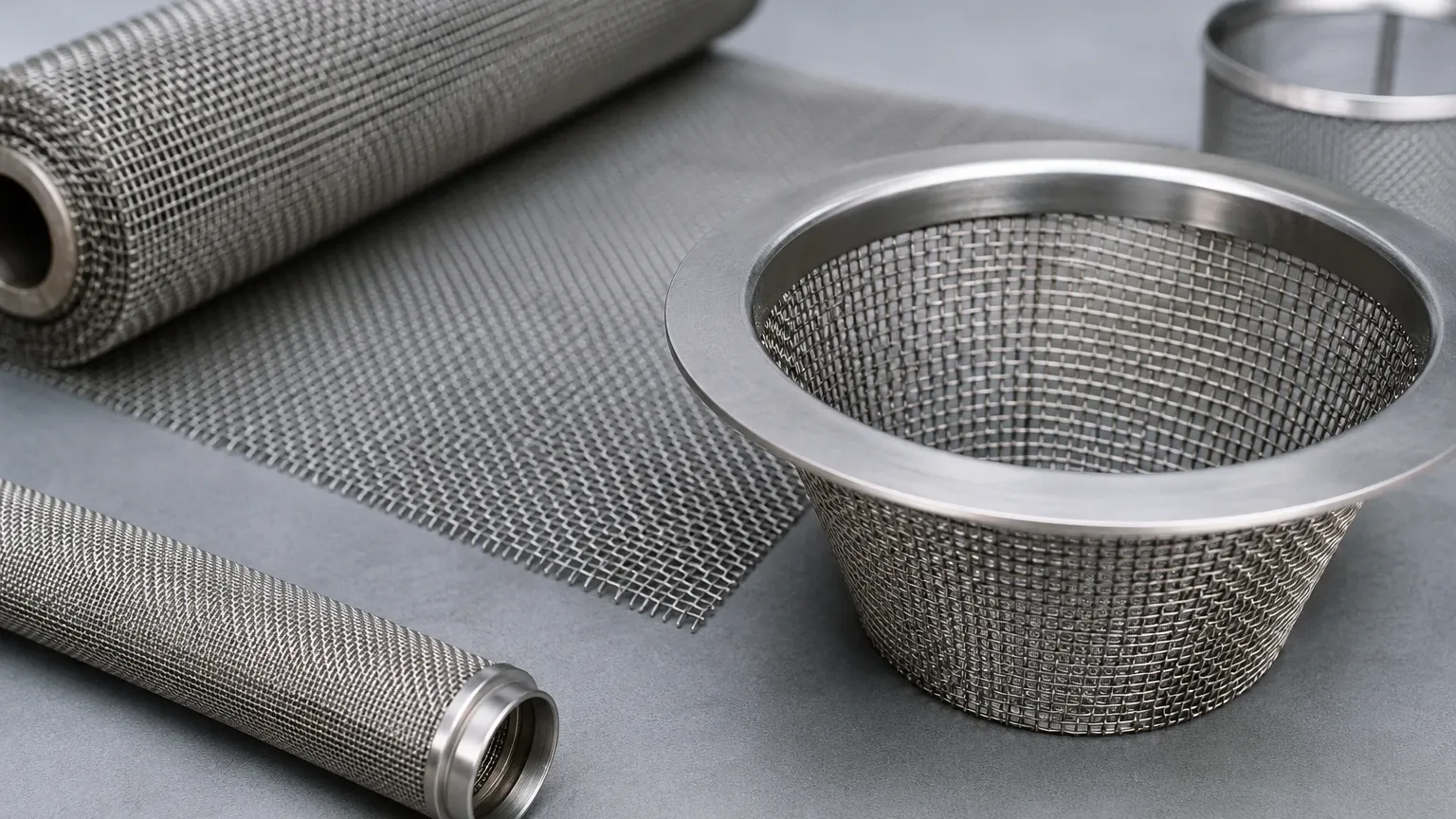
Customization and Construction of Strainer Baskets
Standard off-the-shelf strainers may not always meet the specific mechanical requirements of a high-pressure or high-flow system. Customization of Strainers & Baskets allows engineers to tailor the hardware to the application.
Basket Geometry
Depending on the strainer housing, baskets can be designed as flat-bottom, slant-top, or pleated. Pleating a 40 mesh screen significantly increases the surface area within the same footprint, which lowers the flux rate (flow per unit area) and extends the time between cleaning cycles.
Reinforcement Methods
For high-viscosity fluids or high-pressure systems, a simple 40 mesh weave may fail due to fatigue. Kaifil provides customized solutions where the 40 mesh is sintered to a coarser mesh or spot-welded to a perforated stainless steel cage. This "multi-layer" approach ensures that the 400-micron filtration accuracy is maintained even under surging flow conditions.
Handle and Seal Options
Ease of maintenance is a critical B2B consideration. Custom baskets can be equipped with various handle designs (slant, overhead, or grip) to facilitate quick removal. Furthermore, the sealing interface—whether it is a machined flange or a Viton O-ring—must be precisely engineered to prevent "bypass," where unfiltered fluid leaks around the edges of the basket.
Maintenance and Total Cost of Ownership (TCO)
From a procurement and operations perspective, the strainer 40 mesh size is valued for its cleanability. Unlike disposable depth filters, stainless steel mesh baskets are permanent assets that can be cleaned and reused thousands of times.
Cleaning Procedures
To maintain optimal performance, 40 mesh baskets should be cleaned when the differential pressure reaches a predetermined limit (typically 5-10 psi over the clean drop). Cleaning methods include:
* Backwashing: Reversing the flow to dislodge particles.
* Ultrasonic Cleaning: Using high-frequency sound waves in a solvent bath to remove stubborn or sticky contaminants from the wire intersections.
* Manual Pressure Washing: Directing a high-pressure water stream from the outside-in to push debris out of the mesh.
Evaluating Replacement Cycles
While stainless steel baskets are durable, they are not infinite. Engineers should inspect 40 mesh screens for "blinding" (permanent clogging of the pores), wire fraying, or broken welds. A compromised strainer basket can allow bypass, leading to catastrophic failure of downstream components like turbines or high-pressure valves. Investing in high-quality manufacturing ensures that the mesh is properly tensioned and welded, significantly extending the replacement interval and lowering the total cost of ownership.
Conclusion: Selecting the Right Partner for Filtration
Specifying a strainer 40 mesh size involves more than just selecting a micron rating; it requires an integrated understanding of fluid dynamics, material science, and mechanical design. Whether you are protecting a municipal water system or a complex chemical reactor, the quality of the Strainers & Baskets determines the reliability of the entire process.
Kaifil provides the technical expertise necessary to navigate these variables. By offering customized stainless steel filtration solutions, from material selection to reinforced basket designs, we help engineering teams achieve precise filtration performance. When selecting your next strainer component, consider the operational environment, the required flow rates, and the structural demands of your system to ensure that your 40 mesh solution provides the durability and efficiency your application requires.
