


Strainer 51s01
In industrial fluid handling systems, the integrity of downstream equipment—such as pumps, flow meters, and control valves—depends heavily on the efficiency of primary filtration. The strainer 51s01 represents a critical component in this protective layer, designed to remove coarse particulates from liquid and gas streams. As a specialized part within the broader category of Strainers & Baskets, the 51s01 model is engineered to balance high flow capacity with structural durability, ensuring that industrial processes remain uninterrupted by debris-related failures.
Selecting the correct strainer involves more than matching pipe sizes. For engineers and procurement teams, understanding the technical nuances of the strainer 51s01—from its material composition to its hydraulic performance—is essential for optimizing system uptime and reducing total cost of ownership. This guide examines the engineering considerations, application scenarios, and selection criteria for these essential industrial components.
Technical Specifications and Engineering Design
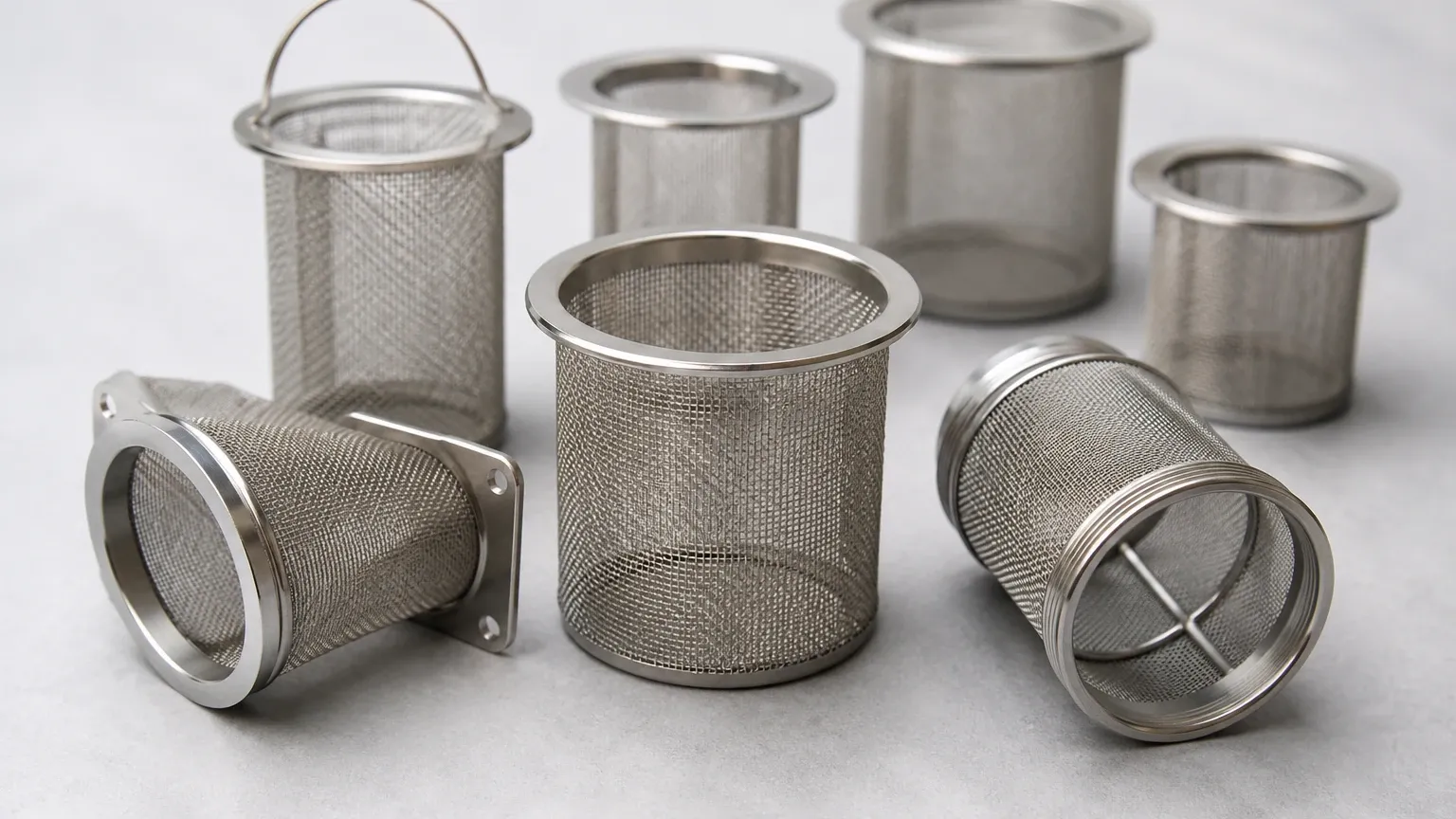
The strainer 51s01 is typically characterized by its robust construction and specific geometric configuration, often utilized in basket or Y-type housings. Its primary function is to intercept solids while allowing the carrier fluid to pass through with minimal resistance.
Material Composition
In demanding B2B environments, material selection is the first line of defense against premature failure. Most 51s01 components are fabricated from high-grade stainless steel, such as SS304 or SS316L.
* SS304: Suitable for general industrial applications, providing excellent strength and basic corrosion resistance for water and non-acidic chemical streams.
* SS316L: Preferred for pharmaceutical, food processing, and marine environments where chloride-induced pitting or chemical corrosion is a significant risk. The low carbon content in 316L also improves weldability and prevents intergranular corrosion in the heat-affected zones of the strainer basket.
Filtration Media and Mesh Density
The effectiveness of the strainer 51s01 is defined by its filtration media. Depending on the application, the unit may feature a single-layer perforated metal screen or a multi-layered wire mesh assembly. The mesh count—ranging from coarse 20 mesh to fine 400 mesh—determines the micron rating. For the 51s01 series, the focus is often on "coarse" to "medium" filtration, typically capturing particles from 50 microns up to several millimeters in size.
The Role of Strainers & Baskets in Process Protection
Industrial systems are frequently exposed to "tramp" solids, such as pipe scale, welding slag, and external contaminants. Without a reliable strainer 51s01 in place, these solids can cause catastrophic damage.
Protecting Rotating Equipment
Centrifugal pumps are particularly vulnerable to particulate matter. If solids enter the pump casing, they can erode the impeller, damage mechanical seals, and lead to vibration-induced bearing failure. By installing a basket strainer upstream, operators ensure that only clean fluid reaches the pump, significantly extending the Mean Time Between Failures (MTBF).
Maintaining Instrument Accuracy
Flow meters and sensors require stable, clean flow to provide accurate data. Particulates can clog the small orifices of differential pressure meters or interfere with the moving parts of turbine meters. The 51s01 provides the necessary protection to maintain the calibration and reliability of these sensitive instruments.
Hydraulic Performance: Flow Rate and Pressure Drop
One of the most critical engineering considerations when implementing a strainer 51s01 is the impact on system hydraulics. Every filter element introduces a degree of resistance to the flow, known as pressure drop ($ΔP$).
The Importance of Open Area Ratio
The efficiency of a strainer is often measured by its Open Area Ratio (OAR). This is the ratio of the total area of the holes in the mesh to the cross-sectional area of the inlet pipe. A high-performance strainer 51s01 typically maintains an OAR of at least 4:1 or 6:1. A higher OAR results in:
1. Lower Initial Pressure Drop: Reducing the energy required for pumping.
2. Longer Service Cycles: Providing more surface area for debris to accumulate before the pressure drop reaches a critical level.
3. Reduced Velocity: Lowering the speed of the fluid as it passes through the mesh, which reduces the risk of particle "breakthrough" or mesh erosion.
Viscosity Considerations
For B2B applications involving oils, resins, or food products, fluid viscosity plays a major role in strainer selection. High-viscosity fluids generate significantly higher pressure drops across the strainer 51s01. Engineers must size the strainer accordingly, often opting for a larger housing or a coarser mesh to compensate for the increased resistance of thicker liquids.
Application Scenarios for the 51s01 Series
The versatility of the strainer 51s01 makes it suitable for a wide array of industrial sectors. Each industry brings unique challenges regarding hygiene, pressure, and chemical exposure.
Chemical and Petrochemical Processing
In chemical plants, strainers must withstand aggressive solvents and high temperatures. The 51s01 is often used in loading and unloading stations to prevent contaminants from entering storage tanks or processing reactors. The use of corrosion-resistant alloys ensures that the strainer does not become a source of contamination itself.
Food and Beverage Production
For food-grade applications, the strainer 51s01 must meet stringent sanitary standards. This involves using 316L stainless steel and ensuring that the basket design is free of "dead zones" where bacteria could proliferate. These strainers are essential in juice processing, dairy production, and brewery operations to remove seeds, pulp, or grain husks.
Water Treatment and Desalination
In water treatment facilities, large-scale Strainers & Baskets are used as pre-filters for reverse osmosis (RO) membranes. The 51s01 serves as a dependable barrier against sand, shells, and organic matter, protecting the expensive membranes from physical abrasion and fouling.
Selection Criteria for Engineering and Procurement
When specifying a strainer 51s01 for a new project or as a replacement part, technical buyers should confirm several key parameters to ensure compatibility and performance.
1. Micron Rating vs. Particle Size: It is a common mistake to select a mesh that is too fine. A mesh that is finer than necessary will clog quickly, leading to excessive maintenance. The rule of thumb is to select a micron rating that is approximately 50% of the size of the smallest particle that needs to be removed.
2. Operating Pressure and Temperature: Ensure the strainer 51s01 housing and the internal element are rated for the maximum surge pressures and temperature fluctuations of the system. High-temperature applications may require specific gasket materials (such as Viton or PTFE) to maintain a seal.
3. Connection Type: Depending on the piping standards, the 51s01 may require flanged (ANSI, DIN, or JIS), NPT threaded, or socket-weld connections. Proper alignment and connection integrity are vital to prevent leaks in high-pressure lines.
4. Ease of Maintenance: In continuous processes, the time required to clean a strainer is a significant factor. Features like quick-opening covers or swing-bolt closures allow operators to service the strainer 51s01 without specialized tools, minimizing downtime.
Maintenance Protocols and Operational Longevity
To ensure the strainer 51s01 performs optimally throughout its service life, a structured maintenance schedule is required. Neglecting a clogged strainer can lead to mesh collapse or pump cavitation.
Differential Pressure Monitoring
The most effective way to manage strainer maintenance is through differential pressure ($ΔP$) monitoring. By installing pressure gauges upstream and downstream of the strainer, operators can see exactly when the basket is becoming full. Generally, a strainer should be cleaned when the $ΔP$ reaches 5-10 psi over the clean pressure drop.
Cleaning Procedures
For the strainer 51s01, cleaning usually involves removing the basket and using a high-pressure water jet or a soft brush to dislodge trapped particulates. In some chemical applications, ultrasonic cleaning or chemical soaking may be necessary to remove stubborn scales or resins. It is critical to inspect the mesh for signs of mechanical fatigue, such as broken wires or distorted perforations, during every cleaning cycle.
Replacement Cycles
While stainless steel strainers are highly durable, they are not permanent. Erosion from high-velocity particulates can eventually thin the metal, and repeated pressure cycling can lead to work hardening and cracking. Maintaining a stock of replacement 51s01 elements ensures that the system can be restored to full efficiency immediately if an element fails.
Customization and OEM Solutions
In many industrial contexts, off-the-shelf components may not meet specific spatial or performance constraints. Custom manufacturing of the strainer 51s01 allows for tailored solutions, such as:
* Reinforced Baskets: Adding internal or external support frames to handle extreme pressure differentials.
* Custom Dimensions: Adjusting the height or diameter of the basket to fit existing non-standard housings.
* Magnetic Inserts: Adding magnetic rods to the center of the strainer 51s01 to capture fine ferrous particles that might otherwise pass through the mesh.
By working with a professional manufacturer like Kaifil, engineers can develop customized filtration components that address the specific challenges of their unique operating environments. Whether it is a modification in mesh weave or the integration of specialized handles for easier extraction, custom-engineered strainers provide a level of reliability that generic parts cannot match.
Conclusion
The strainer 51s01 is a fundamental element in the world of industrial filtration. By providing a robust, high-capacity solution for particulate removal, it safeguards the most expensive and critical components of a fluid system. For engineers, the key to success lies in a deep understanding of material compatibility, hydraulic impact, and maintenance requirements. When properly selected and maintained, these Strainers & Baskets ensure that industrial processes run smoothly, efficiently, and safely, regardless of the complexity of the fluid being handled.
