


Strainer 50mm
In industrial fluid handling, the protection of downstream equipment is a critical engineering priority. A strainer 50mm (often referred to as a DN50 or 2-inch strainer) serves as a primary line of defense against particulate contamination in piping systems. Whether integrated into a chemical processing line, a food production facility, or a hydraulic system, the selection of the correct strainer configuration determines the efficiency, safety, and longevity of the entire process.
As a specialized manufacturer of stainless steel filtration solutions, Kaifil provides precision-engineered Strainers & Baskets designed to meet the rigorous demands of industrial environments. Understanding the technical specifications, material compatibilities, and performance variables of a 50mm strainer is essential for engineers and procurement teams looking to optimize their filtration infrastructure.
Technical Specifications of the 50mm Strainer
The 50mm designation refers to the nominal diameter (DN50) of the inlet and outlet ports, corresponding to a 2-inch pipe size. This size is one of the most versatile in industrial applications, balancing significant flow capacity with a manageable physical footprint.
Connection Types
When selecting a strainer 50mm, the connection method is the first point of integration. Common options include:
* Flanged Connections: Typically used in high-pressure or heavy-duty industrial settings (e.g., ANSI, DIN, or JIS standards). Flanges allow for easy removal of the entire unit for maintenance.
* Threaded Connections (NPT/BSPT): Common in smaller utility lines or hydraulic systems where a compact, leak-proof seal is required.
* Tri-Clamp/Sanitary Fittings: Essential for the pharmaceutical and food and beverage industries, ensuring there are no crevices where bacteria can accumulate.
Flow Rate and Pressure Drop
The 50mm aperture is designed to handle specific flow velocities. Engineers must calculate the clean pressure drop (ΔP) across the strainer. A well-designed 50mm strainer should provide a high open-area ratio—the ratio of the total area of the holes in the internal basket to the cross-sectional area of the inlet pipe. A higher ratio results in a lower pressure drop and longer intervals between cleaning cycles.
Diversity in Strainers & Baskets Design
While the 50mm size is standard, the internal configuration and housing geometry vary significantly based on the application. The term "strainer" usually refers to the housing, while the "basket" is the replaceable or cleanable element inside.
Y-Strainers vs. Basket Strainers
* Y-Strainers: These are characterized by their "Y" shape and are typically used for gases or liquids where the amount of debris to be removed is relatively small. In a 50mm configuration, Y-strainers are often preferred for their compact design and ability to be installed in both horizontal and vertical pipelines.
* Basket (Simplex) Strainers: These feature a vertical cylinder that houses a large-capacity basket. They are used where high flow rates and high dirt-holding capacities are required. The basket design allows for easier cleaning and is generally used in liquid applications where the strainer must be serviced frequently.
* Duplex Strainers: For processes that cannot be shut down for cleaning, a duplex 50mm strainer system uses two separate baskets with a diverter valve, allowing one side to be cleaned while the other remains in operation.
Material Selection and Engineering Durability
Material compatibility is the most significant factor in the service life of a strainer 50mm. Industrial fluids range from benign water to highly corrosive acids and high-temperature steam. Kaifil specializes in stainless steel constructions, which offer superior mechanical strength and chemical resistance.
Stainless Steel Grades
* SS304: The standard choice for general industrial use, providing excellent corrosion resistance for water treatment and mild chemical applications.
* SS316L: Containing molybdenum, 316L is the preferred material for marine environments, pharmaceutical manufacturing, and aggressive chemical processing. It offers higher resistance to pitting and crevice corrosion.
* Specialty Alloys: For extreme environments involving high temperatures or highly acidic media, custom alloys can be utilized to ensure the structural integrity of the housing and the internal mesh.
Internal Mesh and Perforation
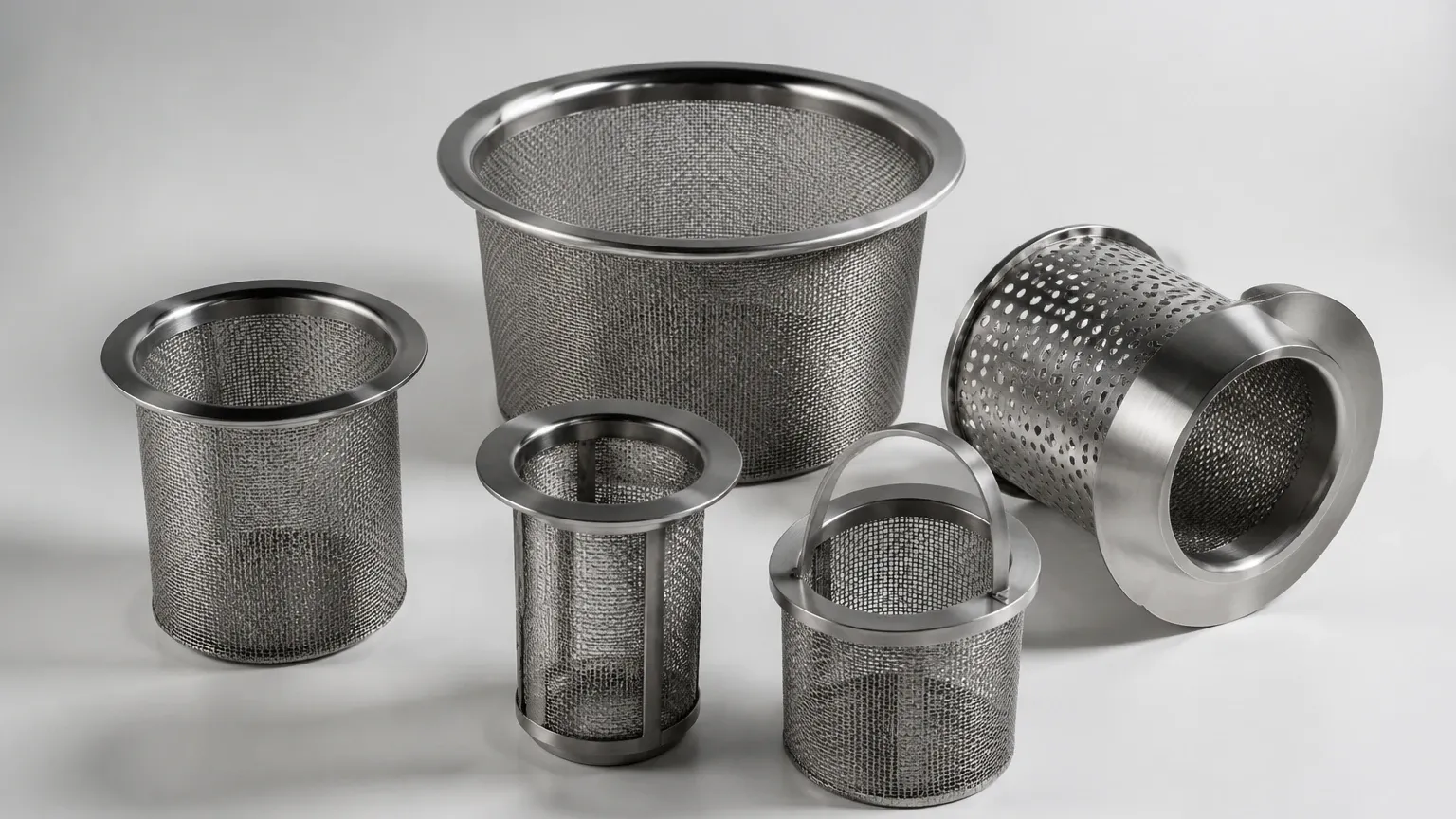
The basket inside a 50mm strainer is typically constructed from perforated metal, often lined with a fine wire mesh. The "micron rating" or "mesh count" defines the size of the particles the strainer will capture. For coarse filtration, a 1/8" or 1/16" perforation may suffice. For finer requirements, multi-layer sintered mesh can be integrated into the basket to provide filtration down to 20 microns or less without sacrificing structural rigidity.
Performance Evaluation and Selection Criteria
When specifying a strainer 50mm for a new or existing system, engineers should evaluate several performance metrics to ensure the component meets the application's demands.
Viscosity and Specific Gravity
The flow characteristics of the fluid significantly impact the performance of the strainer. High-viscosity fluids (like oils or syrups) require larger mesh openings or increased surface area to prevent an excessive pressure drop. If the fluid is significantly denser than water, the structural reinforcement of the basket must be increased to withstand the higher forces exerted during flow.
Maximum Operating Pressure and Temperature
Every 50mm strainer is rated for a maximum pressure (e.g., PN16, PN40, or Class 150/300). It is vital to ensure that the strainer housing and the seals (O-rings or gaskets) are compatible with both the operating pressure and the temperature of the process fluid. Common seal materials include EPDM, Viton (FKM), and PTFE, each offering different levels of thermal and chemical stability.
Dirt Holding Capacity
The volume of the basket directly relates to how much debris can be captured before the pressure drop reaches a critical level. A larger basket volume reduces maintenance frequency and protects the pump or valve downstream from sudden surges in particulate matter.
Maintenance and Operational Best Practices
Even the highest quality strainer 50mm requires a maintenance regimen to ensure continued performance. Failure to maintain the internal basket can lead to basket collapse, bypass of contaminants, or damage to upstream pumps due to cavitation.
1. Differential Pressure Monitoring: Installing pressure gauges upstream and downstream of the strainer is the most effective way to monitor its condition. A significant increase in the pressure differential indicates that the basket is clogged and requires cleaning.
2. Cleaning Procedures: For Y-strainers, a blow-off valve can be installed on the strainer cap to flush out debris without stopping the flow. For basket strainers, the system must be depressurized, the cover removed, and the basket manually cleaned.
3. Gasket Inspection: Every time a strainer is opened for cleaning, the seals and gaskets should be inspected for wear, hardening, or chemical degradation. Replacing these components proactively prevents leaks and environmental hazards.
4. Spare Basket Strategy: To minimize downtime, many facilities keep a spare 50mm basket on hand. This allows the operator to swap the dirty basket for a clean one immediately, deferring the cleaning of the soiled basket to a more convenient time.
Customization and OEM Solutions from Kaifil
Standard off-the-shelf strainers may not always meet the specific nuances of a complex industrial process. This is where Kaifil’s manufacturing expertise provides a distinct advantage. We offer comprehensive customization for Strainers & Baskets, ensuring that every 50mm unit is optimized for its specific environment.
Engineering Collaboration
Kaifil works closely with global engineering teams to develop filtration components that address unique challenges. This includes:
* Custom Dimensions: Adjusting the face-to-face length or housing diameter to fit into restricted spaces.
* Advanced Filtration Media: Integrating specialized wire mesh or wedge wire into the basket design for specific particle retention requirements.
* Reinforced Structures: Designing baskets with internal supports or heavier gauge materials to handle high-pressure surges or heavy debris loads.
* Surface Finishes: Providing mechanical polishing or electropolishing for sanitary applications in the food, beverage, and pharmaceutical sectors.
Quality Assurance
As a professional manufacturer, Kaifil adheres to strict quality control protocols. From material traceability (ensuring the chemical composition of the stainless steel) to hydrostatic pressure testing, we ensure that every strainer 50mm leaving our facility is ready for the rigors of industrial service. Our commitment to durability and precision filtration performance helps our customers reduce total cost of ownership and achieve higher process reliability.
In conclusion, the strainer 50mm is a fundamental component in modern industrial piping. By focusing on material integrity, precise basket design, and the specific requirements of the application, engineers can ensure that their systems remain protected and efficient. Whether you require a standard Y-strainer or a highly customized basket configuration, Kaifil provides the technical expertise and manufacturing capability to deliver high-performance filtration solutions tailored to your needs.
