


50 Mesh Strainers
In industrial fluid handling, the efficiency of a filtration system is often determined by the precision of its primary separation components. Among the various specifications used in liquid and gas processing, 50 mesh strainers represent a critical middle ground in filtration granularity. These components are essential for protecting downstream equipment such as pumps, valves, and spray nozzles from particulate matter that could cause mechanical wear or process contamination.
As a specialized manufacturer, Kaifil provides engineered Strainers & Baskets designed to meet the rigorous demands of chemical, pharmaceutical, and food processing environments. Understanding the technical nuances of 50 mesh strainers is vital for engineers and procurement teams tasked with optimizing system uptime and maintaining product purity.
Understanding the Technical Specifications of 50 Mesh
The term "mesh" refers to the number of openings per linear inch of a wire cloth. Therefore, 50 mesh strainers contain 50 openings in one inch of the screen. To understand the actual filtration capability, one must look beyond the mesh count to the aperture size and wire diameter.
Aperture and Micron Rating
For a standard 50 mesh stainless steel screen, the wire diameter is typically around 0.0083 inches (0.211 mm). This results in an opening size (aperture) of approximately 0.0117 inches, which equates to 297 microns. This level of filtration is ideal for capturing medium-sized particulates that are visible to the naked eye but small enough to clog precision industrial components.
Open Area Percentage
The "open area" is a critical metric for engineers calculating flow rates and pressure drops. A standard 50 mesh screen generally offers an open area of approximately 34% to 38%. While this provides significant surface area for fluid passage, it also means that the structural integrity of the mesh must be supported by high-quality materials and, in many cases, a perforated metal backing to prevent deformation under high-pressure conditions.
Material Selection for Industrial 50 Mesh Strainers
The environment in which a strainer operates dictates the material requirements. Because 50 mesh strainers are frequently used in corrosive or high-temperature applications, stainless steel is the industry standard.
* Grade 304 Stainless Steel: This is the most common material for general industrial use. It offers excellent durability and resistance to oxidation. It is widely used in water treatment and standard hydraulic systems.
* Grade 316/316L Stainless Steel: For applications involving chlorides, acids, or high-salinity environments, Grade 316 is preferred due to the addition of molybdenum, which enhances corrosion resistance. In the pharmaceutical and food industries, 316L (low carbon) is often specified to prevent carbide precipitation during welding, ensuring the longevity of the Strainers & Baskets.
* Specialty Alloys: In extreme chemical processing, materials like Monel, Hastelloy, or Inconel may be utilized for the mesh to withstand aggressive reagents that would degrade standard stainless steel.
Structural Design and Configuration Options
50 mesh strainers are not one-size-fits-all components. Their physical configuration must align with the housing type and the flow dynamics of the system.
Simplex and Duplex Basket Strainers
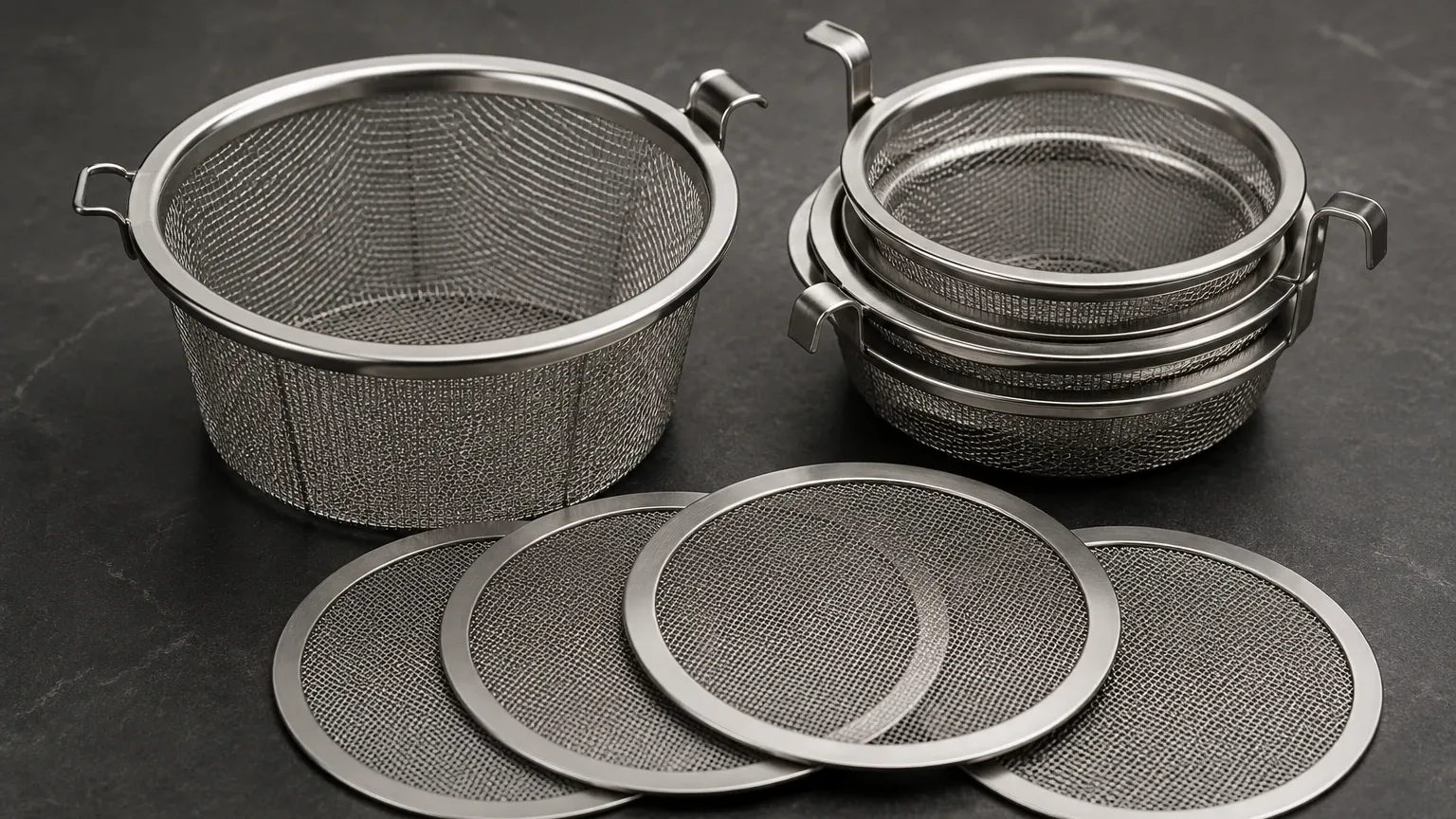
Basket-style strainers are designed for systems where the flow can be periodically interrupted for cleaning (Simplex) or where continuous operation is required (Duplex). The 50 mesh element within these baskets is often pleated to increase the effective filtration surface area, thereby extending the time between cleaning cycles and reducing the frequency of maintenance-related downtime.
Y-Strainers and T-Strainers
Y-strainers are typically used for steam, gas, or liquid lines where the amount of particulate is relatively low. The 50 mesh element in a Y-strainer is usually a cylindrical screen. Because the holding capacity of a Y-strainer is smaller than a basket strainer, 50 mesh is often chosen as a "safety" filter to catch occasional debris rather than as a primary bulk separator.
Custom Fabricated Elements
For OEM applications, 50 mesh strainers can be fabricated into various shapes, including conical (witch's hat) strainers, flat discs, or multi-layered cylinders. Kaifil specializes in custom-welded filtration components where the 50 mesh is bonded to a heavier perforated metal core using TIG or plasma welding to ensure a seamless, high-strength bond that resists hydraulic shock.
Performance Factors: Flow Rate and Pressure Drop
One of the most common mistakes in filter selection is overlooking the "Clean Clean Pressure Drop" (Delta P). As fluid passes through the 50 mesh strainers, the resistance of the wire cloth causes a reduction in pressure.
Calculating the Open Area Ratio
Engineers must ensure that the total open area of the 50 mesh screen is significantly larger than the cross-sectional area of the inlet pipe. A common rule of thumb for industrial Strainers & Baskets is a 6:1 or 8:1 ratio. This ensures that even as the mesh begins to capture debris, the pressure drop remains within acceptable limits for the system's pumps.
Viscosity Considerations
The performance of a 50 mesh strainer is highly dependent on the viscosity of the fluid. While water flows through 297-micron openings with minimal resistance, high-viscosity fluids like heavy oils or resins will experience a much higher pressure drop. In these cases, the structural reinforcement of the mesh becomes even more critical to prevent the screen from collapsing or "blinding" (where particles become wedged in the openings).
Key Industrial Applications for 50 Mesh Filtration
50 mesh strainers serve as versatile tools across several sectors due to their ability to balance fine filtration with high flow capacity.
1. Chemical Processing: Protecting expensive flow meters and control valves from scale, pipe dross, and undissolved reagents.
2. Food and Beverage: Straining fruit pulps, syrups, and oils to ensure a consistent texture and remove any foreign particulates before bottling.
3. Water Treatment: Acting as a pre-filter for reverse osmosis (RO) systems or ultrafiltration membranes, removing larger solids that would otherwise cause premature fouling of the more expensive fine membranes.
4. Hydraulic Systems: Filtering return lines to ensure that metal shavings or seal wear debris do not recirculate through the reservoir and damage the hydraulic pump.
5. Pulp and Paper: Managing white water and coating fluids where consistent particle size is necessary for paper quality.
Maintenance, Cleaning, and Replacement Cycles
The total cost of ownership for 50 mesh strainers is heavily influenced by how they are maintained. Unlike disposable paper or polymer filters, stainless steel 50 mesh elements are designed for reuse.
Cleaning Procedures
Depending on the contaminant, 50 mesh screens can be cleaned via backwashing, ultrasonic cleaning, or manual scrubbing with a soft brush. It is essential to avoid using wire brushes or abrasive tools that could distort the 297-micron openings, as even a slight deformation can allow oversized particles to pass through.
Identifying Mesh Fatigue
Over time, the constant pressure cycles can lead to metal fatigue, particularly at the weld points. During routine inspections, technical teams should look for "thinning" of the mesh or any signs of wire displacement. If the integrity of the 50 mesh is compromised, the entire basket or screen should be replaced to prevent downstream damage.
Replacement Indicators
Automated systems often use differential pressure sensors to alert operators when the Delta P reaches a pre-set limit (usually between 5 to 10 psi). Replacing or cleaning the Strainers & Baskets at this point prevents the risk of the mesh rupturing under excessive load.
Engineering Checklist for Selecting 50 Mesh Strainers
Before finalizing a purchase or specifying a design for a new project, engineers should confirm the following parameters:
* Fluid Compatibility: Does the liquid or gas react with 304 or 316 stainless steel?
* Operating Temperature: Will the thermal expansion of the housing and the mesh differ enough to cause sealing issues?
* Particle Load: Is the volume of debris high enough to require a duplex system or a larger basket size to reduce cleaning frequency?
* Pressure Rating: Does the strainer assembly meet the ASME or relevant industrial pressure vessel codes for the specific application?
* Customization Needs: Does the application require a specific flange type, handle design for easy removal, or a magnetic insert to capture fine ferrous particles that might pass through the 50 mesh openings?
Conclusion: Why Choose 50 Mesh for Your System?
50 mesh strainers offer a robust solution for a wide range of industrial filtration challenges. By providing a 297-micron barrier, they effectively protect sensitive equipment without excessively restricting flow. However, the success of the filtration process depends on the quality of the manufacturing and the precision of the mesh weave.
At Kaifil, we combine advanced manufacturing capabilities with deep engineering expertise to produce Strainers & Baskets that stand up to the most demanding environments. Whether you require a standard 50 mesh replacement or a custom-designed filtration component for a new OEM project, focusing on material quality and structural integrity ensures long-term performance and reduced operational costs. By selecting the right 50 mesh configuration, industrial facilities can achieve the precise balance of protection and efficiency required for modern process control.
