


50mm Strainers
In industrial fluid handling, the integrity of downstream equipment—such as pumps, flow meters, and control valves—depends heavily on the effective removal of particulate matter. The 50mm strainers, often referred to as 2-inch strainers in imperial systems or DN50 in metric standards, serve as a critical line of defense in medium-bore piping systems. These components are engineered to provide high-capacity filtration while maintaining manageable pressure drops, making them a staple in chemical processing, water treatment, and food production lines.
Selecting the correct 50mm strainers requires a deep understanding of fluid dynamics, material compatibility, and the specific mechanical stresses of the application. This guide examines the technical specifications, engineering considerations, and maintenance protocols necessary for optimizing industrial filtration performance.
Understanding the Role of 50mm Strainers in Industrial Piping
A 50mm strainer is designed to intercept solid contaminants within a fluid stream. Unlike fine filters that may require frequent cartridge replacements, strainers are typically used for coarser filtration or as a primary stage to protect more sensitive secondary filters. In a 50mm (DN50) line, the flow velocity and volume are significant enough that any blockage or inefficient design can lead to substantial system-wide pressure fluctuations.
The primary function of these units is to provide a housing for a removable basket or screen. As fluid enters the strainer body, it is directed through the mesh. The solids are trapped within the basket, while the cleaned fluid continues through the outlet. Because the 50mm size is common in both utility lines (water, steam) and process lines (chemicals, oils), the design must balance compact physical dimensions with a large internal surface area to maximize the time between cleaning cycles.
Material Selection and Engineering Specifications
Material integrity is the most significant factor in the longevity of 50mm strainers. Industrial environments often involve corrosive fluids, high temperatures, or strict hygienic requirements. Kaifil specializes in stainless steel solutions, which are preferred for their superior mechanical properties and chemical resistance.
Stainless Steel Grades (304 vs. 316)
For most general industrial applications, Grade 304 stainless steel offers excellent durability and cost-effectiveness. However, in environments involving chlorides, acids, or pharmaceutical-grade processing, Grade 316 or 316L is the industry standard. The addition of molybdenum in 316 stainless steel enhances its resistance to pitting and crevice corrosion, which is vital for 50mm strainers used in marine or chemical processing environments.
Housing and Seal Compatibility
Beyond the metal body, the choice of seals and gaskets is critical. A 50mm strainer must maintain a leak-proof seal under varying pressures. Common seal materials include:
* EPDM: Suitable for water and steam applications.
* Viton (FKM): Preferred for high temperatures and chemical resistance.
* PTFE: Used for highly aggressive chemical environments where universal compatibility is required.
Engineering teams must verify that both the housing material and the internal gaskets are compatible with the Process Fluid (PF) and the Operating Temperature (OT) to prevent premature failure or fluid contamination.
Technical Parameters: Flow Rate and Pressure Drop
One of the most common mistakes in sizing 50mm strainers is focusing solely on the pipe diameter rather than the flow characteristics. The "Pressure Drop" ($ΔP$) is the difference in pressure between the inlet and the outlet of the strainer. An excessive pressure drop indicates that the strainer is either too small for the flow rate or that the mesh is too fine for the particulate load.
The Importance of the Open Area Ratio (OAR)
The Open Area Ratio is the relationship between the total area of the holes in the strainer basket and the internal cross-sectional area of the inlet pipe. For a 50mm strainer to operate efficiently, an OAR of at least 6:1 is often recommended for viscous fluids, while 4:1 may suffice for water. A higher OAR ensures that even as the basket begins to fill with debris, the pressure drop remains within acceptable limits, protecting the pump from cavitation.
Calculating Flow Capacity
In a standard DN50 line, water typically flows at velocities between 1.5 to 3 meters per second. Engineers must consult flow coefficient (Cv) charts to determine how much resistance the strainer body and the specific mesh size will add to the system. If the calculated pressure drop across a clean 50mm strainer exceeds 2 psi (0.14 bar), it may be necessary to consider a larger housing or a different basket configuration to ensure system efficiency.
Comparing Basket Designs for 50mm Filtration Systems
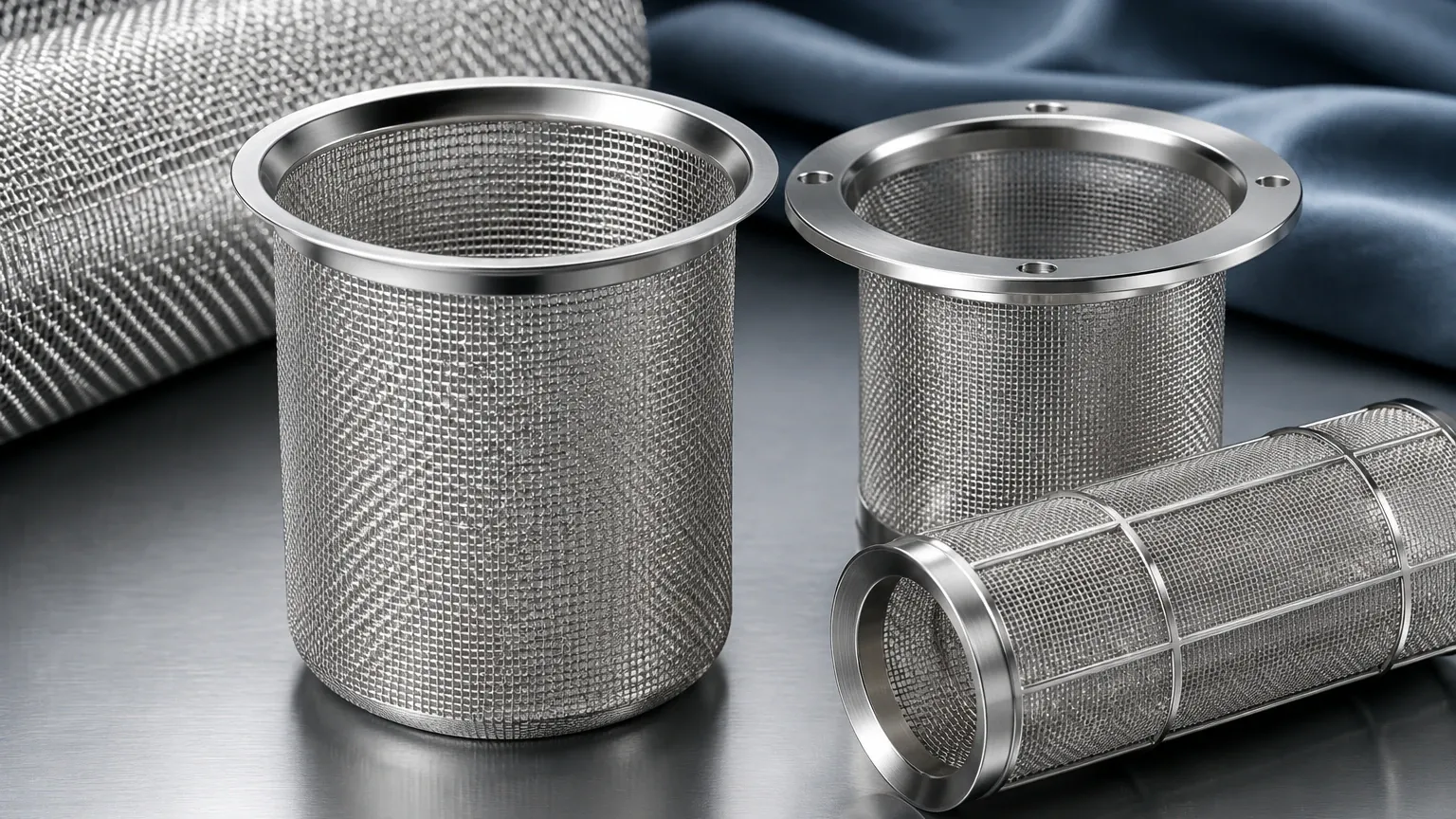
The internal component of the strainer—the basket—is where the actual filtration occurs. When evaluating Strainers & Baskets, engineers must choose between various construction methods based on the required filtration fineness and the structural integrity needed to withstand differential pressure.
Perforated Plate Baskets
These are constructed from heavy-gauge stainless steel sheets with punched holes. They are ideal for removing large debris and provide excellent structural strength. Common perforation sizes range from 1/32" to 1/4". They are often used as a "roughing" stage.
Wire Mesh Lined Baskets
For finer filtration (down to 5 microns), a perforated basket is lined with a fine stainless steel wire mesh. The perforated plate provides the mechanical support, while the wire mesh determines the filtration accuracy. This dual-layer construction is essential for 50mm strainers in high-pressure applications where a fine mesh alone might collapse under the weight of the debris or the force of the fluid.
Magnetic Inserts
In hydraulic systems or metalworking fluid lines, 50mm strainers can be equipped with magnetic inserts. These magnets capture fine ferrous particles that might otherwise pass through a standard mesh, providing an extra layer of protection for precision components.
Customization Options for Specialized Industrial Applications
Standard off-the-shelf strainers do not always meet the nuances of complex industrial processes. Customization is often required to integrate the filtration unit into existing infrastructure or to meet specific regulatory standards. Kaifil provides extensive OEM and customized filtration solutions to address these needs.
Connection Types
While flanged connections (ANSI, DIN, or JIS) are standard for 50mm strainers in heavy industry, other applications may require:
* Threaded Connections (NPT/BSP): Common in smaller utility lines.
* Tri-Clamp/Sanitary Fittings: Essential for the food, beverage, and pharmaceutical industries to ensure easy disassembly and cleaning without bacterial traps.
* Socket Weld: Used in high-pressure or high-temperature steam lines where a permanent, leak-proof joint is required.
Differential Pressure Gauges
To take the guesswork out of maintenance, 50mm strainers can be customized with ports for differential pressure gauges. These gauges monitor the pressure at the inlet and outlet; when the difference reaches a pre-set limit, it signals to the operators that the basket requires cleaning. This prevents unnecessary downtime and protects the system from the risks associated with a completely clogged strainer.
Maintenance, Cleaning, and Operational Longevity
The total cost of ownership (TCO) for a 50mm strainer is determined less by the initial purchase price and more by the ease of maintenance and the durability of the internal components. A well-designed strainer should allow for rapid servicing to minimize process interruptions.
Cleaning Protocols
Most 50mm basket strainers feature a top-entry design. This allows the operator to remove the cover, lift out the basket, clean it, and replace it without removing the entire strainer body from the pipeline. For processes that cannot be shut down, a "Duplex" configuration—consisting of two 50mm strainers connected by a diverting valve—is used. This allows flow to be diverted to the clean side while the dirty basket is serviced.
Inspection for Wear
During regular maintenance, the following should be inspected:
1. Mesh Integrity: Check for broken wires or distorted perforations which can allow bypass.
2. Seat Surfaces: Ensure the area where the basket sits in the housing is clean and free of pitting to prevent fluid bypass.
3. Gasket Condition: Replace seals if they show signs of compression set, hardening, or chemical degradation.
Replacement Cycles
While the stainless steel housing of a 50mm strainer can last for decades, the baskets are wear items. The frequency of replacement depends on the abrasiveness of the contaminants and the frequency of cleaning. Keeping spare baskets on-site is a recommended best practice for critical industrial lines to ensure that a damaged mesh does not lead to extended system outages.
Conclusion: Selecting the Right 50mm Strainer
In summary, 50mm strainers are vital components that balance flow efficiency with equipment protection. By focusing on high-quality materials like 316 stainless steel, calculating precise flow requirements, and choosing the appropriate basket design, engineers can significantly enhance the reliability of their fluid handling systems. Whether for a standard water line or a complex chemical reactor feed, the right filtration solution ensures that the system operates at peak performance with minimal maintenance overhead.
For technical teams looking to optimize their processes, confirming the specific micron rating, pressure requirements, and chemical compatibility with a specialized manufacturer is the final step in securing a robust filtration infrastructure.
