


Cell Strainers 70 Μm
In the landscape of industrial and laboratory filtration, precision is the primary metric of performance. Among the various tools used to ensure fluid purity and particle consistency, cell strainers 70 μm occupy a critical niche. These components are engineered to provide a specific threshold for particle retention, serving as a bridge between coarse pre-filtration and fine-scale molecular separation. For engineers and procurement specialists, understanding the technical nuances of these strainers—ranging from material composition to hydraulic performance—is essential for optimizing process efficiency and ensuring the integrity of downstream equipment.
While often associated with biological sample preparation, the principles governing the design and application of 70 μm filtration media extend into broader industrial sectors, including chemical processing, food and beverage production, and high-precision hydraulic systems. This guide examines the engineering considerations, selection criteria, and operational advantages of utilizing high-quality Strainers & Baskets in demanding environments.
Technical Specifications of 70 μm Mesh
The performance of a 70 μm strainer is defined by its mesh geometry and the material used in its construction. In industrial applications, the "70 μm" designation refers to the nominal or absolute pore size of the filter media. Achieving this level of precision requires advanced weaving techniques, particularly when utilizing stainless steel wire mesh.
Mesh Weave and Open Area
For metal-based cell strainers 70 μm, the most common weave is the plain square weave. In this configuration, each warp wire passes alternately over and under each shute wire. The accuracy of the 70-micron opening depends on the consistency of the wire diameter and the tensioning of the loom.
Engineers must consider the "Open Area Percentage." This value determines the flow capacity and the rate of pressure increase as the filter cakes. A higher open area allows for greater throughput but may reduce the structural rigidity of the mesh if the wire diameter is too thin. Conversely, thicker wires increase durability but restrict flow. Finding the optimal balance is a key part of the design process for custom filtration components.
Material Selection: SS304 vs. SS316
While plastic disposables are common in low-volume laboratory settings, industrial-grade 70 μm strainers typically utilize stainless steel for its superior mechanical properties and chemical resistance:
* Stainless Steel 304: Suitable for general industrial use where corrosion resistance is required but exposure to harsh acids or chlorides is limited.
* Stainless Steel 316/316L: The preferred choice for pharmaceutical, food-grade, and marine applications. The addition of molybdenum provides enhanced resistance to pitting and crevice corrosion, ensuring the longevity of the 70 μm mesh in aggressive chemical environments.
Industrial and Laboratory Applications
The utility of cell strainers 70 μm spans across multiple disciplines, each with specific requirements for particle retention and fluid compatibility.
Biological and Pharmaceutical Processing
In biotechnology, these strainers are indispensable for tissue dissociation and the preparation of single-cell suspensions. A 70 μm mesh effectively removes large cellular aggregates, debris, and undissociated tissue chunks, allowing only the desired cell populations to pass through. This is a critical pre-analytical step for flow cytometry and primary cell culture. In larger-scale pharmaceutical manufacturing, similar filtration principles are applied to protect sensitive chromatography columns and high-pressure liquid chromatography (HPLC) systems from particulate contamination.
Chemical and Industrial Pre-filtration
In chemical processing, 70 μm strainers serve as protective barriers for precision nozzles and sensors. For example, in spray drying or fuel injection systems, particles larger than 70 microns can cause clogs or erosive wear on expensive components. By integrating these strainers into the fluid path, operators can significantly extend the mean time between failures (MTBF) for downstream equipment.
Food and Beverage Clarification
For the production of beverages, oils, and liquid additives, achieving a specific clarity is often a regulatory or quality requirement. 70 μm filtration is frequently used as a secondary clarification stage to remove fine pulp, crystalline precipitates, or environmental contaminants before the product reaches final bottling or packaging lines.
Engineering Considerations for Strainer Selection
When specifying cell strainers 70 μm for a project, engineers must look beyond the pore size and evaluate the mechanical integration of the filter into the existing system.
Pressure Drop (ΔP) and Flow Velocity
Every filtration element introduces a resistance to flow. The pressure drop across a 70 μm mesh is influenced by the fluid's viscosity, the flow velocity, and the degree of loading (particulate accumulation). It is vital to calculate the clean pressure drop to ensure that the system's pump capacity is sufficient. If the ΔP is too high, it can lead to cavitation or reduced system efficiency. In high-flow applications, increasing the surface area through pleated designs or larger basket configurations can mitigate these issues.
Housing and Gasket Compatibility
A 70 μm strainer is only as effective as its seal. Any bypass around the edges of the filter media will allow oversized particles to contaminate the filtrate. When selecting Strainers & Baskets, engineers must ensure that the housing provides a positive seal. Common sealing materials include EPDM, Viton, and PTFE, each selected based on the temperature and chemical nature of the process fluid.
Sterilization and Cleaning Requirements
In many B2B sectors, particularly those involving food or pharmaceuticals, the ability to clean and sterilize the filtration component is mandatory. Stainless steel 70 μm strainers are compatible with various sterilization methods, including:
* Autoclaving: High-pressure steam sterilization.
* CIP (Clean-in-Place): Chemical circulation within the piping system.
* Ultrasonic Cleaning: Using high-frequency sound waves to dislodge particles trapped within the mesh pores.
Comparing Disposable vs. Reusable Solutions
The choice between disposable plastic cell strainers 70 μm and reusable stainless steel variants often comes down to a total cost of ownership (TCO) analysis.
| Feature | Disposable (Plastic/Nylon) | Reusable (Stainless Steel) |
| :— | :— | :— |
| Initial Cost | Low | High |
| Durability | Low (Single-use) | Very High (Years of service) |
| Chemical Resistance | Limited | Excellent |
| Environmental Impact | High waste generation | Low (Sustainable) |
| Pressure Rating | Low | High |
| Customization | Limited to standard sizes | High (Custom shapes/fittings) |
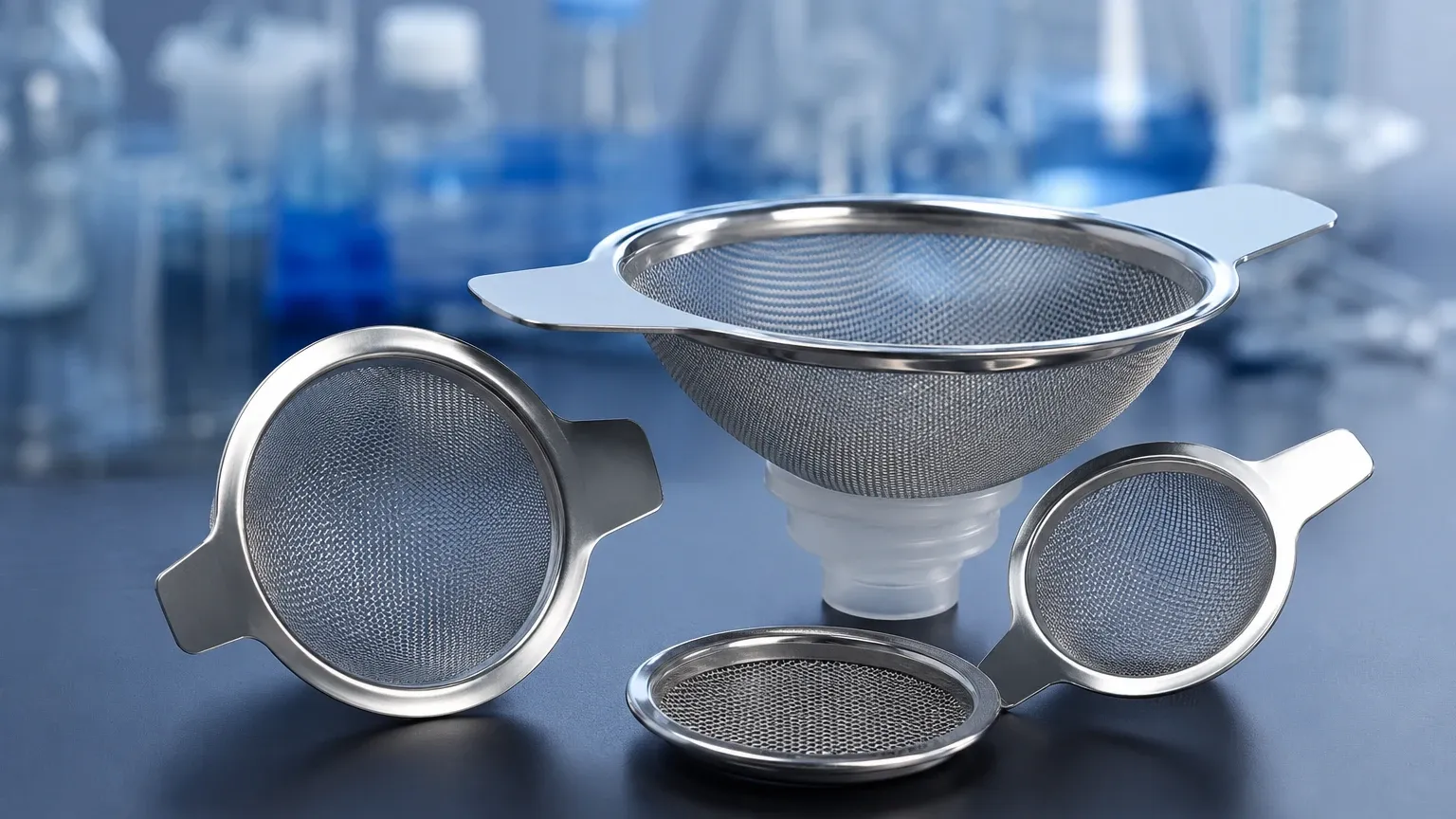
For high-frequency operations or industrial processes where material compatibility is a concern, the long-term savings and reliability of stainless steel strainers often outweigh the initial capital expenditure. Furthermore, metal strainers eliminate the risk of plastic leachables or extractables contaminating the fluid stream, a factor of paramount importance in sensitive chemical and biological assays.
Customization and OEM Solutions
One of the primary advantages of working with specialized manufacturers like Kaifil is the ability to develop customized filtration solutions. Standard off-the-shelf cell strainers 70 μm may not always meet the specific geometric or mechanical requirements of a unique industrial machine.
Customization options include:
* Reinforced Mesh: Adding a coarser support mesh (backing) to the 70 μm layer to handle higher differential pressures without deformation.
* Custom Flanges and Fittings: Ensuring the strainer integrates seamlessly into existing pipework (NPT, BSP, or Tri-clamp fittings).
* Multi-layer Sintered Mesh: Sintering multiple layers of mesh together to create a robust, non-migrating filter element with precise 70 μm retention.
* Specialized Coatings: Applying coatings to improve hydrophobicity or to reduce the adhesion of sticky particulates.
Maintenance and Validation for Long-term Performance
To maintain the integrity of a 70 μm filtration system, a regular maintenance and validation schedule is required. Over time, even the most durable stainless steel mesh can suffer from mechanical fatigue or "blinding" (permanent clogging of the pores).
Routine Inspection
Operators should regularly inspect strainers for signs of mesh breakage or thinning. In a 70 μm mesh, even a small tear can allow significant amounts of contamination through. Visual inspection, often aided by magnification, is the first line of defense.
Bubble Point Testing
For critical applications, the integrity of the 70 μm rating can be validated using a bubble point test. This non-destructive test measures the pressure required to force air through a liquid-saturated filter. The resulting pressure value correlates directly to the largest pore size in the mesh, providing empirical proof that the strainer is still performing to its 70 μm specification.
Effective Cleaning Protocols
Because 70 μm pores are quite small, manual scrubbing is often ineffective and can damage the mesh. Ultrasonic baths are the gold standard for cleaning precision metal filters. The microscopic cavitation bubbles produced by the ultrasonic generator can penetrate the mesh openings and remove deeply embedded particles that chemical flushing might miss.
Conclusion: Selecting the Right Partner for Filtration
Whether you are preparing a single-cell suspension for a laboratory trial or protecting a high-pressure industrial pump, the quality of your cell strainers 70 μm is non-negotiable. Selecting the right component requires a deep understanding of material science, fluid dynamics, and the specific demands of your application environment.
By focusing on high-quality materials, precision manufacturing, and robust engineering, organizations can achieve superior filtration results while minimizing downtime and maintenance costs. For those seeking durable and efficient solutions, exploring professional-grade Strainers & Baskets is the most reliable path toward optimized process performance and long-term operational success.
