


Strainer 80mm
In industrial fluid handling, the selection of filtration components is a critical engineering decision that directly impacts system efficiency, pump longevity, and product purity. The strainer 80mm, often referred to in metric piping specifications as a DN80 strainer, represents one of the most versatile sizes in mid-range industrial applications. This size is standard for high-volume liquid transport where flow rates are significant but require precise management of pressure drop and filtration surface area.
At this scale, the choice between different configurations of Strainers & Baskets involves evaluating flow dynamics, the nature of the suspended solids, and the specific chemical environment of the process. As a specialized manufacturer, Kaifil focuses on providing precision-engineered stainless steel filtration solutions that address these technical requirements through advanced material selection and customized design.
Technical Overview of the 80mm Strainer Specification
An 80mm strainer is designed to integrate into a 3-inch nominal pipe size (NPS) system. In the context of industrial filtration, the "80mm" designation typically refers to the inlet and outlet port diameters. However, the internal dimensions—specifically the basket or screen size—are what determine the functional capacity of the unit.
Material Integrity: SS304 vs. SS316L
For most industrial 80mm filtration applications, stainless steel is the preferred material due to its structural integrity and resistance to corrosion.
* Stainless Steel 304: Suitable for general water treatment, hydraulic oils, and mildly corrosive fluids. It offers excellent mechanical strength and cost-effectiveness for standard industrial environments.
* Stainless Steel 316/316L: Essential for chemical processing, pharmaceutical production, and food and beverage applications. The addition of molybdenum provides enhanced resistance to pitting and crevice corrosion, particularly in environments containing chlorides or acidic compounds.
Pressure Ratings and Connection Types
The strainer 80mm is usually deployed in systems operating under significant pressure. Engineering teams must confirm the pressure rating (such as PN16, PN25, or ANSI Class 150/300) to ensure the housing can withstand surges and steady-state operational loads. Connection types for this size are predominantly flanged to provide a secure, leak-proof seal that can be easily disassembled for maintenance, though threaded or socket-weld options may exist for specific high-pressure hydraulic applications.
Engineering Considerations for Flow and Pressure Drop
One of the most frequent challenges when integrating a strainer 80mm into a piping system is managing the pressure drop ($ΔP$). Every filtration element introduces resistance to flow. If the $ΔP$ is too high, it can lead to cavitation in downstream pumps or insufficient flow to the process equipment.
The Open Area Ratio (OAR)
The efficiency of an 80mm strainer is largely determined by its Open Area Ratio. This is the ratio of the total area of the holes in the mesh or perforated metal to the cross-sectional area of the inlet pipe. For a standard strainer 80mm, a ratio of 4:1 or 6:1 is often targeted. A higher OAR means the strainer can accumulate more debris before the pressure drop becomes critical, thereby extending the service interval.
Viscosity and Flow Velocity
The behavior of the fluid through an 80mm port changes based on viscosity. While water flows relatively freely, high-viscosity fluids like heavy oils or resins require larger mesh openings or increased surface area to maintain the desired flow rate. Engineers must calculate the velocity of the fluid; typically, for liquid service in a DN80 pipe, velocities are kept between 1.5 to 3 meters per second to minimize turbulence and erosion within the strainer body.
Design Variations: Baskets vs. Y-Strainers
When sourcing components from the Strainers & Baskets category, it is vital to distinguish between the two primary geometries used for 80mm sizes.
80mm Basket Strainers (Simplex and Duplex)
Basket strainers are characterized by a vertical cylinder (the basket) that is accessed from the top.
* Simplex Design: Used in batch processes where the flow can be momentarily stopped to clean the basket. In an 80mm configuration, the basket provides a large holding capacity for solids.
* Duplex Design: Consists of two 80mm strainer chambers connected by a diversion valve. This allows for continuous operation; when one basket is full, the flow is switched to the other chamber, allowing for cleaning without system downtime.
80mm Y-Strainers
Y-strainers are more compact and are often used in applications with lower concentrations of solids. They are typically installed in horizontal or vertical lines where space is a constraint. While they are effective for protecting sensitive equipment like meters or control valves, their debris-holding capacity is generally lower than that of a dedicated basket strainer of the same 80mm port size.
Filtration Precision and Mesh Selection
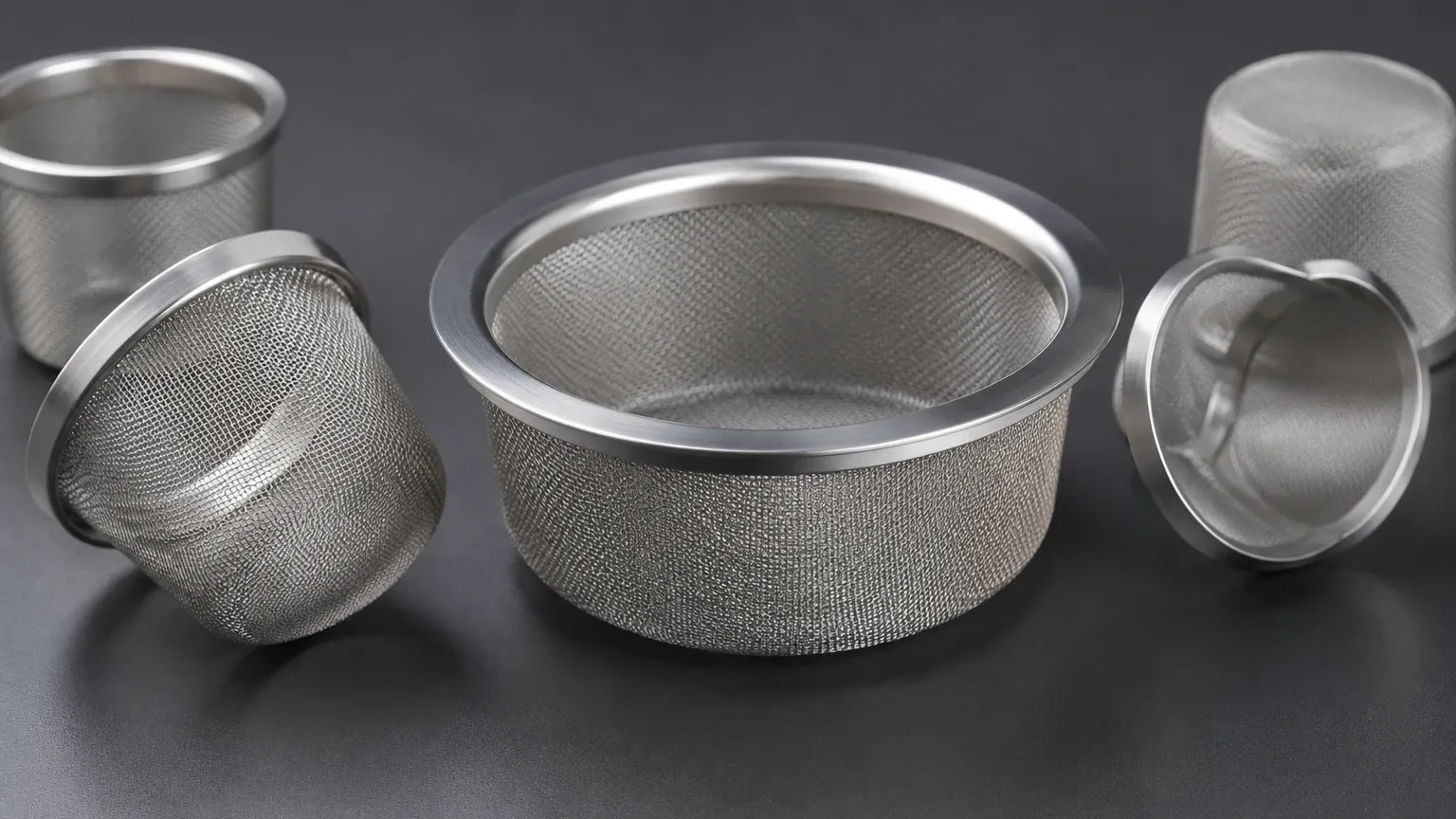
The performance of a strainer 80mm is defined by its internal element. Kaifil utilizes various stainless steel wire mesh and perforated metal structures to achieve specific filtration levels.
1. Perforated Metal: Often used as a "roughing" filter or as a support structure for finer mesh. Hole sizes for an 80mm strainer might range from 1mm to 5mm.
2. Woven Wire Mesh: For finer filtration, layers of stainless steel wire mesh are used. This allows for precision down to 20 microns or lower, depending on the application requirements.
3. Sintered Mesh: In high-pressure or high-temperature 80mm applications, multiple layers of mesh are sintered together to create a robust, rigid filter element that resists deformation under heavy cake loading.
Selecting the correct micron rating is a balance between protecting downstream equipment and avoiding premature clogging. If a process requires 100-micron filtration, using a 50-micron screen will result in unnecessary maintenance costs and higher energy consumption due to increased flow resistance.
Industrial Applications for 80mm Strainers
Chemical and Petrochemical Processing
In chemical plants, the strainer 80mm is frequently used to remove catalysts, scale, or undissolved solids from process streams. The use of SS316L ensures that the strainer can handle aggressive solvents and corrosive reagents without degrading, which could otherwise lead to fluid contamination.
Food and Beverage Production
For food-grade applications, the internal surfaces of the 80mm strainer must be polished to prevent bacterial growth. These strainers are used to filter pulp from juices, clarify syrups, or protect bottling lines from stray particles. Compliance with hygienic standards is paramount here, requiring specialized seals and easy-to-clean basket designs.
Water Treatment and Desalination
In large-scale water treatment, 80mm strainers serve as pre-filters for membrane systems (RO/UF). They remove larger particulates that could foul sensitive membranes. Given the high flow volumes in these plants, the durability of the stainless steel mesh is essential to withstand constant backwashing or manual cleaning cycles.
Hydraulic and Lube Oil Systems
Large hydraulic power units often use an 80mm strainer on the suction side of the pump or in the return line. By removing metallic shavings and environmental contaminants, the strainer prevents premature wear of high-precision hydraulic valves and cylinders.
Maintenance and Operational Longevity
A strainer 80mm is not a "fit and forget" component. Its effectiveness depends on a structured maintenance regime.
Differential Pressure Monitoring
The most reliable way to determine when an 80mm strainer needs cleaning is by monitoring the differential pressure across the inlet and outlet. Installing pressure gauges or a differential pressure switch allows operators to see exactly when the basket is reaching its holding capacity. A common rule of thumb is to clean the element when the $ΔP$ reaches 0.5 to 1.0 bar above the clean pressure drop.
Cleaning Procedures
Because Kaifil manufactures these components from high-quality stainless steel, the filter elements are generally reusable. Cleaning methods include:
* Manual Rinsing: Using high-pressure water or air to dislodge particles from the mesh.
* Ultrasonic Cleaning: For fine mesh screens where particles are deeply embedded in the wire weave.
* Chemical Soaking: Used when the contaminant is an organic resin or scale that cannot be removed mechanically.
Gasket and Seal Replacement
During every maintenance cycle, the seals of the 80mm strainer should be inspected. Depending on the fluid, seals may be made of EPDM, Viton, or PTFE. Over time, thermal cycling and chemical exposure can cause these seals to harden or perish, leading to external leaks or internal bypass.
Customization and OEM Solutions
Standard off-the-shelf strainers may not always meet the unique constraints of a specific industrial project. Customization of the strainer 80mm allows engineers to optimize the component for their exact needs. Kaifil’s manufacturing capabilities include:
* Custom Housing Lengths: To fit into existing piping gaps where standard dimensions are too long or short.
* Specialized Mesh Configurations: Combining different layers of mesh to handle specific particle size distributions.
* Magnetic Inserts: Adding magnetic rods to the basket to capture fine ferrous particles that might otherwise pass through the mesh.
* Reinforced Baskets: For applications involving high-velocity slugs of fluid or heavy debris loads that could collapse a standard basket.
Conclusion: Selecting the Right 80mm Solution
Choosing the correct strainer 80mm requires a comprehensive understanding of the fluid properties, flow requirements, and environmental conditions. By focusing on high-quality materials and precise engineering, industrial operators can ensure their systems remain protected and efficient. Whether the application calls for a simple Y-strainer to protect a meter or a high-capacity duplex basket strainer for continuous chemical processing, the technical details of the filtration media and housing construction are the primary drivers of long-term success.
For technical teams and purchasing departments looking to optimize their filtration processes, reviewing the available options in Strainers & Baskets is the first step toward achieving reliable performance. Kaifil remains committed to supporting global industries with customized, durable, and high-performance stainless steel filtration components tailored to the most demanding industrial environments.
