


Strainer 80 Mesh
In industrial filtration and fluid handling, the selection of the correct mesh size is a critical engineering decision that directly impacts system efficiency, equipment longevity, and product purity. A strainer 80 mesh configuration represents a versatile middle ground in the filtration spectrum, offering a balance between particle retention and flow capacity. For engineers and procurement specialists, understanding the technical nuances of 80 mesh—ranging from its micron equivalent to its structural requirements within Strainers & Baskets—is essential for optimizing industrial processes.
At Kaifil, we specialize in manufacturing precision stainless steel filtration components. This guide provides a technical deep dive into the 80 mesh specification, its performance characteristics, and the engineering considerations necessary for successful implementation in demanding environments.
Understanding the Technical Specifications of 80 Mesh
The term "mesh" refers to the number of openings per linear inch of the wire cloth. An 80 mesh screen contains 80 wires in one direction and 80 wires in the perpendicular direction within a single square inch. However, the mesh count alone does not define the filtration capability; the wire diameter is equally important.
Micron Rating and Opening Size
For a standard industrial strainer 80 mesh, the wire diameter typically ranges from 0.0045 inches to 0.0055 inches (0.11 mm to 0.14 mm). This results in an aperture or opening size of approximately 0.0070 inches, which translates to roughly 177 to 180 microns.
In the context of particle retention, an 80 mesh strainer is designed to capture solids larger than 177 microns. This makes it highly effective for removing fine sand, scale, and various suspended solids that could damage downstream equipment like pumps, spray nozzles, and heat exchangers.
Open Area and Flow Dynamics
The "open area" percentage of a mesh screen dictates the total surface area available for fluid to pass through. For a standard 80 mesh stainless steel screen, the open area is typically between 30% and 36%. Engineers must account for this when calculating the clean pressure drop ($ΔP$) across the strainer. A lower open area increases the velocity of the fluid through the individual apertures, which can lead to higher shear forces and potential mesh deformation if the system pressure is not managed correctly.
Material Selection for 80 Mesh Strainers
Because 80 mesh involves relatively fine wires, material integrity is paramount. At Kaifil, we focus on high-grade stainless steel alloys to ensure durability and chemical compatibility.
Stainless Steel 304
SS304 is the most common choice for general industrial applications. It offers excellent mechanical properties and good resistance to atmospheric corrosion. It is widely used in water treatment, hydraulic systems, and basic chemical processing where highly acidic or alkaline conditions are not present.
Stainless Steel 316 and 316L
For applications involving chlorides, marine environments, or pharmaceutical production, SS316 or its low-carbon variant, SS316L, is preferred. The addition of molybdenum provides superior resistance to pitting and crevice corrosion. In food and beverage applications, SS316L is often the standard due to its inertness and ease of sterilization.
Specialized Alloys
In extreme environments involving high temperatures or highly aggressive chemicals, alloys such as Monel, Inconel, or Hastelloy may be utilized for the 80 mesh weave. These materials maintain their structural integrity and filtration accuracy under conditions where standard stainless steels would fail.
Engineering Design: Integrating 80 Mesh into Strainers & Baskets
An 80 mesh screen is relatively delicate compared to coarser 20 or 40 mesh screens. Therefore, the design of the housing and the internal support structure is vital to prevent mesh failure under pressure surges or heavy cake loading.
Structural Support and Reinforcement
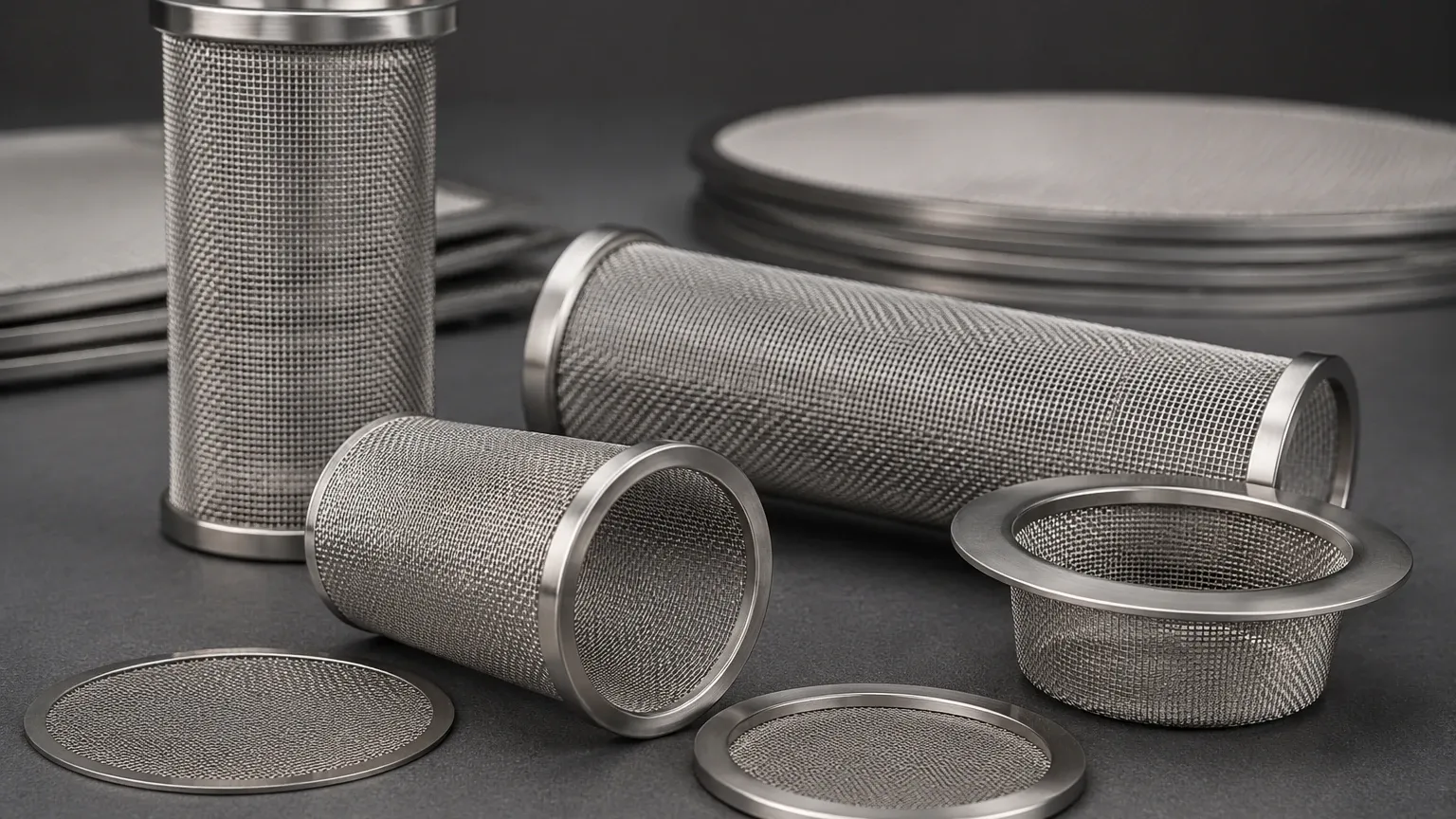
In most industrial Strainers & Baskets, an 80 mesh liner is not used in isolation. Instead, it is typically bonded or mechanically fastened to a more robust support structure, such as a perforated metal basket. The perforated metal provides the mechanical strength to withstand the differential pressure, while the 80 mesh liner performs the actual filtration.
Common support configurations include:
* Internal Lining: The mesh is placed inside the perforated basket, which is ideal for flow that moves from the inside out.
* External Lining: The mesh is wrapped around the outside of the support, used for outside-in flow patterns.
* Five-Layer Sintered Mesh: For high-pressure applications, 80 mesh can be part of a sintered laminate, where multiple layers of mesh are fused together to create a rigid, high-strength filter element.
Flow Path and Turbulence
The geometry of the strainer basket influences the turbulence within the housing. For 80 mesh applications, it is important to ensure that the fluid is distributed evenly across the entire surface area of the mesh. Localized high-velocity zones can cause "wire drawing" or erosion of the fine 80 mesh wires, eventually leading to a bypass of unfiltered fluid.
Performance Evaluation: Pressure Drop and Dirt Holding Capacity
When specifying a strainer 80 mesh, engineers must evaluate the relationship between filtration fineness and maintenance frequency.
Calculating Pressure Drop
The total pressure drop in a strainer system is the sum of the housing loss and the clean media loss. Because 80 mesh has a smaller open area than coarser screens, the initial pressure drop will be higher. If the process fluid has a high viscosity, this $ΔP$ increases exponentially. We recommend sizing the strainer so that the initial pressure drop does not exceed 2 psi (0.14 bar) to allow sufficient headroom for contaminant buildup.
Dirt Holding Capacity
The dirt holding capacity of an 80 mesh screen is limited by its surface area. Once the apertures are bridged by particles, the differential pressure will rise quickly. In systems with high solids loading, a "staged" filtration approach is often more cost-effective. For example, placing a 40 mesh strainer upstream of the 80 mesh unit can significantly extend the service life of the finer screen by removing larger debris first.
Common Industry Applications for 80 Mesh Filtration
The 177-micron filtration provided by 80 mesh is a "sweet spot" for many industrial processes that require the removal of visible particulates without the extreme pressure requirements of sub-100 micron filtration.
Chemical Processing
In chemical manufacturing, 80 mesh strainers are used to protect sensitive instrumentation and to ensure the purity of intermediate products. They are effective at capturing undissolved powders, catalyst fines, and polymer skins.
Food and Beverage Industry
80 mesh is frequently used for straining juices, syrups, and dairy products. It is fine enough to remove pulp fragments and small seeds while maintaining the flow rates required for high-volume production lines. Kaifil ensures that these components meet the necessary surface finish requirements for sanitary applications.
Oil and Gas / Hydraulics
In hydraulic power units (HPUs) and lubrication systems, an 80 mesh strainer serves as a critical suction filter. It prevents larger contaminants from entering the pump, which could cause catastrophic mechanical failure. In the oil and gas sector, it is used in produced water treatment and fuel gas conditioning.
Water Treatment and Irrigation
For cooling tower water and industrial irrigation, 80 mesh is the standard for protecting spray nozzles. Nozzles with small orifices are easily clogged by sand or biological growth; the 177-micron rating of 80 mesh provides an adequate safety margin for most standard industrial nozzle sizes.
Maintenance, Cleaning, and Replacement Cycles
To maintain the performance of a strainer 80 mesh system, a proactive maintenance schedule is required. Unlike disposable cartridges, stainless steel mesh is designed for cleaning and reuse, which reduces the total cost of ownership.
Cleaning Methodologies
1. Manual Cleaning: The basket is removed from the housing and washed with a high-pressure water jet or solvent. Care must be taken not to use abrasive brushes that could distort the 80 mesh weave.
2. Backwashing: In automated systems, a portion of the filtered fluid is diverted back through the mesh in the opposite direction to dislodge the filter cake.
3. Ultrasonic Cleaning: For stubborn contaminants or biological films, ultrasonic baths are highly effective at clearing the small 177-micron openings without damaging the wire structure.
Identifying Failure Modes
Engineers should regularly inspect 80 mesh strainers for:
* Blinding: Permanent clogging of the mesh that cannot be removed by standard cleaning.
* Fatigue Cracking: Often occurring at the weld points between the mesh and the support basket due to pressure cycling.
* Corrosion: Pitting or thinning of the wires, which changes the effective filtration rating.
Selecting the Right Supplier for Custom Filtration
When purchasing a strainer 80 mesh, the quality of the weave and the precision of the assembly are non-negotiable. Poorly manufactured mesh may have inconsistent opening sizes, leading to "hot spots" where larger particles can pass through.
Kaifil provides comprehensive OEM and customized filtration solutions. We work closely with engineering teams to confirm technical requirements before production, including:
* Housing Compatibility: Ensuring the basket dimensions and flange types match existing infrastructure.
* Flow Rate Requirements: Calculating the necessary surface area to meet specific $ΔP$ targets.
* Environmental Factors: Selecting the optimal alloy for temperature and chemical exposure.
By focusing on precision manufacturing and rigorous quality control, Kaifil ensures that every 80 mesh component delivers reliable, long-term performance in the most demanding industrial environments. Whether you require a standard replacement or a custom-engineered basket design, our technical expertise supports your goal of efficient and cost-effective filtration.
