


8 Inch Strainers
In large-scale industrial piping systems, the protection of downstream equipment is a critical engineering priority. An 8 inch strainer serves as a primary line of defense, designed to remove unwanted solids from liquid or gas streams. These components are essential in high-flow environments where the failure of a pump, valve, or heat exchanger due to particulate contamination could result in significant downtime and costly repairs. As systems scale to an 8-inch nominal pipe size (NPS), the mechanical stresses and flow dynamics require a sophisticated approach to strainer design and material selection.
Selecting the right filtration solution for an 8-inch line involves more than matching connection sizes. It requires an understanding of fluid velocity, allowable pressure drop, and the specific characteristics of the debris being captured. This guide examines the technical considerations for Strainers & Baskets in industrial applications, focusing on how engineering choices impact long-term performance and system reliability.
Engineering Fundamentals of 8 Inch Strainers
The "8 inch" designation refers to the nominal pipe size of the inlet and outlet connections. In industrial settings, these are typically flanged connections following standards such as ASME B16.5. Because an 8-inch pipe can transport a substantial volume of fluid—often exceeding 1,500 gallons per minute (GPM) depending on the velocity limits—the internal basket must be engineered to handle high kinetic energy.
Flow Area and Open Area Ratio
One of the most important metrics for an 8 inch strainer is the Open Area Ratio (OAR). This is the ratio between the total open area of the strainer basket and the cross-sectional area of the inlet pipe. For high-performance industrial applications, an OAR of 6:1 or higher is often preferred. A higher OAR ensures that the strainer can capture a significant amount of debris before the pressure drop (Delta P) reaches a critical level that necessitates cleaning. In 8-inch systems, maintaining a low initial pressure drop is vital to energy efficiency and pump longevity.
Structural Integrity under Pressure
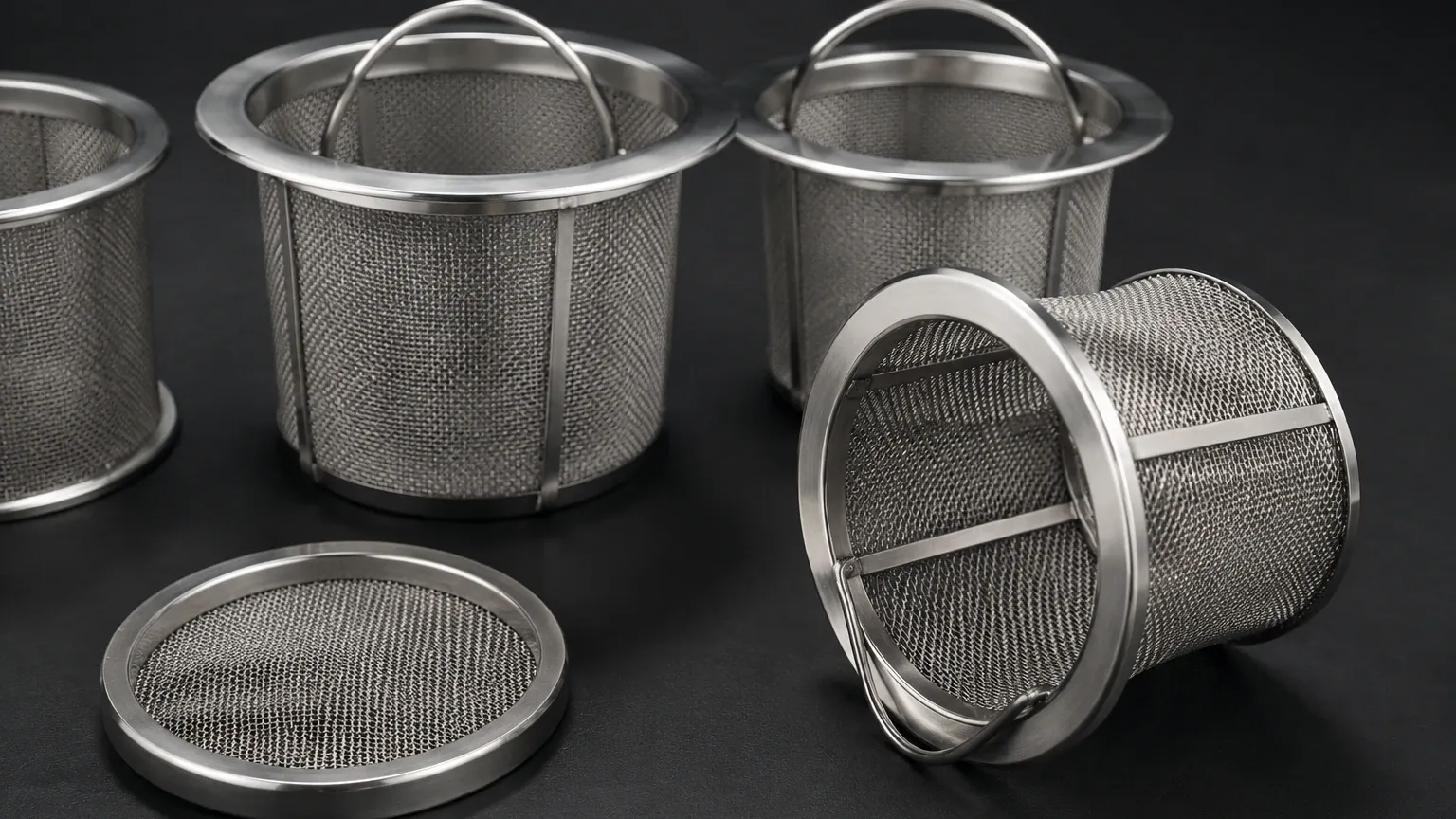
As the size of the strainer increases, the surface area of the internal basket also increases. This larger surface area is subject to significant force when it becomes partially clogged. If the basket is not structurally reinforced, the differential pressure can cause it to collapse or bypass, allowing contaminants to reach sensitive downstream equipment. Engineering 8 inch strainers often involves using heavy-duty perforated metal as a support structure for finer stainless steel wire mesh, ensuring the assembly can withstand the maximum system pressure differential.
Material Selection for Demanding Environments
Material compatibility is a primary factor in the longevity of industrial filtration components. Stainless steel is the industry standard for 8-inch strainers due to its mechanical strength and resistance to various forms of corrosion.
* SS304 Stainless Steel: This is the most common material for general-purpose industrial applications, including water treatment and HVAC systems. It provides excellent strength and good corrosion resistance at a cost-effective price point.
* SS316/316L Stainless Steel: For more aggressive environments, such as chemical processing, pharmaceutical manufacturing, or marine applications, SS316 is preferred. The addition of molybdenum enhances resistance to pitting and crevice corrosion, particularly in chloride-rich environments.
* Specialty Alloys: In extreme cases involving high temperatures or highly corrosive chemicals, manufacturers like Kaifil can utilize specialty alloys to ensure the strainer remains functional throughout its intended service life.
Beyond the housing and the basket, engineers must also consider the gasket and seal materials. Common options include EPDM, Viton, or PTFE, selected based on the chemical composition and temperature of the process fluid.
Types of Strainers for 8-Inch Pipelines
While various designs exist, the choice of strainer type depends largely on the required filtration accuracy and the operational tolerance for system downtime.
Basket Strainers (Simplex)
Simplex basket strainers are the most common choice for 8-inch lines where the flow can be interrupted for cleaning. The basket design allows for a large holding capacity for solids. In an 8-inch configuration, these units are often quite large and may feature a bolted cover or a quick-opening clamp for easier maintenance. Because the basket is removed from the top, these are ideal for liquids with high solid loading.
Duplex Strainers
In critical processes where flow cannot be stopped, a duplex strainer system is required. This consists of two 8-inch strainer housings connected by a diverting valve. When one basket becomes full, the flow is diverted to the clean chamber, allowing the operator to service the first basket without interrupting the process. This is common in fuel lines, cooling water systems for power plants, and continuous chemical production.
Y-Strainers
Y-strainers are typically used in 8-inch lines for gas or steam applications, or where the amount of debris is minimal. While they are more compact than basket strainers, they generally have a smaller OAR and require more frequent cleaning if used in high-debris liquid service.
Customization and OEM Capabilities
Standard off-the-shelf strainers may not always meet the specific requirements of a complex industrial system. Customization is often necessary to optimize performance. Engineering teams frequently look for OEM partners like Kaifil who can provide tailored solutions for 8 inch strainers.
Custom Mesh and Perforation
The filtration degree is determined by the size of the openings in the basket. This can range from coarse perforated plate (1/8" or 1/4" holes) to fine stainless steel mesh capable of capturing particles down to 5 microns. In many 8-inch applications, a "multi-layered" basket design is used, where a fine mesh is sintered or welded to a heavy-duty perforated support to combine high filtration accuracy with structural durability.
Specialized Geometry
Space constraints in industrial plants often require unique piping configurations. Custom 8-inch strainers can be designed with offset inlets/outlets, specialized nozzle orientations, or integrated mounting legs to fit within existing infrastructure. Furthermore, features such as differential pressure taps can be added to allow for automated monitoring of the strainer's condition.
Operational Considerations and Maintenance
The total cost of ownership for an 8 inch strainer is heavily influenced by its maintenance requirements. An improperly sized or selected strainer will require frequent cleaning, leading to increased labor costs and potential process variability.
Monitoring Pressure Drop
Every strainer creates a pressure drop across the system. As the basket collects debris, this pressure drop increases. Engineers should specify the installation of differential pressure gauges across the 8-inch strainer. A common rule of thumb is to clean the basket when the pressure drop increases by 5 to 10 PSI over the clean (initial) pressure drop. Waiting too long can risk basket deformation or "blow-through," where particles are forced through the mesh.
Cleaning Procedures
For an 8-inch system, the basket can be heavy, especially when filled with debris. Maintenance protocols should include safety measures for lifting and handling. Stainless steel baskets are typically cleaned by backwashing with water or using ultrasonic baths for fine mesh that has become blinded by sticky or oily residues. The durability of stainless steel allows these baskets to be cleaned and reused many times, providing a lower long-term cost compared to disposable filter cartridges.
Applications of 8 Inch Strainers
The versatility of 8-inch filtration systems makes them a staple in several key industries:
1. Water Treatment: Protecting large-scale reverse osmosis (RO) membranes and pumps from sand, scale, and organic matter.
2. Chemical Processing: Filtering raw materials and protecting reactors from particulate contamination that could ruin a batch.
3. Food and Beverage: Ensuring product purity in large-scale liquid processing lines, often requiring hygienic 316L stainless steel construction.
4. Oil and Gas: Removing pipeline scale and debris from crude oil or refined products during transport and loading.
5. Pulp and Paper: Filtering process water to prevent nozzles and spray bars from clogging.
Selection Criteria: What Engineers Need to Confirm
Before procuring an 8 inch strainer, the following technical data points must be confirmed to ensure the equipment is fit for purpose:
* Fluid Properties: Viscosity and specific gravity significantly affect pressure drop calculations.
* Flow Rate: Minimum, normal, and maximum flow rates (GPM or m³/h).
* Operating Pressure and Temperature: Must be within the limits of the housing material and flange rating.
* Filtration Level: The specific micron or mesh size required to protect downstream components.
* Debris Type: Is the debris hard, soft, fibrous, or abrasive?
* Space Constraints: Available footprint and overhead clearance for basket removal.
By focusing on these factual engineering requirements, purchasing teams can avoid the pitfalls of undersized or incompatible filtration components. A well-specified 8 inch strainer not only protects the system but also optimizes the efficiency of the entire process.
For organizations requiring precision-engineered filtration, Kaifil offers extensive expertise in manufacturing high-quality stainless steel Strainers & Baskets. Our commitment to technical excellence ensures that every component is designed to meet the rigorous demands of industrial environments, providing reliable performance and long-term durability.
