


8 Y Strainers
In large-scale industrial piping systems, the protection of downstream equipment—such as pumps, control valves, and flow meters—is a critical engineering priority. For systems utilizing 8-inch nominal pipe sizes (NPS), the implementation of 8 y strainers serves as a primary line of defense against particulate contamination. These mechanical components are designed to remove solids from flowing fluids, ensuring that debris does not cause mechanical wear, clogging, or catastrophic failure of sensitive system components.
Selecting the correct 8-inch Y strainer requires a deep understanding of fluid dynamics, material compatibility, and the specific filtration requirements of the process. As a specialized manufacturer, Kaifil provides the technical expertise necessary to navigate these variables, offering high-performance Strainers & Baskets tailored to demanding industrial environments.
Understanding the Role of 8-Inch Y Strainers in Industrial Systems
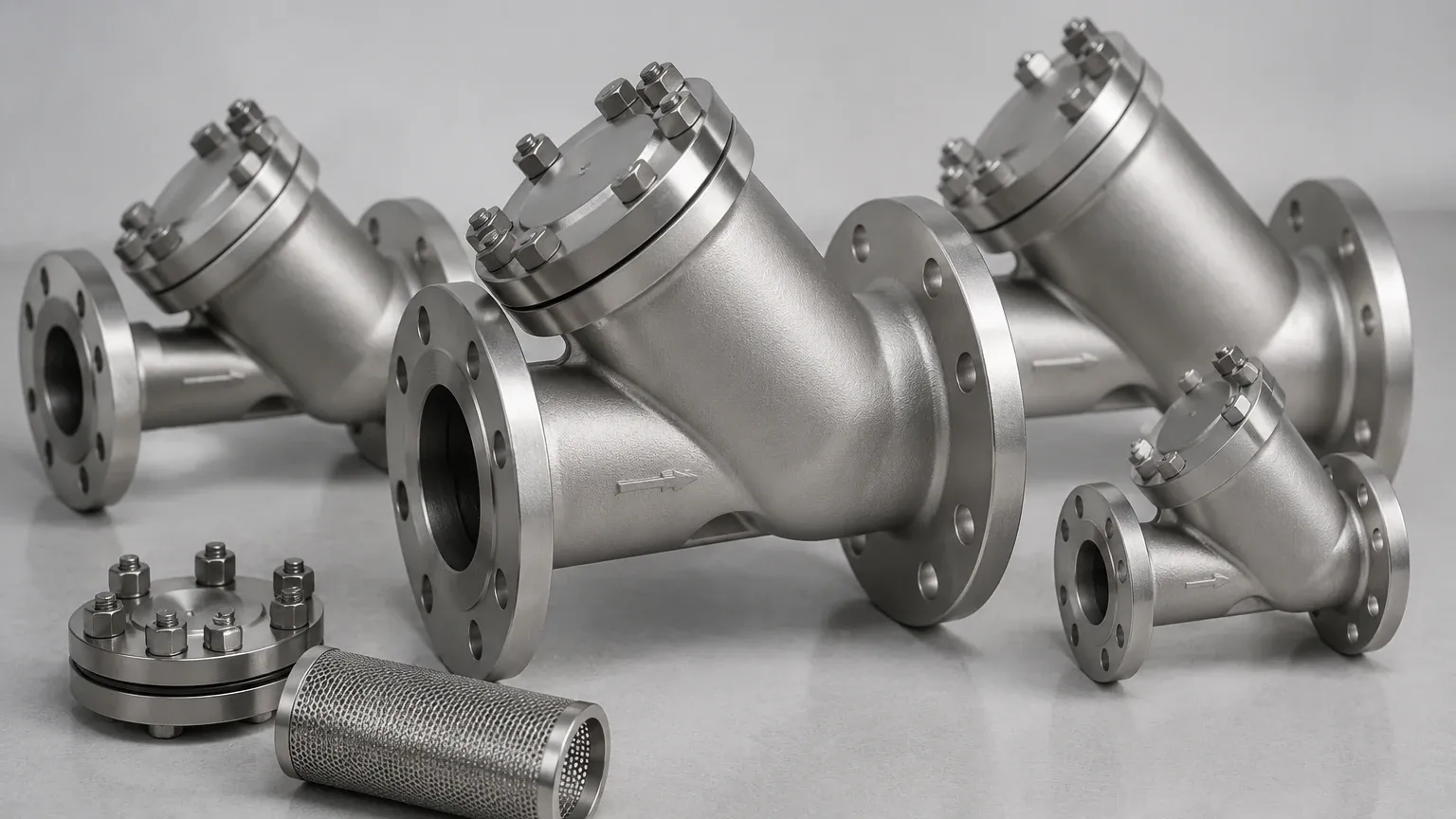
The "Y" configuration is one of the most common designs for industrial strainers due to its compact footprint and the ability to be installed in both horizontal and vertical piping runs. In an 8-inch system, the volume of fluid handled is significant, making the efficiency of the strainer paramount. The 8 y strainers consist of a body, a cover, and a removable straining element (the basket or screen).
When fluid enters the strainer, it is directed into the straining element. The debris is trapped within the mesh or perforated plate, while the clean fluid passes through the outlet. Because 8-inch pipes often carry high flow rates, the strainer must be engineered to handle high velocities without excessive turbulence or pressure drop. The Y-shape allows for a relatively large collecting chamber, which extends the time between cleaning cycles—a vital factor in maintaining system uptime.
Key Engineering Specifications for 8-Inch Y Strainers
When specifying 8 y strainers, engineers must look beyond the pipe size and consider the structural and chemical requirements of the application. The following specifications are standard benchmarks for 8-inch units:
Material Selection
The choice of housing material is dictated by the fluid's corrosivity, temperature, and pressure. While cast iron or carbon steel may suffice for non-corrosive water applications, stainless steel (SS304 or SS316L) is the gold standard for chemical processing, food and beverage, and pharmaceutical industries. Stainless steel offers superior resistance to pitting and stress corrosion cracking, ensuring a longer service life for the 8 y strainers.
Pressure and Temperature Ratings
8-inch strainers are typically rated according to ASME B16.5 standards. Common ratings include Class 150, Class 300, and occasionally Class 600 for high-pressure hydraulic or steam systems. It is essential to verify that the strainer's pressure-temperature rating exceeds the maximum operating conditions of the system, including potential surges.
Connection Types
At the 8-inch size, flanged connections (Raised Face or Ring Type Joint) are the industry standard. Flanged connections provide a secure, leak-proof seal and allow for easier installation and removal compared to threaded connections, which are generally not feasible for large-diameter industrial piping.
Internal Components: Strainers & Baskets Selection
The most critical component of any 8 y strainers is the internal element. The performance of the system depends entirely on the design and quality of the Strainers & Baskets used. At Kaifil, we emphasize the importance of matching the filtration media to the specific contaminant profile.
Perforated Plates vs. Wire Mesh
For coarse filtration (removing large scale, pebbles, or welding slag), a perforated plate made of stainless steel is often sufficient. However, for finer filtration requirements, a wire mesh lining is added to the perforated basket. The perforated plate provides the structural strength to withstand the differential pressure, while the wire mesh determines the filtration accuracy (measured in microns or mesh count).
Open Area Ratio (OAR)
The efficiency of 8 y strainers is often measured by the Open Area Ratio. This is the ratio of the total open area of the straining element to the internal cross-sectional area of the pipe. A higher OAR (typically 4:1 or higher) results in a lower initial pressure drop and longer intervals between cleanings. For 8-inch systems, maintaining a high OAR is essential to prevent the strainer from becoming a bottleneck in the process.
Calculating Flow Performance and Pressure Drop
One of the most common mistakes in strainer selection is overlooking the pressure drop ($ΔP$). As fluid passes through the 8 y strainers, energy is lost due to friction and changes in flow direction. This loss is quantified by the flow coefficient ($C_v$), which represents the flow of water in gallons per minute at 60°F that will pass through the strainer with a 1 psi pressure drop.
Engineers must calculate the clean pressure drop and the maximum allowable pressure drop before cleaning is required. If the $ΔP$ becomes too high, it can lead to cavitation in downstream pumps or even the collapse of the internal basket. Utilizing high-quality, precision-engineered baskets ensures that the flow remains as laminar as possible, minimizing energy loss.
Maintenance and Operational Safety for Large-Scale Strainers
Maintenance of 8 y strainers is more complex than smaller units due to the weight of the components. An 8-inch strainer cover and basket can be heavy, often requiring mechanical lifting assistance or specialized hinges (davit arms) to facilitate safe removal.
Blow-Off Connections
Most 8-inch Y strainers are equipped with a blow-off port in the cover. By installing a blow-off valve, operators can flush out accumulated debris without shutting down the system or opening the strainer. This is particularly effective for loose, non-fibrous contaminants. However, for a thorough cleaning, the system must eventually be depressurized and the basket removed for manual inspection.
Differential Pressure Monitoring
To take the guesswork out of maintenance, it is recommended to install differential pressure gauges across the 8 y strainers. By monitoring the pressure difference between the inlet and outlet, maintenance teams can identify exactly when the basket is reaching its holding capacity, preventing unnecessary downtime or equipment risk.
Customization Options for Demanding Applications
Standard off-the-shelf 8 y strainers may not always meet the nuances of specialized industrial processes. Customization is often required to address specific challenges:
* Specialty Alloys: For highly acidic or high-temperature environments, materials like Monel, Hastelloy, or Duplex Stainless Steel may be required for the internal components.
* Magnetic Inserts: In systems where fine iron or steel particles are present (such as hydraulic oil or condensate return lines), magnetic rods can be added to the basket to capture sub-micron metallic debris that might pass through the mesh.
* Custom Mesh Configurations: Depending on the viscosity of the fluid and the nature of the solids, multi-layered sintered mesh or specific weave patterns may be necessary to optimize filtration without sacrificing flow rate.
Kaifil specializes in these custom OEM solutions, ensuring that every 8-inch filtration component is engineered for the specific stresses of its intended application.
Procurement Considerations: Total Cost of Ownership
When evaluating 8 y strainers, purchasing teams should consider the Total Cost of Ownership (TCO) rather than just the initial purchase price. A lower-quality strainer may have a lower upfront cost but can lead to higher expenses through:
1. Increased Energy Costs: Poorly designed baskets with low OAR cause higher pressure drops, requiring pumps to work harder and consume more electricity.
2. Frequent Replacement: Substandard materials may corrode or fatigue quickly, leading to frequent replacement of the internal Strainers & Baskets.
3. Downstream Damage: If a strainer fails to capture particles effectively, the cost of repairing a damaged 8-inch control valve or high-speed pump far exceeds the savings of a cheaper strainer.
By selecting precision-manufactured 8 y strainers from a reputable manufacturer like Kaifil, industrial facilities ensure long-term reliability, optimized flow performance, and the highest level of equipment protection. Whether you are designing a new piping system or upgrading an existing one, confirming the material grade, pressure rating, and basket configuration is the essential first step toward operational excellence.
