


Strainer Basket Drain Plug
In industrial filtration systems, the efficiency of a process often hinges on the smallest components. While the primary focus is frequently on the filtration media or the housing design, the strainer basket drain plug plays a critical role in the operational maintenance and safety of Strainers & Baskets. For engineers and plant managers, understanding the technical nuances of this component is essential for ensuring system integrity, minimizing downtime, and preventing environmental hazards during cleaning cycles.
Industrial basket strainers are designed to remove large particles from liquid streams, protecting downstream equipment like pumps, valves, and heat exchangers. The drain plug, located at the lowest point of the strainer housing, provides the necessary access to evacuate the liquid and accumulated sludge before the basket is removed for cleaning. Without a high-quality, properly specified drain plug, the maintenance process becomes inefficient and potentially dangerous.
The Engineering Significance of the Strainer Basket Drain Plug
The primary function of a strainer basket drain plug is to facilitate the controlled discharge of fluids. In high-capacity industrial systems, the volume of liquid held within a strainer housing can be substantial. Before an operator can safely open the cover to service the filter basket, the internal pressure must be relieved, and the fluid must be drained to a level that prevents spillage.
From an engineering perspective, the drain plug must withstand the same operational stresses as the main housing. This includes internal pressure, temperature fluctuations, and the chemical nature of the process fluid. A failure at the drain plug—whether through thread stripping, corrosion, or seal degradation—can lead to catastrophic leaks. Consequently, the selection of the drain plug is not a secondary consideration but a vital part of the pressure vessel’s design.
Role in System Depressurization
In many applications, the drain plug works in tandem with a vent valve located at the top of the strainer. By opening the vent and then the drain plug, operators ensure that the fluid exits the housing smoothly without creating a vacuum, which could otherwise trap liquid or cause erratic flow. This controlled environment is crucial when handling hazardous chemicals or high-temperature fluids where splashing must be avoided.
Material Selection and Chemical Compatibility
When specifying a strainer basket drain plug, material compatibility is the most critical factor. At Kaifil, we emphasize that the plug material should generally match or exceed the specifications of the strainer housing to prevent galvanic corrosion and ensure uniform thermal expansion.
Stainless Steel Alloys
Stainless steel is the industry standard for most demanding applications due to its excellent mechanical properties and resistance to oxidation.
* 304 Stainless Steel: Suitable for general-purpose applications, including water treatment and non-corrosive industrial fluids. It offers good strength and basic corrosion resistance at a cost-effective price point.
* 316/316L Stainless Steel: Preferred for chemical processing, pharmaceutical, and food and beverage industries. The addition of molybdenum provides superior resistance to chlorides and acidic environments. 316L (low carbon) is specifically used when welding is required or when maximum resistance to intergranular corrosion is necessary.
* Specialty Alloys: In highly aggressive environments, such as those involving concentrated acids or seawater, materials like Duplex stainless steel or Hastelloy may be required for the drain plug to ensure long-term durability.
Avoiding Galvanic Corrosion
A common mistake in maintenance is replacing a stainless steel plug with a carbon steel or brass alternative. This creates a galvanic cell where the less noble metal (the plug) corrodes rapidly in the presence of an electrolyte (the process fluid). This can lead to the plug becoming "seized" in the housing or failing under pressure. Engineers must ensure that the material of the strainer basket drain plug is electrochemically compatible with the housing and the internal Strainers & Baskets components.
Technical Specifications: Threads, Seals, and Pressure Ratings
The mechanical interface between the drain plug and the strainer housing must be leak-proof under all operating conditions. This requires careful attention to thread standards and sealing mechanisms.
Thread Standards: NPT vs. BSP
Most industrial strainers utilize tapered pipe threads to create a seal. The two most common standards are:
1. NPT (National Pipe Thread): Prevalent in North America, NPT threads rely on a metal-to-metal interference fit. The tapered design allows the threads to compress against each other as the plug is tightened.
2. BSP (British Standard Pipe): Common in Europe and Asia, BSP threads can be tapered (BSPT) or parallel (BSPP). Parallel threads typically require an O-ring or a bonded washer to achieve a seal.
Using the wrong thread type can damage the housing’s female threads, requiring expensive repairs or housing replacement. It is essential to confirm the thread specification of the existing Strainers & Baskets before ordering replacement plugs.
Sealing Compounds and Gaskets
While tapered threads provide a mechanical seal, industrial applications often require additional sealing to account for surface irregularities or high-pressure requirements.
* PTFE Tape/Sealant: Often used with NPT threads to provide lubrication and fill microscopic gaps. However, in high-purity pharmaceutical or food applications, PTFE tape must be used cautiously to prevent fragments from entering the process stream.
* O-Rings and Gaskets: For plugs with parallel threads or specialized "zero-leak" designs, O-rings made of Viton (FKM), EPDM, or Buna-N are used. The choice of elastomer depends entirely on the temperature and chemical composition of the fluid.
Maintenance Protocols and Safety Considerations
The strainer basket drain plug is the primary interface for routine maintenance. Following a strict protocol is necessary to ensure operator safety and equipment longevity.
Safe Drainage Procedure
1. Isolation: Close the inlet and outlet valves to isolate the strainer from the main flow.
2. Depressurization: Open the vent valve slowly to bleed off internal pressure. Never attempt to remove the drain plug while the system is under pressure.
3. Controlled Opening: Slowly loosen the strainer basket drain plug. If fluid begins to spray or hiss, stop immediately and re-verify that the system is depressurized.
4. Cleaning: Once the fluid is drained, remove the housing cover and the filter basket. Clean the basket according to the manufacturer's instructions.
5. Inspection: Before re-installing the plug, inspect the threads for signs of wear or galling. Replace the sealant or O-ring if necessary.
Preventing Thread Galling
Stainless steel threads are prone to galling—a form of cold welding that occurs during tightening. To prevent this, engineers should specify the use of anti-seize compounds (where process-compatible) or ensure that the plug and housing have slightly different hardness levels. A seized drain plug often results in the need to drill out the component, causing significant downtime.
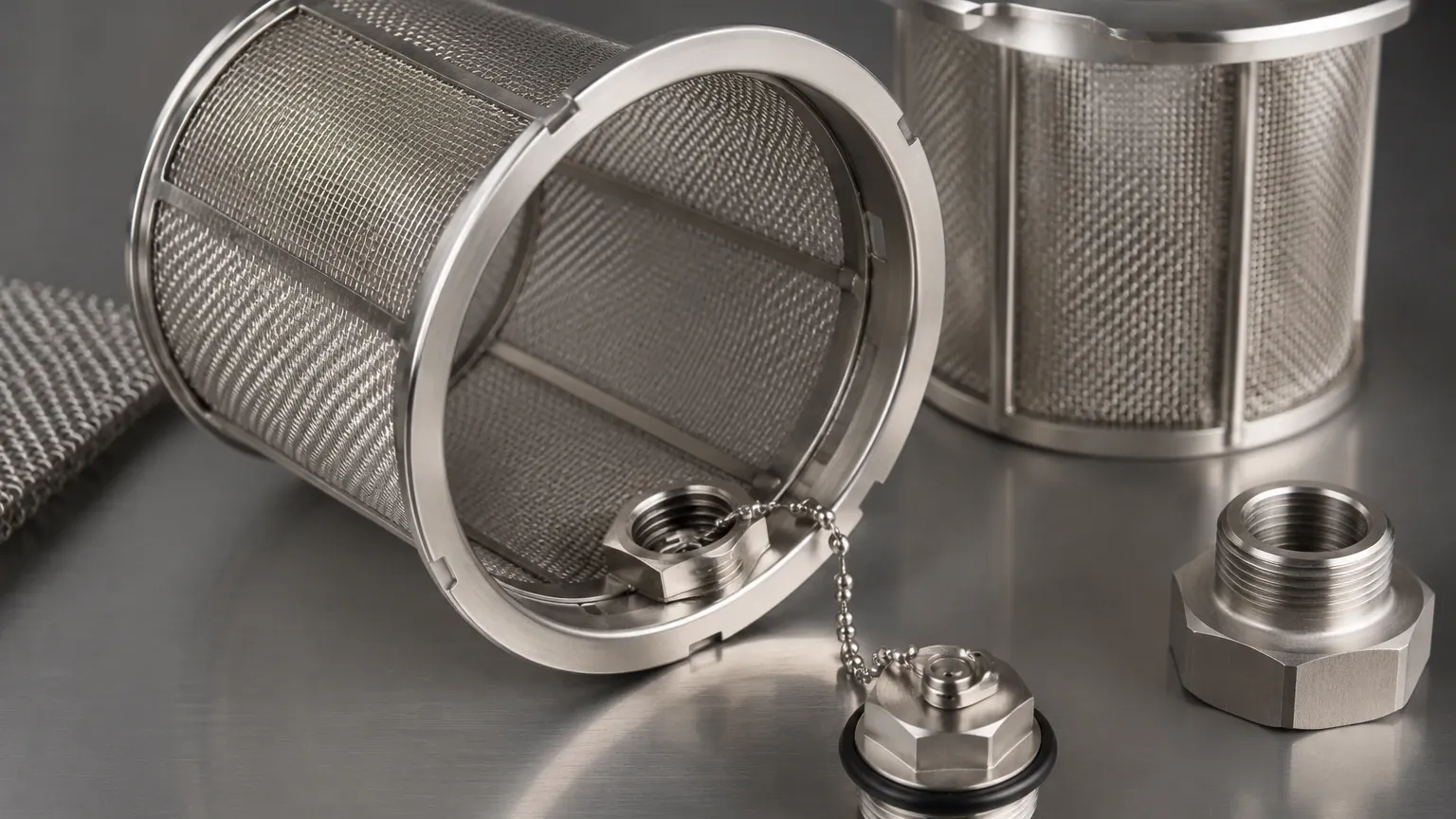
Customization and OEM Solutions for Industrial Strainers
Standard off-the-shelf drain plugs may not meet the requirements of specialized industrial processes. Kaifil provides customized filtration solutions where the drain assembly is engineered for specific performance metrics.
Magnetic Drain Plugs
In hydraulic and lubrication systems, a magnetic strainer basket drain plug can be used to capture fine ferrous particles that might pass through the primary mesh of the Strainers & Baskets. This adds an extra layer of protection for sensitive downstream components.
Extended Drains and Valve Integration
For large-scale strainers, a simple plug may be replaced with an extended nipple and a ball valve. This allows for "blow-down" cleaning, where the drain is opened briefly while the system is under low pressure to flush out heavy solids without stopping the process. Kaifil’s engineering team works with clients to design these custom interfaces, ensuring they meet the required pressure vessel codes.
Total Cost of Ownership (TCO) and Component Durability
When evaluating the cost of a strainer basket drain plug, purchasing teams should look beyond the initial unit price. The total cost of ownership includes the frequency of replacement, the risk of leak-related downtime, and the labor costs associated with difficult maintenance.
Investing in high-precision, CNC-machined stainless steel plugs ensures a perfect fit and reduces the likelihood of thread failure. In high-vibration environments, such as those near reciprocating pumps, a low-quality plug may loosen over time. Specifying plugs with locking features or robust sealing interfaces prevents these issues, ultimately saving the facility thousands of dollars in potential lost production.
Conclusion: Selecting the Right Component
The strainer basket drain plug is a fundamental component that ensures the safe and efficient operation of industrial Strainers & Baskets. By focusing on material compatibility, thread precision, and proper maintenance procedures, engineers can significantly improve the reliability of their filtration systems.
Before finalizing a purchase or maintenance plan, technical professionals should confirm:
* The exact thread standard (NPT vs. BSP).
* The chemical compatibility of the plug and seal material with the process fluid.
* The maximum operating pressure and temperature of the system.
* The accessibility of the drain for routine maintenance.
Kaifil remains committed to providing high-performance, customized filtration components that meet the rigorous demands of the chemical, pharmaceutical, and industrial sectors. For more information on optimizing your filtration hardware, explore our range of precision-engineered solutions.
