


Basket Strainer Kohler
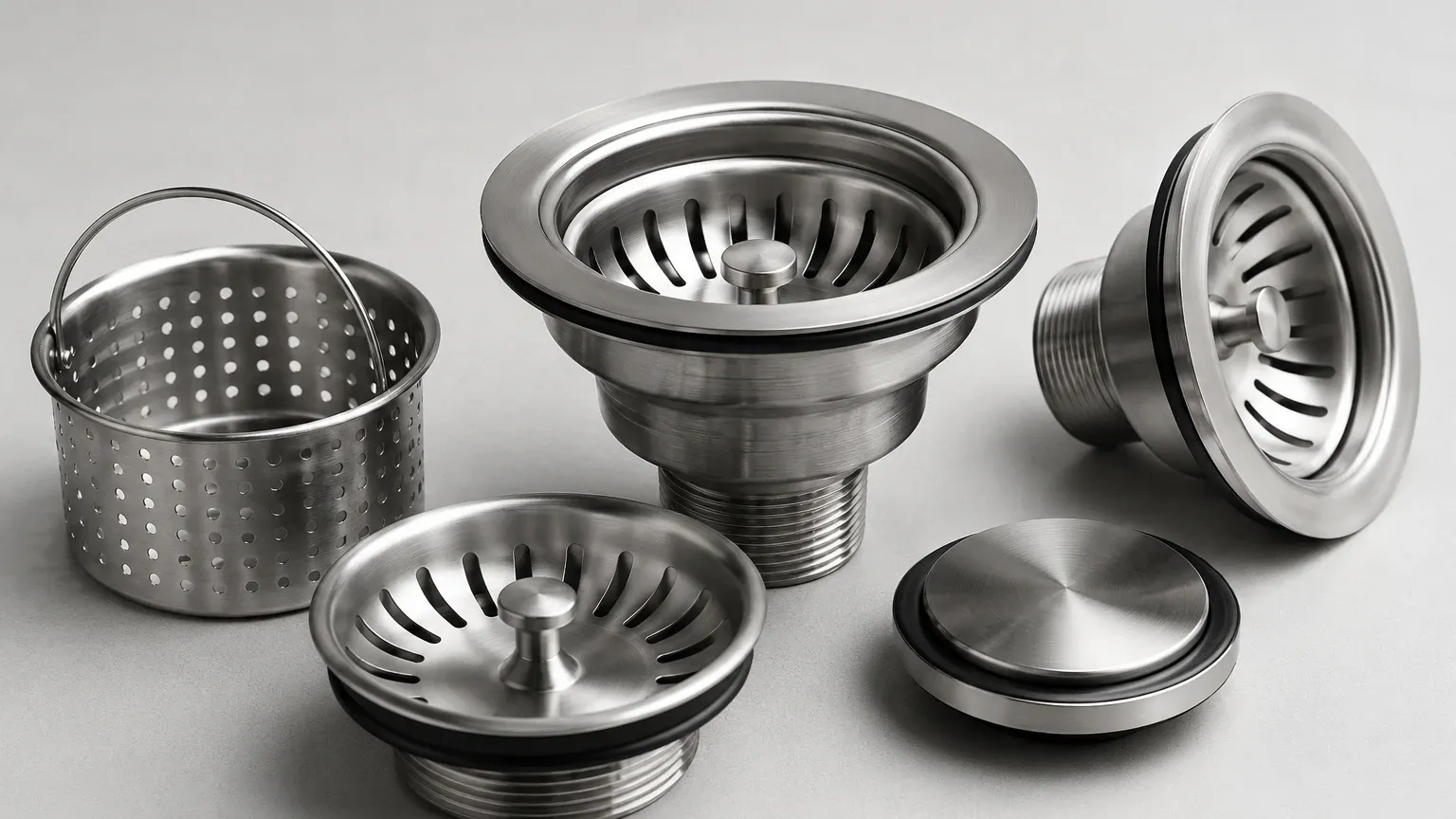
In the realm of fluid management and debris recovery, the term basket strainer often brings to mind the reliable commercial and residential standards set by major manufacturers. Among these, the basket strainer Kohler provides is frequently cited for its durability and standard-fit compatibility in commercial kitchens and light industrial wash-down stations. However, for engineers and procurement specialists operating in heavy industrial sectors—such as chemical processing, pharmaceuticals, and large-scale food production—the requirements for filtration often exceed the capabilities of standard commercial hardware.
Understanding the distinction between commercial-grade components and custom-engineered industrial Strainers & Baskets is essential for maintaining system integrity, preventing downstream equipment damage, and ensuring long-term operational efficiency. This guide examines the technical parameters that define high-performance basket strainers, comparing standard commercial expectations with the rigorous demands of industrial filtration environments.
The Role of Basket Strainers in Modern Fluid Systems
A basket strainer is a closed vessel with a cleanable screen element designed to remove foreign particles from a process line. Unlike Y-strainers, which are often used for smaller amounts of debris, basket strainers are preferred in applications where high flow rates are required and where the volume of solids to be removed is significant.
In a commercial context, a basket strainer Kohler model serves as a primary defense against large solids entering drainage systems. In an industrial context, the role shifts toward protecting sensitive equipment like pumps, valves, and heat exchangers. The "basket" design allows for a larger surface area compared to other strainer types, which results in a lower pressure drop across the unit. For industrial facilities, this translates to reduced energy consumption and longer intervals between cleaning cycles.
When evaluating a basket strainer for an industrial application, engineers must look beyond the basic dimensions. They must consider the open area ratio—the ratio of the total area of the holes in the basket to the internal cross-sectional area of the inlet pipe. A high-quality industrial strainer typically maintains an open area ratio of at least 6:1 to ensure that the system does not experience significant flow restriction as the basket begins to fill with debris.
Comparing Commercial Standards and Industrial Requirements
While a basket strainer Kohler unit is engineered for excellence in its intended environment, industrial applications demand a different set of material and structural benchmarks. Commercial strainers are often optimized for ease of installation and aesthetic longevity in environments with neutral pH levels and standard temperatures.
Industrial Strainers & Baskets, by contrast, are frequently subjected to:
* High Pressure Fluctuations: Industrial lines may experience rapid pressure spikes that would cause thinner commercial baskets to collapse or bypass.
* Aggressive Chemicals: Process fluids in the chemical and pharmaceutical industries can be highly corrosive, requiring specific grades of stainless steel (such as 316L or Duplex) that go beyond standard commercial 304 stainless steel.
* Extreme Temperatures: Filtration components must maintain structural integrity in temperatures ranging from cryogenic levels to several hundred degrees Celsius.
* Precision Filtration: While a commercial strainer might only need to catch large food waste or debris, industrial baskets often utilize fine wire mesh overlays to achieve filtration accuracies down to 5 microns.
For an engineering team, the decision to move from a standard commercial component to a custom industrial solution usually occurs when the cost of downtime or equipment failure outweighs the initial savings of a mass-produced part.
Technical Specifications: Mesh Selection and Micron Ratings
The heart of any basket strainer is the filter element itself. In industrial manufacturing, the selection of the mesh or perforation pattern is a critical engineering decision. Standard commercial strainers typically use a fixed perforation size, but custom industrial solutions allow for multi-layered media.
Perforated Plate vs. Wire Mesh
Industrial baskets often use a heavy-duty perforated plate as a structural support (the "skeleton") with a fine stainless steel wire mesh lining. This combination provides the mechanical strength to withstand high differential pressures while offering the precision required for fine filtration.
Understanding Micron Ratings
In industrial procurement, the term "mesh count" refers to the number of openings per linear inch. However, the more precise measurement is the micron rating, which defines the smallest particle size the strainer will reliably capture. For example, a 100-mesh screen has an opening size of approximately 149 microns. If a process requires the removal of particles at 50 microns, a 300-mesh or a specialized sintered mesh element would be required.
When replacing a standard basket strainer Kohler component in a specialized process, it is vital to confirm whether the existing filtration level is sufficient for the downstream equipment. Upgrading to a custom-designed basket allows for the optimization of the mesh-to-perforation ratio, ensuring that the filter does not become a bottleneck in the production line.
Engineering for Durability: Material Grades and Corrosion Resistance
Material selection is perhaps the most significant differentiator between commercial and industrial filtration components. Most high-quality commercial strainers utilize Type 304 stainless steel, which offers excellent corrosion resistance for water-based applications and standard kitchen environments.
However, in industrial settings, the presence of chlorides, acids, or high-salinity fluids can lead to pitting and stress corrosion cracking in 304 stainless steel. Industrial manufacturers like Kaifil specialize in the use of Type 316L stainless steel, which contains molybdenum. This addition significantly enhances the material's resistance to chemical attack and high-temperature oxidation.
Furthermore, for specialized industries like food and beverage or pharmaceuticals, the surface finish of the Strainers & Baskets is a regulatory requirement. Industrial-grade baskets can be electropolished to achieve a Ra (Roughness Average) value that prevents bacterial adhesion and facilitates easier cleaning (CIP – Clean In Place). A standard basket strainer Kohler unit, while smooth, may not meet the stringent ASME BPE (Bioprocessing Equipment) standards required for sterile processing.
Operational Efficiency: Pressure Drop and Flow Rate Management
In any piped system, every component introduces a degree of resistance to flow, known as pressure drop (ΔP). For an industrial plant, excessive pressure drop means the pumps must work harder, increasing electrical costs and wear on mechanical seals.
Engineers calculating the Total Cost of Ownership (TCO) for a filtration system must account for the "clean pressure drop" and the "dirty pressure drop." A well-designed industrial basket strainer is engineered to have a large enough surface area that the pressure drop remains negligible even when the basket is 50% full.
Commercial strainers like the basket strainer Kohler models are designed for gravity-fed or low-pressure pumped systems where the flow rate is relatively consistent. In industrial applications where flow rates can reach thousands of gallons per minute (GPM), the internal geometry of the strainer housing and the basket must be optimized to minimize turbulence. Turbulence not only increases pressure drop but can also cause "media migration," where the force of the fluid pushes particles through the mesh or damages the wire cloth over time.
Customization and OEM Solutions for Specialized Applications
One of the primary advantages of working with a professional manufacturer of industrial filtration components is the ability to customize every aspect of the strainer. While a basket strainer Kohler provides a reliable, fixed-dimension solution for standard sinks and drains, industrial processes often require unique configurations.
Customization options for industrial Strainers & Baskets include:
* Flange and Connection Types: Beyond standard NPT or slip-fits, industrial units can be manufactured with ANSI flanges, Tri-Clamp fittings for sanitary use, or custom unions to fit existing piping.
* Reinforced Handle Designs: For large baskets that collect heavy debris, reinforced lifting handles or even mechanical hoist points are necessary for safe maintenance.
* Magnetic Inserts: In metalworking or hydraulic applications, magnetic rods can be added to the basket to capture fine ferrous particles that might otherwise pass through the mesh.
* Multi-Stage Filtration: Baskets can be designed with concentric layers of different mesh sizes to provide graduated filtration, extending the life of the finest inner mesh.
By choosing an OEM partner like Kaifil, companies can ensure that their filtration components are not just "off-the-shelf" parts, but engineered tools designed specifically for their unique fluid dynamics and debris profiles.
Maintenance and Replacement Cycles: The Industrial Perspective
In a commercial setting, a basket strainer is often only replaced when it is physically damaged or lost. In the industrial sector, the replacement cycle is a planned part of preventive maintenance.
Industrial baskets are subject to mechanical fatigue from constant flow and periodic cleaning. Over time, the wire mesh can develop micro-tears, particularly at the weld points where the mesh is joined to the perforated support. A failure in the strainer basket can lead to catastrophic damage to high-value downstream equipment.
Engineers should establish a regular inspection schedule to check for:
1. Deformation: Signs that the basket is bowing under pressure.
2. Bypass: Wear on the seating surfaces that allow fluid to go around the basket rather than through it.
3. Integrity of the Mesh: Using light tables or borescope inspections to ensure no holes have developed in the fine mesh layers.
When a standard commercial component such as a basket strainer Kohler is used in a role it wasn't designed for, these failure points often appear much sooner than expected. Transitioning to a heavy-duty industrial basket ensures that the component can withstand repeated ultrasonic cleaning or high-pressure hosing without loss of filtration accuracy.
Conclusion: Selecting the Right Filtration Partner
For purchasing teams and plant engineers, the choice between a standard commercial component and a custom industrial solution depends entirely on the application's risk profile and performance requirements. While the basket strainer Kohler remains a benchmark for quality in commercial plumbing, industrial processing requires the specialized engineering found in custom Strainers & Baskets.
Before placing an order, technical professionals should confirm the following data points with their supplier:
* Fluid Compatibility: Does the stainless steel grade (304, 316, 316L) match the chemical profile of the process fluid?
* Flow and Pressure: Is the basket rated for the maximum expected GPM and PSI of the system?
* Micron Requirements: Does the mesh size align with the protection requirements of downstream pumps and valves?
* Regulatory Compliance: Does the component meet the necessary certifications (FDA, ASME, 3A) for the specific industry?
By focusing on these engineering fundamentals, industrial operators can achieve a filtration system that is not only reliable but also optimized for the lowest possible operational cost and maximum equipment protection.
