


D Wire Mesh
In industrial filtration and separation processes, the precision of the medium determines the efficiency of the entire system. Among the various materials available, d wire mesh—specifically referring to high-density Dutch weave patterns and specialized dimensional wire specifications—stands as a cornerstone for high-performance filtration components. For engineers and technical buyers, understanding the nuances of these materials is essential when specifying Wire Mesh Filter Cylinders & Tubes for demanding environments such as chemical processing, hydraulic systems, and pharmaceutical manufacturing.
This guide provides a technical overview of the operating principles, selection criteria, and engineering considerations required to optimize filtration performance using d wire mesh components.
The Engineering Fundamentals of D Wire Mesh
The term d wire mesh often pertains to Dutch weave variations (Plain Dutch, Twilled Dutch, or Reverse Dutch) where the diameter of the warp and weft wires differs significantly. This configuration creates a dense, robust mesh structure with a tortuous path for fluid flow, which is ideal for fine filtration under high pressure.
Weave Geometry and Filtration Mechanics
Unlike standard square mesh, where the opening is a simple square aperture, d wire mesh utilizes a three-dimensional pore structure. In a Plain Dutch weave, larger diameter warp wires are spaced widely, while smaller diameter weft wires (the "d" or dimensional wires) are driven closely together. This results in a mesh that does not have a straight-through opening, providing superior particle retention and high mechanical strength.
For engineers, this geometry offers two distinct advantages:
1. Surface Loading Characteristics: The dense weave allows for effective surface filtration, making it easier to clean via backpulsing or backwashing.
2. Structural Rigidity: The combination of varying wire diameters ensures that the mesh remains stable under the mechanical stresses found in high-flow filter tubes.
Performance Characteristics of Wire Mesh Filter Cylinders & Tubes
When d wire mesh is fabricated into Wire Mesh Filter Cylinders & Tubes, the resulting component must balance filtration accuracy with structural integrity. The performance of these cylinders is defined by several key metrics that engineers must evaluate during the design phase.
Micron Rating and Retention Efficiency
The primary function of the filter is to remove contaminants of a specific size. D wire mesh is capable of achieving absolute filtration ratings from as low as 5 microns up to several hundred microns. Because the openings are triangular and staggered, the "absolute" rating is more reliable than in standard weaves, as the physical path prevents elongated particles from passing through easily.
Permeability and Pressure Drop
A common challenge in filtration is the trade-off between fine filtration and flow resistance. High-density d wire mesh provides a high number of pores per unit area, which helps maintain a lower initial pressure drop ($ΔP$). However, as the mesh becomes finer, the resistance increases. Engineers must calculate the effective filtration area (EFA) to ensure that the flow velocity does not exceed the structural limits of the mesh or cause premature blinding.
Material Selection and Chemical Compatibility
The longevity of Wire Mesh Filter Cylinders & Tubes is heavily dependent on the alloy selected. In industrial applications, stainless steel is the industry standard due to its balance of cost and performance.
Stainless Steel 304 vs. 316L
* Type 304: Suitable for general industrial use, offering good strength and oxidation resistance. It is commonly used in food and beverage applications where corrosive agents are mild.
* Type 316L: The preferred choice for chemical processing and marine environments. The addition of molybdenum provides superior resistance to pitting and crevice corrosion, particularly in chloride-rich environments. The "L" (low carbon) designation is critical for welded filter cylinders, as it prevents carbide precipitation during the welding process, ensuring the seams remain as corrosion-resistant as the mesh itself.
Specialized Alloys
For extreme environments, d wire mesh can be manufactured from Hastelloy, Inconel, or Monel. These materials are reserved for applications involving high-temperature acidic vapors or highly caustic solutions where standard stainless steels would fail prematurely.
Structural Design and Customization Options
A raw sheet of d wire mesh must be transformed into a functional engineering component. This involves several fabrication steps that dictate the final durability of the filter.
Seam Integrity
In the production of Wire Mesh Filter Cylinders & Tubes, the longitudinal seam is a potential point of failure. Advanced manufacturing techniques, such as plasma welding or TIG (Tungsten Inert Gas) welding, are used to create a fusion bond that is as strong as the parent material. For high-precision applications, the weld bead must be minimized to ensure the cylinder remains perfectly round, which is vital for proper sealing within the filter housing.
Reinforcement and Support
Single-layer d wire mesh may lack the hoop strength required to withstand high collapse pressures. To address this, manufacturers often use a multi-layer construction:
* Filter Layer: The d wire mesh that provides the actual filtration.
* Support Layer: A coarser, heavier square mesh or perforated metal core that provides structural rigidity.
* Protective Layer: An outer mesh that protects the fine filter layer from mechanical damage during installation or cleaning.
Pleating for Increased Surface Area
To extend the service life between cleaning cycles, the mesh can be pleated before being formed into a cylinder. Pleating can increase the surface area by 3 to 5 times compared to a plain cylindrical design, significantly reducing the flux rate (flow per unit area) and lowering the pressure drop.
Installation Checks and Operational Constraints
Proper installation is as critical as the filter design itself. Engineers should verify several factors before deploying Wire Mesh Filter Cylinders & Tubes into a process stream.
1. Sealing Mechanisms: Ensure that the end caps (DOE – Double Open End, or SOE – Single Open End with O-rings) are compatible with the housing. Common seal materials include Viton, EPDM, and PTFE. A bypass at the seal will render even the highest quality d wire mesh ineffective.
2. Flow Direction: Most wire mesh cylinders are designed for outside-to-inside flow. If the process requires inside-to-outside flow, the reinforcement must be placed on the exterior of the cylinder to prevent the mesh from bursting.
3. Thermal Expansion: In high-temperature applications, the difference in expansion rates between the stainless steel filter and a different-material housing must be accounted for to prevent buckling or seal failure.
Cleaning Protocols and Life Cycle Management
One of the primary B2B advantages of stainless steel d wire mesh over disposable media is its cleanability. A well-maintained metal filter can last for years, significantly reducing the total cost of ownership (TCO).
Cleaning Methods
* Backwashing: Reversing the flow of the process fluid to dislodge surface cake.
* Ultrasonic Cleaning: Using high-frequency sound waves in a detergent bath to remove fine particles lodged deep within the Dutch weave pores.
* Chemical Cleaning: Using acids or alkalis to dissolve organic or mineral scaling, provided the chemicals are compatible with the wire alloy.
Replacement Cycles
While d wire mesh is durable, it is not infinite. Engineers should monitor the "dirty" pressure drop. If the pressure drop does not return to near-baseline levels after a cleaning cycle, it indicates depth loading or pore blinding that cannot be reversed, signaling the need for replacement.
Procurement Considerations for Technical Buyers
When sourcing Wire Mesh Filter Cylinders & Tubes from international manufacturers, providing vague specifications can lead to performance gaps. Buyers should confirm the following technical data points:
* Mesh Count and Wire Diameter: Specify both the warp and weft counts to ensure the correct d wire mesh density.
* Absolute vs. Nominal Rating: Request the test method used to determine the micron rating (e.g., glass bead test or bubble point test).
* Material Certification: Ensure the manufacturer provides Mill Test Reports (MTRs) to verify the chemical composition of the stainless steel.
* Pressure Ratings: Define the maximum operating pressure and the required collapse pressure rating.
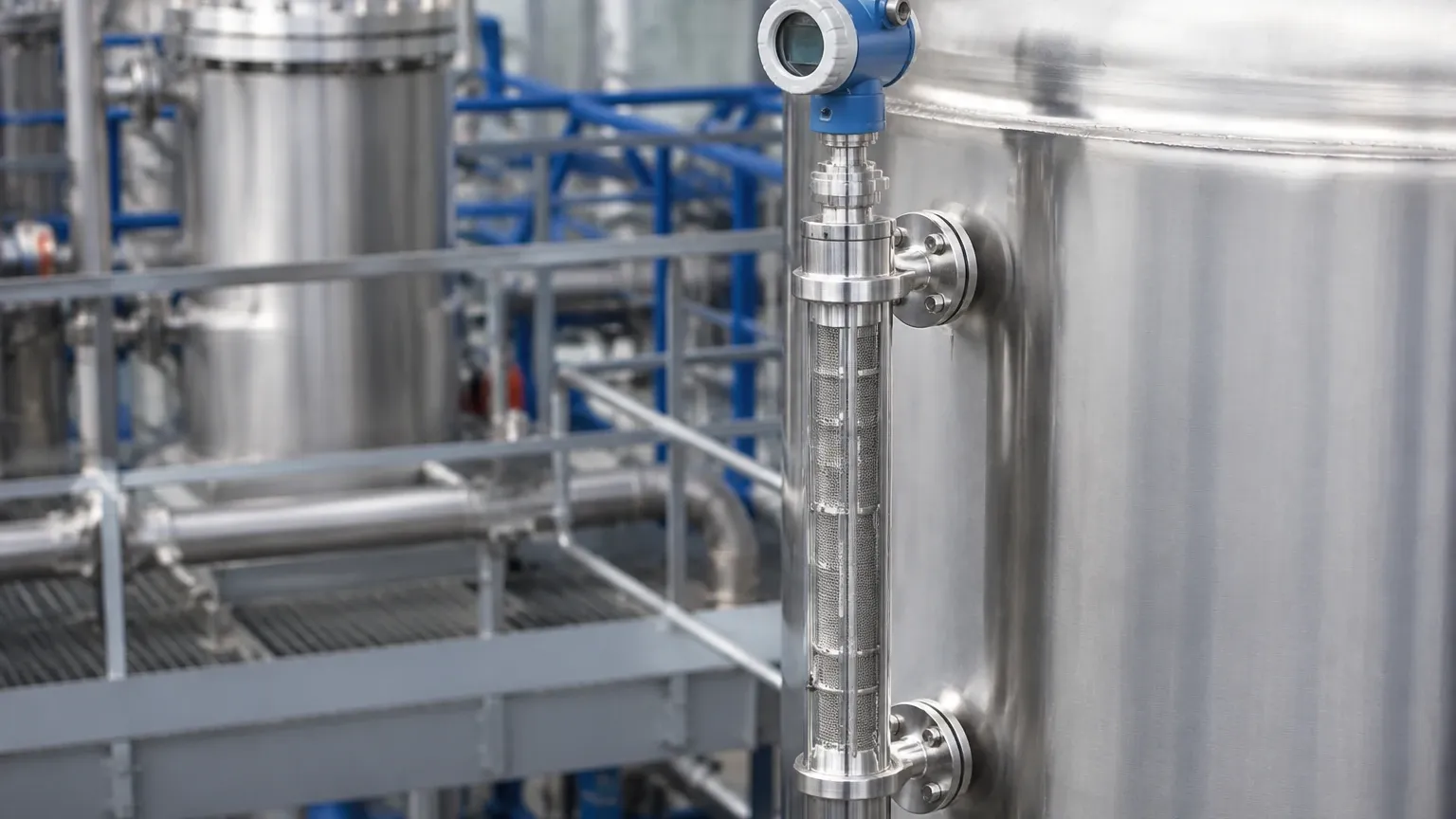
* Dimensional Tolerances: For cylinders used in precision equipment or as housings for sensitive level measurement sensors, tight tolerances on the outer diameter (OD) and length are mandatory.
Conclusion
Selecting the right d wire mesh for industrial applications requires a deep understanding of both material science and fluid dynamics. By focusing on the structural advantages of Dutch weave patterns and the customization potential of Wire Mesh Filter Cylinders & Tubes, engineers can implement filtration solutions that offer high precision, mechanical robustness, and long-term cost efficiency. Whether the application involves protecting sensitive downstream equipment or ensuring the purity of a final product, the technical integrity of the filter component remains the most critical factor in operational success.
