


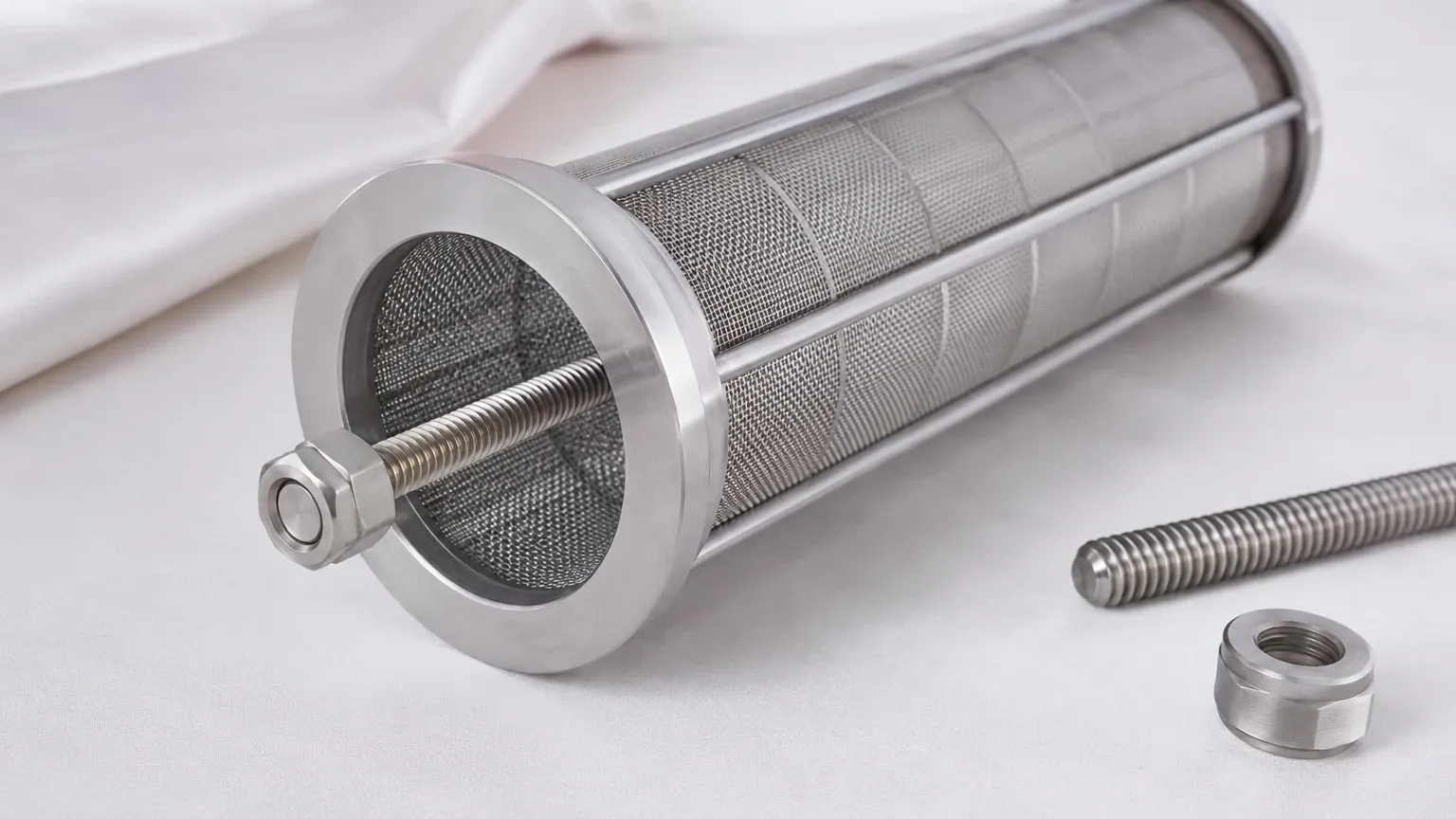
Basket Strainer Long Screw
In the realm of industrial filtration, the reliability of a system often depends on the smallest mechanical details. While the filter media itself performs the primary task of particle separation, the hardware that secures the assembly—such as the basket strainer long screw—plays a pivotal role in maintaining structural integrity, ensuring a leak-proof seal, and facilitating ease of maintenance. For engineers and procurement professionals managing high-pressure or high-volume fluid systems, understanding the technical specifications of these fastening components is essential for optimizing the performance of industrial strainers.
Industrial filtration assemblies, particularly those used in chemical processing, water treatment, and food production, are subject to significant mechanical stress. The use of a basket strainer long screw is frequently dictated by the design of the housing and the thickness of the mounting flange. These screws are not merely fasteners; they are engineered components designed to withstand corrosive environments and high torque requirements while ensuring that the internal basket remains seated correctly against the housing gaskets.
Understanding the Role of Fastening Components in Industrial Filtration
The primary function of a basket strainer is to remove unwanted solids from a liquid stream. These units are typically installed in piping systems to protect downstream equipment like pumps, valves, and heat exchangers. The "basket" is the removable element that captures debris. To ensure that fluid does not bypass the filter media, the basket must be held firmly in place. This is where the basket strainer long screw becomes critical.
In many heavy-duty industrial housings, the lid or the basket retainer is secured using extended bolts or long screws. These are necessary when the housing features thick-walled castings or when specialized spacers are used to accommodate high-viscosity fluids. A standard screw may not offer sufficient thread engagement to provide the necessary clamping force. By utilizing a basket strainer long screw, engineers can ensure that the compression on the O-rings or gaskets is uniform, preventing bypass—a condition where unfiltered liquid escapes around the edges of the basket.
Furthermore, the length of the screw is often a factor in maintenance efficiency. In deep-sump strainers or top-entry housings, longer screws allow for easier access and alignment during the reassembly process after a cleaning cycle. For maintenance teams, having the correct hardware means less downtime and a reduced risk of cross-threading during high-pressure reinstallation.
Engineering Requirements for Strainers & Baskets
When selecting filtration hardware, it is impossible to separate the fasteners from the filter elements themselves. The performance of Strainers & Baskets is defined by their ability to handle specific flow rates and pressure drops while maintaining a target micron rating. Kaifil specializes in manufacturing these components from high-grade stainless steel, ensuring they meet the rigorous demands of industrial environments.
Material Compatibility
In industrial applications, material selection is the first line of defense against system failure. Most industrial strainers and their associated hardware are manufactured from:
* SS304: Suitable for general industrial use, water treatment, and less aggressive chemical environments.
* SS316/SS316L: The standard for pharmaceutical, food and beverage, and marine applications due to its superior resistance to pitting and chloride-induced corrosion.
* Duplex Stainless Steel: Reserved for highly corrosive chemical processing where standard austenitic steels might fail.
Using a basket strainer long screw made from a material that matches the housing and the basket is vital to prevent galvanic corrosion. When two dissimilar metals are in contact in the presence of an electrolyte (the process fluid), the less noble metal will corrode. By standardizing on high-quality stainless steel for both the strainers and the fastening hardware, Kaifil ensures a longer service life for the entire assembly.
Filtration Accuracy and Structural Support
The baskets within these systems are often constructed from perforated metal or reinforced wire mesh. Depending on the application, a basket might require a "long screw" configuration to secure a heavy-duty handle or a reinforced top ring. This structural support is necessary because, as a basket fills with debris, the differential pressure across the media increases. Without robust fastening, the basket could shift or collapse, leading to catastrophic failure of the filtration stage.
Why "Long Screw" Specifications Matter in Industrial Assemblies
In B2B procurement, the term "basket strainer long screw" often refers to a specific replacement part or a design requirement for custom-built housings. There are several engineering scenarios where standard-length hardware is insufficient:
1. Thick Flange Connections: Heavy-duty cast iron or stainless steel housings often have thick flanges to handle high internal pressures (e.g., ANSI Class 150 or 300). These require longer screws to pass through the lid, the gasket, and into the housing body with adequate thread engagement.
2. Jacketed Strainers: In industries like chocolate processing or chemical manufacturing, strainers are often "jacketed" to allow for steam or hot oil circulation. The extra layer of the heating jacket increases the distance the fastener must bridge, necessitating a long screw.
3. Vibration Damping: In systems with high-frequency vibrations (such as those near positive displacement pumps), longer screws may be used in conjunction with specialized locking washers or bushings to provide a more stable tensioning force that resists loosening over time.
4. Thermal Expansion: In high-temperature applications, materials expand. A longer screw provides a greater "stretch length," which can help maintain a consistent clamping force as the temperature of the system fluctuates, preventing leaks during heat-up or cool-down cycles.
Technical Considerations for Selection and Installation
Choosing the right hardware for a filtration system requires more than just measuring length. Engineers must consider several technical factors to ensure the basket strainer long screw performs as intended.
Thread Pitch and Tolerance
Most industrial strainers utilize metric or UNC (Unified National Coarse) threads. For a basket strainer long screw, a coarse thread is often preferred in industrial environments because it is more robust, less likely to cross-thread, and easier to clean if it becomes contaminated with process debris. However, in precision applications where fine adjustment of gasket compression is required, fine-pitched threads may be specified.
Torque and Preload
The effectiveness of a fastener is determined by its preload—the tension created when the screw is tightened. For industrial strainers, over-tightening can deform the basket flange or crush the gasket, while under-tightening leads to leaks. Engineers should always refer to the manufacturer’s torque specifications, which are calculated based on the screw material, diameter, and the required sealing pressure of the housing.
Coating and Surface Treatment
While stainless steel is naturally corrosion-resistant, some applications benefit from additional surface treatments. Passivation is standard for Kaifil components to remove surface contaminants and enhance the chromium oxide layer. In some specialized chemical environments, screws may be coated with PTFE to provide extra chemical resistance and to act as an anti-seize agent, making future maintenance easier.
Custom OEM Solutions for Complex Filtration Systems
One of the primary challenges in industrial maintenance is sourcing exact replacement components for aging or custom-designed equipment. Many off-the-shelf fasteners do not meet the precise tolerances required for high-performance filtration housings. This is where Kaifil’s manufacturing expertise provides significant value.
As a specialist in custom stainless steel filtration, Kaifil provides OEM support for projects requiring non-standard Strainers & Baskets and their associated hardware. Whether a project requires a specific basket strainer long screw with a custom head geometry or a basket with unique dimensions to fit a legacy system, custom manufacturing ensures that the replacement part fits perfectly and performs to the original engineering specifications.
Customization options often include:
* Variable Lengths: Precisely machined lengths to accommodate unique housing depths.
* Specialty Alloys: Sourcing materials like Monel or Inconel for extreme environments.
* Integrated Features: Screws with integrated pressure ports or sensors for smart filtration monitoring.
Maintenance and Total Cost of Ownership
From a B2B perspective, the total cost of ownership (TCO) of a filtration system is heavily influenced by maintenance cycles and part durability. While a basket strainer long screw might seem like a low-cost item, the failure of such a component can lead to expensive system downtime or environmental hazards if a leak occurs.
Inspection Cycles
Regular inspection of all fastening hardware should be part of standard preventative maintenance. Engineers should look for:
* Signs of Galling: Common in stainless steel fasteners, galling can seize the screw, making it impossible to remove without damaging the housing.
* Corrosion: Even stainless steel can suffer from stress corrosion cracking in certain chemical environments.
* Thread Wear: Repeated removal and installation can wear down threads, reducing the maximum achievable preload.
Replacement Strategy
It is often recommended to replace the basket strainer long screw whenever the main housing gaskets are replaced, or at least every few maintenance cycles. This ensures that the threads remain sharp and the metal has not reached its fatigue limit. Keeping a stock of these specific fasteners on-site prevents delays during emergency repairs.
Conclusion: Optimizing System Reliability
In the demanding world of industrial filtration, the synergy between the main filter element and its securing hardware is paramount. The basket strainer long screw is a vital link in this chain, ensuring that Strainers & Baskets operate within their designed parameters. By focusing on high-quality materials, precise engineering specifications, and proper installation techniques, facilities can significantly improve the reliability and efficiency of their fluid processing systems.
For engineers and technical buyers, partnering with a manufacturer like Kaifil ensures access to the expertise required to select the right components for any application. Whether you are dealing with standard water treatment or complex chemical processing, the right combination of filtration media and robust fastening hardware is the key to long-term operational success. Understanding the nuances of components like the basket strainer long screw allows for better-informed purchasing decisions, reduced maintenance costs, and a more resilient industrial infrastructure.
