


Little Strainer Basket
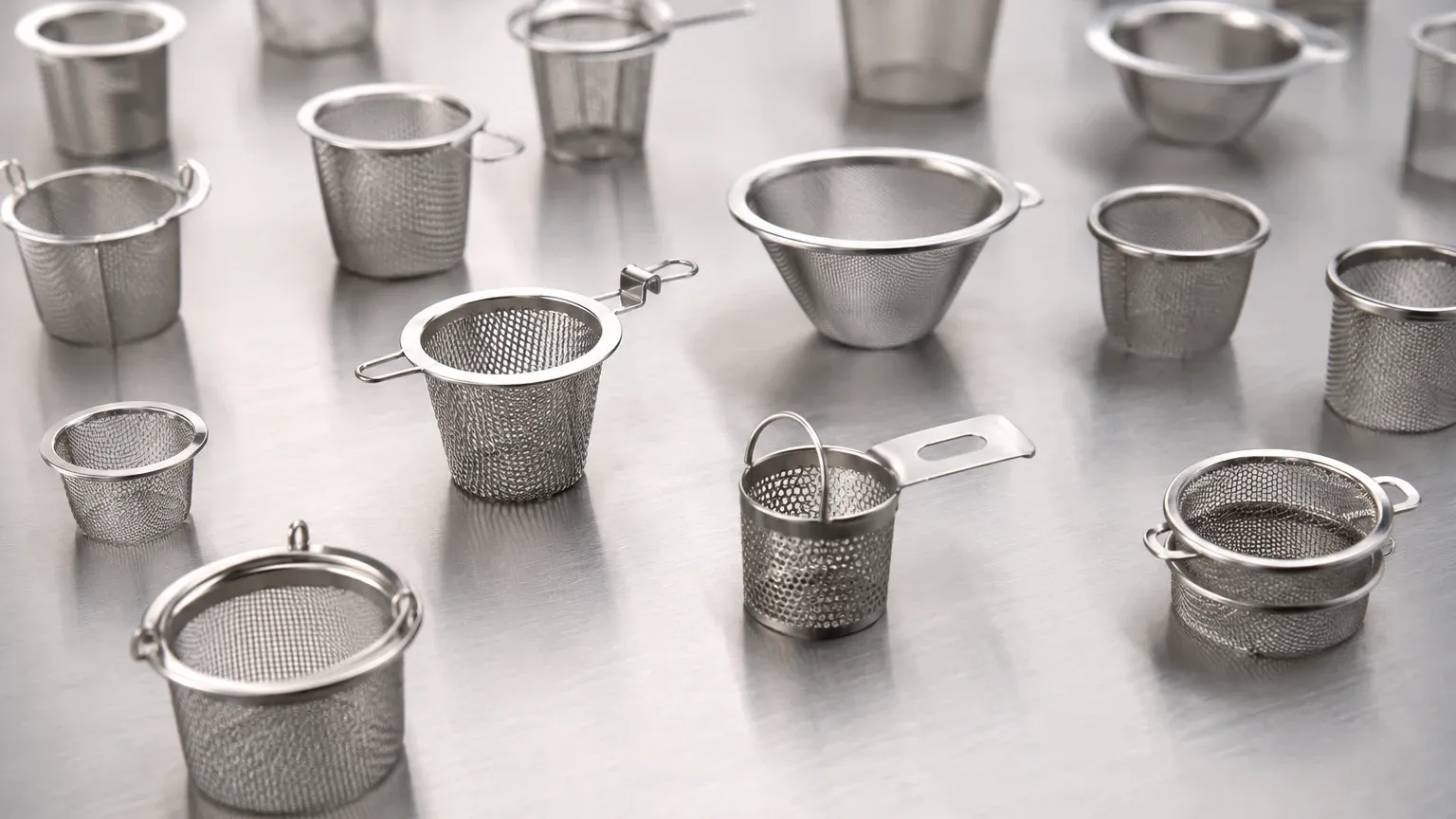
In industrial filtration, the term "little strainer basket" typically refers to compact, precision-engineered filtration components designed for low-flow applications, pilot plant operations, or the protection of sensitive downstream instrumentation. While larger basket strainers handle high-volume bulk processing, these smaller variants are critical for localized filtration where space is limited and precision is paramount. For engineers and procurement teams, selecting the right small-scale strainer involves a deep understanding of material science, fluid dynamics, and mechanical compatibility to ensure the longevity of the entire system.
Industrial Strainers & Baskets are foundational to maintaining fluid purity. When scaled down to smaller dimensions, these components must still adhere to rigorous manufacturing standards to withstand high pressures, corrosive chemicals, and extreme temperatures. This guide examines the technical nuances of small-scale strainer baskets, their industrial applications, and the engineering criteria essential for optimized performance.
Technical Specifications for Small-Scale Industrial Strainers
The performance of a little strainer basket is dictated by its construction materials and the geometry of its filtration media. In industrial environments, stainless steel is the gold standard due to its mechanical strength and resistance to environmental degradation.
Material Selection: 304 vs. 316L Stainless Steel
Most industrial baskets are fabricated from 304 or 316L stainless steel.
- 304 Stainless Steel: Suitable for general-purpose applications, providing excellent strength and basic corrosion resistance. It is commonly used in food processing and hydraulic systems where aggressive chemicals are not present.
- 316L Stainless Steel: The "L" denotes low carbon, which enhances weldability and prevents intergranular corrosion. 316L contains molybdenum, making it the preferred choice for pharmaceutical and chemical applications where exposure to chlorides or acidic cleaning agents is frequent.
Filtration Media and Mesh Types
Small baskets often utilize a combination of perforated metal for structural support and fine wire mesh for the actual filtration. The choice of weave impacts both the flow rate and the particle retention capability:
- Plain Weave: The most common type, offering a straightforward over-under pattern suitable for standard debris removal.
- Dutch Weave: Features a higher density of wires, providing superior strength and the ability to filter much finer particles, often down to the micron level.
- Perforated Metal: Used as a primary strainer for large particles or as a "backup" cage for delicate wire mesh to prevent collapsing under high differential pressure.
Application Environments for Compact Filtration Components
Despite their size, little strainer baskets play a vital role across diverse sectors. Their primary function is to serve as a "last line of defense" or a localized filtration point within a larger complex system.
Chemical and Petrochemical Processing
In chemical lines, small strainers are often installed before expensive sensors, flow meters, or dosing pumps. They prevent trace amounts of particulates from damaging internal components or skewing sensitive measurements. Because these environments are often corrosive, the integrity of the basket's welds and the quality of the stainless steel are paramount.
Food and Beverage Industry
In the food industry, small-scale baskets are used in sampling ports or small-batch processing lines. They must adhere to sanitary standards, featuring smooth surfaces and specialized welding techniques (such as TIG welding) to eliminate "dead zones" where bacteria could proliferate. These baskets are frequently removed for cleaning, requiring robust handles and easy-access designs.
Hydraulic and Lubrication Systems
Precision hydraulic systems rely on clean oil to prevent valve sticking and pump wear. A little strainer basket located in a reservoir return line or a suction line ensures that even small metallic shavings or environmental contaminants are captured before they circulate through the high-pressure circuit.
Pharmaceutical Manufacturing
Pharmaceutical applications require the highest levels of filtration accuracy. Small baskets are used in the production of APIs (Active Pharmaceutical Ingredients) and in cleanroom utilities. Here, the focus is on 316L stainless steel and high-precision micron ratings to ensure product purity and compliance with stringent regulatory standards.
Evaluating Flow Dynamics and Pressure Drop
One of the most critical engineering considerations when implementing a little strainer basket is the relationship between flow rate and pressure drop (Delta P). Because the surface area of a small basket is limited, it can clog more quickly than its larger counterparts if not sized correctly.
The Importance of Open Area Ratio
The "Open Area Ratio" (OAR) is the ratio of the total area of the holes in the mesh to the internal cross-sectional area of the inlet pipe. A well-designed basket should ideally have an OAR of at least 6:1 to 8:1. This ensures that even as the basket begins to collect debris, there is enough remaining open area to allow fluid to pass through without a significant increase in backpressure.
Managing Differential Pressure
Engineers must monitor the differential pressure across the strainer. As the basket fills with contaminants, the pressure on the upstream side increases. If the differential pressure exceeds the basket's structural limits, the mesh may burst or bypass. In small systems, where pumps may have limited head pressure, selecting a basket with a low initial pressure drop is essential for maintaining system efficiency.
Customization Options for OEM Filter Baskets
Off-the-shelf solutions rarely meet the specific requirements of complex industrial machinery. Customization is often necessary to ensure a perfect fit and optimal performance. When sourcing Strainers & Baskets, several customization factors should be considered:
1. Dimensional Accuracy: Small baskets often need to fit into tight housings with minimal clearances. Precision manufacturing ensures that the flange or rim of the basket seats perfectly, preventing fluid bypass.
2. Reinforcement Structures: For high-pressure applications, a little strainer basket may require internal or external support cages. This prevents the mesh from deforming under the weight of the captured solids or the force of the fluid flow.
3. Handle and Lifting Configurations: Even small baskets need to be handled safely. Custom handle designs, such as folding bails or fixed bars, allow for easy extraction during maintenance cycles.
4. Specialized Coatings: In some cases, stainless steel may be electropolished to improve corrosion resistance and ease of cleaning, or coated with specialized materials to reduce friction or prevent adhesion of sticky substances.
Maintenance Protocols and Service Life Optimization
The longevity of a stainless steel strainer basket depends heavily on the maintenance regime. Unlike disposable filters, stainless steel baskets are designed for long-term reuse, making them a cost-effective and environmentally friendly choice.
Cleaning Methods
- Ultrasonic Cleaning: This is the most effective method for small, intricate baskets with fine mesh. Ultrasonic waves create cavitation bubbles that dislodge microscopic particles from deep within the weave.
- Backwashing: In some systems, the flow can be momentarily reversed to flush debris off the surface of the basket. This is effective for larger particles but may not be sufficient for fine silt.
- Chemical Soaking: For baskets used in the food or chemical industries, soaking in a compatible cleaning solution can dissolve organic buildup or scale.
Signs of Wear and Replacement Cycles
While stainless steel is durable, it is not indestructible. Baskets should be inspected regularly for:
- Mesh Blinding: Permanent clogging that cannot be removed by cleaning.
- Mechanical Fatigue: Cracks in the welds or thinning of the mesh due to erosion.
- Deformation: Any sign that the basket is losing its shape, which can lead to bypass.
Establishing a proactive replacement cycle based on the severity of the application helps prevent catastrophic system failures and unplanned downtime.
Critical Factors for Procurement and Engineering Teams
Before finalizing a purchase for a little strainer basket, technical professionals should confirm several key data points with their manufacturer to ensure the component is fit for purpose.
Compatibility Checklist
- Fluid Chemistry: Confirm that the stainless steel grade (304, 316, or 316L) is compatible with the process fluid and any cleaning chemicals used.
- Temperature and Pressure: Ensure the basket and its supporting structure can handle the maximum operating temperature and the highest possible surge pressure.
- Particle Size Distribution: Select a mesh size that is fine enough to protect downstream equipment but coarse enough to avoid premature clogging. A common rule of thumb is to select a mesh size that is approximately 50% of the diameter of the smallest particle that needs to be removed.
- Seal Integrity: If the basket is part of a housing assembly, verify the type of gasket or O-ring required (e.g., Viton, EPDM, or PTFE) to prevent leakage.
Total Cost of Ownership (TCO)
When evaluating the cost of a strainer basket, procurement teams should look beyond the initial purchase price. A high-quality, custom-engineered stainless steel basket may have a higher upfront cost than a generic alternative, but its durability, ease of cleaning, and ability to protect expensive downstream assets result in a significantly lower total cost of ownership over the life of the system.
Conclusion
A little strainer basket is a small but vital component in the industrial landscape. Whether it is protecting a high-precision flow meter in a chemical plant or ensuring the purity of a batch of pharmaceuticals, its role in maintaining system integrity cannot be overstated. By focusing on material quality, precise engineering, and application-specific customization, engineers can ensure that their filtration systems operate at peak efficiency with minimal maintenance requirements.
For those seeking reliable, high-performance filtration components, exploring the range of Strainers & Baskets is the first step toward optimizing industrial fluid processes. Through careful selection and engineering collaboration, even the smallest filtration component can make a significant impact on industrial productivity and product quality.
