


Engineering Guide to Wire Mesh Filter Elements for Industrial Applications
In industrial process engineering, the efficiency and longevity of a system often depend on the precision of its filtration components. A wire mesh filter element serves as a critical barrier against contaminants, ensuring that fluids and gases meet strict purity standards while protecting downstream equipment from wear and damage. Unlike disposable polymer filters, stainless steel wire mesh provides a reusable, high-strength solution capable of withstanding extreme temperatures, high pressures, and corrosive environments.
Selecting the appropriate filtration hardware requires a deep understanding of material science, fluid dynamics, and mechanical design. This guide explores the technical specifications, selection criteria, and engineering considerations for integrating Wire Mesh Filter Cylinders & Tubes into demanding industrial workflows.
Understanding the Wire Mesh Filter Element: Principles and Construction
At its core, a wire mesh filter element is a mechanical sieve. It operates primarily through surface filtration, where particles larger than the mesh openings are trapped on the upstream side of the media. This differs from depth filtration, where particles are captured within the thickness of the media. The primary advantage of surface filtration in an industrial context is the ease of cleaning and the predictability of the pressure drop.
Weave Types and Their Impact
The performance of a filter element is largely dictated by the weave pattern of the wire mesh. Common weaves include:
* Plain Weave: The simplest pattern where wires cross over and under each other. It offers high flow rates and is ideal for general-purpose coarse filtration.
* Twill Weave: Each shute wire passes successively over two and under two warp wires. This allows for a heavier wire diameter for a given mesh count, increasing the mechanical strength of the element.
* Dutch Weave (Plain and Twilled): This weave uses a larger diameter warp wire and a smaller diameter shute wire. The result is a dense, high-strength mesh with very fine filtration ratings, often used in high-pressure applications where precision is paramount.
Structural Integrity
Because industrial filters are often subjected to high differential pressures, the mesh itself is frequently supported by internal or external skeletons. These supports, typically made from perforated metal or heavier wire cages, prevent the mesh from collapsing or bursting during operation. In many custom designs, multiple layers of mesh are sintered together to combine fine filtration with high structural rigidity.
Material Selection and Chemical Compatibility
Material selection is the most critical factor in determining the lifespan of a wire mesh filter element. Industrial environments often involve exposure to aggressive chemicals, high-salinity fluids, or extreme thermal cycles. Stainless steel is the industry standard due to its versatility and durability.
Grade 304 vs. Grade 316L
* Stainless Steel 304: This is the most common grade, offering excellent resistance to atmospheric corrosion and many organic and inorganic chemicals. It is widely used in food and beverage processing and general industrial applications.
* Stainless Steel 316L: Containing molybdenum, 316L provides superior resistance to pitting and crevice corrosion in chloride-rich environments. The "L" denotes low carbon content, which improves weldability and reduces the risk of intergranular corrosion in the heat-affected zones of the filter assembly.
For specialized applications, other alloys such as Monel, Inconel, or Hastelloy may be utilized to handle highly acidic or high-temperature conditions exceeding 500°C (932°F).
Key Performance Metrics: Micron Rating and Flow Rate
When specifying a wire mesh filter element, engineers must balance the need for fine filtration with the requirement for adequate flow rates. This balance is defined by two primary metrics: the micron rating and the open area percentage.
Absolute vs. Nominal Micron Ratings
* Nominal Rating: This refers to the ability of the filter to retain a majority of particles of a specific size (e.g., 90% of 20-micron particles). It is often used for non-critical applications.
* Absolute Rating: This represents the diameter of the largest hard spherical particle that will pass through the filter under specified test conditions. In high-precision industrial processes, absolute ratings are essential to ensure the complete removal of specific contaminants.
Pressure Drop (ΔP)
The pressure drop across a filter element is a function of the fluid’s velocity, viscosity, and the filter’s open area. A high mesh count (finer filtration) naturally reduces the open area, leading to a higher initial pressure drop. Engineers must calculate the "clean pressure drop" to ensure the system’s pump or compressor can maintain the required flow rate as the filter begins to load with contaminants.
Structural Design: Wire Mesh Filter Cylinders & Tubes
The physical geometry of the filter determines its integration into the piping system and its effective filtration area. Wire Mesh Filter Cylinders & Tubes are the most common configurations due to their inherent structural strength and ease of manufacturing.
Cylindrical vs. Pleated Designs
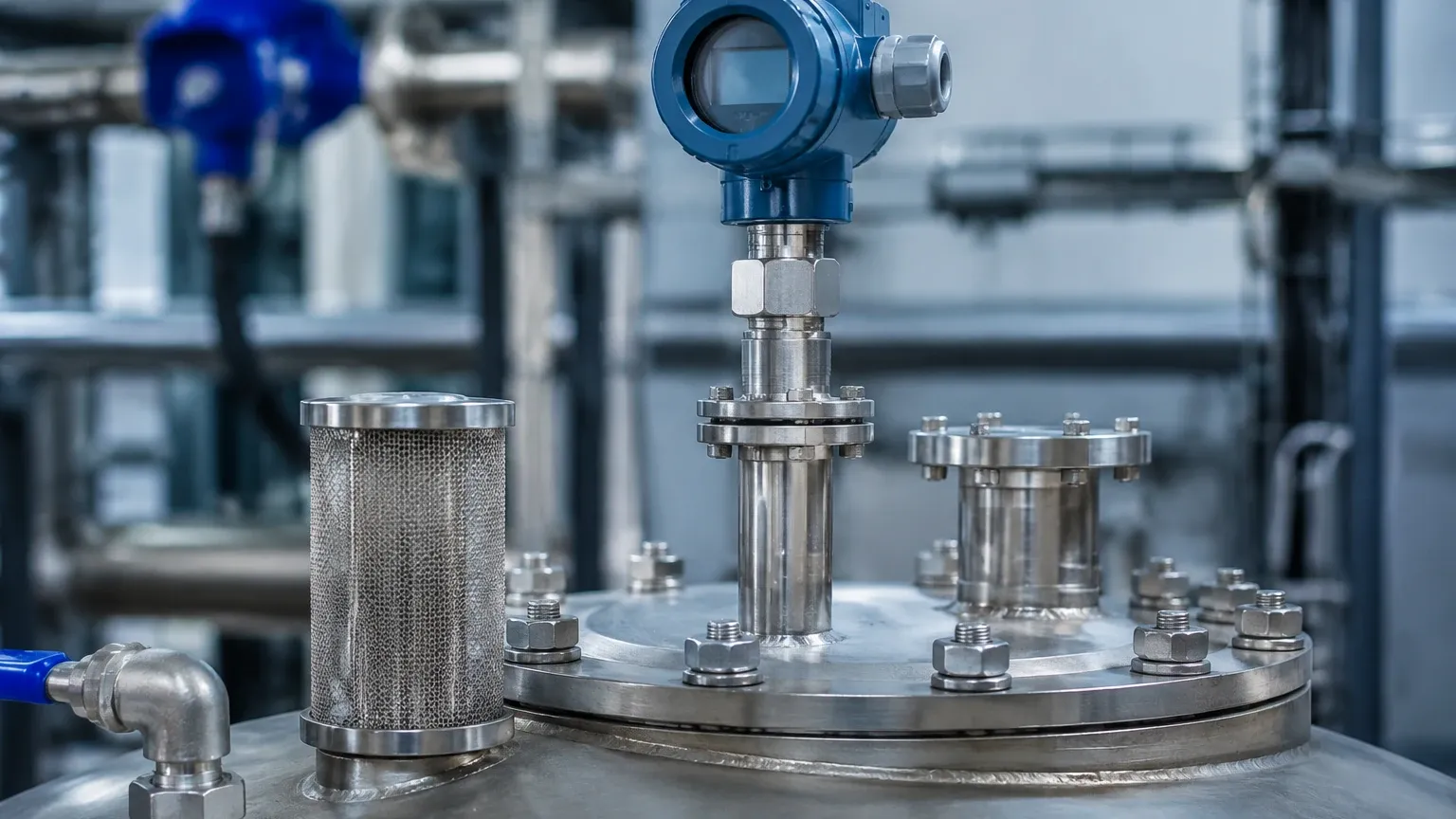
* Cylindrical Elements: These consist of a single or multi-layer mesh wrapped into a tube and welded. They are easy to clean and maintain but have a limited surface area equal to the cylinder's outer dimensions.
* Pleated Elements: By folding the wire mesh into a series of pleats before forming the cylinder, the effective filtration area can be increased by 3 to 10 times. This significantly extends the time between cleaning cycles and reduces the flow velocity through the mesh, which can improve filtration efficiency.
End Fittings and Sealing
A wire mesh filter element is only as effective as its seal. Common end-fitting configurations include:
* Double Open End (DOE): Requires gaskets at both ends to seal against the housing.
* Single Open End (SOE): Often features a threaded connection or an O-ring (e.g., 222 or 226 fittings) at one end and a closed cap at the other. This design minimizes the risk of bypass.
* Flanged Ends: Used in large-scale industrial piping where high mechanical stability is required.
Customization for Demanding Environments
Standard off-the-shelf filters rarely meet the specific needs of complex industrial systems. Customization allows for the optimization of the wire mesh filter element for specific operational challenges.
Multi-Layer Sintered Mesh
For applications involving high pressure or backwashing, sintered wire mesh is often employed. This process involves heat-treating multiple layers of mesh until they fuse at the contact points. The result is a monolithic structure that combines a very fine filtration layer with several coarser support and drainage layers. Sintered elements do not migrate (shed wires) and maintain their pore geometry even under extreme mechanical stress.
Reinforced Cores
In hydraulic systems or high-viscosity fluid processing, the differential pressure can reach levels that would deform standard mesh. In these cases, the wire mesh filter element is built around a heavy-duty perforated core or a spiral-welded tube. This internal reinforcement allows the filter to withstand ΔP spikes without compromising the integrity of the filtration media.
Installation, Maintenance, and Lifecycle Considerations
The total cost of ownership (TCO) for a stainless steel filter is often lower than that of disposable alternatives, despite a higher initial capital expenditure. This is due to the durability and cleanability of the metal mesh.
Cleaning Methods
Unlike polymer filters, a wire mesh filter element can be cleaned and returned to service multiple times. Common cleaning techniques include:
1. Backwashing: Reversing the flow of fluid to dislodge particles from the surface of the mesh. This can often be automated within the system.
2. Ultrasonic Cleaning: Using high-frequency sound waves in a chemical bath to remove fine particles trapped deep within the mesh pores.
1. Chemical Cleaning: Using acids, alkalis, or solvents to dissolve organic or inorganic scaling. This requires careful material compatibility checks to ensure the cleaning agent does not damage the stainless steel.
Monitoring Performance
To optimize maintenance schedules, industrial systems should be equipped with differential pressure sensors. A significant increase in ΔP indicates that the filter is reaching its loading capacity and requires cleaning. Conversely, a sudden drop in ΔP may indicate a breach in the mesh or a seal failure, requiring immediate inspection.
Procurement Checklist for Industrial Buyers
When sourcing Wire Mesh Filter Cylinders & Tubes, international buyers and engineers should confirm the following technical details with the manufacturer to ensure application success:
* Operating Conditions: Define the maximum operating temperature, normal and peak pressure, and the nature of the fluid (viscosity, pH, and corrosivity).
* Filtration Targets: Specify the required micron rating (absolute or nominal) and the type of contaminants being removed.
* Flow Requirements: Provide the minimum and maximum flow rates to ensure the element size is sufficient to prevent excessive pressure drop.
* Mechanical Interface: Confirm the exact dimensions, including length, outer diameter (OD), inner diameter (ID), and the specific type of end fittings or gaskets required.
* Compliance and Standards: Determine if the application requires specific certifications, such as FDA compliance for food and beverage or material traceability reports (MTRs) for pharmaceutical and aerospace sectors.
By focusing on these technical boundaries, engineering teams can implement filtration solutions that enhance process stability, reduce downtime, and ensure the long-term reliability of industrial infrastructure. Kaifil’s expertise in custom stainless steel fabrication provides the necessary technical support to develop high-performance components tailored to these rigorous demands.
