


Strainer Basket Mesh
In industrial fluid handling systems, the integrity of downstream equipment—such as pumps, valves, and heat exchangers—depends heavily on the effectiveness of primary filtration. The strainer basket is the workhorse of these systems, and its performance is dictated almost entirely by the strainer basket mesh. Selecting the correct mesh is not merely a matter of choosing a hole size; it involves a complex balance of material science, fluid dynamics, and mechanical engineering to ensure that the system operates efficiently without excessive pressure drops or frequent mechanical failures.
Industrial strainers are designed to remove large particles from liquid or gas streams. Unlike fine filters that may operate at the sub-micron level, strainer baskets typically handle coarser filtration requirements, ranging from several millimeters down to approximately 40 microns. The mesh serves as the functional interface where separation occurs, making it the most critical component in the assembly.
The Fundamentals of Strainer Basket Mesh Selection
When engineers specify a Strainer & Baskets solution, the first technical hurdle is defining the mesh characteristics. The term "mesh" refers to the number of openings per linear inch. For example, a 20-mesh screen has 20 openings in one inch. However, mesh count alone does not define filtration accuracy because it does not account for wire diameter.
Mesh Count vs. Micron Rating
To achieve precise filtration, engineers often look at the micron rating, which measures the actual distance between the wires. A higher mesh count generally correlates to a smaller micron rating, but the thickness of the wire used in the weave affects the "open area." The open area is the percentage of the total basket surface that is actually available for fluid to pass through. A low open area leads to higher flow resistance, which can starve pumps or cause system-wide pressure spikes.
Weave Types and Their Applications
The geometry of the weave determines how the strainer basket mesh reacts under pressure and how easily it can be cleaned:
1. Plain Weave: The most common industrial weave where each warp wire crosses alternately over and under each weft wire. It offers a high open area and is relatively easy to clean, making it suitable for standard debris removal.
2. Twill Weave: Each weft wire passes over two and under two warp wires. This allows for the use of heavier wires for a given mesh count, providing greater strength for high-pressure applications where a plain weave might deform.
3. Dutch Weave: This weave uses different diameters for warp and weft wires. It results in a much tighter, more compact mesh that offers superior strength and the ability to filter very fine particles while maintaining high mechanical resistance.
Material Engineering for Industrial Environments
The environment in which the strainer operates dictates the material requirements for the mesh. Stainless steel is the industry standard due to its corrosion resistance and mechanical durability. However, the specific grade of stainless steel must be matched to the chemical composition of the fluid and the operating temperature.
Grade 304 Stainless Steel
Grade 304 is the most widely used material for strainer basket mesh. It provides excellent resistance to atmospheric corrosion and is suitable for most water treatment and food-grade applications. It is cost-effective and maintains its structural integrity at temperatures up to 800°F, though its resistance to chlorides is limited.
Grade 316 and 316L Stainless Steel
For more demanding environments, such as chemical processing or marine applications, Grade 316 is preferred. The addition of molybdenum enhances its resistance to pitting and crevice corrosion, particularly in chloride-rich environments. Grade 316L (low carbon) is often specified for components that require extensive welding, as it minimizes the risk of carbide precipitation which can lead to intergranular corrosion.
Specialized Alloys
In extreme cases involving highly acidic or alkaline fluids, or temperatures exceeding the limits of standard stainless steel, manufacturers like Kaifil may utilize specialized alloys such as Monel, Inconel, or Hastelloy. These materials ensure that the strainer basket mesh does not degrade prematurely, which would otherwise lead to bypass—a condition where unfiltered fluid leaks past a compromised mesh.
Structural Integrity and Support Layers
A common engineering challenge with fine strainer basket mesh is its inherent lack of structural rigidity. A fine 100-mesh screen, for instance, is thin and can easily collapse or tear under the force of a high-velocity fluid stream or a significant buildup of debris.
To solve this, industrial strainer baskets are typically constructed using a multi-layer approach. The fine filtration mesh is bonded or lined inside a perforated metal basket. The perforated metal provides the "skeleton" or structural support necessary to withstand differential pressure, while the mesh performs the actual filtration.
In heavy-duty applications, a "double-basket" or "pleated" design may be used. Pleating the mesh increases the total surface area within the same footprint, which significantly lowers the flux (flow per unit area) and extends the time between cleaning cycles. This is particularly beneficial in systems where downtime is costly, as it allows the strainer to hold more solids before reaching its maximum allowable pressure drop.
Optimizing Flow Rates and Pressure Drop
The primary performance metric for any strainer is the pressure drop (Delta P). This is the difference in pressure between the inlet and the outlet of the strainer. As the strainer basket mesh captures particles, the available open area decreases, and the pressure drop increases.
Calculating the Open Area Ratio
Engineers aim for a high "Open Area Ratio," which is the ratio of the total open area of the mesh to the internal cross-sectional area of the inlet pipe. A common industry standard is a 6:1 or 8:1 ratio. If the ratio is too low, the fluid velocity through the mesh becomes too high, which can cause "impingement"—a condition where particles are forced through the mesh or cause rapid erosion of the wire.
Managing Differential Pressure
It is essential to monitor differential pressure across the strainer. Most industrial systems are equipped with gauges or sensors to alert operators when the pressure drop reaches a critical threshold (typically 5 to 10 psi). Operating a strainer beyond its rated differential pressure can result in the mesh "bursting," where the wire cloth tears away from its support, allowing all captured debris to rush downstream and potentially destroy expensive equipment.
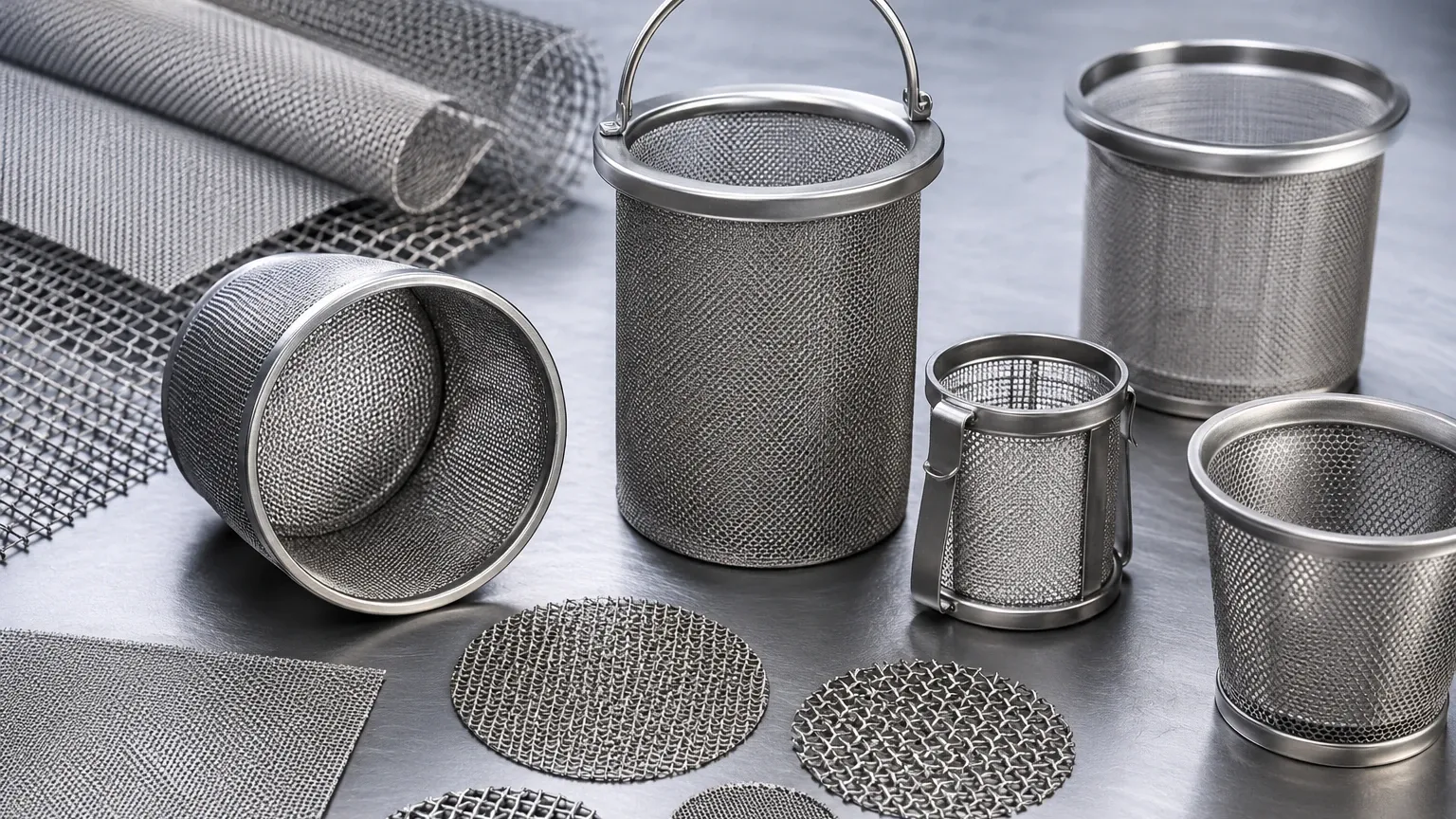
Custom Design and OEM Manufacturing Requirements
No two industrial processes are identical, which is why customization is a core requirement for Strainer & Baskets procurement. OEM manufacturers must be able to adapt mesh specifications to fit existing housings or unique spatial constraints.
Custom Dimensions and Fittings
Customization often involves more than just selecting a mesh count. It includes the design of the flange, handle type (for easy removal), and the sealing mechanism. A bypass-free seal is critical; if the basket does not fit perfectly within the housing, fluid will take the path of least resistance around the basket rather than through the mesh. This requires precision machining and high-quality welding techniques, such as TIG or plasma welding, to ensure that the mesh is securely attached to the frame without gaps.
Prototyping for Specific Applications
In sectors like pharmaceutical or high-purity chemical production, the strainer basket mesh may need to undergo specific surface treatments, such as electropolishing, to remove microscopic burrs and improve cleanability. Working with a manufacturer that understands these technical nuances allows engineers to develop prototypes that meet both filtration goals and regulatory compliance standards.
Maintenance, Cleaning, and Service Life
The longevity of a strainer basket is determined by how it is maintained. Unlike disposable filter cartridges, stainless steel strainer baskets are designed to be cleaned and reused. However, the cleaning method must be appropriate for the mesh type.
Cleaning Protocols
For coarse mesh, manual scrubbing or high-pressure water jets may be sufficient. For finer meshes, ultrasonic cleaning is often recommended to dislodge particles trapped deep within the weave without damaging the delicate wires. In systems where the fluid is viscous or the debris is sticky (such as in food processing or resin manufacturing), backwashing—reversing the flow of fluid to push particles off the mesh—is a common automated solution.
Indicators for Replacement
Despite their durability, strainer basket meshes are subject to mechanical fatigue. Over hundreds of cleaning cycles and thousands of hours of flow, the wires can thin or work-harden and become brittle. Regular inspection should look for:
* Wire Blinding: Permanent lodging of particles that cannot be cleaned, reducing the effective open area.
* Mesh Distortion: Signs that the mesh is bulging or pulling away from the support basket.
* Corrosion: Any discoloration or pitting that suggests the material grade is insufficient for the fluid chemistry.
Conclusion: Selecting the Right Filtration Partner
Choosing the right strainer basket mesh is a critical decision that impacts the reliability and efficiency of an entire industrial facility. It requires a deep understanding of the relationship between mesh geometry, material properties, and system hydraulics. By focusing on high-quality stainless steel construction and precision engineering, operators can ensure that their filtration systems provide consistent protection for downstream assets.
For engineers and purchasing teams, the goal is to find a balance between initial cost and total cost of ownership. A well-engineered strainer basket with the correct mesh specification may have a higher upfront cost but will save significant capital in the long run through reduced downtime, lower energy consumption (due to lower pressure drops), and extended equipment life. When evaluating options, it is vital to consult with specialists who can provide detailed technical data and customization capabilities tailored to specific industrial challenges.
