


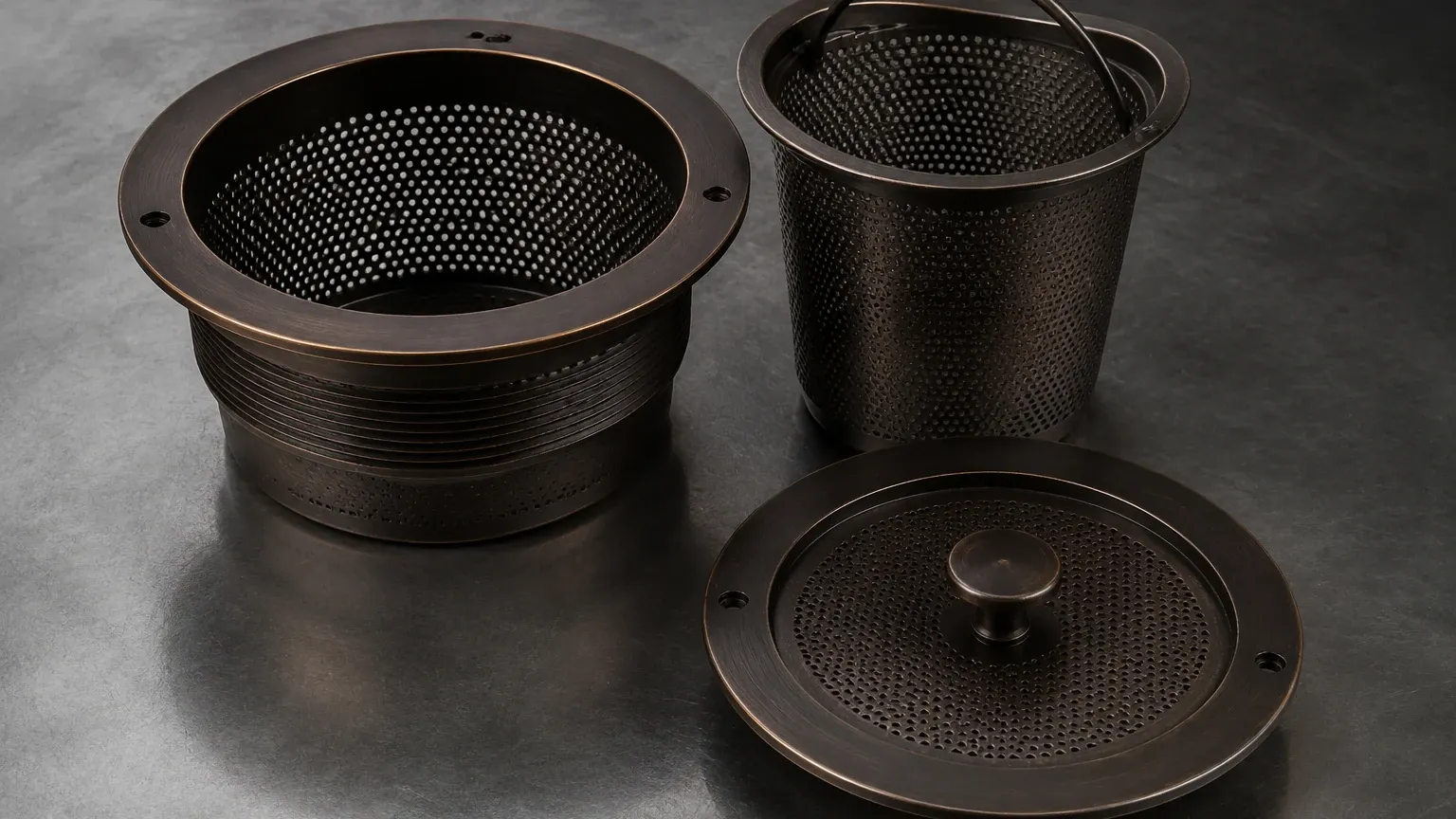
Basket Strainer Oil Rubbed Bronze
In the landscape of industrial and commercial filtration, the selection of components often involves a balance between mechanical performance and environmental integration. While standard stainless steel finishes dominate the industrial sector, specialized applications—ranging from high-end commercial hospitality systems to architectural water features and specific chemical processing environments—require specialized surface treatments. A basket strainer oil rubbed bronze finish represents one such specialized requirement, merging the robust debris-removal capabilities of a heavy-duty strainer with a specific aesthetic and protective surface layer.
For engineers and procurement professionals, selecting the right Strainers & Baskets involves more than just specifying a finish. It requires a deep dive into material compatibility, flow dynamics, and the long-term durability of the filtration media under operational stress. Understanding how a finish like oil rubbed bronze interacts with the underlying substrate and the process fluid is essential for ensuring system longevity and filtration efficiency.
Understanding the Role of Strainers & Baskets in Industrial Filtration
At its core, a basket strainer is a closed vessel with a cleanable screen element designed to remove foreign particles from a process line. Unlike simple Y-strainers, basket strainers typically offer a larger dirt-holding capacity and a lower pressure drop, making them ideal for high-flow applications. The internal basket, often constructed from perforated metal or woven wire mesh, serves as the primary barrier against contaminants that could otherwise damage pumps, valves, and downstream instrumentation.
In B2B applications, the choice of a basket strainer is dictated by the nature of the fluid (viscosity, temperature, and chemical composition) and the size of the particles to be removed. When a project specifies a basket strainer oil rubbed bronze, the engineering focus shifts to how this finish is applied—whether through chemical darkening, plating, or Physical Vapor Deposition (PVD)—and whether it can withstand the abrasive nature of the fluid stream without compromising the integrity of the filtration process.
Technical Specifications and Material Selection
The performance of any filtration component is heavily dependent on its base material. For industrial-grade strainers, stainless steel (typically Grade 304 or 316) is the industry standard due to its inherent corrosion resistance and mechanical strength.
Substrate Considerations
When applying an oil rubbed bronze finish, the substrate is usually brass, bronze, or stainless steel. In industrial settings, stainless steel is preferred as the core material because it provides the structural rigidity necessary to handle high pressure. The "oil rubbed" effect is then achieved through an electro-chemical process or a high-durability coating. For engineers, it is vital to confirm that the finish is non-reactive with the process fluid. For instance, in food and beverage or pharmaceutical applications, the finish must be food-grade and resistant to CIP (Clean-In-Place) chemicals.
Mesh and Perforation Standards
The internal basket is the heart of the unit. Kaifil specializes in custom wire mesh and perforated metal baskets that can be tailored to specific micron ratings. Common configurations include:
- Single Layer Mesh: Ideal for coarse straining where low resistance is required.
- Multi-Layer Sintered Mesh: Used for fine filtration where high structural strength is needed to prevent mesh migration or deformation under high differential pressure.
- Perforated Support: Often used as a cage to support finer mesh linings, ensuring the basket can withstand the weight of collected debris.
Engineering Evaluation: Flow Rates and Pressure Drop
One of the most critical factors in selecting Strainers & Baskets is the calculation of the pressure drop (ΔP). Every filtration element introduces a degree of resistance to the flow. As the basket collects debris, this resistance increases.
Calculating the Clean Pressure Drop
Engineers must calculate the clean pressure drop based on the fluid's velocity and viscosity. A basket strainer oil rubbed bronze must be sized so that the initial pressure drop does not exceed 2-3 PSI in most standard liquid applications. If the pressure drop is too high from the outset, the service interval (the time between cleanings) will be significantly shortened, leading to increased labor costs and potential system downtime.
Open Area Ratio
The efficiency of a basket strainer is often measured by its "Open Area Ratio" (OAR). This is the ratio of the total open area of the basket's mesh or perforations to the cross-sectional area of the inlet pipe. A high-quality industrial strainer should provide an OAR of at least 6:1 or 8:1. This ensures that even as the basket becomes partially clogged, the system can maintain an acceptable flow rate without triggering high-pressure alarms.
The Impact of Specialized Finishes on Durability
While the primary function of an oil rubbed bronze finish may be aesthetic in some contexts, in a B2B environment, it must also serve a functional purpose. In certain atmospheric conditions, specialized finishes can provide an extra layer of protection against external oxidation. However, the internal surfaces of the strainer—those in direct contact with the process fluid—must remain functionally smooth to prevent the adhesion of biofilms or scale.
PVD vs. Chemical Treatments
For industrial applications, Physical Vapor Deposition (PVD) is often superior to traditional chemical darkening. PVD creates a molecular bond with the substrate, resulting in a finish that is incredibly hard and resistant to scratching. This is particularly important for basket strainers that undergo frequent manual cleaning. A chemically darkened finish may wear off over time, exposing the base metal and potentially contaminating the process fluid with finish particles.
Corrosion Resistance in Harsh Environments
In coastal or high-humidity environments, a basket strainer oil rubbed bronze finish can act as a barrier against salt air. However, if the internal fluid is corrosive (such as acidic wastewater), the engineer must ensure that the internal basket remains high-grade stainless steel, regardless of the external housing's finish. Compatibility charts should always be consulted to match the alloy with the chemical profile of the fluid.
Maintenance and Operational Lifecycle
The total cost of ownership (TCO) for industrial filtration is determined by the ease of maintenance and the frequency of component replacement. Basket strainers are designed for easy access; most feature a bolted or quick-release cover that allows the operator to remove the basket for cleaning without disconnecting the piping.
Cleaning Protocols
When maintaining a basket strainer with a specialized finish, it is important to use non-abrasive cleaning agents. Harsh chemicals or wire brushes can damage an oil rubbed bronze surface, leading to pitting and localized corrosion. For the internal mesh, ultrasonic cleaning or high-pressure water jets are the preferred methods for removing embedded particulates without damaging the wire structure.
Replacement Cycles
The lifespan of the internal basket depends on the abrasiveness of the solids being filtered. In applications involving sand or metal shavings, the mesh may experience erosion over time. Regular inspections should look for:
- Mesh Blinding: Permanent clogging that cannot be removed by standard cleaning.
- Deformation: "Belly" or sagging in the basket floor caused by excessive pressure differentials.
- Bypass: Gaps between the basket rim and the housing seat that allow unfiltered fluid to pass through.
Customization Options for B2B Applications
Every industrial system has unique requirements. Kaifil provides extensive OEM and customization capabilities to ensure that the filtration solution fits the specific geometry and performance needs of the project. When specifying a basket strainer oil rubbed bronze, the following customization options should be considered:
1. Connection Types: While NPT (National Pipe Thread) is common for smaller units, larger industrial systems may require flanged (ANSI or DIN) or socket-weld connections to ensure leak-proof operation at higher pressures.
2. Gasket Materials: The seal between the cover and the housing must be compatible with the fluid. Options range from standard EPDM and Buna-N to high-temperature Viton or PTFE for aggressive chemical applications.
3. Differential Pressure Gauges: To optimize the cleaning cycle, strainers can be fitted with DP gauges. These provide a real-time visual or electronic signal when the basket is full, preventing unnecessary downtime or pump cavitation.
4. Magnetic Inserts: For applications involving ferrous metal particles, magnetic rods can be added to the basket to capture fine metal dust that might otherwise pass through the mesh.
Selecting the Right Partner for Filtration Solutions
Choosing a manufacturer for specialized filtration components requires a partner who understands both the metallurgical properties of the materials and the fluid dynamics of the application. Kaifil’s experience in producing custom stainless steel filtration solutions ensures that even specialized requests, such as those involving unique finishes or complex basket geometries, meet rigorous industrial standards.
When evaluating a supplier for Strainers & Baskets, engineers should confirm the manufacturer's ability to provide material test reports (MTRs), pressure test certifications, and detailed technical drawings. This level of transparency is essential for integrating the component into larger systems, such as hydraulic power units, water treatment skids, or chemical processing lines.
Final Considerations for Procurement
Before finalizing a purchase order for a basket strainer oil rubbed bronze, the following checklist should be verified by the engineering team:
- Micron/Mesh Requirement: Is the filtration level sufficient to protect downstream equipment without causing excessive pressure drop?
- Seal Compatibility: Does the gasket material match the chemical and temperature profile of the fluid?
- Installation Space: Is there sufficient overhead clearance to remove the basket for cleaning?
- Finish Durability: Is the oil rubbed bronze finish applied via a method (like PVD) that will withstand the intended environment?
By focusing on these technical parameters, B2B buyers can ensure that their filtration system remains efficient, durable, and aesthetically aligned with project requirements. Whether the application is a high-visibility commercial installation or a specialized industrial process, the right basket strainer is a critical investment in system reliability and fluid purity.
