


Strainer Basket Washer
In industrial filtration, the term "strainer basket washer" typically refers to two critical aspects of system maintenance and performance: the sealing components (washers or gaskets) that ensure a bypass-free fit within a housing, and the specialized cleaning processes or equipment used to restore the permeability of stainless steel filter media. For engineers and procurement teams managing fluid handling systems, understanding the technical nuances of these components is essential for maintaining operational efficiency and protecting downstream equipment.
Industrial Strainers & Baskets are designed to remove coarse particles from liquids and gases. However, the effectiveness of the basket is entirely dependent on the integrity of its seal and the cleanliness of its mesh. Whether you are dealing with chemical processing, water treatment, or food and beverage production, the interaction between the basket, its sealing washer, and the cleaning protocol dictates the total cost of ownership (TCO) and the lifespan of the filtration hardware.
The Function of the Strainer Basket Washer in System Integrity
The primary role of a washer or gasket in a strainer assembly is to prevent "fluid bypass." Bypass occurs when the process fluid flows around the outside of the filter basket rather than through the mesh media. This often happens due to an improper seal at the flange where the basket rests within the strainer housing.
Preventing Fluid Bypass
In high-pressure environments, even a microscopic gap can allow significant volumes of unfiltered fluid to pass. This leads to the contamination of sensitive downstream components such as pumps, valves, and spray nozzles. A precision-engineered strainer basket washer provides the necessary compression to bridge the gap between the basket flange and the housing seat. When selecting these components, engineers must consider the "seat load"—the amount of pressure required to compress the washer enough to create a gas-tight or liquid-tight seal without deforming the metal basket itself.
Vibration Dampening and Alignment
Beyond sealing, the washer acts as a buffer. Industrial systems often experience hydraulic shock or mechanical vibration. A resilient washer absorbs these micro-movements, preventing metal-on-metal friction that could lead to galling or fatigue failure of the basket flange. Furthermore, the thickness of the washer can be used to adjust the vertical alignment of the basket within the housing, ensuring that the handle or hold-down assembly applies even pressure across the sealing surface.
Material Selection for Strainer Basket Washers
Choosing the correct material for a strainer basket washer is a decision driven by chemical compatibility, temperature limits, and pressure requirements. Using an incompatible material can lead to swelling, brittleness, or complete seal failure, resulting in costly downtime.
Common Elastomers and Polymers
1. Buna-N (Nitrile): The standard choice for general-purpose applications involving water, oils, and some solvents. It offers good abrasion resistance but has a limited temperature range (typically up to 250°F).
2. EPDM (Ethylene Propylene Diene Monomer): Excellent for water and steam applications, as well as some dilute acids. It is widely used in the food and beverage industry but should never be used with petroleum-based fluids.
3. Viton (FKM): A high-performance fluorocarbon elastomer capable of withstanding extreme temperatures (up to 400°F) and a wide array of aggressive chemicals and fuels.
4. PTFE (Teflon): Known for near-universal chemical resistance. While PTFE is less resilient (it does not "spring back" like rubber), it is essential for pharmaceutical and high-purity chemical processes where leaching or contamination is a concern.
Metallic and Spiral Wound Gaskets
In high-pressure steam or high-temperature petrochemical applications, elastomeric washers may fail. In these instances, metallic washers or spiral wound gaskets—composed of a metal strip and a soft filler—are utilized. These provide the structural integrity needed to maintain a seal under extreme thermal expansion and contraction cycles.
Maintenance and Cleaning: The Strainer Basket Washer Process
In many industrial contexts, a "strainer basket washer" also refers to the equipment or procedure used to clean a fouled basket. Because stainless steel Strainers & Baskets are designed for reuse, establishing a rigorous cleaning protocol is vital for maintaining flow rates and preventing permanent "blinding" of the mesh.
Ultrasonic Cleaning
For precision wire mesh filters, ultrasonic cleaning is the gold standard. This process uses high-frequency sound waves to create cavitation bubbles in a cleaning solution. When these bubbles implode, they dislodge microscopic particles trapped deep within the weave of the mesh. This is particularly effective for removing carbon buildup, resins, or fine powders that manual scrubbing cannot reach.
Chemical Bathing and Backwashing
In chemical processing, baskets are often submerged in specialized cleaning agents designed to dissolve specific contaminants without attacking the 304 or 316L stainless steel. Following a chemical soak, high-pressure backwashing (flowing fluid in the reverse direction of the filtration path) helps to flush out the loosened debris.
Automated Washing Systems
Large-scale facilities often employ automated strainer basket washers. These machines function similarly to industrial dishwashers but are built to handle heavy metal components. They utilize rotating spray arms and high-temperature detergents to ensure that every square inch of the mesh is cleared of biological or industrial residue. For the food and beverage industry, these washers also incorporate a sanitization cycle to meet FDA or EHEDG standards.
Engineering Considerations for Custom Strainer Baskets
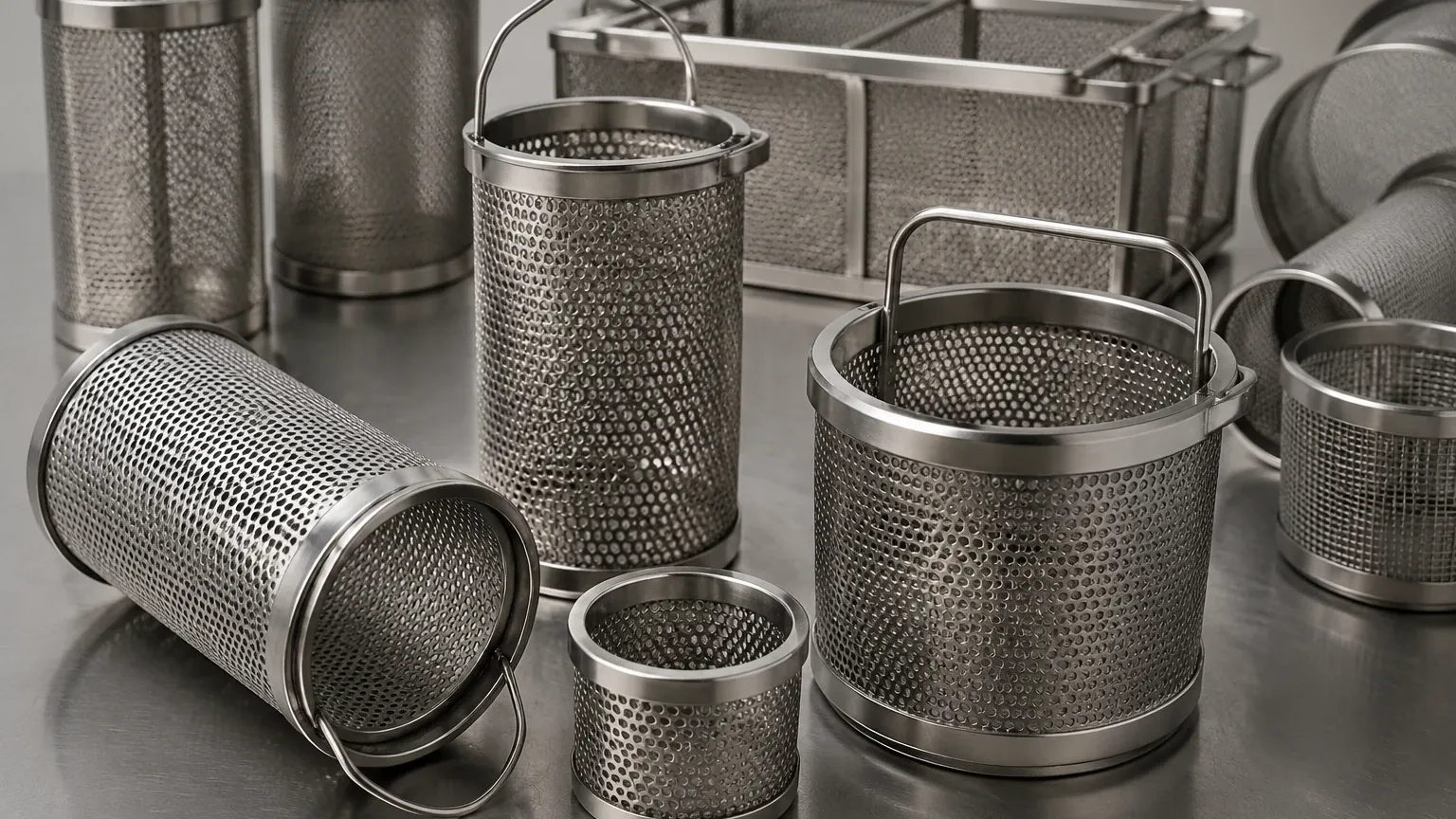
When designing or purchasing a strainer basket, the interface between the mesh and the support structure is critical. A high-quality basket is more than just a wire mesh bag; it is a precision-engineered component designed to withstand specific differential pressures.
Mesh vs. Perforation
Engineers must choose between perforated metal and wire mesh, or a combination of both. Perforated metal provides the structural "skeleton," while a fine wire mesh liner provides the actual filtration. The strainer basket washer must be sized to accommodate the total thickness of these layers at the flange. If the mesh is not properly welded or crimped to the flange, the washer may not sit flat, leading to seal failure.
Micron Ratings and Flow Velocity
The "open area" of a basket determines the pressure drop (delta P) across the filter. A common engineering mistake is selecting a mesh that is too fine for the required flow velocity, leading to rapid clogging and frequent cleaning cycles. By optimizing the ratio of the basket surface area to the pipe diameter, engineers can extend the time between cleaning intervals, thereby reducing the wear and tear on the strainer basket washer and the basket itself.
Troubleshooting Common Filtration Failures
If a filtration system is not performing to specifications, the issue often lies with the seal or the maintenance of the basket.
Identifying Seal Leakage
If downstream sensors detect particles that should have been captured by the strainer, the first point of inspection is the washer. Look for:
* Compression Set: The washer has become permanently flattened and no longer exerts sealing force.
* Extrusion: The washer material has been pushed out of the sealing groove due to excessive pressure.
* Chemical Degradation: The washer is swollen, sticky, or cracked.
Managing Differential Pressure
An increase in differential pressure indicates that the basket is fouled. However, if the pressure drop remains suspiciously low, it may indicate that the basket has ruptured or that the strainer basket washer has failed, allowing the fluid to bypass the media entirely. Regular monitoring of pressure gauges is the most effective way to determine when a basket needs to be moved to the washer for cleaning.
Optimizing Total Cost of Ownership (TCO)
Investing in high-quality Strainers & Baskets and their associated sealing components reduces long-term operational costs. While a low-cost, generic washer might seem economical, the cost of a single hour of unplanned downtime usually far exceeds the price of a premium Viton or PTFE seal.
Durability of Stainless Steel
Using 316L stainless steel for both the basket and the internal support hardware ensures maximum resistance to corrosion. This material choice, combined with a robust cleaning regimen, allows a single basket to remain in service for years. The "washer" in this context—the cleaning process—becomes a value-add that protects the capital investment in the filtration hardware.
Customization for OEM Applications
For original equipment manufacturers (OEMs), sourcing custom-sized baskets and washers is often necessary to fit proprietary housing designs. Customization allows for the optimization of the sealing surface, ensuring that the washer provides a perfect fit even in compact or non-standard configurations. Working with a manufacturer that understands the interplay between metal fabrication and elastomer performance is key to developing a reliable filtration module.
Conclusion: Ensuring Long-Term Filtration Performance
The strainer basket washer, whether viewed as a sealing component or a maintenance process, is fundamental to industrial fluid purity. A well-selected washer ensures that every drop of fluid passes through the intended filter media, while a disciplined washing protocol ensures that the media remains functional over hundreds of cycles.
For engineers tasked with maintaining these systems, the focus should remain on material compatibility, precision fitment, and the implementation of effective cleaning technologies. By addressing these technical details, facilities can achieve higher throughput, lower maintenance costs, and superior protection for their most critical industrial assets.
