


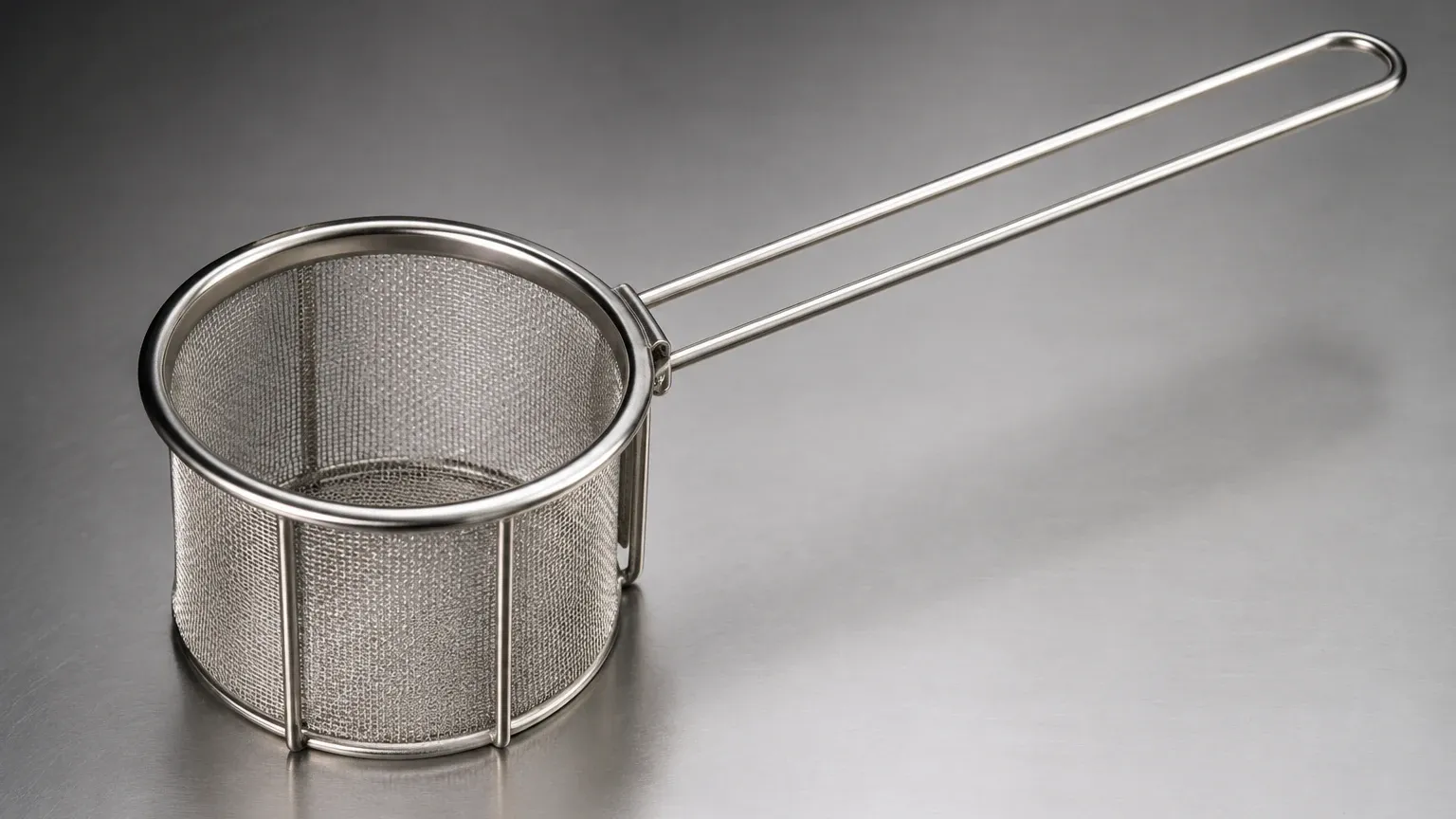
Strainer Basket with Long Handle
In industrial filtration, the efficiency of a system is often determined by the accessibility and serviceability of its primary components. Among the various configurations of Strainers & Baskets, the strainer basket with long handle serves a critical role in applications where depth, temperature, or chemical exposure makes standard basket retrieval impractical. These specialized components are engineered to provide coarse filtration and protect downstream equipment while ensuring that operators can safely and efficiently perform maintenance tasks.
For engineers and procurement teams, selecting the correct basket configuration requires a technical understanding of fluid dynamics, material compatibility, and ergonomic requirements. This article examines the engineering considerations, material specifications, and operational advantages of integrating long-handle strainer baskets into industrial processes.
The Engineering Rationale for Long-Handle Designs
A strainer basket is designed to capture solid contaminants from a fluid stream. While the filtration media—typically perforated metal or wire mesh—performs the actual separation, the handle is the primary interface for manual servicing. The "long handle" modification is rarely a generic addition; it is a calculated response to specific environmental constraints.
Deep Sump and Tank Applications
In many chemical processing and water treatment facilities, strainers are submerged in deep sumps or tanks. A standard handle would require the operator to reach deep into the vessel or use secondary tools to hook and pull the basket. A strainer basket with long handle allows for direct manual retrieval from the surface, reducing the risk of dropping the basket or losing it within the system.
Thermal and Chemical Safety
In high-temperature applications, such as hot oil filtration or steam condensate recovery, the fluid temperature can exceed safe handling limits for standard PPE. By extending the handle length, the operator’s hands remain at a safe distance from the heat source. Similarly, in corrosive environments involving acids or caustic solutions, the long handle minimizes the risk of splashing or direct contact with the process fluid during the cleaning cycle.
Ergonomics and Leverage
Industrial baskets, when filled with heavy debris or sludge, can become significantly heavier than their dry weight. A long handle provides better leverage and a more ergonomic grip position, reducing the physical strain on maintenance personnel and decreasing the likelihood of workplace injuries related to repetitive lifting.
Material Selection and Structural Integrity
Because these baskets are often deployed in demanding environments, the choice of material is paramount. Kaifil specializes in stainless steel constructions, which offer the necessary mechanical strength and corrosion resistance required for industrial longevity.
Stainless Steel Grades
* Type 304: The standard choice for general-purpose industrial applications. It provides excellent corrosion resistance in water and mild chemical environments.
* Type 316/316L: Preferred for pharmaceutical, food and beverage, and marine applications. The addition of molybdenum enhances resistance to pitting and crevice corrosion, particularly in chloride-rich environments.
* Specialty Alloys: For highly aggressive chemical processing, materials such as Hastelloy or Duplex stainless steel may be utilized to ensure the basket does not degrade prematurely.
Handle Construction
The handle itself must be engineered to support the weight of the basket plus the maximum expected debris load. In a strainer basket with long handle, the handle is typically TIG-welded to the top ring or the side walls of the basket. For very long handles, reinforcement struts or a thicker gauge of rod/flat bar may be used to prevent bending or snapping under tension during retrieval.
Technical Specifications of Filtration Media
The performance of Strainers & Baskets is dictated by the open area ratio and the micron rating of the filtration media. When specifying a long-handle basket, engineers must balance filtration fineness with the resulting pressure drop.
Perforated Metal vs. Wire Mesh
* Perforated Metal: Used for coarse filtration (typically 1/32" to 1/2" holes). It provides the highest structural rigidity and is ideal for protecting pumps from large debris like stones, bolts, or scale.
* Wire Mesh: Used for finer filtration (down to 5 microns). In a basket configuration, wire mesh is usually supported by an outer layer of perforated metal to prevent the mesh from collapsing under the pressure of the fluid flow.
Open Area Ratio
The "Open Area" refers to the total area of the holes divided by the total area of the basket surface. A higher open area results in a lower initial pressure drop ($ΔP$) and longer run times between cleaning cycles. Engineers should aim for a basket-to-pipe area ratio of at least 6:1 to ensure that the strainer does not become a bottleneck in the system.
Application-Specific Configurations
Different industries require different variations of the strainer basket with long handle to meet regulatory or process standards.
Food and Beverage Industry
In food processing, hygiene is the primary concern. Baskets must be manufactured with smooth, crevice-free welds (sanitary finish) to prevent bacterial growth. The long handle allows operators to pull baskets from deep cooking oil vats or juice extraction tanks without contaminating the product or risking burns.
Pharmaceutical and Biotech
These applications often require 316L stainless steel with a high degree of surface polishing (electropolishing). The long handle is often designed to be detachable or foldable to fit into autoclaves for sterilization between batches.
Oil and Gas / Hydraulic Systems
In hydraulic reservoirs, the strainer basket with long handle is used to catch large particulates before the fluid enters the high-pressure pump. The handle length is customized to the depth of the reservoir, ensuring the basket sits at the optimal intake level while remaining accessible from the top access port.
Performance Evaluation and Selection Criteria
When purchasing a strainer basket with long handle, engineers should evaluate the following technical parameters to ensure system compatibility:
1. Flow Rate and Velocity: High-velocity flows can cause vibration in long handles if they are not properly braced. The basket must be sized to keep the fluid velocity through the media within acceptable limits (usually below 10 ft/s for liquids).
2. Maximum Allowable Pressure Drop: Determine the point at which the basket must be cleaned. A long handle makes frequent cleaning easier, but the basket should still have enough dirt-holding capacity to avoid excessive downtime.
3. Seating and Gaskets: The basket must seat firmly within the strainer housing to prevent "bypass," where fluid flows around the basket rather than through it. The handle design must not interfere with the housing cover or the sealing mechanism.
4. Handle Length and Clearance: Measure the overhead clearance above the strainer housing. A very long handle may require significant vertical space to be fully extracted from the unit.
Maintenance, Cleaning, and Replacement Cycles
The primary advantage of a strainer basket with long handle is the ease of maintenance. However, even the most robust stainless steel basket will eventually require inspection or replacement.
Cleaning Protocols
Baskets should be cleaned when the pressure differential reaches a pre-determined limit (often 5-10 psi over the clean pressure drop). Using the long handle, the operator removes the basket and uses a high-pressure water jet or ultrasonic cleaning to dislodge trapped particles. It is vital to clean from the "clean side" to the "dirty side" (backwashing) to prevent embedding particles deeper into the mesh.
Inspection for Wear
During cleaning, the basket should be inspected for:
* Structural Deformation: Checking for any bowing or crushing of the mesh/perforation.
* Weld Integrity: Ensuring the handle attachment points remain secure.
* Erosion: In high-velocity systems, the metal may thin over time due to the abrasive nature of the particles being filtered.
Total Cost of Ownership (TCO)
While a custom strainer basket with long handle may have a higher initial purchase price than a standard off-the-shelf component, the TCO is often lower. Reduced labor time for cleaning, improved operator safety, and longer service life due to high-quality stainless steel construction provide a significant return on investment.
Customization and OEM Capabilities
As a professional manufacturer, Kaifil understands that industrial filtration is rarely one-size-fits-all. A strainer basket with long handle often requires customization to fit existing infrastructure. Engineering teams can specify exact handle lengths, handle shapes (T-handle, loop handle, or hook), and specific filtration accuracies to meet their process needs.
Before finalizing a design, it is recommended that engineers confirm the following details with the manufacturer:
* Dimensional Accuracy: Ensure the basket diameter and height match the internal dimensions of the strainer housing.
* Flow Direction: Confirm whether the fluid flows from the inside-out or outside-in, as this affects the placement of reinforcement cages.
* Environment Compatibility: Verify that the selected stainless steel grade is appropriate for the chemical composition and temperature of the process fluid.
By focusing on precision manufacturing and technical expertise, Kaifil provides reliable Strainers & Baskets that enhance the safety and efficiency of industrial filtration systems worldwide. Whether for a standard replacement or a custom OEM project, the integration of a properly engineered long-handle basket is a strategic choice for optimized plant operations.
