


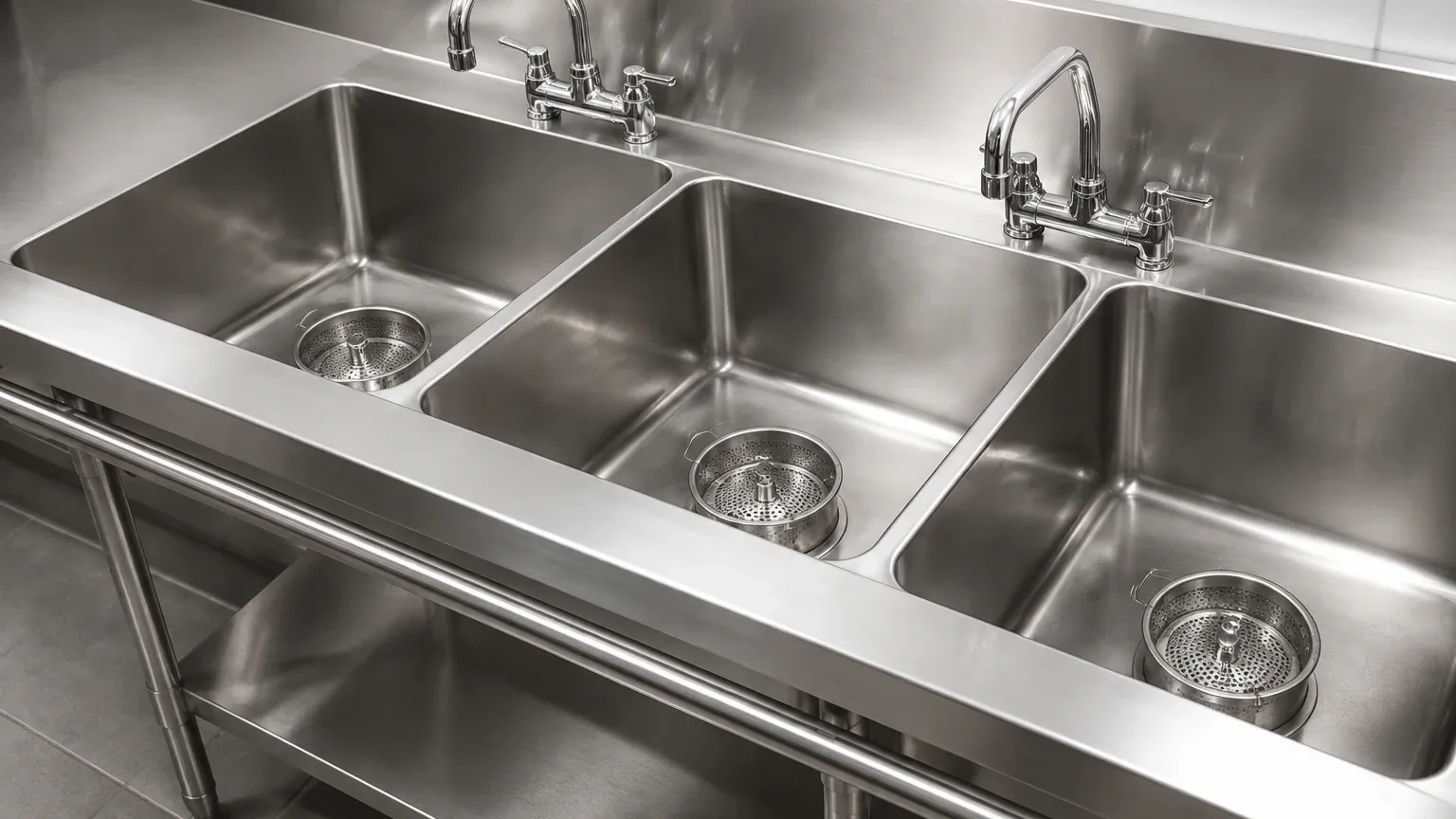
Basket Strainer 3 Compartment Sink
In industrial and commercial environments, the management of wastewater and solid debris is a critical component of operational efficiency and regulatory compliance. The 3-compartment sink—a staple in food processing, pharmaceutical labs, and chemical handling facilities—serves as the primary line of defense for sanitation. However, the efficacy of this system relies heavily on the quality of the filtration components used. A high-performance basket strainer 3 compartment sink setup ensures that solids are captured before they enter the drainage system, preventing costly plumbing blockages and protecting downstream grease traps or water treatment equipment.
As a specialized manufacturer of stainless steel filtration solutions, Kaifil understands that industrial strainers are not merely accessories but engineered components that must withstand rigorous cleaning cycles, corrosive chemicals, and high-volume flow. This guide explores the technical considerations, material requirements, and selection criteria for Strainers & Baskets within 3-compartment sink systems.
The Role of Basket Strainers in Commercial Sink Systems
A 3-compartment sink typically follows a standardized workflow: wash, rinse, and sanitize. Each stage introduces different types of debris and chemical concentrations into the drainage system.
1. The Wash Station: This compartment handles the heaviest load of organic solids, fats, and oils. The basket strainer here must be capable of capturing large particles while maintaining a high flow rate to prevent the sink from backing up during active use.
2. The Rinse Station: While the debris load is lighter, the strainer must still capture smaller particles that may have bypassed the initial wash.
3. The Sanitize Station: This compartment often involves high-temperature water and chemical sanitizers. The filtration components here must be highly resistant to chemical corrosion and thermal expansion.
Without a robust basket strainer 3 compartment sink configuration, these solids accumulate in the piping, leading to anaerobic bacterial growth, foul odors, and eventual pipe failure. For B2B procurement and facility engineering, selecting a strainer based on the specific particulate profile of the operation is essential for maintaining a sterile and functional environment.
Material Selection: Why Stainless Steel is Non-Negotiable
In industrial filtration, the choice of material directly impacts the total cost of ownership. While plastic or low-grade alloy strainers may have a lower initial purchase price, they frequently fail under the stress of industrial cleaning agents and mechanical wear.
Corrosion Resistance
Stainless steel, specifically Grade 304 and Grade 316, is the industry standard for a reason. Grade 304 offers excellent resistance to common cleaning chemicals, while Grade 316 is preferred in environments with high chloride exposure or aggressive chemical processing. In a 3-compartment sink, where bleach or quaternary ammonium compounds are frequently used, the chromium-oxide layer of stainless steel prevents pitting and oxidation that would otherwise compromise the structural integrity of the mesh or perforation.
Thermal Stability
Commercial sinks often utilize water temperatures exceeding 140°F (60°C) for sanitation. Stainless steel maintains its mechanical properties at these temperatures, whereas thermoplastic alternatives may warp or become brittle over time. This stability ensures that the basket strainer maintains a tight seal against the drain flange, preventing bypass—a common failure mode where debris escapes around the edges of the filter.
Technical Specifications: Flow Rates and Filtration Precision
When specifying a basket strainer 3 compartment sink solution, engineers must balance the need for fine filtration with the requirement for rapid drainage. This balance is determined by two primary factors: the open area ratio and the perforation/mesh size.
Open Area Ratio
The open area is the total area of the holes in a perforated plate or the openings in a wire mesh, expressed as a percentage of the total surface area. A higher open area results in a lower pressure drop and faster drainage. For industrial sinks, an open area of 40% to 60% is typically targeted to ensure that the sink drains efficiently even as the basket begins to fill with debris.
Filtration Precision
* Perforated Metal: Ideal for capturing large food solids, bone fragments, or industrial scraps. Standard perforation sizes for sink baskets range from 1/8 inch to 1/16 inch.
* Wire Mesh Liners: For applications requiring the capture of finer particulates—such as coffee grounds in food service or fine powders in a lab setting—a stainless steel wire mesh liner can be integrated into the basket. This provides a multi-stage filtration effect within a single component.
Operational Compliance and Grease Trap Protection
For many jurisdictions, the installation of effective Strainers & Baskets is a legal requirement under health and safety codes. Municipalities often mandate that commercial facilities prevent solids from entering the public sewer system.
Furthermore, most 3-compartment sinks are connected to a grease trap (or grease interceptor). If solid waste is allowed to enter the grease trap, it settles at the bottom, reducing the volume available for fat and oil separation. This forces the grease trap to be pumped more frequently, significantly increasing maintenance costs. By utilizing a high-capacity basket strainer 3 compartment sink setup, facilities can extend the interval between grease trap cleanings and ensure compliance with local environmental regulations.
Customization Options for Industrial Applications
Standard off-the-shelf strainers often fail to meet the specific needs of specialized industrial processes. Customization allows engineers to tailor the filtration component to the exact demands of their facility.
Handle and Lift Designs
In high-volume environments, the ease of removing and cleaning the basket is paramount. Custom handle designs, such as fixed bails or telescoping handles, allow staff to remove the basket without coming into direct contact with the captured waste, improving hygiene and safety.
Deep-Well vs. Shallow Baskets
The depth of the basket determines its holding capacity. A deep-well basket is advantageous in facilities where the sink is used continuously, as it requires less frequent emptying. Conversely, shallow baskets are used in sinks with low clearance or specific drainage configurations.
Integrated Sealing Gaskets
To prevent bypass, custom baskets can be engineered with high-temperature silicone or EPDM gaskets. This ensures that 100% of the wastewater passes through the filtration media, which is critical in pharmaceutical or high-precision manufacturing contexts where even small amounts of particulate matter can disrupt downstream processes.
Maintenance Protocols and Longevity
The lifespan of a stainless steel basket strainer is largely dependent on the maintenance protocol. Unlike disposable filters, professional-grade stainless steel baskets are designed to be cleaned and reused indefinitely.
Cleaning Procedures
To prevent the buildup of biofilms and mineral scale, baskets should be cleaned at the end of every shift. In industrial settings, ultrasonic cleaning or high-pressure hosing is often used to clear the mesh or perforations. Because Kaifil utilizes high-grade stainless steel, these baskets can withstand rigorous mechanical cleaning without losing their shape or filtration accuracy.
Inspection for Wear
Facility managers should periodically inspect strainers for signs of mechanical fatigue, such as broken wire mesh or distorted flanges. A distorted flange can lead to a poor seal, allowing debris to bypass the filter and enter the plumbing. Replacing a worn strainer is a minor expense compared to the cost of hydro-jetting a clogged sewer line.
Selecting the Right Partner for Filtration Solutions
Choosing the right basket strainer 3 compartment sink solution requires a deep understanding of both filtration physics and the specific constraints of the application. For engineers and procurement teams, the goal is to find a balance between durability, filtration efficiency, and ease of maintenance.
Kaifil provides the technical expertise necessary to navigate these choices. By focusing on precision manufacturing and high-quality materials, Kaifil ensures that every filtration component contributes to the long-term reliability of the facility's infrastructure. Whether you are outfitting a new commercial kitchen or upgrading an industrial processing plant, the integration of professional-grade Strainers & Baskets is a critical step in optimizing your wastewater management strategy.
In conclusion, the humble basket strainer is a linchpin of industrial sanitation. By prioritizing stainless steel construction, calculating the necessary flow rates, and considering custom design features, B2B buyers can ensure their 3-compartment sinks remain functional, compliant, and cost-effective for years to come.
