


Basket Strainer 3 1 2
In industrial fluid handling and process engineering, the basket strainer 3 1 2 (3.5-inch) represents a specific size category often utilized in commercial food processing, chemical handling, and specialized water treatment systems. Unlike standard pipe sizes that typically jump from 3 inches to 4 inches, the 3 1/2-inch specification is a critical standard for high-capacity drainage, commercial kitchen equipment, and specific hydraulic return lines. Selecting the correct Strainers & Baskets for these applications requires a deep understanding of material compatibility, flow dynamics, and filtration precision.
As a professional manufacturer of custom stainless steel filtration solutions, Kaifil focuses on the engineering nuances that distinguish a high-performance basket strainer from a generic component. This guide examines the technical considerations, material requirements, and selection criteria for 3 1/2-inch basket strainers in industrial environments.
Understanding the Applications of 3 1/2 Inch Basket Strainers
The dimension "3 1/2" often refers to the outer diameter of the strainer body or the connection size for specific industrial drain assemblies. In the context of industrial filtration, these components serve as the primary line of defense for downstream equipment such as pumps, heat exchangers, and spray nozzles.
Commercial and Industrial Food Processing
In food and beverage production, the basket strainer 3 1/2 is a standard for heavy-duty wash-down stations and processing vats. These strainers must handle high volumes of water while capturing large debris like vegetable peels, bone fragments, or packaging materials. The use of stainless steel is non-negotiable here to meet sanitary standards and resist the corrosive effects of organic acids and cleaning agents.
Chemical Processing and Fluid Handling
Chemical plants often utilize specialized piping where a 3.5-inch interface is required for specific reactor outlets or storage tank drains. In these scenarios, the basket strainer must be engineered to withstand aggressive solvents and varying pH levels. The structural integrity of the basket is paramount, as it must resist collapsing under the pressure of accumulated solids.
HVAC and Cooling Water Systems
Large-scale cooling towers and HVAC systems frequently employ basket strainers to remove scale, rust, and biological growth from the circulating water. A 3 1/2-inch strainer provides a significant surface area, allowing for longer intervals between cleaning cycles compared to smaller 2-inch or 3-inch alternatives.
Material Selection and Engineering Considerations
When specifying a basket strainer 3 1/2, the choice of material determines the component's lifespan and its ability to maintain filtration accuracy under stress. Kaifil specializes in stainless steel alloys, which offer superior durability compared to plastic or cast iron alternatives.
Stainless Steel 304 vs. 316
* Grade 304: This is the standard for most industrial applications. It provides excellent corrosion resistance and mechanical strength. It is suitable for water treatment, most food processing, and general industrial fluids.
* Grade 316/316L: For environments involving high salt concentrations, chlorides, or acidic chemicals, Grade 316 is preferred. The addition of molybdenum enhances its resistance to pitting and crevice corrosion, making it the authoritative choice for marine environments and pharmaceutical processing.
Mesh vs. Perforated Metal
The internal basket of a 3 1/2-inch strainer can be constructed using perforated metal, woven wire mesh, or a combination of both.
* Perforated Metal: Best for coarse filtration (removing large particles > 1mm). It provides high structural rigidity.
* Woven Wire Mesh: Necessary for fine filtration (down to 5 microns). In a basket strainer 3 1/2, a fine mesh is often supported by an outer layer of perforated metal to prevent the mesh from deforming under high flow velocities.
Key Evaluation Criteria for Industrial Procurement
Engineers and purchasing teams must look beyond the basic dimensions when selecting a basket strainer. The following technical parameters are essential for ensuring system efficiency.
Open Area Ratio
The efficiency of a basket strainer is largely determined by its open area ratio—the total area of the holes in the basket relative to the cross-sectional area of the inlet pipe. A high-quality basket strainer 3 1/2 should ideally have an open area ratio of at least 6:1. This ensures that even as the basket begins to fill with debris, the pressure drop across the strainer remains within acceptable limits, preventing pump cavitation and energy waste.
Pressure Drop (Delta P)
Every filtration component introduces a degree of resistance to the flow. Engineers must calculate the clean pressure drop based on the fluid's viscosity and flow rate. If the basket strainer 3 1/2 is too restrictive, it will force the system to work harder, increasing operational costs. Conversely, a strainer that is too coarse will allow harmful particles to pass through, potentially damaging expensive downstream components.
Seal Integrity and Connection Types
For industrial applications, the method of connection—whether NPT threaded, flanged, or tri-clamp—must match the existing piping system. Furthermore, the seal between the basket and the strainer housing is a critical failure point. High-performance strainers utilize precision-machined seats and O-rings (Viton, EPDM, or PTFE) to ensure that no fluid bypasses the filtration element.
Customization and OEM Solutions for Specialized Systems
Standard off-the-shelf strainers often fail to meet the specific needs of complex industrial processes. This is where custom manufacturing becomes essential. At Kaifil, we provide tailored solutions that go beyond the basic basket strainer 3 1/2 specifications.
Tailored Filtration Accuracy
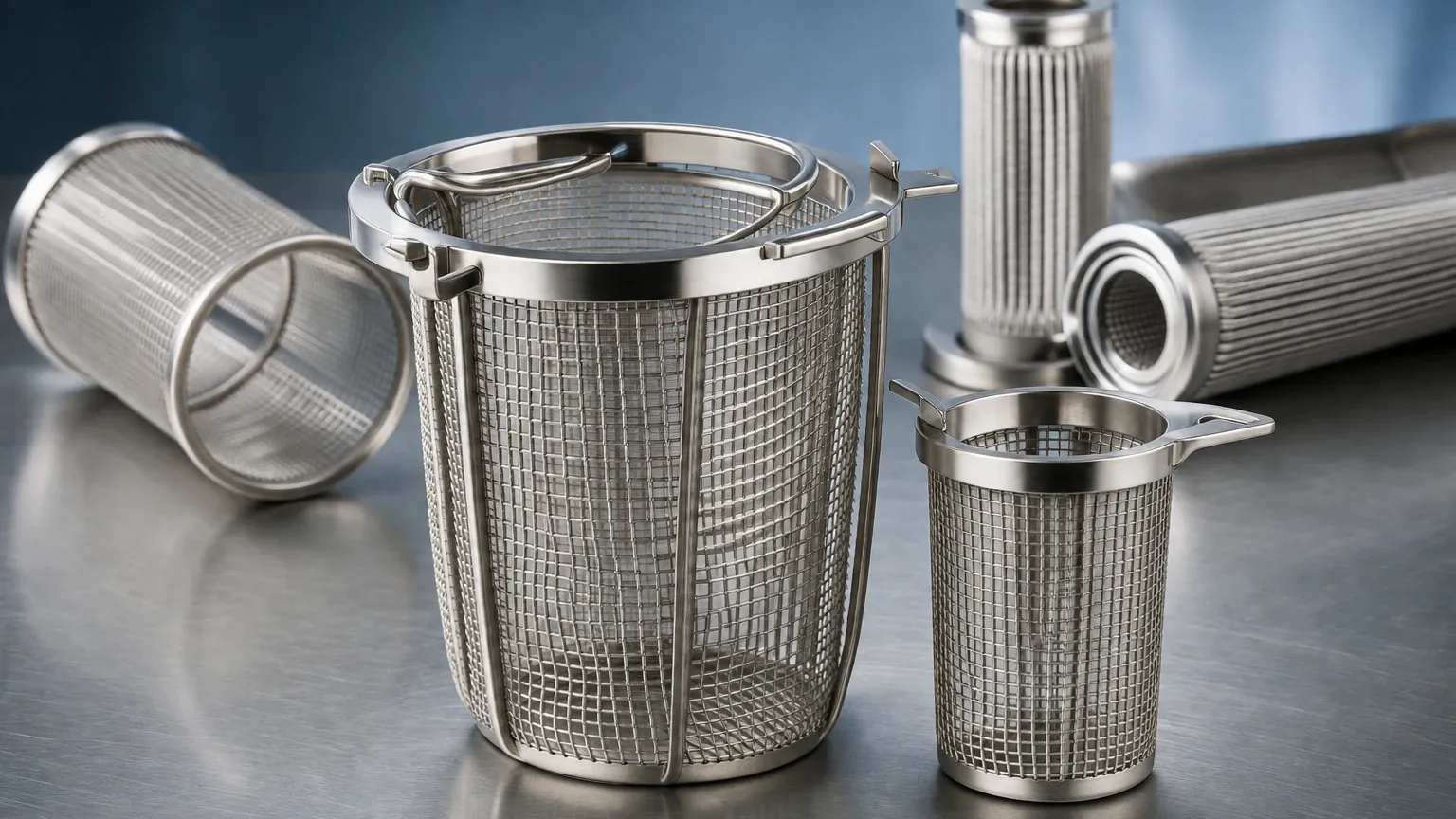
Depending on the sensitivity of the downstream equipment, a standard mesh might not be sufficient. We can engineer multi-layer sintered mesh baskets that provide exceptional strength and precise micron ratings. This is particularly useful in hydraulic systems where even microscopic contaminants can cause valve failure.
Reinforced Structural Design
In high-pressure applications, a standard basket may buckle. Customization allows for the addition of internal baffles or reinforced rings that distribute the mechanical load more evenly across the basket body. This extends the replacement cycle and reduces the risk of catastrophic system failure.
Handle and Lifting Configurations
For a 3 1/2-inch basket, the weight of the collected debris can be significant. Custom handle designs, such as slanted handles or heavy-duty bails, facilitate easier removal and cleaning, improving workplace safety and reducing maintenance downtime.
Installation and Maintenance Best Practices
To maximize the performance of a basket strainer 3 1/2, proper installation and a rigorous maintenance schedule are required.
Proper Orientation
Basket strainers are typically designed for horizontal piping runs where the basket hangs downward. This orientation allows gravity to assist in settling the debris at the bottom of the basket. Installing a strainer in the wrong orientation can lead to uneven debris loading and premature clogging.
Monitoring Differential Pressure
The most effective way to manage a basket strainer is by installing pressure gauges upstream and downstream of the unit. By monitoring the differential pressure, maintenance teams can identify exactly when the basket needs cleaning. Cleaning a basket based on actual pressure data, rather than a fixed schedule, prevents unnecessary system shutdowns and ensures the strainer never reaches a point of total blockage.
Cleaning Procedures
Stainless steel baskets are designed for reuse. When cleaning a basket strainer 3 1/2, it is important to use methods that do not damage the mesh. For fine mesh baskets, ultrasonic cleaning or high-pressure air/water from the outside-in (backwashing) is recommended. Avoid using wire brushes on fine mesh, as this can distort the openings and compromise filtration accuracy.
Total Cost of Ownership Considerations
While the initial purchase price of a high-quality stainless steel basket strainer 3 1/2 may be higher than lower-grade alternatives, the total cost of ownership (TCO) is significantly lower. Durable materials reduce the frequency of replacements, while an optimized design minimizes energy consumption by maintaining low pressure drops.
Furthermore, the protection provided to downstream pumps and instrumentation can save thousands of dollars in repair costs and lost production time. When evaluating suppliers, engineers should prioritize manufacturers who offer technical support, material certifications, and the ability to provide replacement baskets that meet the original equipment specifications.
Conclusion
The basket strainer 3 1/2 is a vital component in many industrial and commercial sectors. Whether it is used for protecting a high-pressure pump in a chemical plant or ensuring the hygiene of a food processing line, the quality of the strainer directly impacts the reliability of the entire system. By focusing on material grade, open area ratios, and custom engineering possibilities, organizations can optimize their filtration processes for long-term success.
For more information on selecting the right filtration components or to discuss custom OEM requirements, engineers and procurement professionals can Review product options and application support to find the most suitable solutions for their specific industrial challenges.
