


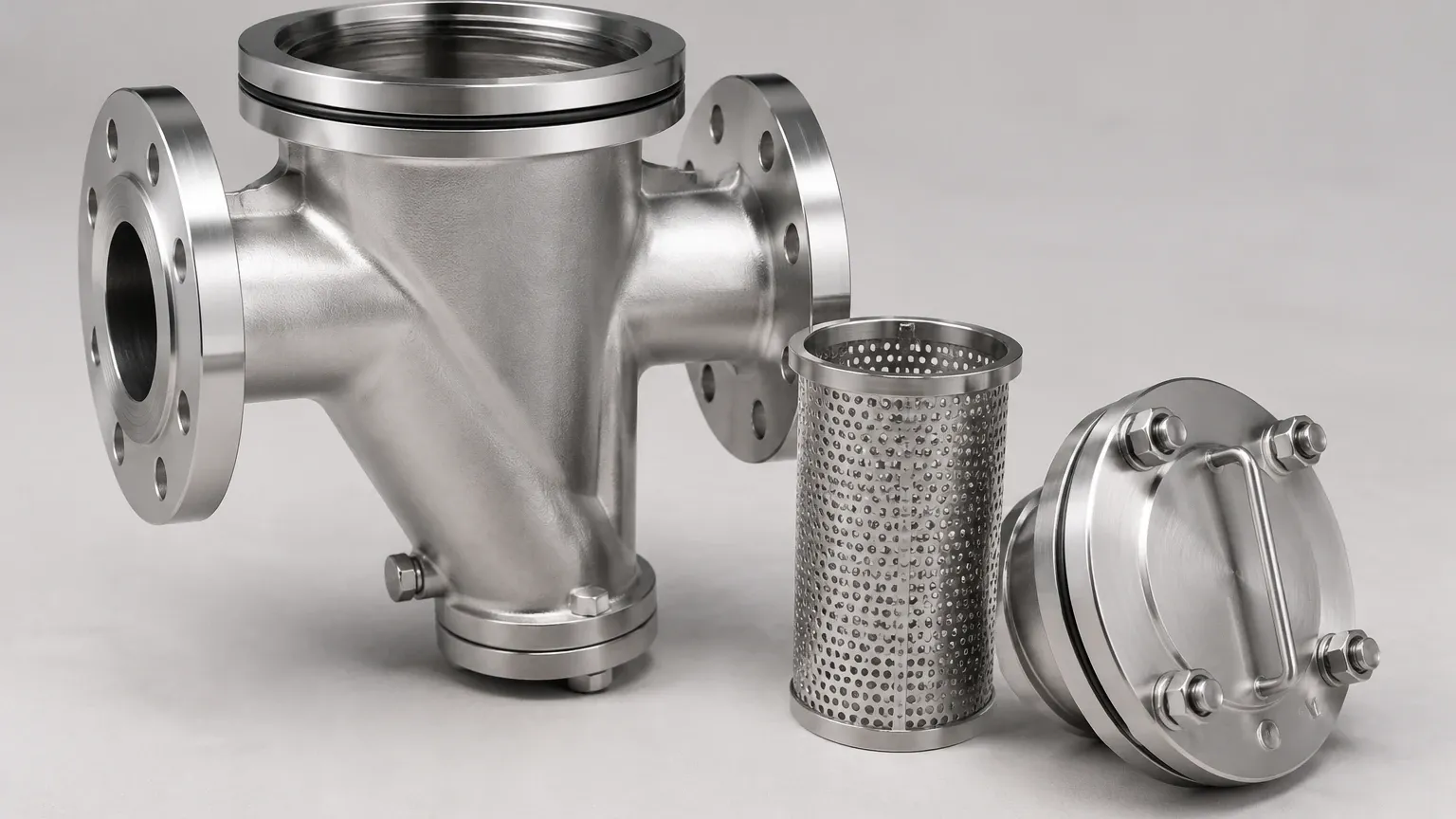
Basket Strainer 50mm
In industrial fluid handling, the protection of downstream equipment is a primary engineering concern. The basket strainer 50mm, often designated as a DN50 or 2-inch nominal pipe size component, serves as a critical line of defense against particulate contamination. These strainers are designed to remove relatively large solids from liquids, preventing damage to pumps, valves, heat exchangers, and flow meters.
As a specialized manufacturer, Kaifil provides high-precision Strainers & Baskets engineered to meet the rigorous demands of chemical processing, food and beverage production, and hydraulic systems. Understanding the technical nuances of the 50mm sizing, material selection, and internal configurations is essential for engineers and purchasing teams tasked with optimizing system longevity and process efficiency.
Understanding the Role of 50mm Basket Strainers in Industrial Systems
A basket strainer 50mm is typically installed in horizontal pipelines where high flow capacity and low pressure drop are required. Unlike Y-strainers, which are often used for smaller debris or intermittent flow, basket strainers feature a larger internal volume. This design allows for a greater holding capacity for solids, which translates to longer intervals between cleaning cycles.
In a typical industrial setup, the 50mm strainer is selected based on the flow rate of the process fluid. A DN50 pipe size is common in mid-sized pilot plants, secondary cooling loops, and chemical dosing lines. The primary function is to intercept scale, rust, jointing compound, and weld beads that may be present in the piping system. By capturing these contaminants in a removable basket, the strainer ensures that the fluid reaching sensitive components meets the required cleanliness standards.
Technical Specifications and Sizing for DN50 Strainers
When specifying a basket strainer 50mm, engineers must look beyond the nominal pipe size. The performance of the strainer is dictated by its internal geometry and the ratio of the open area of the basket to the cross-sectional area of the inlet pipe.
Flow Rate and Velocity
For a standard DN50 pipeline, flow velocities are generally maintained between 1.5 to 3 meters per second for liquids. At these velocities, a well-designed basket strainer should exhibit a minimal clean pressure drop. If the fluid viscosity is high—such as in heavy oils or syrups—the flow velocity must be adjusted downward, or a larger strainer body may be required to maintain an acceptable pressure differential.
Connection Types
The 50mm strainer is available with various connection standards to match existing infrastructure:
* Flanged Connections: Common in heavy industrial applications, following ANSI (Class 150/300), DIN (PN16/PN40), or JIS standards. Flanged units allow for easier removal of the entire housing during major maintenance.
* Threaded Connections: Often used in smaller systems or where space is constrained, typically utilizing NPT or BSPT threads.
* Socket Weld/Butt Weld: Used in high-pressure or high-temperature applications where leak prevention is paramount, such as in steam or hazardous chemical lines.
Material Engineering: Selecting Stainless Steel Grades
Material compatibility is perhaps the most critical factor in the selection of a basket strainer 50mm. Kaifil specializes in stainless steel filtration solutions because of the material's inherent durability and resistance to a wide range of corrosive agents.
304 Stainless Steel
Grade 304 is the standard choice for general industrial applications, including water treatment and non-corrosive chemical transport. It offers excellent mechanical properties and good resistance to atmospheric corrosion. However, it is susceptible to pitting in high-chloride environments.
316 and 316L Stainless Steel
For more demanding environments, such as marine applications or chemical processing involving acids, 316 stainless steel is preferred due to the addition of molybdenum. 316L (low carbon) is specifically utilized in pharmaceutical and food-grade applications where welding is required, as it prevents carbide precipitation and maintains corrosion resistance at the weld joints.
Specialized Alloys
In extreme cases involving highly aggressive chemicals or high temperatures, exotic alloys like Duplex stainless steel or Hastelloy may be required. These materials provide superior resistance to stress corrosion cracking and localized pitting, ensuring the structural integrity of the strainer body and the internal basket under harsh conditions.
Filtration Media: Perforated Plates vs. Wire Mesh Liners
The "basket" within a basket strainer 50mm is the component that performs the actual separation. The design of this basket depends on the size of the particles that need to be removed.
Perforated Baskets
For coarse filtration, a perforated stainless steel plate is used. Common hole sizes range from 1mm to 5mm. These are robust and can withstand significant pressure differentials without deforming. They are ideal for protecting pumps from large debris like gravel or metal shavings.
Mesh-Lined Baskets
When finer filtration is required, a wire mesh liner is added to the interior or exterior of the perforated basket. The perforated plate provides the structural support, while the mesh determines the filtration rating. Mesh sizes are often specified in microns (μm) or mesh count (number of openings per linear inch). For a 50mm strainer, mesh ratings can go as fine as 40 microns, though this significantly increases the frequency of cleaning due to the faster accumulation of fine particulates.
Magnetic Inserts
In systems where ferrous particles (iron or steel) are a concern, such as in hydraulic loops or aging iron piping, magnetic inserts can be placed within the basket. These magnets attract and hold fine iron filings that might otherwise pass through a standard mesh.
Evaluating Pressure Drop and Flow Efficiency
The pressure drop ($ΔP$) across a basket strainer 50mm is a function of the fluid's density, viscosity, flow rate, and the percentage of the basket's open area. Engineers use the Cv (flow coefficient) to calculate the expected pressure drop.
A high-performance strainer is designed with a high "open area ratio." This is the ratio of the total area of the holes in the basket to the internal cross-sectional area of the inlet pipe. A ratio of 6:1 or 8:1 is often targeted to ensure that even as the basket begins to fill with debris, the pressure drop remains within manageable limits.
If the pressure drop exceeds the design threshold (typically 0.3 to 0.5 bar for a clean strainer), it can lead to cavitation in downstream pumps or a significant reduction in process flow. Monitoring this via differential pressure gauges is a standard industry practice.
Maintenance Protocols and Operational Safety
One of the primary advantages of the basket strainer 50mm is the ease of maintenance. Unlike Y-strainers, the basket can usually be accessed from the top by removing a cover, without needing to disassemble the entire piping section.
Cleaning Procedures
1. Isolation: The flow must be diverted or stopped using isolation valves.
2. Depressurization: The internal pressure must be vented through a drain or vent valve to ensure operator safety.
3. Cover Removal: Depending on the design, this may involve loosening swing bolts, a bolted flange, or a quick-release clamp.
4. Basket Extraction: The basket is lifted out, cleaned (usually via a pressurized water jet or ultrasonic bath), and inspected for damage.
5. Gasket Inspection: The O-ring or gasket on the cover should be inspected for wear and replaced if necessary to prevent leaks upon reassembly.
Simplex vs. Duplex Configurations
For processes that cannot be shut down for cleaning, a Duplex strainer configuration is used. This consists of two 50mm basket strainers connected by a diverter valve. When one basket becomes clogged, the flow is switched to the clean side, allowing the dirty basket to be serviced without interrupting the process.
Customization Options for Specialized Applications
Standard off-the-shelf strainers may not meet the specific requirements of every industrial application. Kaifil provides extensive customization for the basket strainer 50mm to address unique engineering challenges:
* Custom Dimensions: Adjusting the face-to-face length to fit into existing piping gaps.
* Specialized Coatings: Applying PTFE or epoxy coatings for enhanced chemical resistance or to meet specific food-grade standards.
* Heating Jackets: For fluids that solidify at room temperature (like resins or chocolate), steam or hot water jackets can be added to the strainer body to maintain fluid temperature.
* Automated Blow-down: In some designs, a valve at the bottom of the strainer can be automated to flush out settled solids periodically, extending the time between manual cleanings.
Selecting the Right Partner for Filtration Solutions
Choosing a basket strainer 50mm involves balancing initial capital expenditure with long-term operational costs. A low-quality strainer may have a lower purchase price but can lead to higher costs through frequent basket failures, bypass of contaminants, or excessive pressure drops that increase energy consumption.
When evaluating suppliers, engineers should confirm:
* Material Certification: Availability of MTRs (Material Test Reports) for the stainless steel used.
* Pressure Testing: Confirmation that each unit has been hydrostatically tested to 1.5 times its rated working pressure.
* Design Compliance: Adherence to international standards like ASME Section VIII or the Pressure Equipment Directive (PED).
Kaifil’s expertise in manufacturing custom stainless steel filtration components ensures that every Strainers & Baskets solution is optimized for its specific industrial environment. By focusing on precision engineering and high-quality material selection, Kaifil helps technical teams achieve reliable, cost-effective filtration performance that protects critical infrastructure and maintains process integrity.
