


8 Basket Strainer Dimensions
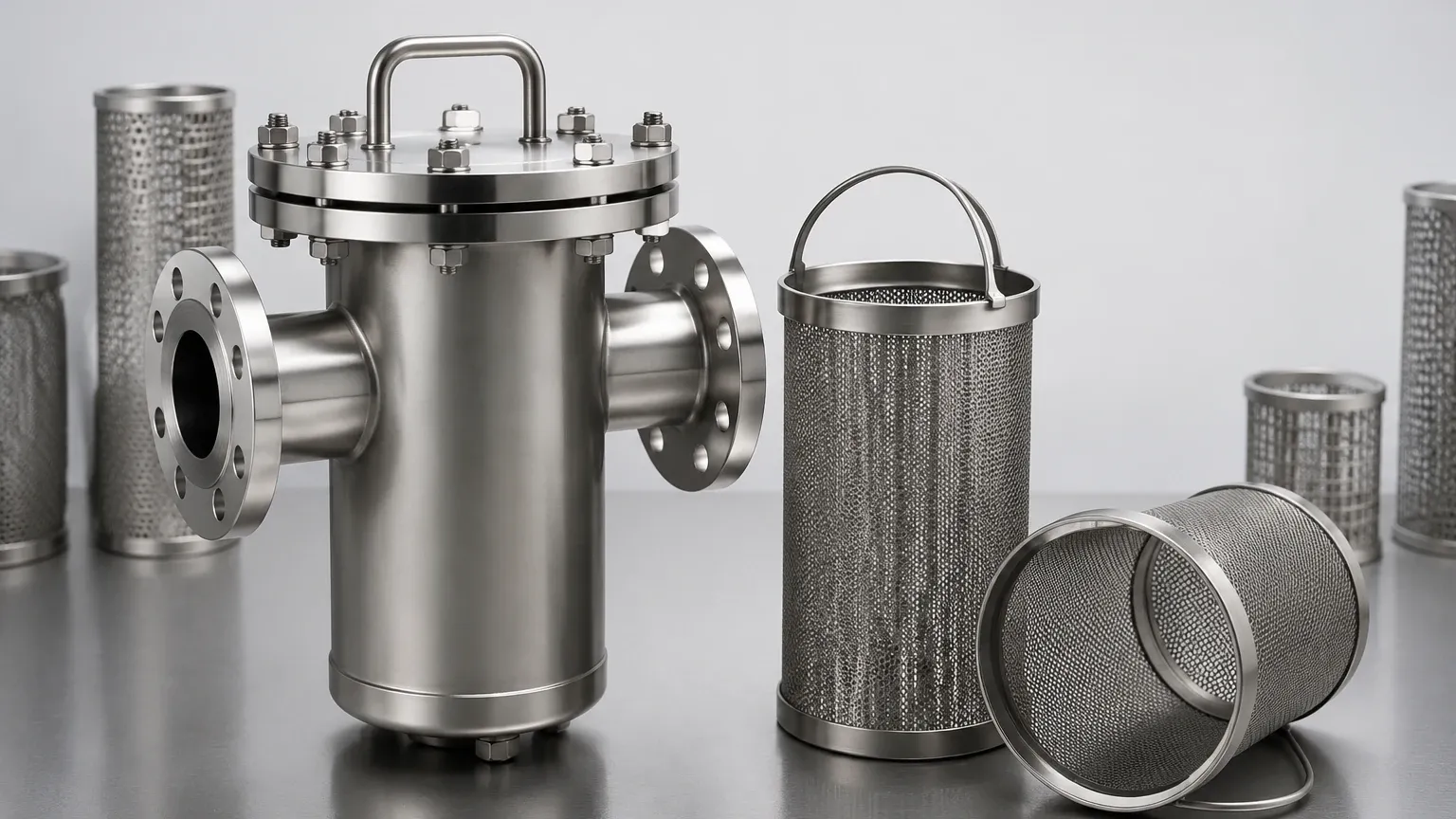
In industrial piping systems, the 8-inch basket strainer is a critical component for protecting downstream equipment such as pumps, valves, and flow meters from particulate contamination. Selecting the correct unit requires a precise understanding of 8 basket strainer dimensions, as these measurements dictate not only the fit within a pipeline but also the hydraulic performance and ease of maintenance. For engineers and procurement teams, dimensional accuracy is the baseline for ensuring system integrity and preventing costly field modifications.
As a specialized manufacturer of stainless steel filtration solutions, Kaifil emphasizes that while nominal pipe sizes (NPS) are standardized, the external dimensions and internal basket configurations can vary significantly based on the pressure rating, material of construction, and specific manufacturer design. This guide provides a technical overview of the dimensions and engineering considerations essential for integrating an 8-inch basket strainer into industrial processes.
Understanding Core Dimensional Parameters
When evaluating 8 basket strainer dimensions, several key measurements must be verified against the project’s piping schematics. These dimensions are typically influenced by the flange rating (e.g., ANSI Class 150, 300, or 600) and the body material.
Face-to-Face (End-to-End) Dimensions
The face-to-face dimension is the overall length of the strainer from one flange face to the other. For a standard 8-inch Class 150 flanged basket strainer, this dimension often ranges between 18 and 25 inches, depending on whether the design is a compact “simplex” style or a higher-capacity model. This measurement is critical for “drop-in” replacements where the piping gap is already fixed.
Center-to-Bottom and Center-to-Top
The vertical footprint of the strainer is equally important.
- Center-to-Bottom: This measurement determines how much space the strainer body occupies below the pipe centerline. It is influenced by the sump capacity, which is designed to collect debris without immediately clogging the basket.
- Center-to-Top: This includes the cover assembly. Many 8-inch strainers utilize bolted covers or quick-opening swing bolts. The height must account for the clearance needed to lift the cover.
Basket Removal Clearance
One of the most frequent oversights in system design is failing to account for the clearance required to remove the internal basket. Because an 8-inch strainer handles significant flow volumes, the basket itself is substantial. Engineers must ensure there is enough overhead space—often equal to or greater than the height of the strainer body—to extract the basket for cleaning. If vertical space is restricted, specialized low-profile or side-entry Strainers & Baskets may be required.
The Impact of Pressure Ratings on Dimensions
The physical size and weight of an 8-inch strainer are heavily dependent on its pressure class. An 8-inch Class 300 strainer will have thicker walls, larger flange diameters, and a higher bolt hole count compared to a Class 150 unit.
For example, an 8-inch Class 150 flange has an outside diameter of 13.5 inches, while a Class 300 flange increases to 15 inches. These changes affect the overall weight and the structural support requirements of the piping system. When reviewing 8 basket strainer dimensions, always cross-reference the flange specifications with ASME B16.5 standards to ensure compatibility with existing gaskets and bolting hardware.
Internal Basket Geometry and Filtration Area
While external dimensions focus on fit, internal dimensions focus on performance. The efficiency of a basket strainer is measured by its "Open Area Ratio" (OAR). This is the ratio of the total open area of the basket to the internal cross-sectional area of the inlet pipe.
For an 8-inch pipe (which has an internal cross-sectional area of approximately 50 square inches), a well-designed strainer basket should provide an OAR of at least 6:1 or 8:1 for liquid service. This ensures that even as the basket collects debris, the pressure drop (ΔP) remains within acceptable limits. Kaifil’s engineering team calculates these ratios based on the specific mesh or perforation size requested, ensuring that the internal basket dimensions are optimized for the intended flow rate.
Material Selection and Customization
In demanding industrial environments, such as chemical processing or marine applications, the material of the strainer body and basket is as important as the dimensions. Stainless steel (304 or 316L) is the standard for corrosion resistance and durability.
Custom Dimensional Requirements
Standard off-the-shelf strainers may not always fit into tight skids or legacy piping systems. Kaifil specializes in customized filtration components where 8 basket strainer dimensions can be adjusted to meet specific site constraints. This includes:
- Offset Nozzles: Adjusting the inlet and outlet heights to match non-standard piping levels.
- Extended Sumps: Increasing the center-to-bottom dimension to allow for greater solids holding capacity between cleaning cycles.
- Custom End Connections: While flanged ends are standard, some applications may require butt-weld or socket-weld ends, which alter the face-to-face dimensions.
Engineering Selection and Flow Considerations
Before finalizing the purchase of an 8-inch basket strainer based on dimensions alone, engineers must evaluate the hydraulic impact. The primary goal is to maintain a low clean pressure drop.
Flow Velocity
For liquids, the recommended flow velocity in an 8-inch pipe is typically between 5 and 10 feet per second (fps). If the velocity is higher, the turbulence within the strainer body can increase, potentially leading to erosion of the basket or the body walls. If the application involves high-viscosity fluids (such as heavy oils), the strainer may need to be oversized—using a larger body with 8-inch reducers—to provide sufficient filtration surface area.
Viscosity and Micron Rating
The choice of filtration media (perforated plate vs. fine wire mesh) significantly affects the internal clearance and the pressure drop. A basket lined with a 100-mesh stainless steel screen will have a higher resistance than one using 1/8" perforations. These factors must be balanced against the 8 basket strainer dimensions to ensure the unit can handle the required throughput without frequent bypass or clogging.
Installation and Maintenance Best Practices
Proper installation is critical to ensuring that the 8 basket strainer dimensions perform as intended.
1. Support and Alignment: Given the weight of an 8-inch stainless steel strainer (which can exceed several hundred pounds when full of fluid), adequate pipe hangers or floor supports are mandatory. Misalignment during installation can put undue stress on the flanges, leading to leaks.
2. Venting and Draining: Every 8-inch strainer should be equipped with a vent plug on the cover and a drain plug at the bottom. This allows operators to safely depressurize and empty the unit before opening the cover for maintenance.
3. Differential Pressure Monitoring: Installing pressure gauges upstream and downstream of the strainer is the most effective way to determine when the basket needs cleaning. A common rule of thumb is to clean the basket when the differential pressure reaches 5-10 psi over the clean drop.
Total Cost of Ownership
When specifying Strainers & Baskets, the initial purchase price is only one part of the total cost of ownership. Engineers should also consider:
- Maintenance Labor: Does the design allow for quick basket changes?
- Replacement Parts: Are gaskets and replacement baskets standard sizes or proprietary?
- Durability: Will the stainless steel construction withstand the process fluid for the intended service life of the plant?
By focusing on high-quality materials and precise manufacturing, Kaifil ensures that our 8-inch filtration solutions provide long-term reliability, reducing the frequency of replacements and minimizing system downtime.
Conclusion
Selecting the right 8-inch basket strainer involves a detailed analysis of 8 basket strainer dimensions, pressure ratings, and internal performance characteristics. Whether you are designing a new water treatment facility or upgrading a chemical processing line, confirming the face-to-face length, removal clearance, and open area ratio is essential for a successful installation.
Kaifil provides the technical expertise and manufacturing flexibility required to deliver precision-engineered stainless steel strainers that meet the most demanding industrial standards. By understanding the nuances of dimensional requirements and hydraulic performance, engineering teams can ensure their systems remain protected and efficient for years to come.
