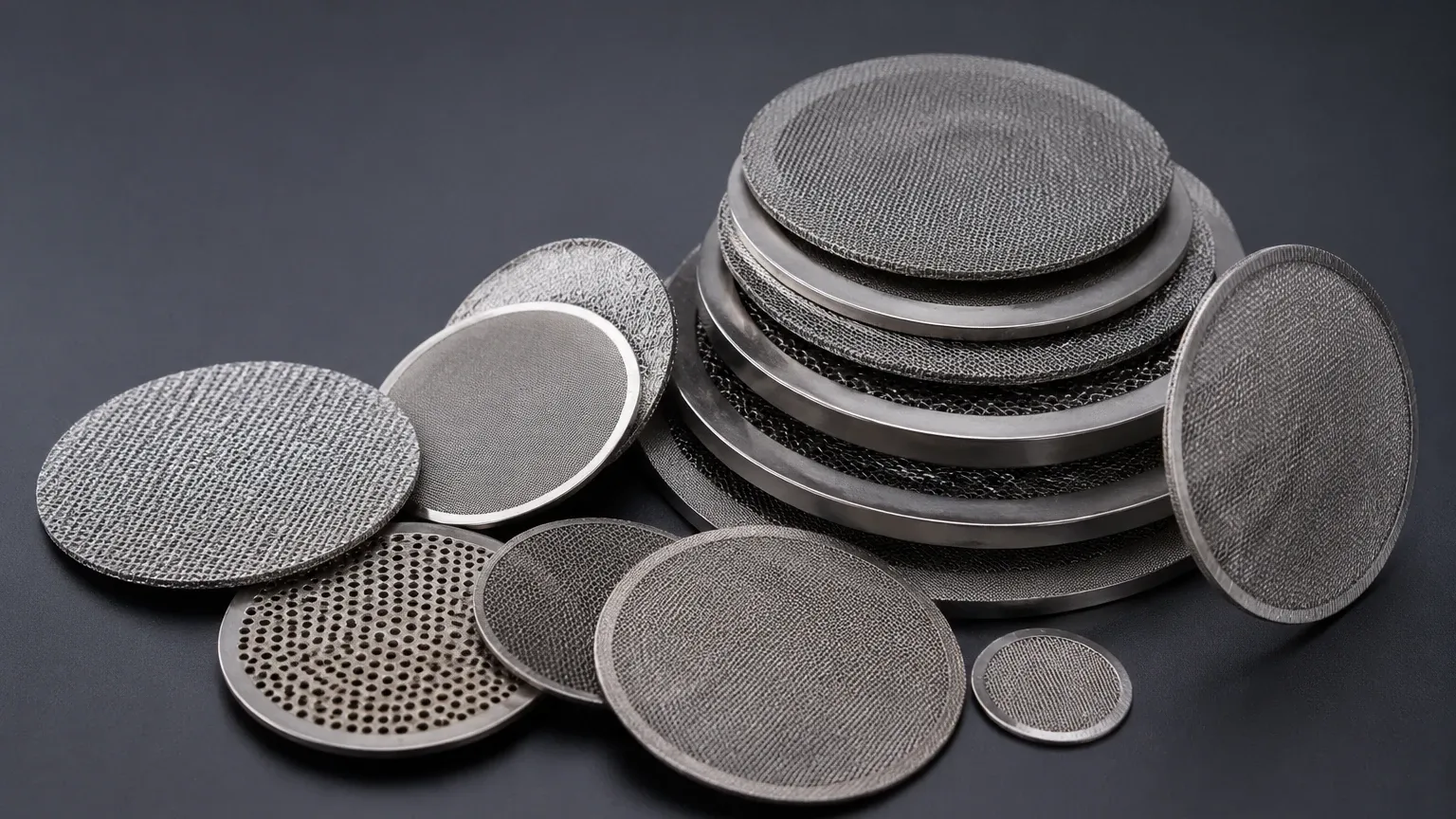
Filter Packs
In industrial filtration, the efficiency of a process often hinges on the structural integrity and precision of the filtration media. Among the most versatile components used in high-pressure and high-temperature environments are filter packs. These multi-layered assemblies are engineered to provide a balance between fine filtration accuracy and the mechanical strength required to withstand demanding operational conditions. For engineers and procurement teams, selecting the right configuration of Filter Discs & Packs is a critical decision that impacts product purity, equipment longevity, and overall process economy.
The Engineering Behind Multi-Layer Filter Packs
Filter packs are rarely composed of a single layer of wire mesh. Instead, they are sophisticated composite structures where each layer serves a specific functional purpose. The design usually follows a symmetrical or asymmetrical layering strategy to optimize flow and particle retention.
1. The Filtration Layer: This is the core of the pack, typically made from fine stainless steel wire mesh or metal fiber felt. The mesh count and weave type (such as plain, twill, or Dutch weave) determine the micron rating. For applications requiring high precision, Dutch weave is often preferred due to its dense structure and superior particle retention.
2. The Support Layer: Fine filtration mesh is inherently delicate. To prevent the mesh from deforming or rupturing under high differential pressure, coarser mesh layers are placed on either side. These support layers provide the necessary rigidity to maintain the pack's shape.
3. The Drainage Layer: In thicker filter packs, drainage layers are included to ensure that the filtered fluid can exit the assembly efficiently, reducing the pressure drop across the media.
By combining these layers, manufacturers can create a filter that captures particles as small as 5 microns while remaining stable under hundreds of bars of pressure, a feat that single-layer filters cannot achieve.
Material Selection and Chemical Compatibility
Material science is the foundation of reliable filtration. In industrial settings, the chemical composition of the fluid and the operating temperature dictate the choice of alloy. Stainless steel is the industry standard due to its corrosion resistance and mechanical toughness.
* Grade 304: Suitable for general industrial applications where moderate corrosion resistance is required. It is cost-effective and performs well in most food and beverage or hydraulic applications.
* Grade 316L: The "L" stands for low carbon, which improves weldability and resistance to intergranular corrosion. 316L contains molybdenum, making it significantly more resistant to chlorides and acidic environments, which is essential for chemical processing and pharmaceutical manufacturing.
* High-Nickel Alloys: In extreme cases involving highly corrosive media or temperatures exceeding 500°C, alloys like Hastelloy or Inconel may be used. These materials ensure that the filter packs do not degrade or leach metallic ions into the process stream.
Engineers must also consider the thermal expansion coefficients of the materials, especially in polymer extrusion where temperatures can fluctuate significantly. Using consistent materials throughout the pack prevents internal stresses that could lead to bypass or structural failure.
Structural Variations: Framed vs. Spot-Welded Packs
The method used to join the layers of a filter pack is as important as the mesh itself. The choice between framing and welding depends on the sealing requirements of the housing and the intensity of the pressure.
Spot-Welded Packs
Spot welding is a common and cost-effective method for securing multiple layers of mesh. Small weld points are applied at the perimeter to keep the layers aligned during installation. These are ideal for applications where the filter is held in place by a mechanical clamping force within the machine, such as in simple hydraulic systems or low-viscosity fluid filtration.
Framed or Rimmed Packs
For high-pressure applications like plastic and resin extrusion, filter packs are often encased in a metal rim. These rims are typically made from aluminum, copper, or stainless steel. The rim serves two purposes: it provides a leak-proof seal against the walls of the filter changer and protects the edges of the wire mesh from fraying. Aluminum rims are popular for their malleability, allowing them to deform slightly under pressure to create a perfect gasket-like seal.
Performance Metrics: Beyond Micron Ratings
When evaluating filter packs, engineers often focus solely on the micron rating. However, a comprehensive technical evaluation must include several other performance indicators to ensure long-term reliability.
* Pressure Drop (ΔP): This is the difference in pressure between the upstream and downstream sides of the filter. A high initial pressure drop indicates that the filter may be too restrictive for the pump capacity, leading to energy inefficiency. Well-designed packs maximize the open area to keep ΔP low.
* Dirt-Holding Capacity: This refers to the volume of contaminants the pack can retain before the pressure drop reaches a critical limit. Multi-layer designs often incorporate "depth filtration" principles, where larger particles are caught by outer layers while finer particles are trapped deeper within, extending the service life.
* Mechanical Strength: In processes like polymer melt filtration, the media must withstand extreme viscosity and pressure. If the pack is not engineered for the specific shear forces of the fluid, the mesh pores may enlarge (pore migration), allowing oversized contaminants to pass through.
Primary Industrial Applications
Customized filtration solutions are required across a broad spectrum of industries, each with unique challenges.
1. Polymer and Plastic Extrusion
This is perhaps the most demanding application for filter packs. Molten polymers are highly viscous and must be filtered at high temperatures to remove "black specks," un-melted resin, and degraded material. The filter must maintain its integrity under immense pressure to ensure the quality of the final film, fiber, or profile.
2. Chemical and Petrochemical Processing
In these environments, the focus is on chemical compatibility. Filter packs are used to protect downstream catalysts and high-precision valves from particulate contamination. The use of 316L or 904L stainless steel is common here to prevent pitting corrosion.
3. Pharmaceutical and Food Production
Hygiene and cleanability are paramount. Filters used in these sectors must be manufactured without the use of toxic binders or adhesives. Stainless steel packs are preferred because they can be ultrasonically cleaned and sterilized, meeting stringent FDA or equivalent regulatory standards.
4. Hydraulic and Oil Filtration
Precision metal filters are used in hydraulic systems to protect sensitive components like servo-valves. Unlike disposable paper filters, metal filter packs offer consistent performance under surging pressures and can be cleaned and reused, reducing the total cost of ownership.
Customization and OEM Considerations
Off-the-shelf filtration components rarely meet the specific needs of specialized industrial machinery. Customization is often necessary to optimize performance. When working with a manufacturer like Kaifil, engineers should be prepared to confirm several technical parameters:
* Geometry: While circular discs are standard, packs can be manufactured in kidney, oval, or rectangular shapes to fit specific breaker plates.
* Layer Sequence: The specific order of mesh counts (e.g., 20/60/100/60/20) must be tailored to the contaminant profile of the raw material.
* Tolerances: Precision in the outer diameter is vital for automatic screen changers to prevent jamming or bypass.
By providing detailed application data—including fluid viscosity, operating temperature, and the nature of the contaminants—procurement teams can ensure they receive a product that is engineered for their specific operational reality rather than a generic substitute.
Maintenance, Cleaning, and Replacement Cycles
Understanding when to replace or clean a filter pack is essential for preventing downtime. Most modern systems monitor the differential pressure across the filter. Once the pressure reaches a predetermined set point, the pack must be changed.
In many industries, stainless steel filter packs are considered semi-permanent. Depending on the contaminant (e.g., organic matter vs. hard metal fragments), these packs can be cleaned using methods such as:
* Ultrasonic Cleaning: High-frequency sound waves create cavitation bubbles that dislodge particles from deep within the mesh.
* Pyrolysis (Burn-off): For polymer applications, packs are heated in a controlled environment to carbonize the plastic, which is then removed via vacuum or water jet.
* Chemical Solvent Cleaning: Used when the contaminant can be dissolved without damaging the stainless steel substrate.
However, it is important to note that every cleaning cycle slightly degrades the mechanical properties of the mesh. After a certain number of cycles, the pack will no longer return to its original "clean" pressure drop, signaling that it is time for a full replacement.
Conclusion: Selecting the Right Partner
Industrial filtration is a precise science where small deviations in mesh quality or assembly technique can lead to significant production losses. High-quality Filter Discs & Packs provide the reliability needed to maintain continuous production cycles and protect expensive downstream equipment. When evaluating suppliers, technical expertise and the ability to provide customized, OEM-grade solutions should be the primary criteria. By focusing on material integrity, structural design, and application-specific engineering, companies can achieve superior filtration performance and a lower total cost of ownership.