

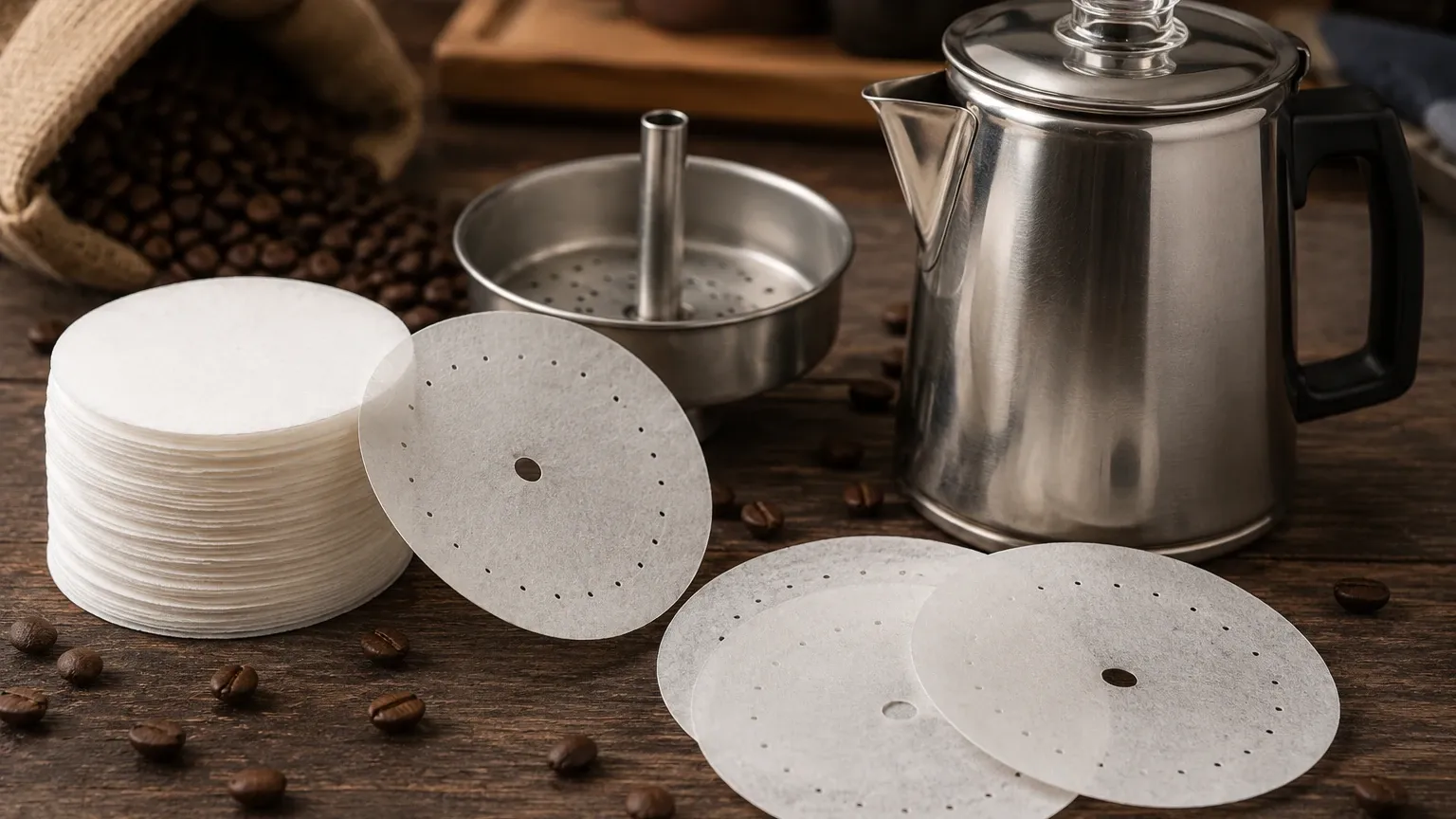
Coffee Filter Packs for Percolator
In the landscape of industrial food and beverage processing, the efficiency of extraction processes often hinges on the precision of the filtration media utilized. For commercial-scale brewing and high-output beverage production, the traditional reliance on disposable paper media is increasingly being replaced by permanent, high-performance stainless steel components. Specifically, when designing or maintaining professional-grade brewing equipment, understanding the technical nuances of coffee filter packs for percolator systems is essential for ensuring consistent product quality, operational longevity, and cost-effectiveness.
Industrial percolators operate on the principle of continuous gravity or pressure-fed circulation, where hot water is repeatedly passed through a bed of grounds. This environment subjects the filtration media to high temperatures, varying hydraulic pressures, and the chemical acidity inherent in coffee oils. To meet these demands, engineers and procurement specialists often turn to advanced Filter Discs & Packs manufactured from stainless steel wire mesh, which provide the structural integrity and filtration accuracy that disposable alternatives lack.
The Mechanics of Percolation and Filtration Requirements
Percolation is a dynamic process. Unlike drip filtration, where water passes through the medium once, a percolator recirculates the liquid. This means the filter must not only prevent solids from entering the final extract but also withstand multiple cycles of saturation and flow without deforming or clogging.
In a B2B context, such as in the manufacturing of large-scale hotel brewing systems or industrial extractors, the filtration component—often referred to as the "pack" or "disc"—must be engineered with specific micron ratings. If the mesh is too coarse, "fines" (microscopic coffee particles) will pass through, resulting in a muddy sediment and over-extracted bitterness. If the mesh is too fine, the flow rate is restricted, leading to increased pressure within the system and potential bypass or mechanical failure.
Modern coffee filter packs for percolator applications utilize multi-layered sintered wire mesh or precision-cut single-layer discs to balance these competing requirements. By selecting a specific weave pattern, such as plain or twilled Dutch weave, manufacturers can achieve a precise aperture size that retains solids while allowing essential oils and aromatic compounds to pass through freely.
Technical Specifications of Stainless Steel Filter Discs & Packs
When evaluating Filter Discs & Packs for industrial percolators, technical professionals must look beyond surface dimensions. The performance of a filter is defined by its geometry, pore distribution, and mechanical strength.
Mesh Count and Micron Rating
For coffee applications, the micron rating typically ranges from 50 to 150 microns. A 100-micron stainless steel mesh is frequently the standard for commercial percolators, as it effectively captures the majority of coarse and medium grinds used in high-volume brewing. In specialized extractors where a cleaner profile is required, multi-stage packs may be used, featuring a coarse support layer and a fine filtration layer.
Structural Integrity
Unlike paper coffee filter packs for percolator use, which can tear under the weight of wet grounds or the force of circulating water, stainless steel discs are rigid. In larger industrial units, these discs may be reinforced with a perforated metal plate or a coarser mesh backing to prevent "ballooning" or structural fatigue during high-pressure cycles.
Edge Treatment
To ensure a bypass-free seal within the percolator basket, the edges of the filter discs are often bound. This can involve spot welding, aluminum or stainless steel rimming, or precision laser cutting to ensure the disc fits perfectly against the housing walls. A secure fit is critical; even a millimeter of clearance can allow sediment to bypass the filter, compromising the entire batch.
Material Science: Selecting the Right Alloy for Food-Grade Applications
In the food and beverage industry, material selection is dictated by both performance and regulatory compliance. Stainless steel is the gold standard due to its inert nature and resistance to corrosion.
1. Type 304 Stainless Steel: This is the most common material used for coffee filter packs for percolator systems. It offers excellent corrosion resistance to the organic acids found in coffee and is highly durable for standard commercial environments.
2. Type 316L Stainless Steel: For industrial applications involving high-salinity water or aggressive cleaning chemicals (such as caustic CIP – Clean-In-Place cycles), 316L is preferred. The addition of molybdenum provides superior resistance to pitting and crevice corrosion, ensuring a longer service life in demanding processing plants.
Beyond corrosion resistance, stainless steel is preferred because it does not impart any flavor to the beverage. Paper filters can sometimes introduce a "woody" or bleached taste, and plastic components may degrade over time at high temperatures. Stainless steel remains stable, ensuring that the sensory profile of the extract remains pure.
Optimizing Flow Rate and Sediment Retention
One of the primary challenges for engineers is optimizing the "open area" of the filter. The open area refers to the percentage of the disc surface that allows liquid to pass. A higher open area results in a lower pressure drop and faster processing times, which is critical for high-throughput industrial brewing.
However, increasing the open area often means using thinner wires or a larger mesh opening, which can compromise the strength of the coffee filter packs for percolator equipment. To solve this, Kaifil utilizes advanced weaving techniques that maximize the number of pores per square inch while maintaining the structural thickness of the wire.
Furthermore, the surface topography of the mesh plays a role in how the "filter cake" (the layer of coffee grounds) builds up. A well-designed filter disc encourages a uniform cake distribution, which actually assists in the filtration process. If the mesh surface is too smooth or too irregular, it can lead to "channeling," where water finds a path of least resistance, resulting in uneven extraction and poor flavor consistency.
Operational Efficiency and Total Cost of Ownership (TCO)
For purchasing teams and plant managers, the shift from disposable coffee filter packs for percolator use to permanent stainless steel Filter Discs & Packs is often driven by a Total Cost of Ownership (TCO) analysis. While the initial capital expenditure for a custom-engineered stainless steel filter is higher than a box of paper filters, the long-term savings are substantial.
Waste Reduction and Sustainability
In a high-volume facility, the daily disposal of thousands of paper filters and the associated logistics of procurement and storage represent a significant operational burden. Permanent stainless steel filters eliminate this waste stream, aligning with corporate sustainability goals and reducing the environmental footprint of the production line.
Durability and Replacement Cycles
A high-quality stainless steel filter disc can last for thousands of cycles if maintained correctly. In contrast, paper filters are a recurring expense. When factoring in the labor costs associated with managing inventory and the potential for downtime caused by running out of disposables, the permanent solution offers a more predictable and lower operational cost over a 12-to-24-month period.
Cleaning and Maintenance
Modern industrial percolator filters are designed for ease of maintenance. They can be cleaned using ultrasonic baths, high-pressure air, or standard food-grade detergents. Because they are made of robust alloys, they can withstand the rigorous cleaning protocols required in pharmaceutical or food-grade environments without losing their shape or filtration accuracy.
OEM Customization for Commercial Brewing Systems
Every industrial brewing system has unique geometry and flow characteristics. Standard off-the-shelf filters rarely provide the optimized performance required for high-end equipment. This is where OEM (Original Equipment Manufacturer) customization becomes vital.
When sourcing coffee filter packs for percolator systems, engineers should confirm the following customization options with their manufacturer:
* Custom Diameters and Shapes: Whether the system requires a circular disc, a rectangular pack, or a complex conical shape, precision manufacturing ensures a perfect fit.
* Multi-Layer Sintering: For applications requiring extreme durability and fine filtration, multiple layers of mesh can be sintered (bonded with heat and pressure) into a single, rigid plate. This prevents any shifting of the mesh wires during operation.
* Specialized Coatings: In some instances, non-stick or hydrophobic coatings may be applied to the mesh to facilitate easier cleaning and faster discharge of spent grounds.
By partnering with a manufacturer like Kaifil, equipment designers can integrate bespoke Filter Discs & Packs that are specifically tuned to the pump pressures and grind profiles of their machines.
Conclusion: Selecting the Right Partner for Industrial Filtration
The selection of coffee filter packs for percolator systems is a critical decision that impacts the quality of the final beverage, the reliability of the equipment, and the overall efficiency of the production process. For the B2B sector, moving away from generic, disposable options toward engineered stainless steel solutions is a mark of technical maturity and operational foresight.
Engineers and procurement specialists must prioritize manufacturers who understand the interplay between material science, weave mechanics, and food-grade compliance. By focusing on high-quality stainless steel Filter Discs & Packs, facilities can achieve a level of consistency and durability that meets the rigorous standards of today’s food and beverage industry. Whether you are designing a new commercial brewer or upgrading an existing industrial extraction line, the right filtration component is the foundation of a superior product.
