


Coffee Filter Packs Near Me
In the context of commercial coffee production and industrial extraction, the search for "coffee filter packs near me" often leads procurement managers and process engineers toward a critical decision: should they continue using disposable media or transition to permanent, high-performance stainless steel filtration? For large-scale brewing, cold brew extraction, and industrial espresso systems, the filtration component is not merely a consumable but a precision-engineered tool that dictates the clarity, flavor profile, and operational efficiency of the production line.
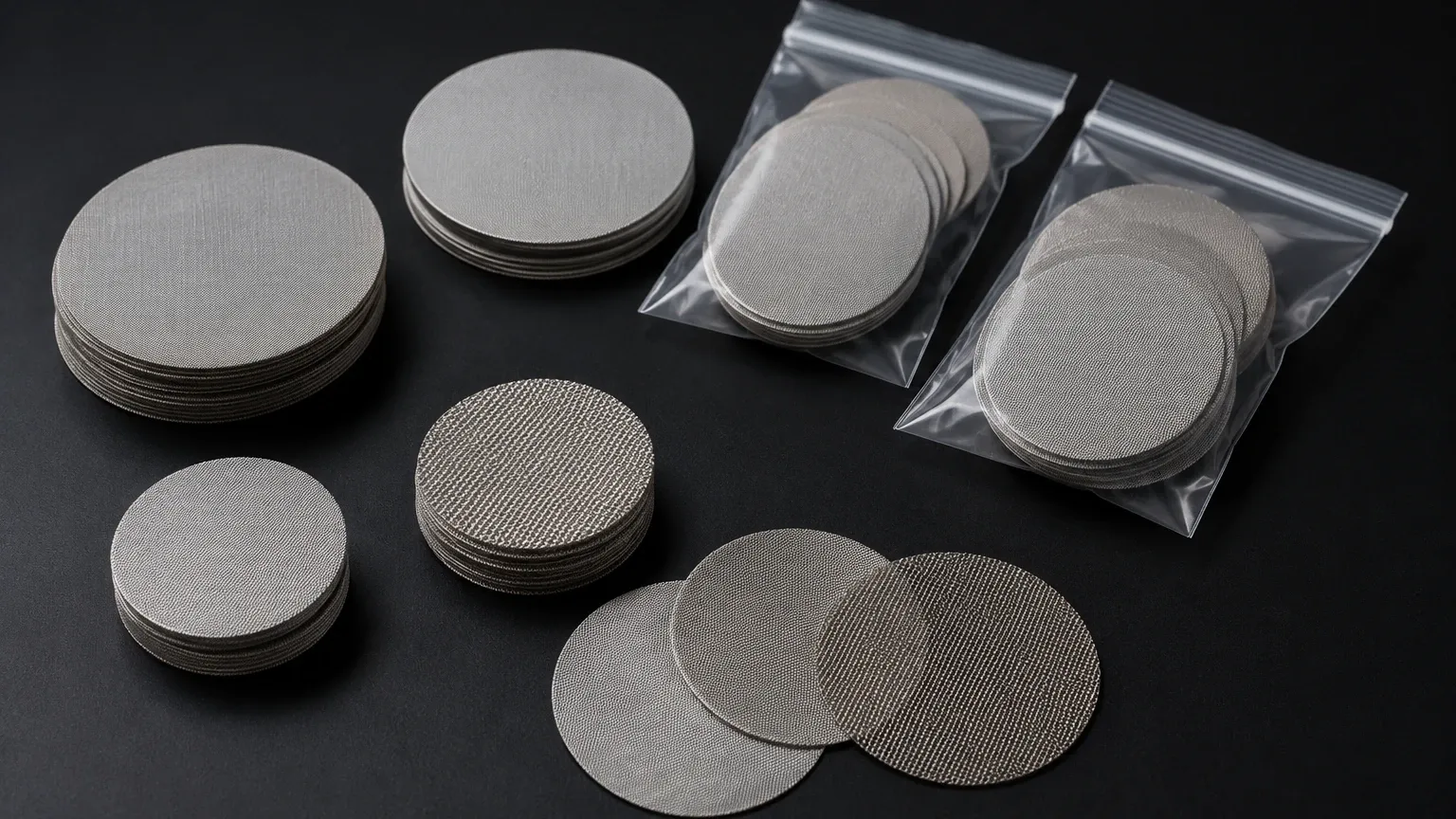
Industrial coffee filter packs are typically constructed from multiple layers of stainless steel wire mesh, designed to handle high flow rates and significant pressure differentials while maintaining strict micron-level accuracy. Unlike domestic paper filters, these metal Filter Discs & Packs provide the structural integrity required for continuous industrial use, offering a sustainable and cost-effective solution for modern food and beverage facilities.
Technical Specifications of Industrial Filter Discs & Packs
When evaluating filtration components for coffee processing, understanding the technical specifications of the wire mesh is paramount. Industrial filters are categorized by their weave type, material grade, and structural configuration.
Material Selection: 304 vs. 316L Stainless Steel
For most food-grade applications, including coffee extraction, Type 304 or 316L stainless steel is the industry standard.
* Type 304: Offers excellent corrosion resistance and durability for standard brewing environments. It is the most common choice for general filtration needs.
* Type 316L: Contains molybdenum, which provides superior resistance to chlorides and organic acids. In high-temperature extraction or environments where aggressive cleaning chemicals are used, 316L is preferred to prevent pitting and ensure a longer service life.
Weave Types and Filtration Performance
The performance of Filter Discs & Packs is largely determined by the weave of the wire mesh. Common weaves include:
* Plain Weave: The most straightforward construction where wires cross over and under each other. It provides high flow rates and is easy to clean, making it suitable for coarse filtration or as a support layer.
* Dutch Weave: This weave uses thicker warp wires and finer weft wires, resulting in a dense, strong mesh with very fine filtration capabilities. It is ideal for removing fine coffee particulates (fines) that can cause bitterness or cloudiness in the final product.
* Twill Weave: Allows for a heavier wire to be used for a given mesh count, increasing the strength and durability of the filter disc.
Why Professionals Move Beyond Disposable Filters
While the initial search for "coffee filter packs near me" might be driven by immediate local availability, industrial users must consider the long-term implications of their filtration choice. Stainless steel filter packs offer several advantages over paper or fabric alternatives.
1. Consistency in Extraction
Paper filters can vary in thickness and porosity, leading to inconsistent extraction times and flavor profiles across different batches. Precision-engineered stainless steel discs maintain a constant pore size, ensuring that every brew cycle meets the exact same quality standards. This is particularly vital for brands looking to scale their production while maintaining a signature taste.
2. Durability and Pressure Resistance
In industrial extraction, filters are often subjected to high pressures to force water through densely packed grounds. Paper filters are prone to tearing or "blowouts" under these conditions. Stainless steel Filter Discs & Packs are designed to withstand significant mechanical stress without deforming, ensuring that the filtration barrier remains intact throughout the process.
3. Total Cost of Ownership (TCO)
Although the upfront cost of a stainless steel filter pack is higher than a box of disposable filters, the TCO is significantly lower. A high-quality metal filter can be cleaned and reused thousands of times, eliminating the recurring cost of disposables, reducing waste disposal fees, and minimizing the logistics of managing frequent inventory refills.
Applications in Large-Scale Coffee Processing
The utility of industrial filter packs extends across various segments of the coffee industry. Each application requires specific engineering considerations to optimize the output.
Cold Brew Extraction
Cold brew involves long steeping times and often produces a high volume of fine sediment. Using multi-layer Filter Discs & Packs allows for the efficient removal of these fines without clogging. The rigidity of the metal mesh also supports the weight of large volumes of wet grounds, which can be substantial in commercial tanks.
Industrial Espresso and Pod Production
For manufacturers of coffee pods or large-scale espresso machines, precision is non-negotiable. The filter must allow for high-pressure water throughput while preventing even the smallest particles from entering the final cup. Sintered mesh discs are often used here because the layers are fused together, providing a smooth surface and exceptional structural stability.
Instant Coffee and Extract Manufacturing
In the production of coffee concentrates and instant coffee, filtration is a multi-stage process. Coarse mesh packs are used for primary separation, followed by progressively finer discs to achieve the desired clarity before the evaporation or freeze-drying stages.
Sourcing Considerations: Finding Suppliers "Near Me"
In a globalized economy, the term "near me" is increasingly defined by lead times and supply chain reliability rather than physical proximity. When sourcing Filter Discs & Packs, engineers should prioritize manufacturers who can offer:
* Customization Capabilities: Every extraction system has unique dimensions and pressure requirements. A supplier that can customize the diameter, thickness, and mesh configuration of the disc is more valuable than a local distributor with limited off-the-shelf stock.
* Technical Support: Choosing the right micron rating is a balance between flow rate and filtration efficiency. Manufacturers with engineering expertise can help calculate the optimal mesh count to prevent clogging while ensuring product clarity.
* Quality Certification: For food and beverage applications, ensuring that the materials are FDA-compliant and that the manufacturing process follows ISO standards is critical for food safety and regulatory compliance.
By working directly with a manufacturer like Kaifil, companies can bypass the limitations of local retail stock and receive components engineered specifically for their machinery, often with lead times that rival local sourcing due to optimized global logistics.
Engineering Criteria for Filter Selection
Before finalizing a purchase for coffee filter packs, technical teams should evaluate several key performance indicators (KPIs):
Pore Size and Micron Rating
Coffee fines typically range from 10 to 100 microns. A filter that is too coarse will allow sediment through, while one that is too fine will clog rapidly (blinding), requiring frequent cleaning and reducing throughput. Multi-layer packs often solve this by using a graduated density approach—coarser layers on the outside to catch large particles and finer layers in the center for final polishing.
Edge Treatment and Sealing
To prevent bypass (where liquid flows around the filter rather than through it), the edges of the filter discs must be properly finished. Options include:
* Spot Welding: Keeps multiple layers together securely.
* Rim Binding: A metal or polymer rim is added to the edge to provide a better seal against the housing and to protect the mesh from fraying.
* Sintering: Fusing the wires at their contact points for a completely rigid, non-fraying edge.
Cleaning and Maintenance Cycles
One of the primary concerns for engineers is how easily the Filter Discs & Packs can be cleaned. Stainless steel mesh is compatible with various cleaning methods, including backwashing, ultrasonic cleaning, and chemical CIP (Clean-In-Place) cycles. Understanding the compatibility of the filter material with your existing cleaning protocols is essential for maintaining hygiene and extending the component's lifespan.
The Role of Customization in Filtration Efficiency
Standardized filters rarely provide the peak efficiency required for specialized industrial processes. Customization allows for the adjustment of several variables:
1. Layer Configuration: Combining different mesh counts to create a custom depth-filtration effect.
2. Geometric Precision: Laser-cutting technology ensures that discs fit perfectly into existing housings, preventing leaks and mechanical wear.
3. Reinforcement: For high-pressure applications, adding a perforated metal support plate to the mesh pack can prevent bursting or permanent deformation.
Conclusion: Making an Informed Procurement Decision
While the search for "coffee filter packs near me" may start as a quest for a simple replacement part, it represents an opportunity to upgrade the efficiency and quality of an industrial coffee process. By transitioning to high-quality stainless steel Filter Discs & Packs, facilities can achieve better consistency, lower operational costs, and a more sustainable production model.
When selecting a partner for these components, focus on technical expertise, material quality, and the ability to provide customized solutions that meet the specific demands of your extraction equipment. Reliable filtration is the foundation of a high-quality coffee product, and investing in the right metal filter technology is a decision that pays dividends in both product excellence and bottom-line savings.
