


Coffee Filter Packs 4 Cup
In the commercial food and beverage industry, the demand for precision, consistency, and sustainability has led to a significant shift in how small-batch filtration is approached. While the term "coffee filter packs 4 cup" often brings to mind consumer-grade paper disposables, for engineers and procurement professionals in the industrial brewing and extraction sectors, it represents a specific dimensional and performance standard. Transitioning from disposable media to high-precision stainless steel Filter Discs & Packs offers substantial improvements in filtration accuracy, chemical resistance, and long-term operational efficiency.
Industrial-grade filter packs are designed to meet the rigorous demands of continuous use, where maintaining the integrity of the flavor profile and the clarity of the extract is paramount. This article explores the technical considerations, engineering specifications, and selection criteria for stainless steel filtration components used in small-batch commercial applications.
The Evolution from Disposable to Permanent Filtration in Small-Batch Brewing
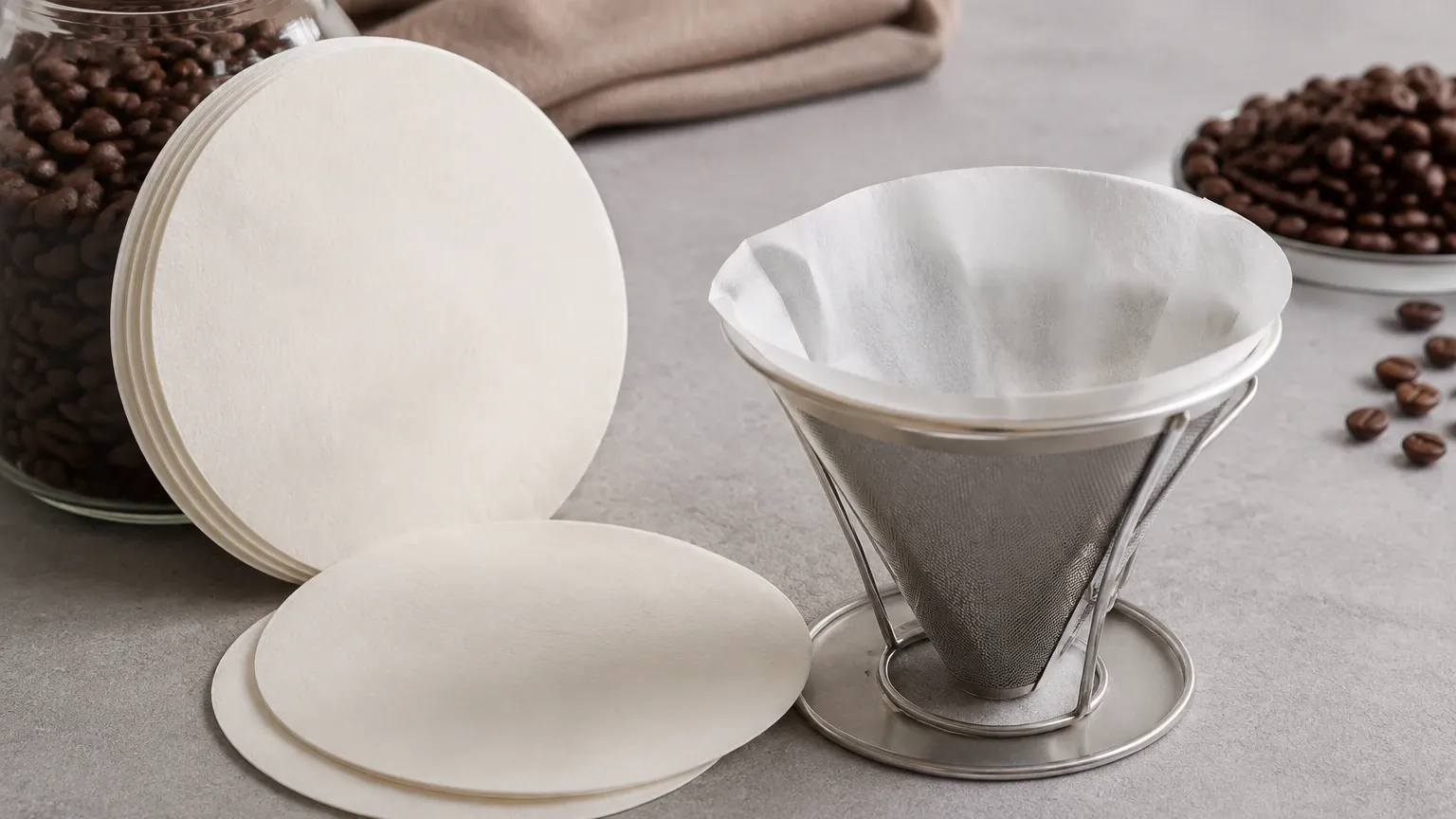
The traditional use of paper-based coffee filter packs 4 cup in commercial environments often presents challenges related to consistency and waste. Paper filters, while inexpensive per unit, introduce variables such as absorption of essential oils and potential chemical leaching from bleaching agents. Furthermore, the structural weakness of paper under high-pressure or high-temperature extraction can lead to "blowouts" or bypass, compromising the final product quality.
In contrast, stainless steel filter discs and packs provide a rigid, repeatable filtration barrier. For 4-cup capacity systems—common in laboratory testing, high-end hospitality, and specialized extraction units—the move toward metal mesh is driven by the need for exact pore size control. Unlike the irregular fiber distribution in paper, woven wire mesh offers a uniform aperture, ensuring that every batch meets the same quality standards. This is particularly critical for OEM manufacturers who must guarantee the performance of their brewing equipment over thousands of cycles.
Engineering Specifications of Stainless Steel Filter Discs & Packs
When specifying Filter Discs & Packs for a 4-cup system, engineers must look beyond basic dimensions. The performance of a filter is dictated by its material composition, weave type, and structural reinforcement.
Material Selection: SS304 vs. SS316L
Stainless steel is the industry standard due to its corrosion resistance and food-grade safety.
* Grade 304: Suitable for most standard brewing applications where moisture is the primary environmental factor. It offers excellent durability and cost-effectiveness.
* Grade 316L: Recommended for applications involving high acidity or where aggressive cleaning agents (such as caustic soda or acidic descalers) are used. The addition of molybdenum in 316L provides superior resistance to pitting and crevice corrosion.
Weave Types and Micron Ratings
The "micron rating" determines the smallest particle the filter will retain. For a coffee filter packs 4 cup application, the goal is often to balance clarity with the retention of natural oils.
* Plain Weave: A simple over-under pattern that provides high flow rates and is easy to clean.
* Dutch Weave: A more complex weave where thicker warp wires are combined with thinner, closely packed weft wires. This creates a tortuous path for particles, offering higher strength and finer filtration (down to 5-10 microns) without sacrificing structural integrity.
* Twilled Weave: Used when finer meshes are required in heavier wire diameters, providing a robust solution for high-pressure extraction.
Structural Design: Single vs. Multi-layer
For industrial applications, a single layer of mesh may not be sufficient to withstand the mechanical stresses of the brewing cycle. Multi-layer sintered or bound packs combine a fine filtration layer with coarser support layers. This prevents the fine mesh from deforming under pressure and extends the service life of the component.
Performance Advantages: Flow Rate, Clarity, and Durability
In a commercial 4-cup brewing system, the flow rate is a critical variable. If the resistance is too high, the extraction time increases, leading to over-extraction and bitterness. If the resistance is too low, the water passes through too quickly, resulting in a weak, under-extracted product.
Precision Flow Control
Stainless steel Filter Discs & Packs allow for precise engineering of the open area percentage. By selecting a specific wire diameter and mesh count, manufacturers can calibrate the flow rate to match the pump pressure or gravity-fed requirements of the machine. This level of control is impossible with paper coffee filter packs 4 cup, which can vary in density from one batch to the next.
Enhanced Clarity without Oil Loss
One of the primary technical advantages of metal mesh is its ability to allow aromatic oils to pass through while retaining fine particulates (fines). Paper filters often trap these oils, which are essential for the body and flavor profile of the beverage. A well-engineered stainless steel disc ensures a clean cup with a full-bodied flavor, meeting the requirements of specialty coffee professionals.
Thermal Stability
Industrial brewing often involves water temperatures near the boiling point. Stainless steel maintains its structural properties and pore size at these temperatures, whereas organic fibers in paper can soften or expand, altering the filtration characteristics mid-cycle.
Customization for OEM and Industrial Applications
For manufacturers of commercial brewing equipment, off-the-shelf solutions rarely suffice. Customization is necessary to ensure the filter integrates perfectly with the mechanical housing and the fluid dynamics of the system.
Edge Treatment and Framing
To prevent fraying and ensure a bypass-free seal, filter discs can be finished with various edge treatments:
* Spot Welding: Multiple layers are welded at the perimeter to maintain alignment.
* Aluminum or Stainless Steel Rims: A metal U-binding is crimped around the edge of the disc. This provides a smooth surface for gaskets to seal against and increases the overall rigidity of the pack.
* Sintering: The layers are fused together at a molecular level using heat and pressure, creating a monolithic structure that is virtually impossible to delaminate.
Dimensional Accuracy
In a 4-cup system, the tolerances for the filter housing are often tight. Precision laser cutting or die-stamping ensures that every disc fits perfectly within the basket, preventing "edge leakage"—a common failure point where unfiltered liquid bypasses the media.
Selection Criteria for Engineers and Purchasing Teams
When evaluating Filter Discs & Packs to replace or upgrade coffee filter packs 4 cup systems, procurement teams should consider the following factors to ensure long-term ROI:
1. Filtration Efficiency (Micron Rating): Determine the specific particle size that must be retained. For most commercial brewing, a range of 40 to 100 microns is standard, though finer applications may require sub-20 micron Dutch weaves.
2. Pressure Drop (ΔP): Calculate the maximum allowable pressure drop across the filter. A filter that is too dense will require higher pump energy and may cause system strain.
3. Cleaning and Maintenance Cycles: Consider how the filter will be cleaned. In high-volume environments, filters must be capable of withstanding ultrasonic cleaning or backflushing without damage.
4. Regulatory Compliance: Ensure the materials used are FDA or EC 1935/2004 compliant for food contact. This includes not only the mesh but also any bonding agents or rim materials.
5. Total Cost of Ownership (TCO): While the initial cost of a stainless steel pack is higher than a box of paper filters, the elimination of recurring purchases, reduced waste disposal costs, and improved product consistency usually result in a payback period of less than six months in commercial settings.
Common Risks and Mitigation in Metal Filtration
While stainless steel filters are superior in many ways, they are not without engineering challenges. The most common issue is "blinding" or clogging. In coffee filtration, fine particles and oils can build up over time within the mesh apertures.
To mitigate this, Kaifil recommends a regular maintenance schedule involving backwashing or the use of enzymatic cleaners that break down organic oils. Additionally, choosing a "smooth" weave like a plain Dutch weave can make surface cleaning more effective compared to more textured weaves.
Another risk is mechanical fatigue. If a filter disc is subjected to constant pressure fluctuations, it may eventually crack. This is why selecting the correct wire gauge and potentially using a multi-layer reinforced pack is essential for industrial-scale equipment.
Conclusion: Optimizing Your Small-Batch Filtration
Transitioning to professional-grade stainless steel Filter Discs & Packs is a strategic move for any B2B entity involved in the production or design of 4-cup brewing and extraction systems. By moving away from the limitations of disposable coffee filter packs 4 cup, companies can achieve higher precision, better flavor profiles, and a significantly reduced environmental footprint.
When selecting a filtration partner, it is vital to work with a manufacturer that understands the nuances of wire mesh engineering. From material grade selection to custom rim designs, the right technical support ensures that your filtration components perform reliably in the most demanding industrial environments. For engineers and purchasing teams, the focus should remain on the technical specifications that drive performance: micron accuracy, structural durability, and ease of maintenance.
