


Filter Pack for Photoshop
In the realm of precision engineering and industrial manufacturing, terminology often overlaps with other fields. While the phrase "filter pack for photoshop" typically refers to a collection of digital overlays used to enhance visual aesthetics in graphic design, the industrial sector uses the term "filter pack" to describe a sophisticated assembly of wire mesh layers designed for high-pressure filtration. For engineers and procurement specialists in the chemical, polymer, and food processing industries, a filter pack is not a digital asset but a critical mechanical component that ensures product purity and protects expensive downstream equipment.
At Kaifil, we specialize in the design and manufacture of high-performance Filter Discs & Packs that meet the rigorous demands of modern industrial processes. Understanding the technical nuances of these components—from material selection to layer configuration—is essential for optimizing filtration efficiency and extending the service life of industrial machinery.
The Anatomy of Industrial Filter Discs & Packs
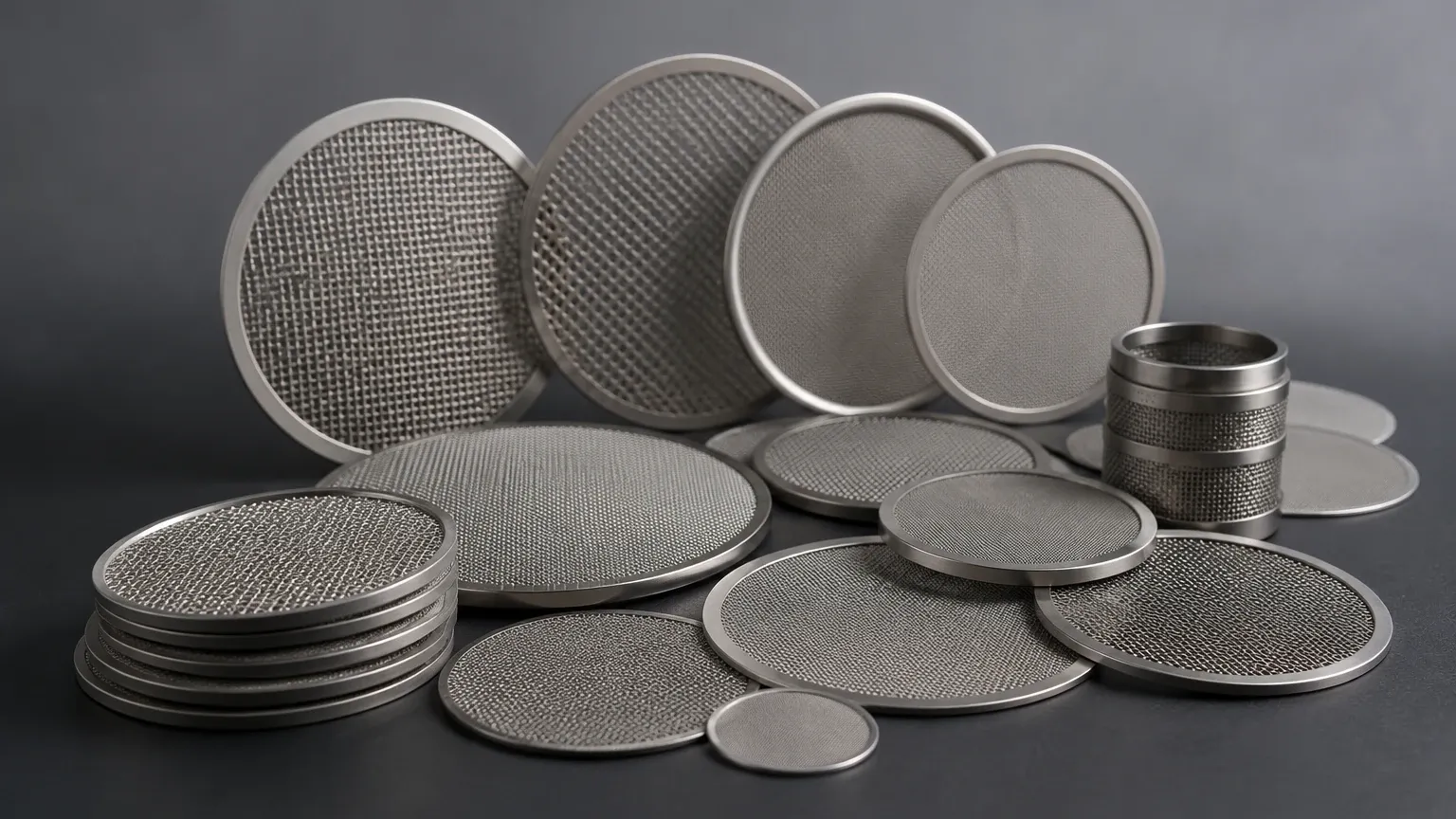
An industrial filter pack is rarely a single piece of material. Instead, it is a composite structure engineered to perform specific tasks under intense heat and pressure. These packs are primarily used in the plastics and synthetic fiber industries, where they are placed in the flow of molten polymer to remove contaminants such as gels, carbonized particles, and foreign debris.
Single-Layer vs. Multi-Layer Construction
Single-layer filter discs are often used for simple straining applications or as pre-filters. However, most demanding industrial applications require multi-layer packs. These are composed of several layers of stainless steel wire mesh, often ranging from coarse to fine and back to coarse. This "sandwich" structure provides several benefits:
1. Structural Integrity: The coarse outer layers provide the mechanical strength needed to withstand high differential pressures without deforming the finer, more delicate filtration layer in the center.
2. Gradient Filtration: By layering different mesh counts, the pack can capture larger particles on the outer surface while the inner layers handle fine particulate matter, effectively increasing the dirt-holding capacity.
3. Flow Distribution: Properly designed packs help in evening out the flow of the medium, reducing turbulence and ensuring a consistent output.
Engineering Considerations: Material and Weave Selection
The performance of Filter Discs & Packs is dictated by the metallurgy and the physical structure of the wire mesh. Unlike a digital filter pack for photoshop, which manipulates light and color pixels, an industrial filter pack manipulates fluid dynamics and physical particles.
Stainless Steel Grades
Most industrial filter packs are manufactured from 304 or 316L stainless steel.
* Grade 304: Offers excellent resistance to a wide range of atmospheric environments and many corrosive media. It is the standard choice for general industrial applications where cost-effectiveness and durability are balanced.
* Grade 316L: Contains molybdenum, which provides superior corrosion resistance, particularly against chlorides and industrial solvents. The "L" denotes low carbon content, which improves weldability and prevents sensitization during the spot-welding process used to assemble the packs.
Weave Types and Their Impact
The type of weave used in the mesh layers determines the filtration accuracy (micron rating) and the flow resistance:
* Plain Weave: The most common and economical weave, where each warp wire crosses over and under each weft wire. It provides high flow rates but limited structural strength for very fine filtration.
* Dutch Weave: This weave uses a heavier warp wire and a finer weft wire, resulting in a dense, strong mesh with very small triangular openings. This is ideal for high-pressure applications requiring precise micron ratings.
* Twill Weave: Allows for thicker wires and a heavier mesh, providing greater durability for heavy-duty filtration tasks.
Customization: Spot Welding and Rimmed Edges
One of the most critical aspects of purchasing industrial filter packs is the method of assembly. Because these packs must fit perfectly into a filter changer or a breaker plate, precision in dimensions is non-negotiable.
Spot-Welded Packs
In this configuration, multiple layers of mesh are joined together at specific points using resistance welding. This ensures that the layers remain in the correct sequence during installation and operation. Spot welding is highly efficient for high-volume production and provides a cost-effective solution for standard extrusion processes.
Rimmed or Framed Packs
For applications involving extreme pressures or where bypass must be strictly prevented, the edges of the filter pack are enclosed in a metal rim. These rims are typically made from aluminum, copper, or stainless steel. The rim serves two purposes: it binds the layers securely and acts as a gasket, creating a tight seal against the housing wall. This prevents "edge leakage," which can compromise the purity of the final product.
Applications in High-Pressure Extrusion and Chemical Processing
The industrial application of Filter Discs & Packs is diverse, but they are most prevalent in sectors where the "melt" must be pristine.
Polymer and Plastic Extrusion
In the production of films, sheets, and profiles, even a microscopic contaminant can cause a break in the production line or a visual defect in the product. Filter packs are used in screen changers to remove these impurities. The choice of pack depends on the viscosity of the polymer and the required clarity of the final plastic.
Synthetic Fiber Production
When spinning polyester or nylon fibers, the spinneret holes are incredibly small. If the polymer contains any particulate matter, these holes will clog, leading to costly downtime. Multi-layer filter packs with high-precision Dutch weave layers are essential here to ensure continuous, defect-free production.
Chemical and Petrochemical Filtration
In chemical processing, filter discs are used to recover catalysts or to protect sensitive instruments from debris. The chemical compatibility of the mesh and the rim material is paramount in these environments to prevent premature failure due to corrosion.
How to Evaluate and Select the Right Filter Pack
For an engineer, selecting a filter pack is a balance of performance, longevity, and cost. When evaluating options, consider the following criteria:
1. Micron Rating: What is the smallest particle you need to remove? It is important to distinguish between "nominal" and "absolute" micron ratings. An absolute rating guarantees that no particle larger than the specified size will pass through.
2. Pressure Drop (Delta P): Every filter creates a resistance to flow. A pack with too many layers or a mesh that is too fine will cause a significant pressure drop, forcing the pump to work harder and potentially leading to system failure.
3. Temperature Requirements: Ensure the materials used (including the rim and any adhesives or welds) can withstand the operating temperature of the process.
4. Cleaning and Reusability: While some filter packs are designed for single use, many stainless steel packs can be cleaned (via ultrasonic baths or chemical cleaning) and reused several times, reducing the total cost of ownership.
Common Risks and Quality Assurance
In the B2B procurement process, the risk of low-quality filtration components can lead to catastrophic results, such as equipment damage or product recalls. Common issues with sub-standard filter packs include:
* Media Migration: Poorly manufactured mesh can shed wires, which then travel downstream into the final product.
* Inaccurate Micron Ratings: Variations in the wire diameter or weave density can lead to inconsistent filtration performance.
* Weak Welds: If the spot welds fail, the layers can shift, leading to uneven flow and potential bypass.
At Kaifil, we mitigate these risks through rigorous quality control. Our manufacturing process involves precision stamping to ensure exact diameters and ultrasonic cleaning to remove any residual oils or debris from the manufacturing process. We provide our clients with the technical documentation needed to confirm that each Filter Discs & Packs shipment meets their specific engineering standards.
Conclusion: The Importance of Technical Partnership
Whether you are looking for a simple single-layer disc or a complex, multi-layered rimmed pack, the success of your filtration process depends on the quality of the component. While a "filter pack for photoshop" is a tool for digital artists, the industrial filter pack is a tool for engineers who build the physical world.
Choosing a manufacturer like Kaifil means gaining access to technical expertise that spans material science and fluid dynamics. We work closely with our customers to develop customized filtration solutions that optimize production efficiency and ensure the highest levels of product purity. When the stakes involve high-pressure machinery and sensitive chemical processes, the right filter pack is not just an accessory—it is a cornerstone of operational excellence.
