


Filter Pack for Well
In industrial water abstraction, chemical injection, and oil and gas recovery, the integrity of a well system is heavily dependent on the efficiency of its filtration interface. A filter pack for well systems serves as the critical barrier between the geological formation and the internal pumping equipment. Its primary purpose is twofold: to stabilize the formation and to prevent the ingress of fine solids—such as sand, silt, and clay—into the wellbore. Failure to implement an appropriately engineered filtration solution leads to pump abrasion, reduced flow rates, and eventual well failure.
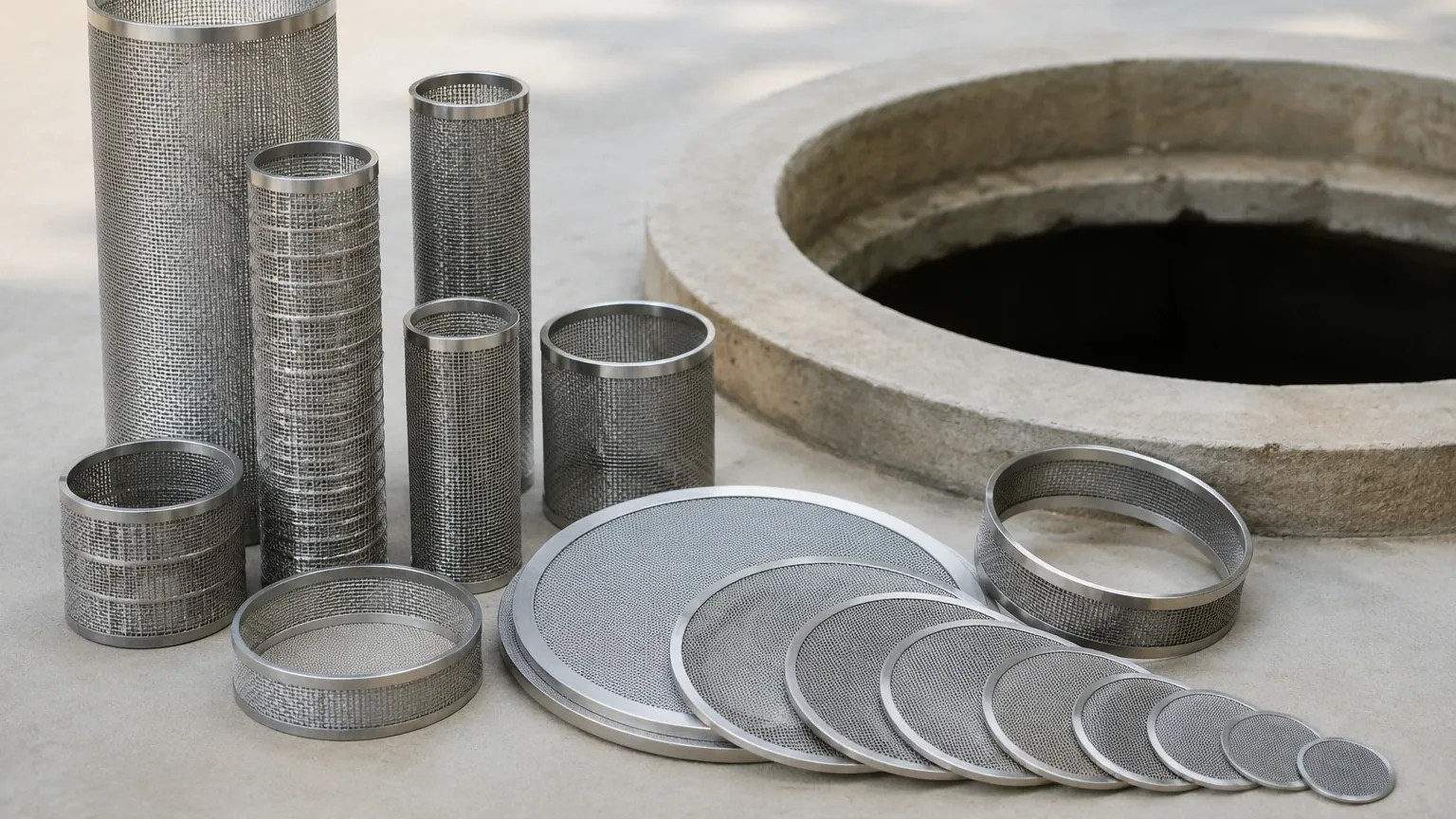
For engineers and procurement specialists, selecting the right mechanical components, such as Filter Discs & Packs, is essential for ensuring long-term operational stability. While traditional gravel packs rely on graded aggregates, modern industrial wells often utilize high-precision stainless steel filter packs to provide superior mechanical strength and predictable filtration accuracy.
The Fundamental Role of Filtration in Well Systems
Every well, whether used for municipal water supply or industrial process cooling, interacts with a subsurface aquifer. These aquifers are rarely composed of uniform material. As water is drawn into the well, the resulting pressure gradient can mobilize small particles. If these particles are not filtered at the point of entry, they act as an abrasive slurry, rapidly eroding impellers, valves, and seals.
A filter pack for well applications acts as a secondary barrier that complements the well screen. In many high-demand industrial scenarios, the "filter pack" refers to a combination of granular media and mechanical metal filters. The mechanical component must be designed to withstand the hydrostatic pressure of the well while maintaining a specific open area to minimize drawdown. By utilizing precision-engineered metal filter packs, operators can achieve a higher degree of control over the particle size distribution allowed into the system, which is vital for downstream processes that require high-purity water.
Mechanical vs. Natural Filter Pack for Well Design
When designing a well, engineers must decide between a natural development and an artificial filter pack.
1. Natural Development: This involves removing the finer particles from the formation immediately surrounding the screen, leaving only the coarser natural materials to act as a filter. This is only feasible in highly uniform, coarse-grained formations.
2. Artificial Filter Pack: In formations where the grain size is non-uniform or too fine, an artificial filter pack is required. This involves placing a specially graded material (often silica sand or gravel) or a mechanical stainless steel mesh assembly around the well screen.
In specialized industrial applications—such as deep-sea wells or chemical waste injection—the reliance on granular media alone is often insufficient. Here, multi-layer Filter Discs & Packs are integrated into the well-head or downhole assembly. These stainless steel components provide a fixed pore structure that cannot shift or settle over time, unlike granular packs. This stability is crucial for maintaining consistent flow rates and protecting high-value submersible pumps.
Material Selection: Why Stainless Steel Filter Discs & Packs Excel
The environment within a well is often chemically aggressive. Factors such as pH fluctuations, high salinity, and the presence of dissolved oxygen or hydrogen sulfide can lead to rapid corrosion of standard carbon steel components. For a filter pack for well systems to remain effective over a decades-long service life, material selection is the most critical engineering decision.
Stainless steel, particularly grades 304 and 316L, is the industry standard for high-performance well filtration. Grade 316L, with its molybdenum content, offers enhanced resistance to pitting and crevice corrosion in chloride-rich environments, such as brackish water or coastal aquifers.
Beyond corrosion resistance, stainless steel filter packs offer high mechanical strength. In deep wells, the filter must withstand significant collapse pressures and the mechanical stresses of installation and periodic cleaning. Unlike synthetic or plastic filters, stainless steel maintains its structural integrity under thermal stress, making it suitable for geothermal wells or high-temperature industrial discharge systems.
Sizing and Micron Rating: Engineering the Perfect Interface
The effectiveness of a filter pack for well applications is determined by its micron rating and its relationship to the formation's grain size. Engineering a filter that is too fine will lead to premature clogging and excessive pressure drops, while a filter that is too coarse will allow sand to bypass the system.
To determine the correct specification, engineers typically perform a sieve analysis of the formation material. The goal is to select a filter mesh size that retains the filter pack material (if using gravel) or the formation itself. In mechanical filtration, the use of Filter Discs & Packs allows for precise control over the aperture size.
Modern manufacturing techniques, such as sintered wire mesh, allow for multiple layers of stainless steel to be bonded together. This creates a filter medium that combines a fine filtration layer with thicker, high-strength support layers. This composite structure ensures that the filter can handle high flow velocities without the mesh wires shifting, which would otherwise compromise the micron rating.
Performance Evaluation and Hydraulic Conductivity
A primary concern for any well operator is hydraulic conductivity—the ease with which fluid moves through the filter interface. A well-designed filter pack for well systems should maximize the "open area." The open area is the percentage of the filter surface that consists of holes or pores.
High open area results in:
* Lower Entrance Velocity: Reducing the speed at which water enters the well minimizes the mobilization of fine sediments.
* Reduced Drawdown: Lower resistance to flow means the pump does not have to work as hard to maintain the desired yield, leading to significant energy savings.
* Minimized Incrustation: Lower velocities reduce the rate at which minerals, such as calcium carbonate or iron, precipitate out of the water and clog the filter pores.
When evaluating Filter Discs & Packs, engineers must balance the need for a high open area with the requirement for mechanical durability. Sintered mesh packs are particularly effective here, as they provide a stable, high-porosity structure that resists deformation even under high differential pressures.
Custom OEM Solutions for Specialized Well Environments
No two geological formations are identical, and standard off-the-shelf filtration products often fall short in complex industrial environments. Customization is frequently required to address specific challenges such as unconventional borehole diameters, unique chemical compositions, or extreme pressure requirements.
Manufacturers like Kaifil specialize in developing tailored filtration components. For a filter pack for well applications, this might include:
* Custom Geometric Configurations: Designing filter packs that fit into specific downhole tool strings or well-head assemblies.
* Layered Media Gradients: Creating a multi-stage filtration effect within a single pack to capture a wide range of particle sizes.
* Specialized Alloys: Utilizing Duplex stainless steel or Monel for environments where standard 316L may not suffice.
By working closely with a manufacturer that understands the nuances of industrial filtration, engineering teams can ensure that their filter pack is optimized for the specific hydraulic and geological conditions of their project.
Maintenance and Longevity of Industrial Well Filters
Even the most well-engineered filter pack for well systems will eventually require maintenance. Over time, biological fouling (biofilm growth) or chemical incrustation can reduce the effective open area. However, the choice of a stainless steel mechanical filter significantly simplifies the rehabilitation process.
Unlike granular packs, which may need to be replaced or supplemented, stainless steel Filter Discs & Packs can often be cleaned in situ. Methods such as backwashing, high-pressure jetting, or chemical acidification are highly effective on metal mesh. Because stainless steel is resistant to a wide range of acids and biocides, aggressive cleaning agents can be used to dissolve mineral scales or kill iron-reducing bacteria without damaging the filter medium.
Monitoring the total cost of ownership (TCO) is vital. While a high-quality metal filter pack may have a higher initial capital expenditure compared to simpler solutions, the reduction in pump repairs, the lower energy costs due to improved hydraulic efficiency, and the extended service life of the well provide a much higher return on investment over time.
Conclusion: Selecting the Right Filtration Partner
The success of an industrial well project hinges on the reliability of the interface between the aquifer and the pump. A properly specified filter pack for well systems prevents the catastrophic failures associated with sand production and chemical corrosion. By prioritizing high-quality materials, precise micron ratings, and robust mechanical designs, engineers can safeguard their infrastructure and ensure consistent performance.
For those seeking reliable, high-performance filtration components, Filter Discs & Packs from specialized manufacturers offer the precision and durability required for demanding industrial applications. Whether dealing with water treatment, chemical processing, or hydraulic systems, selecting a filtration partner with deep technical expertise and OEM capabilities is the most effective way to optimize well longevity and operational efficiency.
