


Understanding Wire Mesh Filter HS Code and Technical Procurement for Industrial Filtration
In the landscape of international industrial procurement, the precision of technical specifications is matched only by the precision of trade documentation. For engineers and purchasing managers sourcing stainless steel filtration components, identifying the correct wire mesh filter hs code is a critical step in ensuring regulatory compliance, calculating accurate landed costs, and streamlining customs clearance.
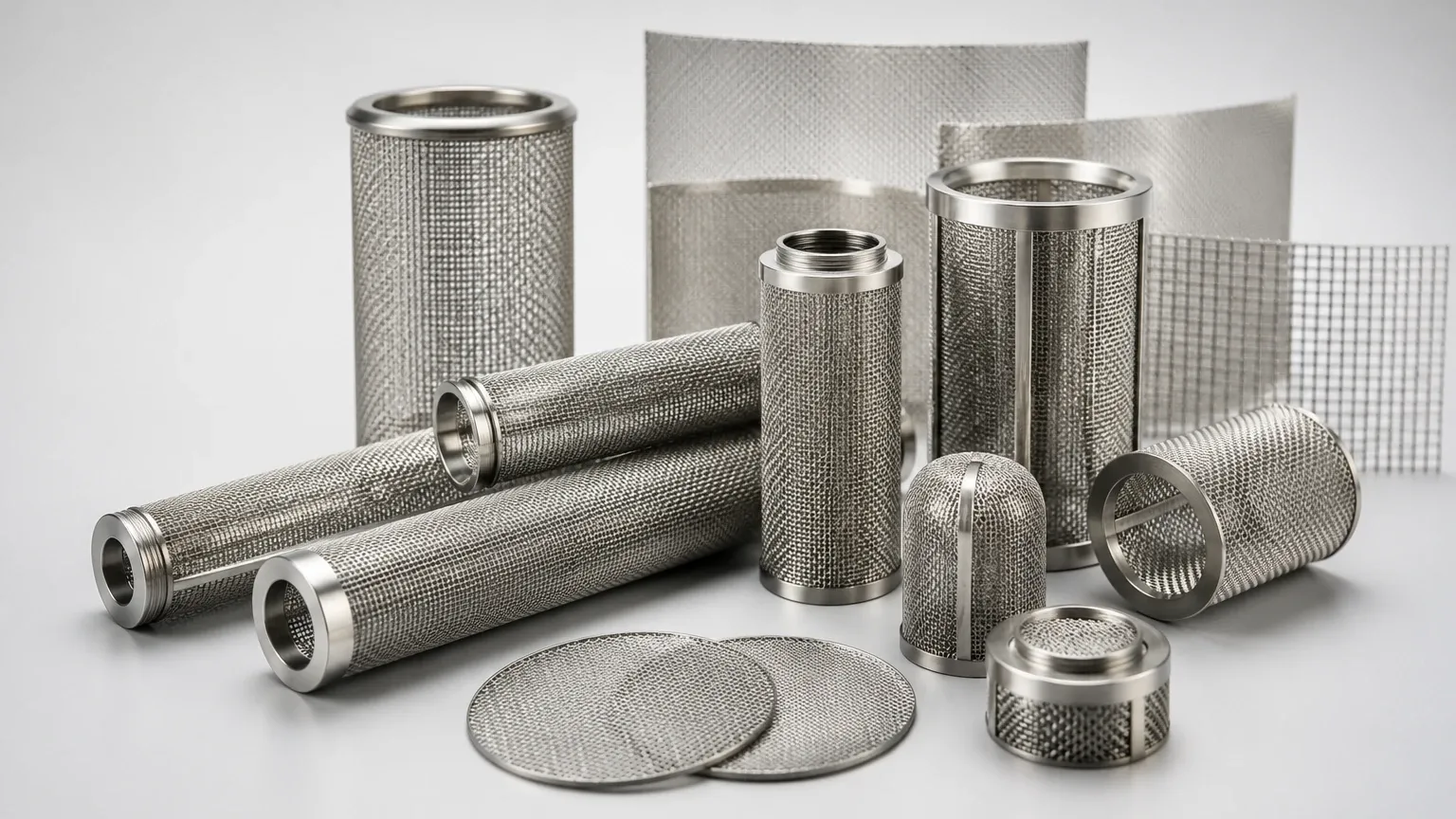
Wire Mesh Filter Cylinders & Tubes represent a sophisticated category of industrial components used across chemical processing, hydraulic systems, and pharmaceutical manufacturing. Because these products often cross international borders, understanding their classification within the Harmonized System (HS) is as vital as understanding their micron rating or pressure drop characteristics.
The Role of HS Codes in Industrial Filtration Procurement
The Harmonized System is an international nomenclature for the classification of products. It allows participating countries to classify traded goods on a common basis for customs purposes. For specialized components like wire mesh filters, the HS code determines the tariff rates, eligibility for trade agreements, and specific import/export restrictions.
When sourcing filters, the wire mesh filter hs code typically falls under two primary headings, depending on the stage of manufacture and the intended application:
1. HS Code 7314: This category generally covers cloth (including endless bands), grill, netting, and fencing, of iron or steel wire. If the product is supplied as bulk wire mesh or simple processed mesh that has not yet been integrated into a specific mechanical assembly, it may fall here.
2. HS Code 8421: This is the most common heading for finished industrial filtration components. It covers "Centrifuges, including centrifugal dryers; filtering or purifying machinery and apparatus, for liquids or gases."
Specifically, for stainless steel filter cartridges and cylinders, subheadings such as 8421.29 (for filtering or purifying liquids) or 8421.39 (for filtering or purifying gases) are frequently utilized. Precise classification depends on whether the filter is considered a part of a machine or a standalone apparatus.
Technical Anatomy of Wire Mesh Filter Cylinders & Tubes
To understand why classification can vary, one must look at the engineering complexity of the components. Wire Mesh Filter Cylinders & Tubes are not merely rolled pieces of mesh; they are precision-engineered tools designed to withstand specific operational stresses.
Material Selection and Alloy Properties
Most industrial wire mesh filters are manufactured from austenitic stainless steels, such as AISI 304, 316, or 316L. The choice of material impacts both the filtration performance and the HS classification in some jurisdictions where the base metal composition is a primary factor.
* SS 304: Offers excellent resistance to a wide range of atmospheric environments and many corrosive media. It is the standard for food and beverage applications.
* SS 316L: Contains molybdenum, which provides superior resistance to chlorides and acids. This is the preferred material for marine environments, chemical processing, and pharmaceutical applications where high-purity standards are mandatory.
Weave Types and Filtration Accuracy
The geometry of the weave determines the filtration rating (expressed in microns). Common weaves include:
* Plain Weave: The simplest pattern, where wires cross over and under each other. It provides high flow rates but lower mechanical strength.
* Twill Weave: Allows for thicker wires and is used for heavier filtration requirements.
* Dutch Weave: Uses different diameters for warp and weft wires to create a dense, strong mesh capable of very fine filtration (down to 5-10 microns).
Engineering Selection Criteria for Industrial Applications
When selecting Wire Mesh Filter Cylinders & Tubes, engineers must look beyond the wire mesh filter hs code and focus on the technical variables that ensure system longevity and efficiency.
1. Filtration Rating: Nominal vs. Absolute
Engineers must distinguish between nominal ratings (the ability to retain a percentage of particles) and absolute ratings (the diameter of the largest spherical particle that will pass through the filter). For critical hydraulic or pharmaceutical applications, absolute ratings are often required to prevent downstream contamination.
2. Differential Pressure (ΔP)
The pressure drop across the filter media is a critical design constraint. A high initial differential pressure can reduce the service life of the filter and increase energy consumption in pumping systems. Factors influencing ΔP include the open area of the mesh, fluid viscosity, and flow velocity.
3. Structural Integrity and Support
In high-pressure environments, wire mesh filters require internal or external support cores. These are typically perforated metal tubes or coarser mesh layers that prevent the primary filtration media from collapsing or deforming under the force of the fluid stream. The method of joining—whether via plasma welding, TIG welding, or ultrasonic bonding—also dictates the filter's resistance to thermal and mechanical shock.
Application-Specific Considerations
The utility of Wire Mesh Filter Cylinders & Tubes spans diverse industries, each with unique regulatory and performance requirements.
Chemical and Petrochemical Processing
In these environments, filters must resist aggressive solvents and high temperatures. Stainless steel mesh is often the only viable option due to its chemical inertness. The HS code 8421.29 is frequently used here for liquid chemical filtration units.
Food and Beverage Industry
Filtration components must comply with FDA or EU food contact regulations. The smooth surface of stainless steel wire mesh allows for effective Clean-in-Place (CIP) procedures, reducing the risk of microbial growth. Here, the durability of the filter ensures that no metal fragments (media migration) enter the product stream.
Hydraulic and Lubrication Systems
Protecting sensitive valves and pumps from particulate wear is the primary goal. Wire mesh filters in these systems are often designed as "last chance" filters or suction strainers. The wire mesh filter hs code 8421.23 (for oil or petrol filters in internal combustion engines) might be relevant if the filters are used in automotive or heavy machinery contexts, though industrial hydraulics usually remain under 8421.29.
International Trade and Compliance Logistics
For procurement teams, the accuracy of the wire mesh filter hs code directly impacts the total cost of ownership (TCO). Misclassification can lead to:
* Delayed Shipments: Customs authorities may hold goods if the description on the commercial invoice does not match the provided HS code.
* Financial Penalties: Underpayment of duties due to incorrect classification can result in significant fines from national customs agencies.
* Anti-Dumping Duties: Some regions impose specific duties on stainless steel products from certain countries. Correct classification ensures that the buyer is aware of these costs before the order is finalized.
When working with a professional manufacturer like Kaifil, it is essential to confirm the technical description and the recommended HS code during the quoting phase. This transparency allows for a smoother logistics chain and more predictable budgeting.
Installation and Maintenance Best Practices
The performance of Wire Mesh Filter Cylinders & Tubes is heavily dependent on correct installation and a proactive maintenance schedule.
Installation Constraints
Ensure that seals and gaskets (often made of PTFE, Viton, or EPDM) are compatible with the process fluid. Improperly seated filters can lead to "bypass," where the fluid flows around the filter media rather than through it, rendering the filtration system ineffective.
Cleaning and Reuse
One of the primary advantages of stainless steel wire mesh over disposable polymer filters is cleanability. Depending on the contaminant, filters can be cleaned using:
* Backwashing: Reversing the flow to dislodge particles.
* Ultrasonic Cleaning: Using high-frequency sound waves in a solvent bath to remove fine particles trapped deep within the weave.
* Chemical Cleaning: Using specific acids or alkalis to dissolve organic or inorganic scaling.
It is important to monitor the integrity of the mesh after repeated cleaning cycles. Over time, high-pressure cleaning can cause "pore blinding" or fatigue cracks in the wire, necessitating replacement.
Conclusion: Strategic Sourcing of Filtration Components
Selecting the right Wire Mesh Filter Cylinders & Tubes involves a balance of mechanical engineering, material science, and trade compliance. By understanding the nuances of the wire mesh filter hs code, purchasing teams can better navigate the complexities of global supply chains while ensuring that the technical requirements of the application are met without compromise.
Kaifil provides the technical expertise and manufacturing precision required to develop customized filtration solutions that meet these rigorous standards. Whether the application demands high-pressure resistance, extreme chemical compatibility, or ultra-fine filtration accuracy, choosing the correct stainless steel component is the foundation of system reliability and operational efficiency. For technical consultation on specific filtration challenges or to confirm specifications for international shipping, engineers should rely on established manufacturing partners who understand both the product and the regulatory environment in which it operates.
