


How Do People Filter Packs
In high-pressure industrial environments, particularly within polymer extrusion, chemical processing, and hydraulic systems, the efficiency of a production line often hinges on the integrity of its filtration components. When engineers ask, "how do people filter packs," they are typically investigating the mechanical and operational methodologies used to integrate multi-layered wire mesh structures into a fluid stream to remove contaminants without compromising flow rates.
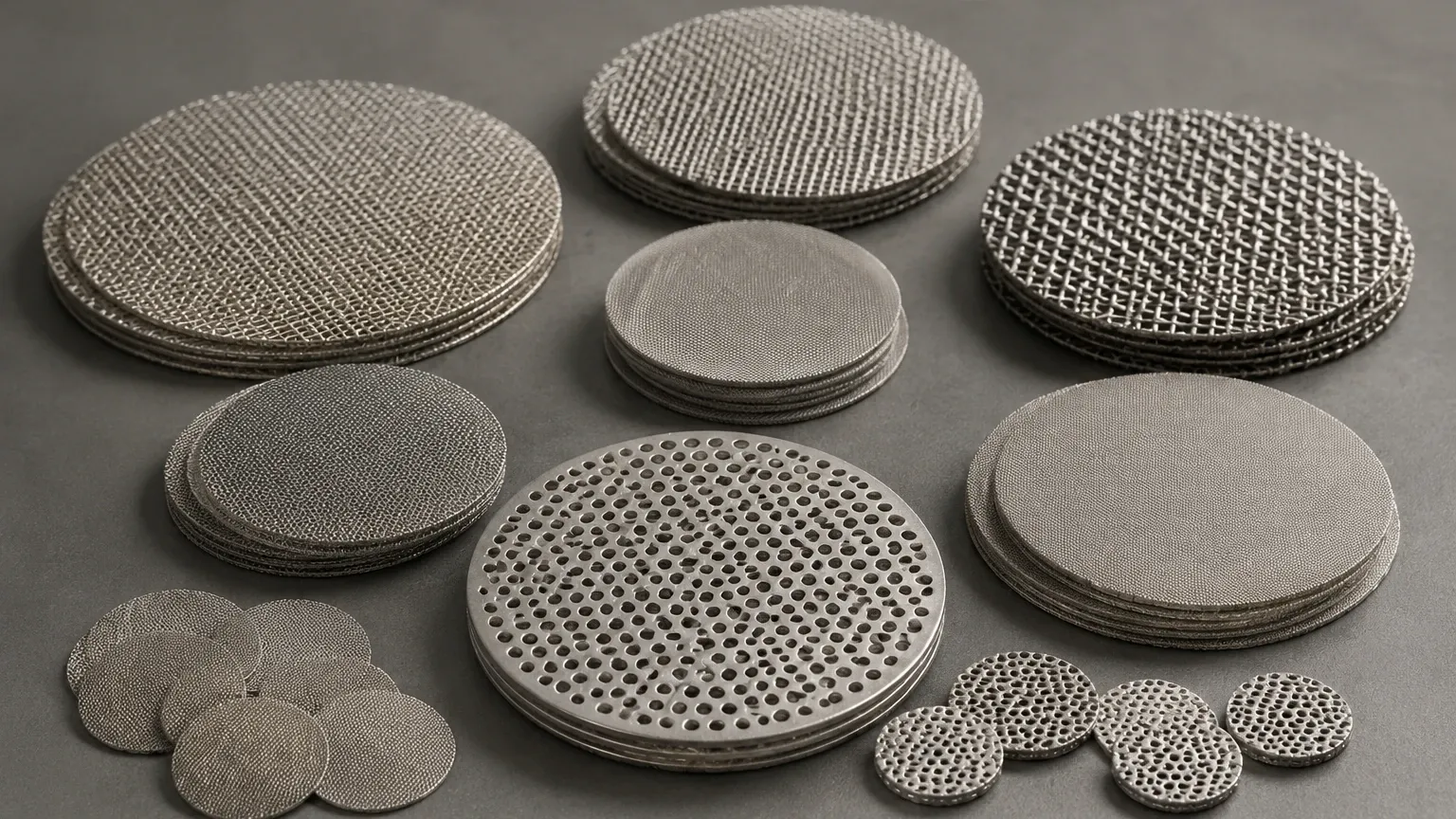
Filter packs, often comprised of multiple layers of stainless steel wire mesh, are essential for ensuring the purity of melts and fluids. Understanding the technical nuances of how these packs are selected, assembled, and utilized is critical for maintaining equipment longevity and product quality. This guide examines the engineering principles behind Filter Discs & Packs and the practical considerations for their implementation in demanding industrial applications.
The Fundamental Mechanics of Filter Packs
To understand how do people filter packs effectively, one must first look at the physics of depth filtration versus surface filtration. While a single-layer filter disc provides a basic barrier, a "pack" is an engineered assembly designed to manage the distribution of pressure and the accumulation of debris over time.
Industrial filter packs usually consist of a sequence of wire mesh layers with varying micron ratings. The process of "filtering with packs" involves a graded density approach. The outer layers—often coarser mesh—act as a support structure and a pre-filter, capturing larger particulates. The inner layers, which feature a finer weave, perform the precision filtration. This configuration prevents the fine mesh from being overwhelmed and blinded by large particles, thereby extending the service life of the entire assembly.
From an engineering perspective, the pack must withstand significant differential pressure. In polymer extrusion, for example, the melt is forced through the pack at high temperatures and pressures. If the pack is not correctly designed, the mesh can deform or "migrate," leading to bypass or downstream contamination. This is why many industrial operators opt for spot-welded or rimmed packs to maintain structural alignment under stress.
Material Selection and Environmental Compatibility
When determining how do people filter packs in corrosive or high-temperature environments, material science becomes the primary focus. Stainless steel is the industry standard due to its thermal stability and resistance to oxidation.
Stainless Steel 304 vs. 316
* SS 304: This is the most common material for general industrial use. It offers excellent mechanical strength and good corrosion resistance for standard chemical and food-grade applications.
* SS 316: For applications involving high salinity, acidic environments, or pharmaceutical processing, SS 316 is preferred. The addition of molybdenum enhances its resistance to pitting and crevice corrosion, ensuring that the filter pack does not degrade and introduce metallic impurities into the process stream.
In specialized sectors, alloys like Inconel or Monel may be used, but for the vast majority of B2B filtration needs, high-quality stainless steel wire mesh provides the optimal balance between cost and performance.
How Do People Filter Packs: The Assembly and Configuration Process
The question of "how do people filter packs" also pertains to the physical configuration of the discs. There are several common methods for assembling these components to meet specific machinery requirements.
1. Spot-Welded Packs
In this configuration, multiple layers of mesh are permanently joined at specific points using resistance welding. This ensures that the layers remain in the correct sequence during installation and operation. Spot-welded packs are ideal for automated production lines where manual alignment of individual discs would be too time-consuming or prone to error.
2. Framed or Rimmed Packs
For high-pressure applications, packs are often enclosed in a metal rim, typically made of aluminum, stainless steel, or copper. The rim serves two purposes: it prevents the edges of the wire mesh from fraying (which could lead to "wire migration" into the product) and it acts as a gasket. When the filter pack is compressed within the machine housing, the rim deforms slightly to create a leak-proof seal, ensuring that 100% of the fluid passes through the filtration media.
3. Layer Sequencing
A typical high-performance pack might follow a 20/60/200/60/20 mesh sequence. The 20-mesh layers provide rigidity, the 60-mesh layers act as intermediate buffers, and the 200-mesh center layer provides the target filtration accuracy. This symmetrical design also prevents the pack from being installed backwards, a common risk in fast-paced industrial maintenance environments.
Technical Weave Patterns and Their Impact on Performance
The efficiency of how people filter packs is also determined by the weave pattern of the wire mesh used within the assembly. Each weave offers different characteristics regarding flow resistance and particle retention.
* Plain Weave: The most straightforward pattern where wires cross over and under each other. It provides high flow rates and is easy to clean, making it suitable for less demanding filtration tasks.
* Dutch Weave: This pattern uses a heavier warp wire and a finer weft wire, resulting in a dense, tight mesh. Dutch weave is the preferred choice for precision filtration in packs because it offers superior strength and can achieve much finer micron ratings than plain weave.
* Twill Weave: By allowing wires to cross over two and under two, twill weaves can utilize heavier wires for a given mesh count. This increases the mechanical durability of the filter pack, which is essential in high-viscosity applications like heavy oil or thick polymer melts.
Addressing Common Risks: Mesh Migration and Pressure Drops
When implementing filter packs, engineers must account for two primary risks: mesh migration and excessive pressure drop.
Mesh Migration occurs when individual wires break off from the filter and enter the downstream flow. This is a critical failure in pharmaceutical or food and beverage production. To mitigate this, high-quality manufacturers use precision cutting and ultrasonic cleaning to ensure no loose fragments remain on the discs. Furthermore, using rimmed packs significantly reduces the risk of edge fraying.
Pressure Drop (ΔP) is the difference in pressure between the upstream and downstream sides of the filter. As the pack captures contaminants, the ΔP increases. If the initial pressure drop is too high due to poor pack design (e.g., using a mesh that is too fine for the required flow rate), the system will reach its terminal pressure too quickly, necessitating frequent shutdowns for filter replacement. Calculating the effective open area of the Filter Discs & Packs is a vital step in the engineering phase to ensure a balance between filtration fineness and operational uptime.
Customization and OEM Considerations
Because industrial machinery varies significantly between manufacturers, a "one-size-fits-all" approach rarely works for filtration. Customization is a core component of how people filter packs effectively in specialized sectors.
When sourcing filter packs, purchasing teams should confirm several technical specifications with their supplier:
* Micron Rating: The exact particle size that must be retained.
* Dimensions: Precise diameter tolerances are required to ensure the pack fits perfectly into the breaker plate or recessed housing.
* Layer Composition: The specific sequence of mesh counts required for the application's viscosity and contaminant load.
* Cleaning Requirements: Whether the packs are intended to be disposable or if they must withstand burn-off cleaning or ultrasonic baths for reuse.
Working with a manufacturer that offers OEM capabilities allows for the development of bespoke filtration solutions that are optimized for specific flow dynamics, reducing the total cost of ownership by extending the intervals between filter changes.
Maintenance and Replacement Cycles
The final aspect of how do people filter packs involves monitoring and maintenance. In most automated systems, pressure transducers monitor the differential pressure across the filter pack. Once a predetermined threshold is reached, the pack is considered "spent."
In polymer processing, this often involves a "screen changer" mechanism that allows for the rapid replacement of the filter pack without stopping the entire extrusion line. For manual systems, the downtime associated with filter changes can be significant, making the durability and dirt-holding capacity of the pack a primary economic factor. High-quality stainless steel packs, while potentially having a higher upfront cost, often provide a lower total cost per gallon (or kilogram) of filtered product due to their ability to hold more debris before reaching terminal pressure.
Conclusion
Understanding how do people filter packs requires a deep dive into the intersection of mechanical engineering and material science. By selecting the right combination of mesh layers, weave patterns, and assembly methods, industrial operators can achieve precise filtration while maintaining high throughput. Whether for a hydraulic system, a chemical reactor, or a plastic extruder, the choice of filter pack directly impacts the quality of the final output and the efficiency of the entire production process. For those seeking reliable, high-performance filtration components, focusing on technical specifications and customization options is the key to optimizing industrial performance.
