


Engineering Guide to Metal Mesh Filter HVAC Systems and Components
In industrial air handling and climate control, the selection of filtration media directly impacts system longevity, energy efficiency, and indoor air quality. While synthetic and fiberglass media are common in commercial buildings, industrial environments often necessitate a more robust solution. The metal mesh filter hvac application serves as a critical line of defense in heavy-duty Heating, Ventilation, and Air Conditioning (HVAC) systems. These filters are engineered to withstand high temperatures, moisture, and corrosive atmospheres where standard disposable filters would fail.
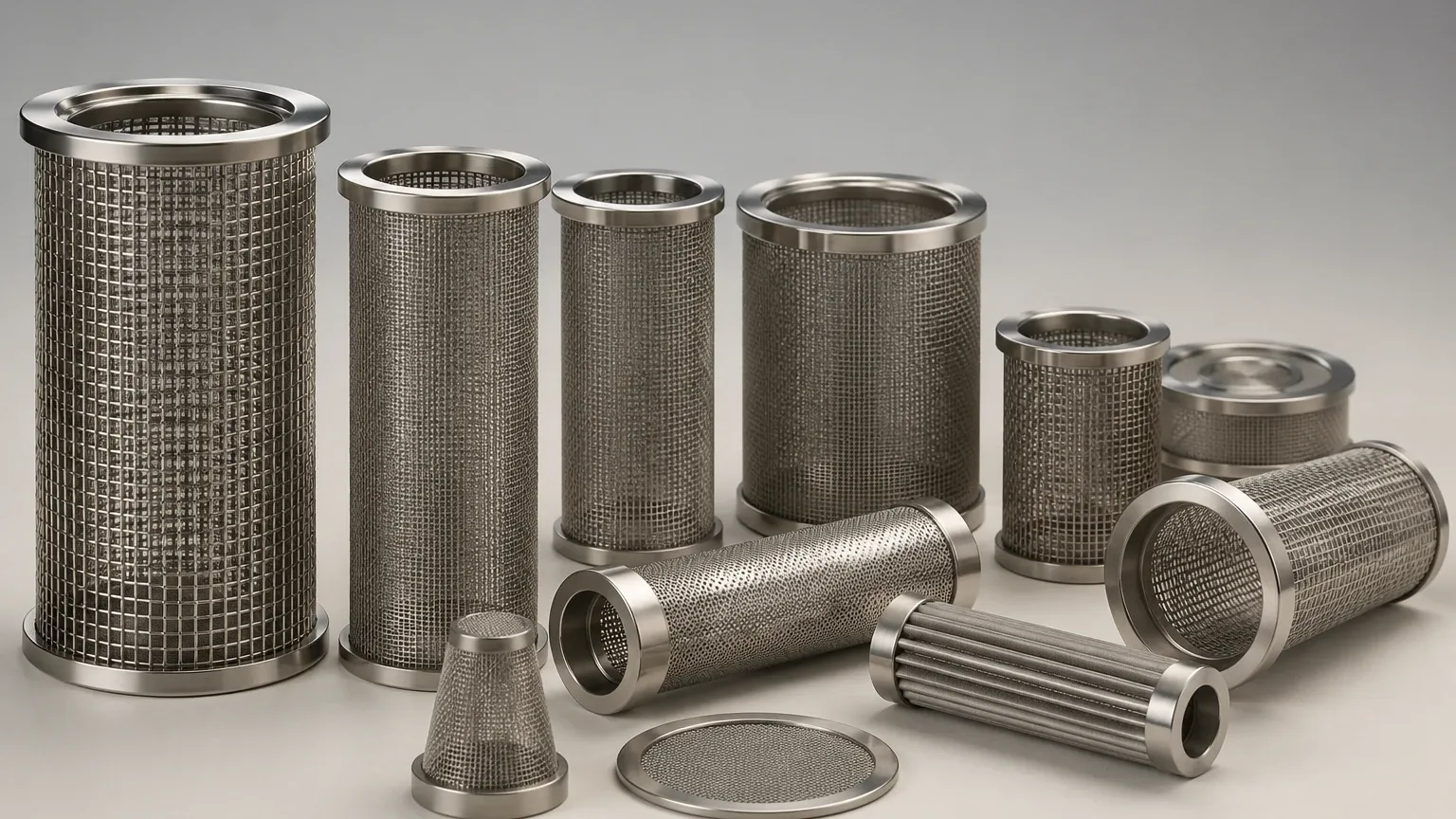
For engineers and procurement specialists, understanding the technical specifications of Wire Mesh Filter Cylinders & Tubes and flat mesh panels is essential for optimizing the performance of Air Handling Units (AHUs) and industrial ventilation systems. This article examines the engineering principles, material considerations, and selection criteria for metal mesh filtration in industrial HVAC contexts.
Operating Principles of Metal Mesh Filtration
Metal mesh filters operate primarily through mechanical separation mechanisms, specifically inertial impingement and interception. Unlike high-efficiency particulate air (HEPA) filters that rely on diffusion for sub-micron particles, metal mesh is designed to capture larger particulates, grease, and moisture droplets.
Inertial Impingement
In a metal mesh filter hvac setup, air is forced through multiple layers of woven or expanded metal. As the air stream deviates to pass through the mesh apertures, heavier particles—due to their inertia—cannot change direction as quickly as the air. These particles collide with the wire surfaces and become trapped. In many industrial applications, the mesh is coated with a light adhesive or oil to increase the retention rate of these particles.
Interception
Interception occurs when a particle follows a streamline in the air flow but comes within one particle radius of the wire surface. The physical structure of the wire mesh acts as a barrier. The efficiency of interception is highly dependent on the mesh count (the number of openings per linear inch) and the wire diameter.
Material Selection and Environmental Compatibility
The choice of material for HVAC filtration is governed by the chemical composition of the air stream and the ambient environment. While aluminum is a common choice for lightweight commercial applications, industrial engineering usually demands stainless steel for its superior mechanical properties.
1. Stainless Steel 304: The standard for most industrial HVAC applications. It offers excellent resistance to corrosion from moisture and is suitable for general air intake and exhaust systems.
2. Stainless Steel 316/316L: Specified for environments with high salt content (coastal areas) or chemical processing plants where acetic, sulfuric, or phosphoric acids may be present. The addition of molybdenum provides enhanced resistance to pitting and crevice corrosion.
3. Galvanized Steel: Used in low-moisture environments where cost-effectiveness is prioritized over long-term corrosion resistance.
In high-temperature HVAC applications, such as those found in foundries or commercial kitchens, stainless steel metal mesh filter hvac components maintain structural integrity at temperatures exceeding 400°C, far beyond the limits of synthetic media.
Design Parameters for Wire Mesh Filter Cylinders & Tubes
While flat panel filters are the standard for wall-mounted intakes, many industrial HVAC systems utilize Wire Mesh Filter Cylinders & Tubes for specialized filtration tasks. These cylindrical geometries are often found in centrifugal fan intakes, high-pressure blowers, and mist elimination stages.
Structural Reinforcement
Cylindrical filters must withstand significant differential pressure ($ΔP$). Engineers often specify a multi-layer construction where a fine filtration mesh is supported by a coarser, heavier-gauge wire mesh or a perforated metal core. This prevents the mesh from collapsing or deforming under high face velocities.
Pleating for Surface Area
To reduce the initial pressure drop and extend the service life between cleanings, the wire mesh within the cylinder or tube can be pleated. Pleating increases the effective filtration area within the same footprint, allowing for lower velocity through the media (face velocity), which improves capture efficiency and reduces energy consumption by the fan motor.
Custom End Caps and Sealing
The integration of these components into the HVAC housing requires precise end-cap designs. Options include flanged ends, threaded connections, or open ends with gaskets (EPDM, Silicone, or PTFE) to ensure a zero-bypass seal. Bypass is a critical failure mode in industrial HVAC, where unfiltered air leaks around the filter frame, potentially damaging downstream coils or fans.
Performance Metrics: Airflow, Pressure Drop, and Efficiency
When specifying a metal mesh filter hvac component, engineers must balance three competing factors: filtration efficiency, airflow capacity, and pressure drop.
Static Pressure and $ΔP$
Every filter introduces resistance to the airflow, measured as static pressure drop. A higher mesh count (smaller openings) increases filtration efficiency but also increases the initial pressure drop. In industrial HVAC design, the goal is typically to keep the initial $ΔP$ below 0.2 to 0.5 inches of water gauge (w.g.). If the pressure drop is too high, the system's energy consumption rises, and the airflow volume ($CFM$) may drop below the required levels for proper ventilation or cooling.
Face Velocity
Face velocity is the speed of the air as it approaches the filter face, usually measured in feet per minute (FPM). For metal mesh filters, typical face velocities range from 250 to 500 FPM. Exceeding these speeds can cause "blow-through," where captured contaminants (especially liquids like oil or water) are re-entrained into the clean air stream.
Micron Rating vs. Mesh Count
Unlike liquid filters, which are often rated by absolute micron size, metal mesh HVAC filters are often described by mesh count. However, for precision engineering, it is vital to correlate mesh count with the wire diameter to determine the clear opening size. For example, a 40×40 mesh with a 0.010" wire diameter provides a 0.015" (381 micron) opening.
Integration and Installation in Industrial AHUs
Proper installation is as critical as the filter's technical specifications. In large-scale industrial Air Handling Units (AHUs), the metal mesh filter hvac is often installed in a V-bank configuration. This arrangement allows for a larger filter surface area to be packed into a smaller cross-section of the ductwork, effectively slowing down the air as it passes through the mesh.
Installation Constraints
* Access Space: Ensure there is sufficient clearance for technicians to remove and replace Wire Mesh Filter Cylinders & Tubes or panels. In many industrial sites, filters are neglected simply because they are difficult to access.
* Orientation: For moisture or grease-laden air, filters should be installed so that captured liquids can drain away from the air stream, often requiring a vertical orientation with a drainage tray at the base.
* Gasketing: Use high-quality gaskets to prevent air bypass. In high-temperature zones, metal-to-metal seals or specialized ceramic gaskets may be required.
Maintenance Cycles and Total Cost of Ownership (TCO)
One of the primary advantages of metal mesh filtration over disposable media is the ability to clean and reuse the components. While the initial capital expenditure (CAPEX) for stainless steel mesh is higher than for pleated paper or synthetic filters, the Total Cost of Ownership (TCO) is often lower due to the elimination of recurring replacement costs and disposal fees.
Cleaning Protocols
Industrial metal mesh filters can be cleaned using several methods depending on the contaminant:
* Pressure Washing: Effective for dust and large particulates.
* Solvent Degreasing: Necessary for filters used in kitchen exhaust or industrial lubrication mist capture.
* Ultrasonic Cleaning: The gold standard for fine wire mesh, as it removes deeply embedded particles within the weave without damaging the wires.
* Steam Cleaning: Useful for sterilizing filters in food processing or pharmaceutical HVAC systems.
Replacement Indicators
Despite being washable, metal mesh filters eventually require replacement. Signs of terminal fatigue include:
* Wire Fraying: Physical damage to the weave that creates large gaps.
* Permanent Blinding: When contaminants become chemically bonded to the metal or lodged so deeply that cleaning cannot restore the original pressure drop.
* Frame Distortion: Warping of the filter frame that prevents a proper seal within the AHU housing.
Critical Considerations for International Procurement
When sourcing metal mesh filter hvac components from global manufacturers like Kaifil, purchasing teams and engineers should confirm several technical details to ensure the product meets site requirements:
1. Material Certification: Request Material Test Reports (MTRs) to verify the grade of stainless steel (e.g., ensuring 316 grade is actually provided for corrosive environments).
2. Tolerances: Specify the allowable variance in dimensions. For cylindrical filters, the outer diameter (OD) and length tolerances are critical for fitment into existing housings.
3. Mesh Uniformity: Inquire about the quality control processes used to ensure consistent aperture sizes across the entire surface of the mesh.
4. Structural Integrity: For high-pressure systems, confirm the burst pressure or maximum allowable $ΔP$ for the Wire Mesh Filter Cylinders & Tubes.
By focusing on these technical boundaries, industrial facilities can implement a filtration strategy that protects downstream equipment, maintains air quality standards, and optimizes long-term operational costs. Metal mesh remains the preferred choice for demanding HVAC environments where durability and cleanability are non-negotiable.
