


How Much Does a Tank Filter Cost
Determining how much does a tank filter cost is a complex process for industrial engineers and procurement specialists because the price is rarely a fixed figure. In industrial environments—ranging from chemical processing and pharmaceuticals to food and beverage production—a "tank filter" can refer to a wide variety of components. It might describe a large-scale housing assembly, a specialized vent filter, or the precision-engineered internal elements such as Filter Discs & Packs that perform the actual separation.
For a technical professional, understanding the cost structure requires looking beyond the initial purchase price. It involves evaluating material grades, filtration precision, structural design, and the long-term operational impact of the component. This guide breaks down the primary cost drivers for industrial tank filtration solutions to help you estimate budgets and optimize your filtration performance.
Understanding the Variables in Industrial Tank Filtration Pricing
The question of how much does a tank filter cost depends heavily on the specific application requirements. Industrial filtration is not a one-size-fits-all commodity; rather, it is an engineered solution designed to withstand specific pressures, temperatures, and chemical environments.
Generally, the cost is divided into two categories: the filter housing (the vessel) and the filter elements (the consumables or cleanable components). While a housing is a capital expenditure with a long lifespan, the internal elements—such as wire mesh discs or multilayer packs—represent the ongoing functional cost. Factors such as the volume of fluid to be processed, the nature of the contaminants, and the required purity levels will dictate the complexity of the design, which in turn drives the price.
Material Selection and Its Impact on Price
Material choice is perhaps the most significant factor in determining how much does a tank filter cost. In industrial settings, stainless steel is the standard due to its durability and resistance to corrosion, but the specific grade of steel drastically alters the price point.
1. 304 Stainless Steel: This is the most common and cost-effective option for general-purpose applications. It offers good corrosion resistance for water treatment and basic industrial processing. If your application does not involve high acidity or chloride exposure, 304 stainless steel provides a lower entry cost.
2. 316 and 316L Stainless Steel: For more demanding environments, such as chemical processing or pharmaceutical manufacturing, 316L is preferred. The addition of molybdenum enhances resistance to pitting and crevice corrosion. While 316L increases the initial cost by approximately 20% to 40% compared to 304, it is often more cost-effective over time due to its extended service life in harsh conditions.
3. Exotic Alloys: In extreme cases involving high-temperature steam or highly corrosive chemicals, materials like Hastelloy or Monel may be required. These materials can increase the cost by several hundred percent compared to standard stainless steel but are necessary for safety and performance in specialized tank environments.
The Engineering Complexity of Filter Discs & Packs
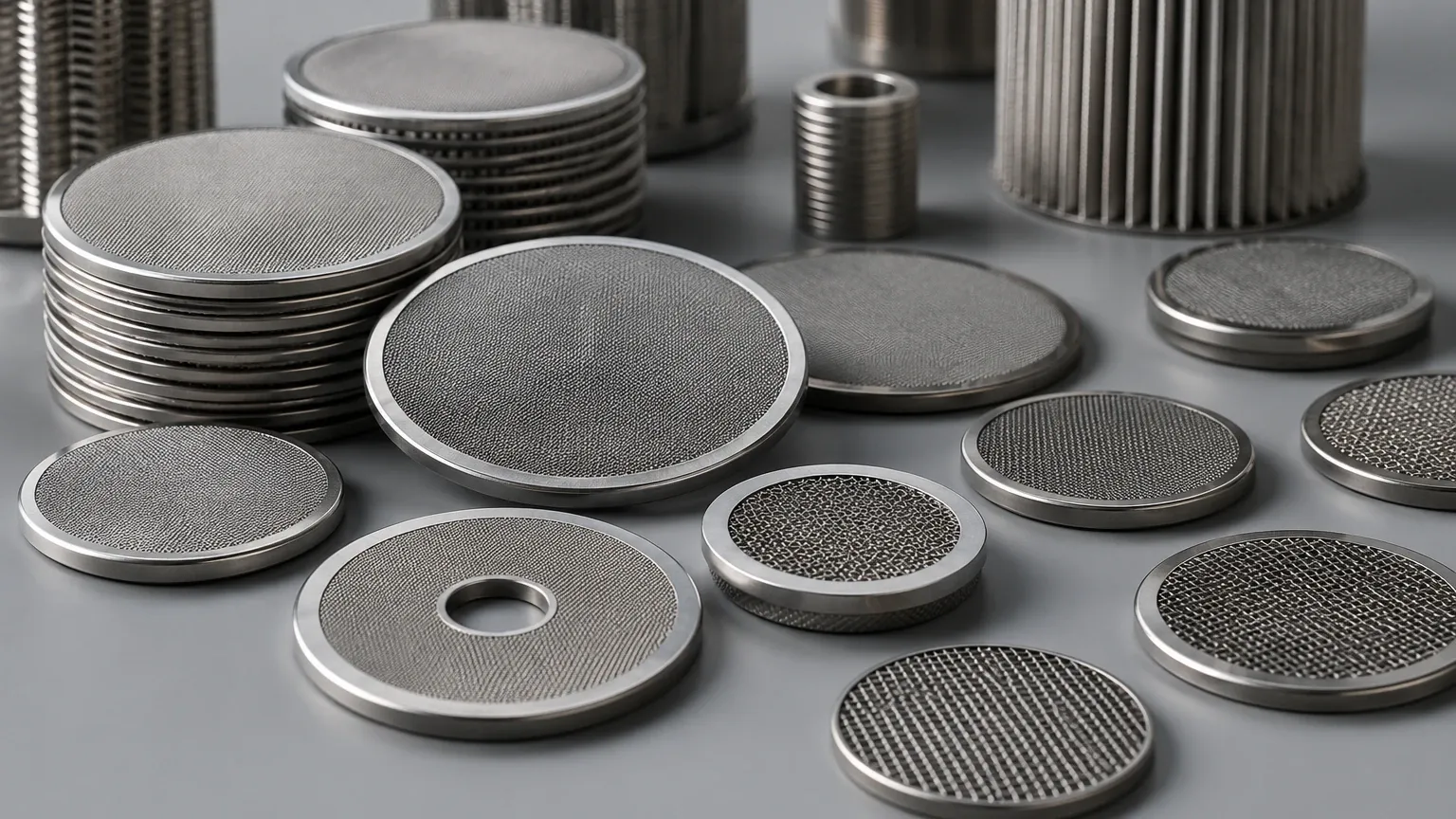
When evaluating how much does a tank filter cost, engineers must focus on the internal filtration media. Many tank systems utilize Filter Discs & Packs to achieve high-precision results. The construction of these elements significantly influences the price.
* Single-Layer Discs: These are the most economical option, consisting of a single layer of woven wire mesh. They are suitable for coarse filtration where high mechanical strength is not the primary concern.
* Multi-Layer Spot-Welded Packs: To achieve finer filtration while maintaining structural integrity, multiple layers of mesh are stacked and spot-welded together. The complexity of aligning these layers and the labor involved in welding increase the unit cost.
* Rimmed or Framed Packs: For filters that must withstand high differential pressures within a tank, adding a metal rim (aluminum or stainless steel) provides necessary edge stability. This additional fabrication step adds to the manufacturing cost but prevents bypass and extends the life of the filter.
* Sintered Mesh: Sintering involves bonding multiple layers of mesh through a heat-treatment process without the use of binders. This creates an incredibly robust and cleanable filter element. While sintered packs represent a higher upfront investment, their durability often results in a lower total cost of ownership.
Filtration Precision and Micron Ratings
The "tightness" of the filter, or its micron rating, is a direct cost driver. Achieving a high level of filtration accuracy requires more sophisticated weaving techniques and finer wire diameters.
For example, a coarse mesh designed to catch 100-micron particles is relatively inexpensive to produce. However, as you move toward 20 microns, 5 microns, or even sub-micron levels, the wire mesh becomes significantly more delicate and difficult to manufacture. The use of Dutch weave patterns—such as Plain Dutch Weave (PDW) or Twilled Dutch Weave (TDW)—allows for high-density filtration and better pressure resistance, but these specialized weaves require more material and slower production times, increasing the overall cost.
Furthermore, the "absolute" vs. "nominal" rating of the filter impacts pricing. An absolute-rated filter, which guarantees the capture of all particles above a certain size, requires more stringent quality control and testing than a nominal-rated filter, adding a premium to the price.
Customization and OEM Requirements
Standardized filter sizes are always more affordable due to economies of scale. However, many industrial tanks require custom-engineered solutions to fit existing piping, unique vessel geometries, or specific flow rate requirements.
When considering how much does a tank filter cost for a custom project, you must account for:
* Tooling Costs: If a non-standard diameter or shape is required, new cutting dies or molds may need to be fabricated.
* Prototyping: For new filtration processes, an initial prototype phase is often necessary to verify flow rates and pressure drops before moving to full-scale production.
* Volume Discounts: In the B2B manufacturing sector, the quantity ordered has a massive impact on the per-unit price. Ordering 1,000 filter discs will result in a much lower unit cost than ordering 10, as the setup time for the machinery is amortized over a larger number of parts.
Evaluating the Total Cost of Ownership (TCO)
A common mistake in procurement is focusing solely on the purchase price. To truly understand how much does a tank filter cost, one must look at the Total Cost of Ownership (TCO). A cheaper filter that needs to be replaced every two weeks is far more expensive than a high-quality stainless steel filter that lasts for six months and can be cleaned.
1. Cleaning vs. Replacement: Stainless steel filter elements are often cleanable via backwashing, ultrasonic cleaning, or chemical baths. This allows them to be reused multiple times. Disposable filters may have a lower initial price but generate significant waste and recurring costs.
2. Downtime Costs: Every time a tank filter needs to be changed, the process must be stopped. In high-volume production, the cost of labor and lost production time during a filter change can far exceed the cost of the filter itself. Investing in high-capacity Filter Discs & Packs that offer longer intervals between cleanings is a strategic way to reduce operational expenses.
3. Energy Efficiency: A poorly designed filter can cause a high pressure drop, requiring pumps to work harder and consume more electricity. Precision-engineered filters optimize the open area of the mesh to ensure maximum flow with minimal resistance, lowering energy costs over the life of the system.
Key Considerations for Procurement and Engineering Teams
Before requesting a quote or finalizing a purchase, engineers should confirm several technical parameters to ensure they are getting the best value for their application. When asking how much does a tank filter cost, be prepared to provide the following information:
* Fluid Characteristics: What is the viscosity, temperature, and chemical composition of the fluid? This dictates the material grade.
* Contaminant Profile: What is the size, shape, and concentration of the particles being removed? This determines the micron rating and the need for multi-layer packs.
* Operating Pressure: What is the maximum differential pressure the filter must withstand? This influences the structural design and the choice between single-layer or reinforced mesh.
* Compliance Requirements: Does the filter need to meet FDA, high-purity pharmaceutical, or specific ISO standards? Certification and specialized cleaning (such as oil-free processing) will affect the final price.
By focusing on these technical specifications, you can move away from generic estimates and toward a precise understanding of the investment required. While the initial question of how much does a tank filter cost may seem simple, the answer lies in the balance between material quality, engineering precision, and long-term durability. Choosing the right partner for custom stainless steel filtration ensures that you receive a product that not only fits your budget but also protects your equipment and ensures the quality of your final product.
