


J Filter Alternatives
In industrial filtration, the search for j filter alternatives is often driven by a need for improved durability, better chemical compatibility, or more cost-effective procurement strategies. While standard filtration components serve a broad range of general applications, specialized industrial processes—such as polymer extrusion, chemical processing, and pharmaceutical manufacturing—frequently require performance characteristics that standard off-the-shelf units cannot sustain.
For engineers and procurement teams, evaluating alternatives involves a deep dive into material science, mesh geometry, and mechanical integrity. Transitioning from a specific proprietary design to high-performance Filter Discs & Packs allows for greater customization and optimization of the filtration lifecycle. This guide explores the technical considerations, material advantages, and engineering parameters essential for selecting the right alternative filtration solution.
Understanding the Technical Need for J Filter Alternatives
Industrial filters are often integrated into complex machinery where the original equipment manufacturer (OEM) provides a proprietary "J" style filter. However, these standard components may present limitations in demanding environments. Common reasons for seeking j filter alternatives include:
1. Material Limitations: Standard filters may use grades of stainless steel or synthetic materials that do not hold up against highly corrosive chemicals or extreme temperatures.
2. Pressure Drop Issues: If a filter is not optimized for the specific viscosity of the fluid, it can cause excessive differential pressure, leading to energy inefficiency or equipment strain.
3. Supply Chain Flexibility: Relying on a single proprietary source can lead to long lead times. Finding a high-quality manufacturer capable of producing equivalent or superior components ensures operational continuity.
4. Customization Requirements: Many industrial processes evolve. An alternative filter allows engineers to adjust the micron rating or the layering of the mesh to better suit updated process parameters.
By moving toward precision-engineered metal mesh solutions, facilities can often achieve a lower total cost of ownership through extended service life and improved cleaning cycles.
Evaluation Criteria for Filter Discs & Packs
When replacing a standard filter with custom Filter Discs & Packs, technical specifications must be matched or exceeded to ensure system integrity. The following criteria are foundational to the selection process:
Filtration Accuracy (Micron Rating)
Filtration accuracy is defined by the size of the particles the mesh can successfully retain. In B2B applications, this is often categorized as "absolute" or "nominal." When seeking alternatives, it is critical to confirm that the replacement mesh provides the same absolute rating to prevent downstream contamination. Stainless steel wire mesh offers precise control over aperture size, ranging from several millimeters down to 2 microns.
Mechanical Strength and Pleating
Filters must withstand significant mechanical stress, especially in high-pressure hydraulic or extrusion systems. Alternatives must be evaluated based on their burst strength and resistance to deformation. Multi-layer packs often utilize a coarse support mesh combined with a fine filtration layer to provide both high-precision filtration and structural rigidity.
Flow Rate and Permeability
The geometry of the weave—whether plain, twill, or Dutch weave—directly impacts the permeability of the filter. A well-designed alternative will maintain the required flow rate while minimizing the pressure drop across the media. This is particularly important in continuous flow systems where any interruption can result in significant downtime.
Material Selection: Beyond Standard Specifications
One of the primary advantages of sourcing j filter alternatives from a specialized manufacturer like Kaifil is the ability to select materials tailored to the specific chemical and thermal environment of the application. While many standard filters use basic stainless steel, high-performance alternatives often utilize advanced alloys.
* SS304: Suitable for general industrial use where basic corrosion resistance is required.
* SS316L: The industry standard for pharmaceutical and food-grade applications. The "L" denotes low carbon, which improves weldability and resistance to intergranular corrosion.
* Exotic Alloys: For highly aggressive chemical environments, materials like Hastelloy or Monel may be used in the construction of filter packs to prevent premature failure due to pitting or stress corrosion cracking.
Selecting the correct alloy ensures that the filter does not leach contaminants into the process stream and remains structurally sound throughout its intended service life.
Engineering Customization in Filter Packs
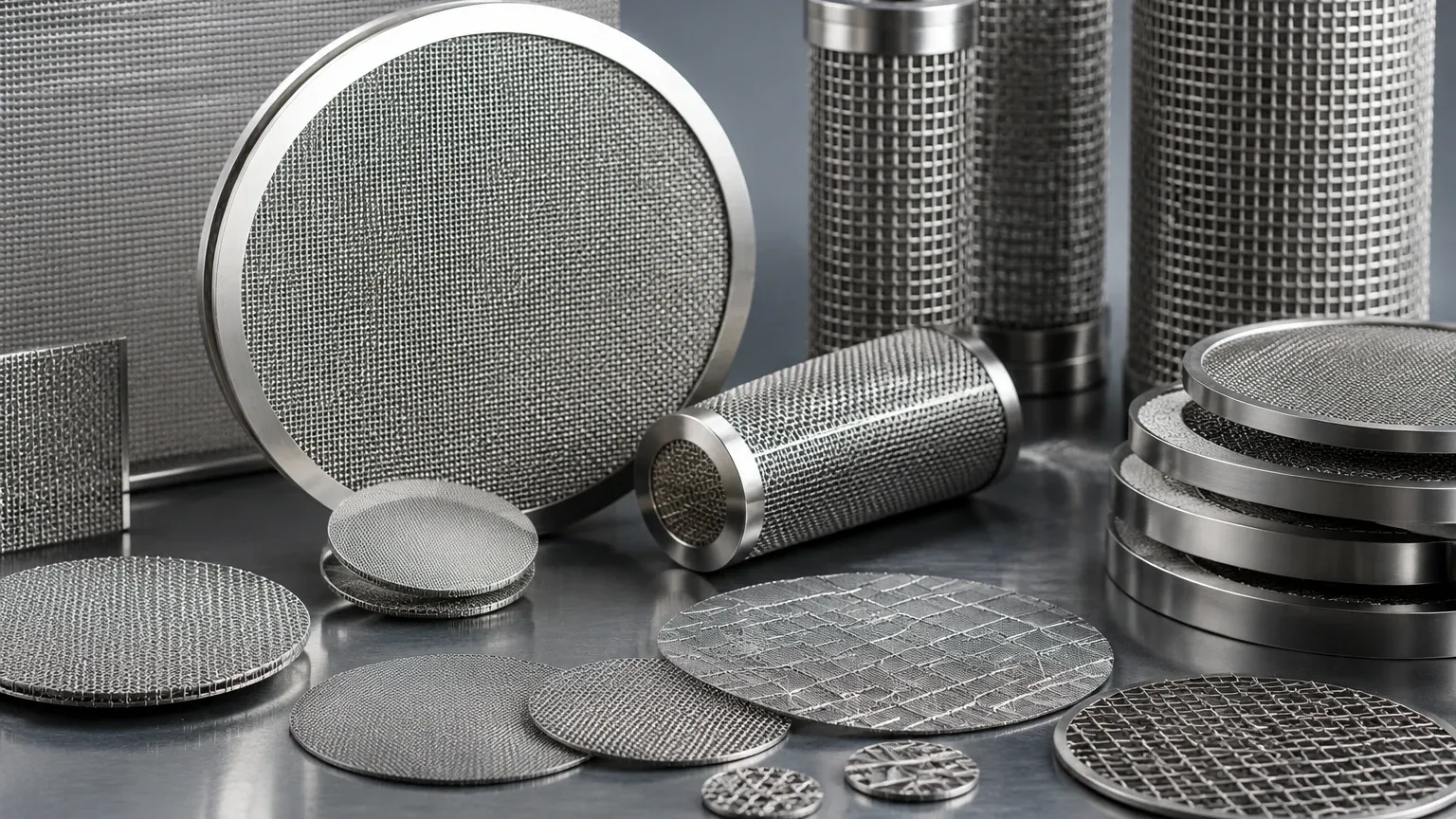
Unlike standard single-layer filters, custom Filter Discs & Packs can be engineered with multiple layers of varying mesh counts. This "gradient" filtration approach allows for higher dirt-holding capacity.
Layer Configuration
In a typical multi-layer pack, the layers are arranged to capture larger particles on the outer surfaces while the inner layers perform the fine filtration. This prevents the fine mesh from blinding prematurely. The layers can be joined through various methods, including:
* Spot Welding: Ideal for keeping multiple layers aligned during installation.
* Aluminum or Stainless Steel Rimming: Provides a clean, compressed edge that ensures a tight seal within the filter housing, preventing bypass.
* Sintering: For the most demanding applications, sintered mesh layers are fused together at a molecular level, creating a porous metal plate that is virtually immune to media migration.
Shape and Geometry
While "J" filters may have specific proprietary shapes, manufacturers can produce alternatives in various geometries, including circular discs, oval packs, or kidney-shaped filters, ensuring a perfect fit for existing hardware without requiring system modifications.
Performance Expectations and Lifecycle Management
Transitioning to a high-quality alternative should result in measurable performance improvements. Engineers should monitor several key performance indicators (KPIs) following the installation of new filter components.
Cleaning and Reusability
One of the most significant benefits of stainless steel filter discs over synthetic or disposable alternatives is the ability to clean and reuse them. Depending on the contaminant, these filters can be cleaned using ultrasonic baths, chemical solvents, or high-pressure backwashing. A robust alternative should maintain its micron rating and structural integrity through multiple cleaning cycles, significantly reducing waste and replacement costs.
Differential Pressure Monitoring
By tracking the rate at which differential pressure increases, maintenance teams can determine the optimal replacement or cleaning cycle. High-quality wire mesh alternatives often show a more linear pressure increase compared to standard filters, allowing for more predictable maintenance scheduling.
Total Cost of Ownership (TCO)
While the initial purchase price of a custom-engineered filter may be higher than a mass-produced standard unit, the TCO is often lower. This is achieved through reduced downtime, fewer replacement purchases, and the protection of expensive downstream equipment from particle damage.
Transitioning to Custom Filtration Solutions
For technical professionals ready to move away from standard proprietary units, the transition process should be data-driven. The following steps are recommended for validating j filter alternatives:
1. Technical Audit: Document the current filter's dimensions, material, mesh count, and the specific operating conditions (temperature, pressure, fluid type).
2. Sample Testing: Request samples of the proposed Filter Discs & Packs to conduct fitment tests and initial flow rate validations.
3. Pilot Run: Install the alternative in a single production line to monitor performance over a full service cycle before implementing the change across the entire facility.
4. Documentation: Ensure that the new components come with material certifications (MTRs) and compliance documentation, especially for regulated industries like food and beverage or pharmaceuticals.
Conclusion
Selecting j filter alternatives is a strategic decision that impacts the efficiency and reliability of industrial operations. By focusing on precision-engineered Filter Discs & Packs, engineers can overcome the limitations of standard components. Whether the goal is to enhance chemical resistance, improve filtration fineness, or secure a more reliable supply chain, the shift toward customized stainless steel solutions provides the technical flexibility required in modern manufacturing. With the right material selection and engineering design, these alternatives not only match the performance of original components but often exceed them, providing a more robust solution for demanding industrial environments.
