


J Series Filters
In the landscape of industrial fluid processing, J series filters represent a critical category of high-performance filtration systems designed to handle demanding pressure, temperature, and chemical compatibility requirements. These systems are frequently employed in sectors ranging from polymer processing and chemical manufacturing to oil and gas refining. The efficacy of any J series filtration unit is fundamentally dependent on the quality and precision of its internal components, specifically the Filter Discs & Packs that serve as the primary barrier against contaminants.
For engineers and procurement professionals, understanding the technical specifications of j series filters is essential for optimizing system uptime and ensuring product purity. These filters are not merely consumables; they are engineered components that must withstand significant differential pressures while maintaining precise micron ratings. This guide explores the technical architecture, material considerations, and selection criteria for J series filtration solutions.
Technical Architecture of J Series Filtration Systems
J series filters are typically characterized by their robust housing designs and their ability to accommodate high-surface-area filter media. The architecture is usually optimized for inline installation, allowing for seamless integration into existing piping systems. The internal configuration often utilizes a series of stacked discs or cylindrical packs, which are designed to maximize the filtration area within a compact footprint.
One of the defining features of J series filters is their versatility in flow direction. Depending on the specific model and application, flow can be directed from the outside-in or inside-out. This flexibility allows engineers to design systems that facilitate easier cleaning or more efficient cake buildup management. The housing itself is often constructed from high-grade stainless steel or carbon steel, depending on the corrosivity of the process fluid, and is designed to meet ASME or equivalent pressure vessel standards.
In high-viscosity applications, such as polymer melt filtration, the J series design must account for the rheological properties of the fluid. This involves minimizing "dead zones" within the filter housing where material could stagnate and degrade. The transition zones within the filter are precision-machined to ensure a uniform flow distribution across the entire surface of the Filter Discs & Packs, preventing localized blinding and extending the operational lifecycle of the media.
Material Selection and Engineering for Durability
The performance of j series filters in aggressive industrial environments is largely dictated by material science. Because these filters often operate at elevated temperatures (sometimes exceeding 300°C) and high pressures, the choice of stainless steel alloys is paramount.
1. AISI 304/304L: A standard choice for general industrial applications where basic corrosion resistance is required. It is widely used in food and beverage processing and water treatment.
2. AISI 316/316L: The preferred material for pharmaceutical and chemical applications. The addition of molybdenum provides enhanced resistance to pitting and crevice corrosion in chloride-rich environments.
3. Specialty Alloys: For extreme conditions involving highly acidic or alkaline fluids, alloys such as Monel, Inconel, or Hastelloy may be utilized in the construction of the filter mesh and support structures.
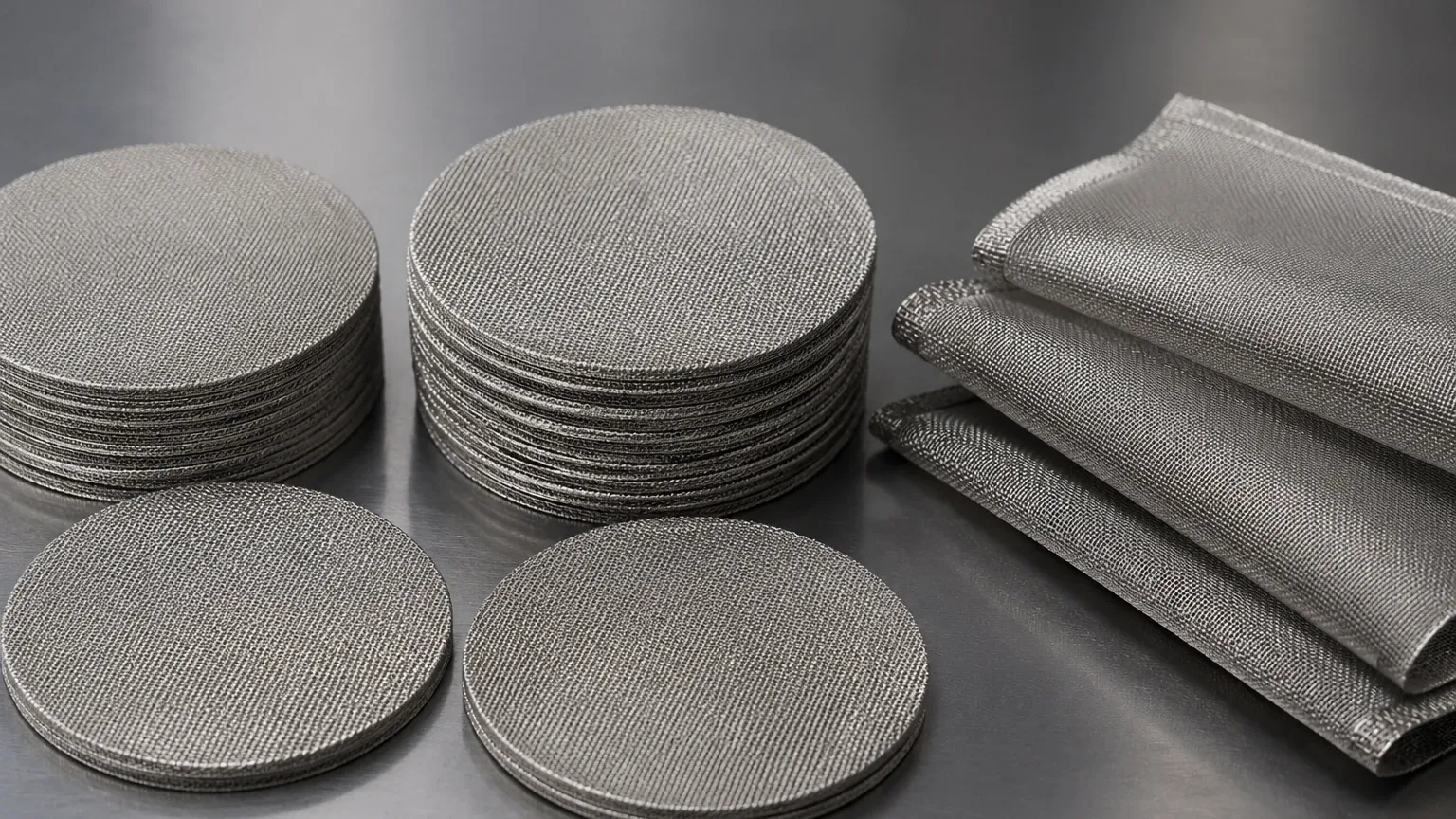
Beyond the alloy type, the physical structure of the filtration media—whether it is woven wire mesh, sintered metal fiber, or multi-layer laminates—must be engineered for mechanical stability. In J series systems, the filter media is often subjected to hydraulic shocks and frequent pressure fluctuations. Without proper reinforcement, the mesh can deform, leading to "media migration" or a bypass of contaminants. High-quality Filter Discs & Packs utilize spot-welded or aluminum/stainless steel rimmed edges to maintain structural integrity under these stresses.
The Critical Role of Filter Discs & Packs in Performance
The heart of the J series filter is the disc or pack assembly. These components are responsible for the actual separation process, and their design determines the filtration accuracy (micron rating) and the dirt-holding capacity of the system.
Multi-Layer Construction
In many J series applications, a single layer of wire mesh is insufficient. Instead, multi-layer packs are used. These typically consist of:
* Filtration Layer: The fine mesh that determines the micron rating.
* Support Layers: Coarser mesh layers on either side of the filtration layer that provide mechanical strength and prevent the fine mesh from collapsing under pressure.
* Drainage Layers: Layers designed to facilitate the flow of filtered fluid away from the mesh, reducing the overall pressure drop across the pack.
Sintering vs. Mechanical Bonding
For the most demanding j series filters, sintered metal mesh is often the preferred choice. Sintering involves heating multi-layer mesh in a vacuum furnace to bond the contact points of the wires without melting them. This creates a rigid, stable structure that cannot shift or fray. For less intensive applications, mechanically bonded or spot-welded Filter Discs & Packs offer a cost-effective alternative while still providing reliable filtration performance.
Engineering Considerations: Micron Ratings and Pressure Drop
When selecting components for j series filters, engineers must balance two competing factors: filtration efficiency and pressure drop (ΔP).
Filtration Efficiency and Micron Rating
Micron ratings can be classified as nominal or absolute. A nominal rating indicates the ability of the filter to retain the majority of particles of a specific size, while an absolute rating indicates that 99.9% or more of particles above that size will be captured. In critical applications like pharmaceutical manufacturing or fine chemical synthesis, absolute-rated Filter Discs & Packs are essential to ensure consistent product quality.
Managing Pressure Drop
As the filter captures contaminants, the pressure drop across the media increases. If the initial pressure drop is too high due to an undersized filter or an overly restrictive mesh weave, the operational window before the filter requires cleaning or replacement will be significantly shortened. Engineers must calculate the "Clean Pressure Drop" based on the fluid viscosity, flow rate, and the effective filtration area. Utilizing pleated designs or multi-disc stacks within the J series housing can increase the surface area, thereby lowering the initial ΔP and extending service life.
Industrial Applications of J Series Filtration
The versatility of j series filters makes them suitable for a wide array of industrial processes. Each application presents unique challenges that influence the design of the filtration media.
* Chemical Processing: Used to remove catalysts, undissolved solids, and impurities from aggressive solvents and reagents. The use of 316L stainless steel is standard here to prevent corrosion.
* Polymer and Resin Production: In the extrusion of plastics and synthetic fibers, J series packs are used to remove gels and degraded polymer particles. These filters must operate at very high pressures and temperatures.
* Food and Beverage: Employed in the filtration of edible oils, syrups, and beverages. Here, the focus is on hygienic design and compliance with food safety standards (FDA/EC 1935/2004).
* Hydraulic and Lubrication Systems: Protecting sensitive valves and pumps from particulate wear. J series filters in these systems often feature high-strength support layers to handle rapid pressure spikes.
Maintenance, Cleaning, and Replacement Protocols
One of the primary advantages of using stainless steel Filter Discs & Packs in J series systems is their cleanability. Unlike disposable polymer filters, metal filters can often be refurbished and reused, significantly lowering the total cost of ownership.
Cleaning Methods
1. Ultrasonic Cleaning: Effective for removing fine particles lodged within the mesh openings. This method uses high-frequency sound waves to create cavitation bubbles that dislodge contaminants.
2. Chemical Cleaning: Involves soaking the filters in specialized solvents, acids, or alkalis to dissolve organic or inorganic deposits. This is common in chemical and polymer applications.
3. Burn-off (Thermal Cleaning): Used primarily in the polymer industry to remove residual plastic by heating the filters in a controlled atmosphere furnace or fluidized bed.
Determining Replacement Cycles
While cleanable, metal filters eventually reach a point of "permanent fouling" or mechanical fatigue. Monitoring the pressure drop is the most common method for determining when a filter needs attention. If the pressure drop returns to a higher-than-baseline level after cleaning, it indicates that the media is nearing the end of its functional life. Regular inspection for mesh deformation, broken wires, or compromised seals is critical during the maintenance cycle.
Customization and OEM Integration
Every industrial process has specific nuances that a standard "off-the-shelf" filter may not fully address. Successful implementation of j series filters often requires a degree of customization. This can include bespoke disc diameters, specialized rim materials, or unique layer configurations designed to target specific particle size distributions.
Kaifil works closely with engineering teams to develop customized Filter Discs & Packs that integrate seamlessly into J series housings. By analyzing the specific flow conditions, temperature profiles, and chemical exposures of an application, it is possible to engineer a filtration solution that maximizes efficiency while minimizing maintenance downtime. Whether it is a single-layer mesh disc for a simple strainer or a complex multi-layer sintered pack for high-pressure polymer melt, the focus remains on precision, durability, and technical reliability.
