


Maxwell Coffee Filter Packs
In the commercial beverage and food processing industry, the efficiency of filtration systems directly impacts product consistency, flavor profiles, and operational overhead. While many consumers are familiar with the convenience of maxwell coffee filter packs in office or hospitality environments, the engineering principles behind these "packs" are mirrored and magnified in industrial-scale extraction. For technical professionals and engineers, transitioning from disposable paper-based solutions to high-performance, permanent Filter Discs & Packs represents a significant step toward optimizing large-scale production lines.
Industrial filtration requires a balance of precision, durability, and chemical resistance. Whether a facility is processing coffee extracts, liquid concentrates, or other food-grade fluids, the choice of filtration media determines the success of the separation process. This article examines the technical transition from consumer-style filter packs to industrial stainless steel components, focusing on material science, structural integrity, and the total cost of ownership.
Understanding the "Pack" Concept in Industrial Filtration
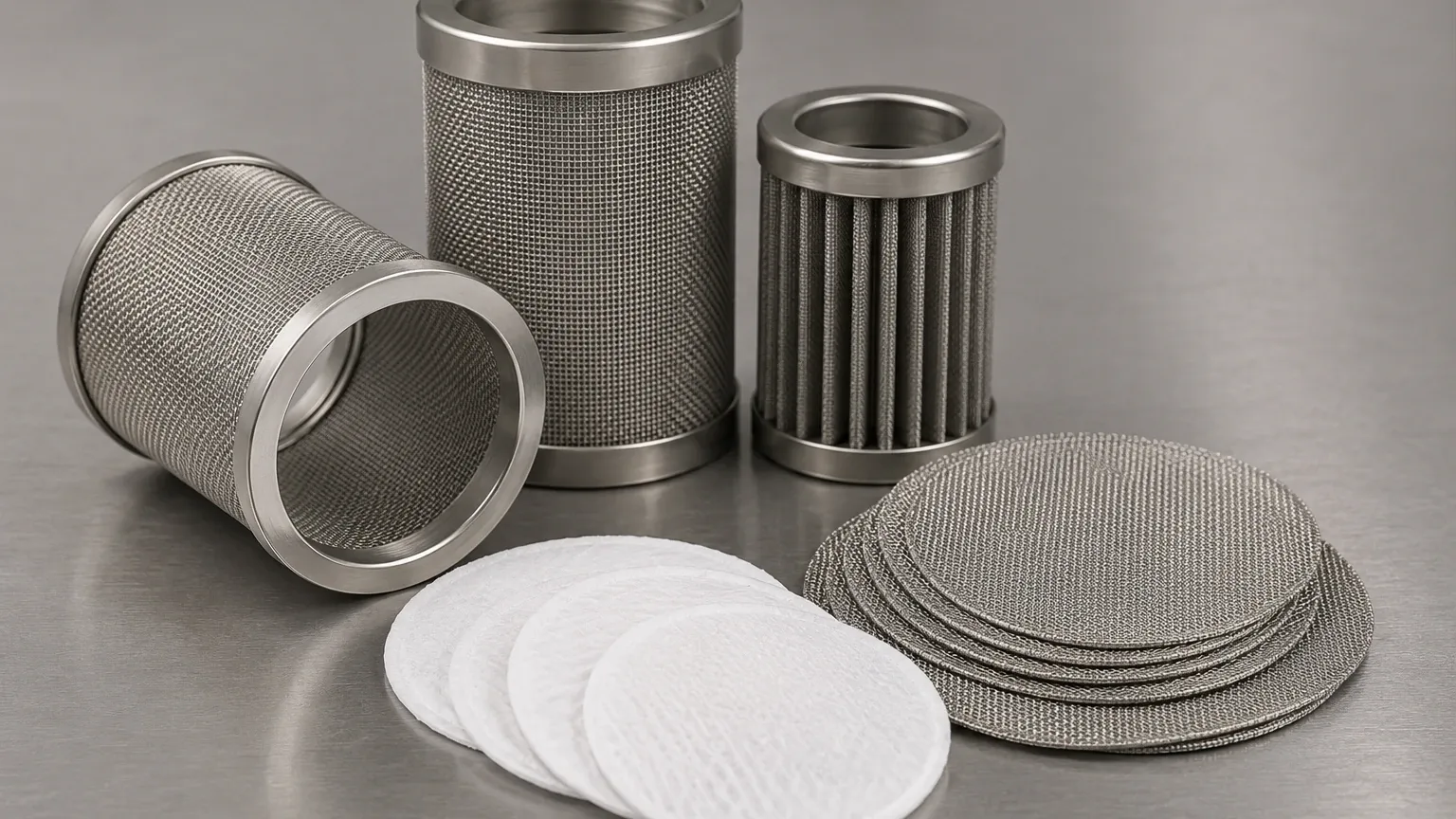
The term "filter pack" in a B2B context refers to a multi-layered assembly of wire mesh or sintered metal designed to provide graduated filtration. Much like the self-contained nature of maxwell coffee filter packs, industrial filter packs are designed for ease of installation and replacement, ensuring that the filtration media remains properly aligned within the housing even under high-pressure conditions.
In industrial coffee processing—such as the production of instant coffee or liquid concentrates—the "pack" serves as a critical barrier. It must allow for the passage of essential oils and flavors while capturing fine particulates (fines) that can cause bitterness or sediment in the final product. Unlike paper, which can tear or bypass under pressure, stainless steel filter discs provide a rigid, predictable pore structure.
Key Components of Industrial Filter Packs
1. Support Mesh: A coarse outer layer that provides mechanical strength to withstand high differential pressures.
2. Filtration Layer: The functional core, often a fine Dutch weave or square weave mesh, tailored to a specific micron rating.
3. Protective Layer: A secondary mesh that prevents the fine filtration layer from being damaged during handling or backwashing.
4. Edge Binding: Often made of aluminum, copper, or stainless steel, the binding ensures the layers remain compressed and prevents fluid bypass at the edges.
Material Selection for Beverage Extraction
When evaluating filtration solutions for applications similar to those handled by maxwell coffee filter packs, material compatibility is paramount. Coffee is naturally acidic and contains oils that can degrade certain synthetic materials over time. Furthermore, the high temperatures required for extraction demand thermal stability.
Stainless Steel 304 vs. 316L
For most industrial food and beverage applications, Stainless Steel 304 is the baseline. However, in environments where cleaning-in-place (CIP) involves harsh chemicals or where the fluid has a high chloride content, 316L is preferred. 316L contains molybdenum, which significantly enhances resistance to pitting and crevice corrosion. For engineers, choosing 316L for their Filter Discs & Packs ensures a longer service life and reduces the risk of metal leaching into the product stream.
Sintered Metal Options
For high-pressure extraction, sintered wire mesh is often the ideal choice. Sintering involves bonding multiple layers of mesh together using heat and pressure without the use of adhesives. This creates a monolithic structure that will not delaminate, even when subjected to intense back-pulsing or high-velocity fluid flows. This is a critical upgrade over disposable packs, which are prone to bursting under industrial pump pressures.
Engineering Considerations: Micron Ratings and Flow Rates
One of the primary challenges in replacing a paper-based system like maxwell coffee filter packs with a metal alternative is matching the filtration characteristics. Paper filters are depth filters with irregular pore structures, whereas wire mesh provides a surface filtration mechanism with precise, geometric openings.
Calculating the Micron Requirement
In coffee filtration, the goal is often to remove particles larger than 10 to 25 microns to ensure a clean cup. However, removing too much can strip away the oils that contribute to the "mouthfeel" of the beverage. Engineers must specify the micron rating based on the grind size of the coffee and the desired clarity.
* Coarse Filtration (100+ microns): Used for primary separation of large grounds.
* Fine Filtration (20-50 microns): Standard for commercial brewing and extraction.
* Ultra-Fine Filtration (5-15 microns): Used for clarifying extracts or protecting downstream membranes.
Managing Pressure Drop
As a filter pack accumulates solids, the pressure drop (delta P) across the media increases. Industrial stainless steel discs are designed to maximize the open area, which reduces the initial pressure drop and extends the time between cleaning cycles. This is a significant advantage over paper packs, which can quickly blind and require immediate disposal.
Customization and OEM Integration
No two industrial brewing or extraction systems are identical. While consumer products like maxwell coffee filter packs are standardized for specific machines, industrial components must be highly customized. Manufacturing expertise allows for the production of filter discs in various shapes—circular, rectangular, or even complex geometries with center holes for bolt-through assemblies.
Edge Treatments and Sealing
To prevent bypass, the edges of the filter pack must be sealed. Common methods include:
* Spot Welding: Ideal for multi-layer packs where a rigid edge is not required.
* Aluminum/Stainless Steel Rimming: Provides a gasket-like surface that ensures a tight seal within the filter housing.
* TIG/Plasma Welding: Used for high-purity applications where no foreign materials (like rimming metals) are allowed.
For purchasing teams, confirming the exact dimensions and edge thickness is vital to ensure the Filter Discs & Packs fit existing hardware without modification.
Maintenance, Cleaning, and Lifecycle Costs
The most compelling argument for switching from disposable paper packs to stainless steel filter discs is the total cost of ownership (TCO). While the initial investment in metal filtration is higher, the recurring costs associated with paper—purchasing, storage, disposal, and labor for frequent changes—quickly exceed the cost of a permanent solution.
Cleaning Protocols
Unlike disposable maxwell coffee filter packs, stainless steel discs are designed for reuse. Effective cleaning methods include:
* Ultrasonic Cleaning: High-frequency sound waves create cavitation bubbles that dislodge fine particles trapped deep within the mesh.
* Backwashing: Reversing the flow of fluid to push contaminants off the surface of the mesh.
* Chemical Soaking: Using food-grade caustic or acidic solutions to dissolve organic buildup and oils.
Durability and Replacement Cycles
A well-maintained stainless steel filter pack can last for several years in a commercial environment. The primary failure modes to watch for include mechanical deformation (due to excessive pressure) and mesh blinding that cannot be reversed by cleaning. Regular inspection of the mesh integrity is recommended to prevent particulate breakthrough.
Addressing Common Engineering Questions
Before finalizing a purchase of industrial filter components, engineers often have specific concerns regarding performance and compliance.
Is the filtration media food-grade?
All stainless steel mesh used in beverage applications should comply with international food safety standards, such as those set by the FDA or EU 1935/2004. This ensures that the material does not impart odors, tastes, or hazardous substances to the coffee extract.
How does mesh weave affect performance?
Plain weave mesh is excellent for high-flow applications with low solids loading. For applications requiring finer filtration and higher strength, a Twilled Dutch Weave is often employed. This weave allows for a much higher density of wires, resulting in a tortuous path that captures smaller particles while maintaining structural rigidity.
Can these filters be used in existing equipment?
In many cases, industrial brewing equipment can be retrofitted to accept stainless steel Filter Discs & Packs. This often involves replacing a paper-holding basket with a custom-engineered mesh assembly that mirrors the dimensions of the original filter area.
Conclusion: Optimizing the Extraction Process
While the convenience of maxwell coffee filter packs serves a specific niche in the consumer and office market, industrial beverage production demands a more robust approach. By utilizing precision-engineered stainless steel filter discs, manufacturers can achieve greater control over their product quality, reduce waste, and improve the efficiency of their extraction lines.
When selecting a filtration partner, it is essential to look beyond the basic dimensions. Engineering support, material traceability, and the ability to customize the mesh structure are the hallmarks of a reliable filtration solution. For those looking to upgrade their systems, exploring the technical specifications of modern Filter Discs & Packs is the first step toward a more sustainable and high-performance production environment. By focusing on durability and precision, facilities can ensure that every batch of product meets the highest standards of clarity and flavor.
