


What Is Packet Filtering
In the context of industrial manufacturing and fluid dynamics, the term "packet filtering" refers to the mechanical process of using multilayered wire mesh assemblies—commonly known as filter packs—to remove particulate matter from high-pressure or high-viscosity media. While the term is frequently associated with information technology and network security, in the world of precision engineering and chemical processing, it describes a critical stage in polymer extrusion, fiber production, and hydraulic systems.
Understanding the mechanics of Filter Discs & Packs is essential for engineers tasked with maintaining system integrity and product purity. This process involves the strategic layering of various wire cloth specifications to create a filtration "packet" that can withstand extreme mechanical stress while providing precise micron-level separation.
The Engineering Behind Industrial Packet Filtering
At its core, industrial packet filtering is defined by the assembly of multiple layers of stainless steel wire mesh. These layers are not chosen at random; they are engineered to perform specific roles within the filtration sequence. A typical filter pack consists of three primary components:
1. The Filtration Layer: This is the core of the packet, usually a fine Dutch weave or square weave mesh that determines the actual micron rating of the assembly. It is responsible for capturing the target particles.
2. The Support Layer: Fine filtration mesh is often structurally delicate. Support layers, made of coarser mesh (such as 20×20 or 40×40 mesh), are placed on either side of the filtration layer to prevent it from deforming under high differential pressure.
3. The Drainage Layer: In complex assemblies, additional layers facilitate the even distribution of fluid across the entire surface area of the filter, preventing localized clogging and extending the service life of the pack.
By combining these layers into a single unit—often secured by spot welding or an external metallic rim—manufacturers create a robust tool capable of performing under conditions where a single-layer filter would fail.
Why Multilayer Filter Packs Are Necessary
Single-layer wire mesh filters have inherent limitations in industrial environments. When processing viscous fluids like molten polymers or heavy resins, the pressure required to force the material through a fine mesh can cause the wires to shift or the mesh to burst.
Packet filtering solves this through structural reinforcement and gradient filtration. By stacking meshes of increasing fineness, the packet can perform "depth filtration" to a limited extent. Coarser particles are trapped by the outer layers, while the inner layers capture the finer contaminants. This prevents the primary filtration layer from becoming prematurely blinded (clogged), which is vital for maintaining a consistent flow rate in continuous production lines.
Technical Specifications and Material Selection
For engineers, selecting the right materials for packet filtering is a matter of balancing chemical compatibility with mechanical durability. Stainless steel is the industry standard due to its resistance to corrosion and high temperatures.
Grade 304 vs. Grade 316L
* SS 304: Suitable for general industrial applications where basic corrosion resistance is required. It is cost-effective and provides excellent structural strength.
* SS 316L: The preferred choice for chemical processing, pharmaceutical manufacturing, and food and beverage applications. The addition of molybdenum provides superior resistance to chlorides and organic acids, while the "L" (low carbon) designation prevents sensitization during welding processes.
Weave Types in Packet Filtering
* Plain Weave: The most common and economical, offering high flow rates and easy cleaning.
* Dutch Weave: Characterized by a higher density of wires in one direction, creating a tortuous path for particles. This weave is essential for high-pressure packet filtering where precision is paramount.
* Twilled Weave: Used when thicker wires are required for a specific micron rating, providing increased durability for heavy-duty applications.
Key Applications for Filter Discs & Packs
The implementation of packet filtering is found across various sectors where fluid purity is non-negotiable.
Polymer and Plastic Extrusion
In the plastics industry, filter packs (often called screen packs) are placed in the extruder's breaker plate. Their role is to remove "gels" (unmelted polymer) and foreign contaminants that could cause defects in the final product, such as film breakage or imperfections in molded parts. The ability of the packet to withstand pressures exceeding 5,000 PSI is critical here.
Chemical and Petrochemical Processing
Chemical reactors often require the filtration of catalysts or the removal of byproducts from aggressive solvents. Packet filtering allows for the use of fine mesh that can withstand the corrosive nature of the chemicals while maintaining the structural integrity of the filter housing.
Oil and Gas Filtration
Downhole and refinery operations utilize multilayer filter discs to protect sensitive equipment from sand, scale, and other debris. In these environments, the filters must resist high temperatures and the abrasive nature of the particulates.
Engineering Considerations for Selection
When specifying Filter Discs & Packs for a new or existing system, engineers must evaluate several performance metrics to ensure the chosen solution is cost-effective and reliable.
1. Micron Rating and Efficiency
It is important to distinguish between "nominal" and "absolute" micron ratings. A nominal rating indicates the filter's ability to retain the majority of particles of a certain size, whereas an absolute rating guarantees the retention of all particles above that size. In packet filtering, the combination of layers often allows for a more reliable absolute rating than a single-layer equivalent.
2. Pressure Drop (Delta P)
The resistance to flow created by the filter pack is known as the pressure drop. A high initial pressure drop can reduce the efficiency of pumps and increase energy consumption. Engineers must balance the need for fine filtration with the requirement for an acceptable flow rate. Proper layering in the packet can help minimize this drop by maximizing the effective filtration area.
3. Mechanical Strength and Binding Methods
How the layers of the packet are held together affects both performance and ease of handling.
* Spot Welded Packs: Multiple layers are welded at several points. This is an economical solution for packs that will be held in place by a mechanical housing.
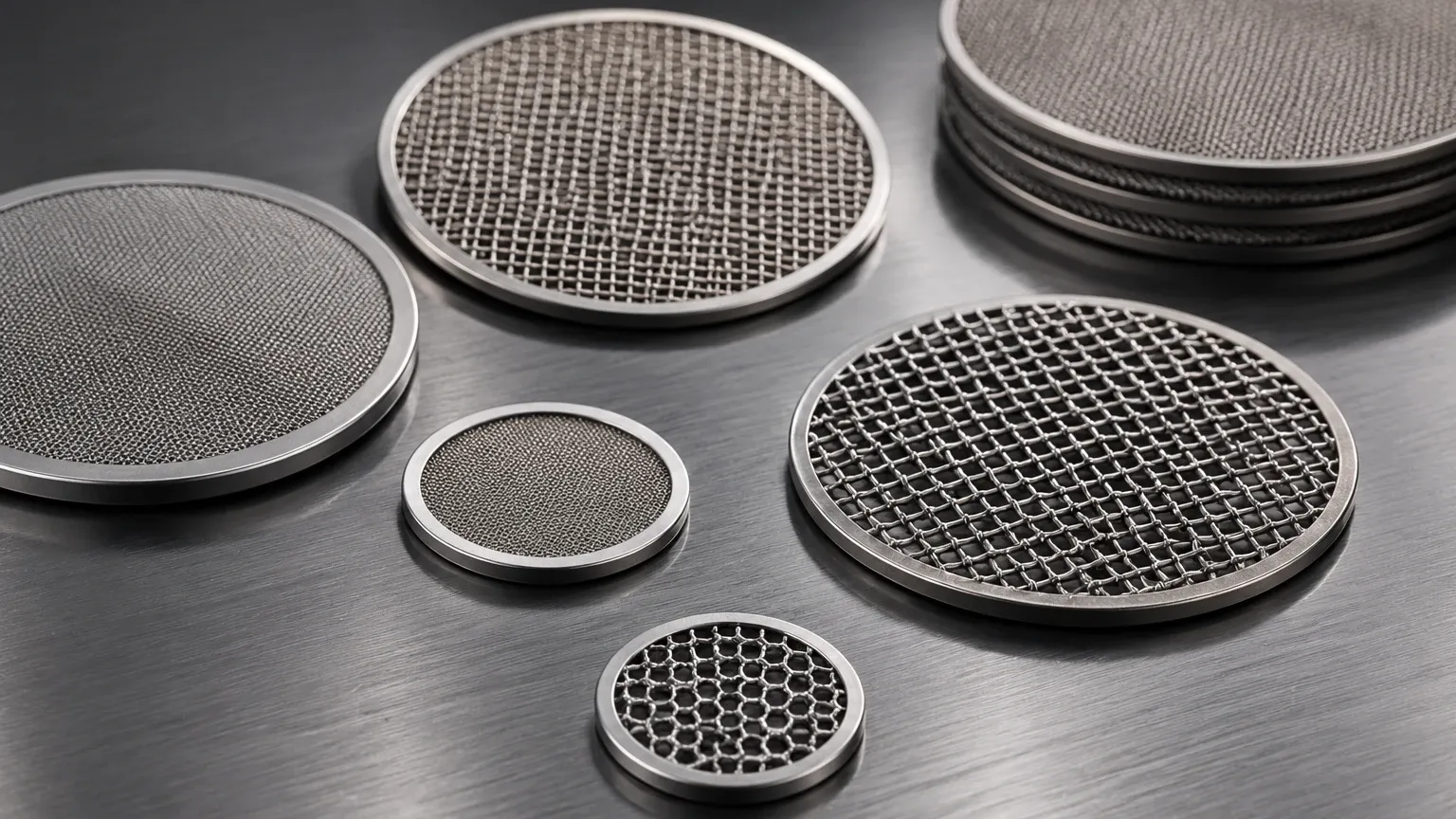
* Rimmed Packs: The edges of the mesh layers are encased in a metal rim (aluminum, copper, or stainless steel). This provides a superior seal, prevents bypass, and makes the packs easier to install and remove.
* Sintered Packs: In extreme cases, the layers are diffusion-bonded (sintered) together. This creates a monolithic structure that cannot delaminate, even under extreme backwashing or mechanical vibration.
Customization and OEM Solutions
Industrial filtration is rarely a one-size-fits-all field. Customization is often necessary to match the specific geometry of the machinery or the unique rheology of the fluid being processed.
Manufacturers like Kaifil provide customized designs that include specialized shapes—such as oval, rectangular, or kidney-shaped discs—and multi-stage filtration gradients. For purchasing teams, working with a manufacturer that offers OEM capabilities ensures that the filter packs are optimized for the specific tolerances of their equipment, reducing the risk of bypass or mechanical failure.
Maintenance and Replacement Cycles
In a production environment, knowing when to replace a filter pack is vital for preventing downtime. Most systems monitor the differential pressure across the filter. Once the pressure reaches a predetermined threshold, the packet is considered "spent."
While some stainless steel filter packs can be cleaned using ultrasonic baths or chemical solvents, many high-pressure applications treat them as consumables. The cost of cleaning must be weighed against the risk of mesh fatigue or residual contamination. For critical applications, using fresh, high-quality Filter Discs & Packs is the safest way to ensure consistent product quality.
Total Cost of Ownership (TCO)
When evaluating the cost of packet filtering solutions, engineers should look beyond the initial purchase price. The total cost of ownership includes:
* Frequency of Change-outs: Higher-quality packs that last longer reduce labor costs and production downtime.
* Energy Consumption: Filters that maintain a lower pressure drop for longer periods reduce the load on pumps.
* Product Yield: Improved filtration accuracy reduces the amount of rejected material, directly impacting the bottom line.
By selecting a filter pack that is precisely engineered for the application, companies can achieve a more stable process and a higher return on investment.
Conclusion
Packet filtering, through the use of sophisticated multilayered wire mesh assemblies, remains a cornerstone of modern industrial processing. Whether it is ensuring the clarity of a pharmaceutical grade chemical or the strength of a polymer fiber, the mechanical integrity and filtration precision of these components are indispensable. By understanding the relationship between mesh selection, layer configuration, and mechanical support, engineering and purchasing teams can select filtration solutions that optimize performance while minimizing operational risks.
