


Q Factor Filters
In the field of industrial filtration, the performance of a filter medium is rarely defined by a single metric. While micron ratings and flow rates are standard specifications, engineers often look toward more comprehensive performance indices to evaluate the true efficiency of a system. One such critical metric is the Quality Factor, often abbreviated as the Q factor. In the context of high-precision separation, q factor filters represent a class of filtration solutions—specifically Filter Discs & Packs—engineered to maximize particle retention while minimizing the energy-intensive drawback of pressure drop.
For technical professionals and purchasing teams, understanding how the Q factor influences the selection of stainless steel filtration components is essential for optimizing process uptime and reducing the total cost of ownership. This guide examines the engineering principles behind the Q factor, the structural design of filter discs, and the selection criteria necessary for demanding industrial applications.
Understanding the Quality Factor in Industrial Filtration
The Quality Factor ($Q_f$) is a dimensionless or semi-dimensionless parameter used to characterize the performance of a filter medium. It is mathematically defined by the relationship between the filtration efficiency ($E$) and the pressure drop ($ΔP$) across the medium. The formula is generally expressed as:
$$Q_f = \frac{-\ln(1 – E)}{\Delta P}$$
From an engineering perspective, an ideal filter achieves the highest possible particle capture rate with the lowest possible resistance to flow. A high Q factor indicates that the filter medium is exceptionally efficient at trapping contaminants without requiring excessive pumping power or causing significant system stress. When evaluating q factor filters, engineers are essentially looking for materials—such as sintered wire mesh or multi-layered stainless steel packs—that offer a superior balance of these two competing variables.
In liquid filtration, particularly in hydraulic systems and polymer melt processing, the Q factor serves as a proxy for the "cleanliness" of the design. A low Q factor often implies that the filter is either too restrictive (leading to high energy costs and frequent bypass events) or too porous (allowing harmful particulates to pass through).
The Role of Filter Discs & Packs in High-Performance Systems
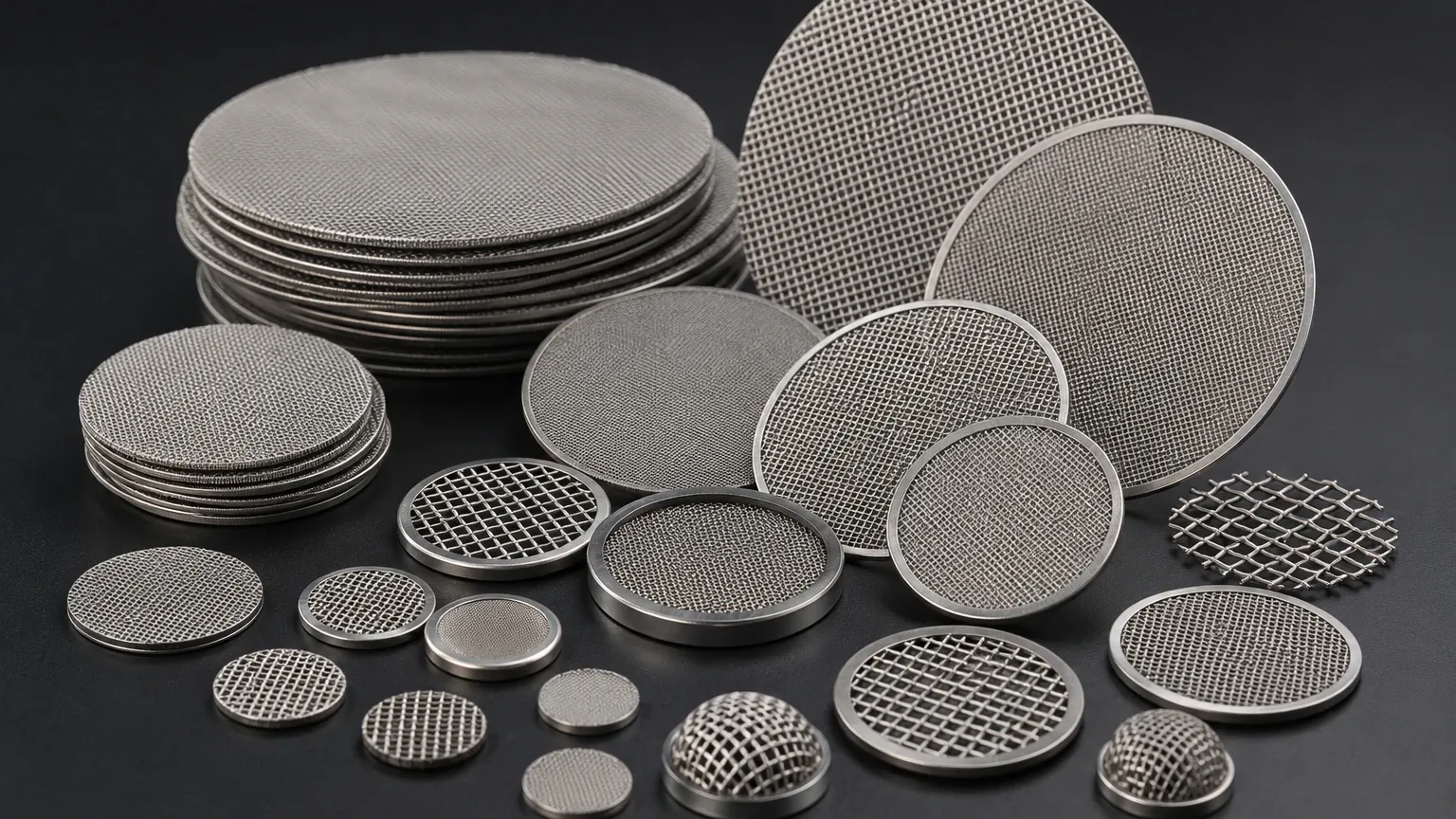
Filter discs and packs are the primary components used to achieve high Q factor performance in localized or high-pressure environments. These components are typically manufactured from stainless steel wire mesh, which provides the mechanical strength and chemical resistance required for industrial processing.
Structural Configurations
Kaifil specializes in various configurations that directly impact the filtration quality factor:
1. Single-Layer Filter Discs: Often used for coarse filtration or as a support layer, these provide a predictable pressure drop and are easily cleaned.
2. Multilayer Filter Packs: By combining different mesh counts, these packs create a gradient filtration effect. The outer layers trap larger particles, while the inner, finer layers perform the final separation. This structure significantly boosts the Q factor by increasing the total dirt-holding capacity without a proportional increase in initial pressure drop.
3. Sintered Mesh Discs: Sintering bonds multiple layers of wire mesh together at the molecular level. This eliminates media migration and ensures that the pore structure remains stable even under extreme pressure, maintaining a consistent Q factor over the filter's operational life.
Engineering Considerations for Q Factor Optimization
When specifying q factor filters for a specific application, several engineering variables must be balanced. The goal is to customize the filter disc or pack to the specific rheology of the fluid and the nature of the contaminants.
Wire Diameter and Mesh Count
The geometry of the wire mesh is the most significant contributor to the Q factor. A smaller wire diameter increases the open area of the mesh, which reduces pressure drop. However, thinner wires may lack the structural integrity to withstand high-pressure differentials. Kaifil’s engineering process involves selecting the optimal wire gauge and weave pattern—such as Plain, Twill, or Dutch weaves—to ensure the filter meets the required micron rating while maintaining high permeability.
Porosity and Tortuosity
Porosity refers to the percentage of void space within the filter medium, while tortuosity describes the complexity of the path a fluid must take to pass through the filter. For high-performance q factor filters, the objective is to create a path that is tortuous enough to trap particles through inertial impaction and diffusion, yet porous enough to prevent a "bottleneck" effect. Stainless steel wire mesh is preferred here because its geometric regularity allows for more precise calculations of these factors compared to random fiber media.
Material Compatibility
The longevity of the Q factor is dependent on the material's resistance to corrosion and thermal degradation. In chemical processing or food production, 304 or 316L stainless steel is standard. If the material corrodes, the pore structure changes, leading to a rapid decline in the Q factor and potential system contamination.
Applications Where Q Factor is Critical
High-quality filtration components are utilized across various sectors where precision is non-negotiable. In these scenarios, the selection of Filter Discs & Packs is driven by the need for consistent, high-efficiency performance.
Polymer and Plastic Extrusion
In the extrusion process, "screen packs" are used to remove gels and un-melted particles from the polymer melt. A filter pack with a poor Q factor will cause the extruder to work harder, increasing the temperature of the melt and potentially leading to thermal degradation of the product. High Q factor packs ensure a smooth flow and high-quality end products like films and fibers.
Hydraulic and Lubrication Systems
Hydraulic fluids must remain free of microscopic metal shavings and environmental dust to prevent component wear. Filter discs used in these systems must maintain a high Q factor to ensure that the sensitive valves and pumps are protected without causing cavitation due to high pressure drops at the pump inlet.
Pharmaceutical and Chemical Processing
In these industries, filtration is often part of a sterile process. The ability to clean and reuse stainless steel filter discs is a major advantage. Because stainless steel maintains its structural integrity through multiple cleaning cycles (such as ultrasonic cleaning or backwashing), the Q factor remains stable over a longer period compared to disposable synthetic filters.
Common Risks and Evaluation Criteria
When sourcing industrial filters, engineers must be wary of several common pitfalls that can compromise system performance:
* Media Migration: In low-quality filters, individual wires or fibers may break loose and enter the downstream flow. This not only ruins the Q factor but can also damage sensitive equipment.
* Inconsistent Pore Size: If the manufacturing process for the wire mesh is not tightly controlled, the "nominal" micron rating may be inaccurate, leading to unpredictable filtration efficiency.
* Pressure Shock Vulnerability: In systems with fluctuating flow rates, the filter must be able to withstand sudden pressure spikes. A filter that deforms under pressure will see its Q factor collapse as the pores stretch or compress.
To mitigate these risks, it is recommended to confirm the following with your manufacturer:
1. Burst Strength: What is the maximum pressure differential the disc or pack can handle before structural failure?
2. Effective Filtration Area (EFA): How much of the disc surface is actually available for filtration versus the area taken up by rims or supports?
3. Cleaning Protocols: What are the recommended methods for restoring the filter's original pressure drop characteristics?
The Kaifil Advantage in Custom Filtration
As a professional manufacturer, Kaifil understands that a "one-size-fits-all" approach rarely succeeds in complex industrial environments. Optimizing for q factor filters requires a deep understanding of the application's specific demands. Kaifil provides customized stainless steel filtration solutions, ranging from simple wire mesh discs to complex, multi-stage filter packs with specialized edging (such as aluminum, copper, or stainless steel rims).
By focusing on precision manufacturing and high-quality raw materials, Kaifil ensures that every filter component delivers a reliable balance of efficiency and flow. Whether you are designing a new hydraulic system or looking to optimize an existing chemical processing line, selecting the right filter structure is the first step toward achieving superior process control.
Conclusion: Selecting the Right Solution
The Quality Factor is more than just a theoretical calculation; it is a practical roadmap for selecting filtration components that perform reliably under pressure. By prioritizing high Q factor designs, engineers can ensure their systems operate with maximum efficiency, minimum energy waste, and extended maintenance intervals.
When evaluating your next filtration project, consider the long-term benefits of precision-engineered stainless steel components. For detailed specifications on available mesh types, disc dimensions, and custom pack configurations, engineers and procurement teams are encouraged to Review product options and application support to find the optimal match for their specific industrial requirements.
