


Filter Pack Respirator
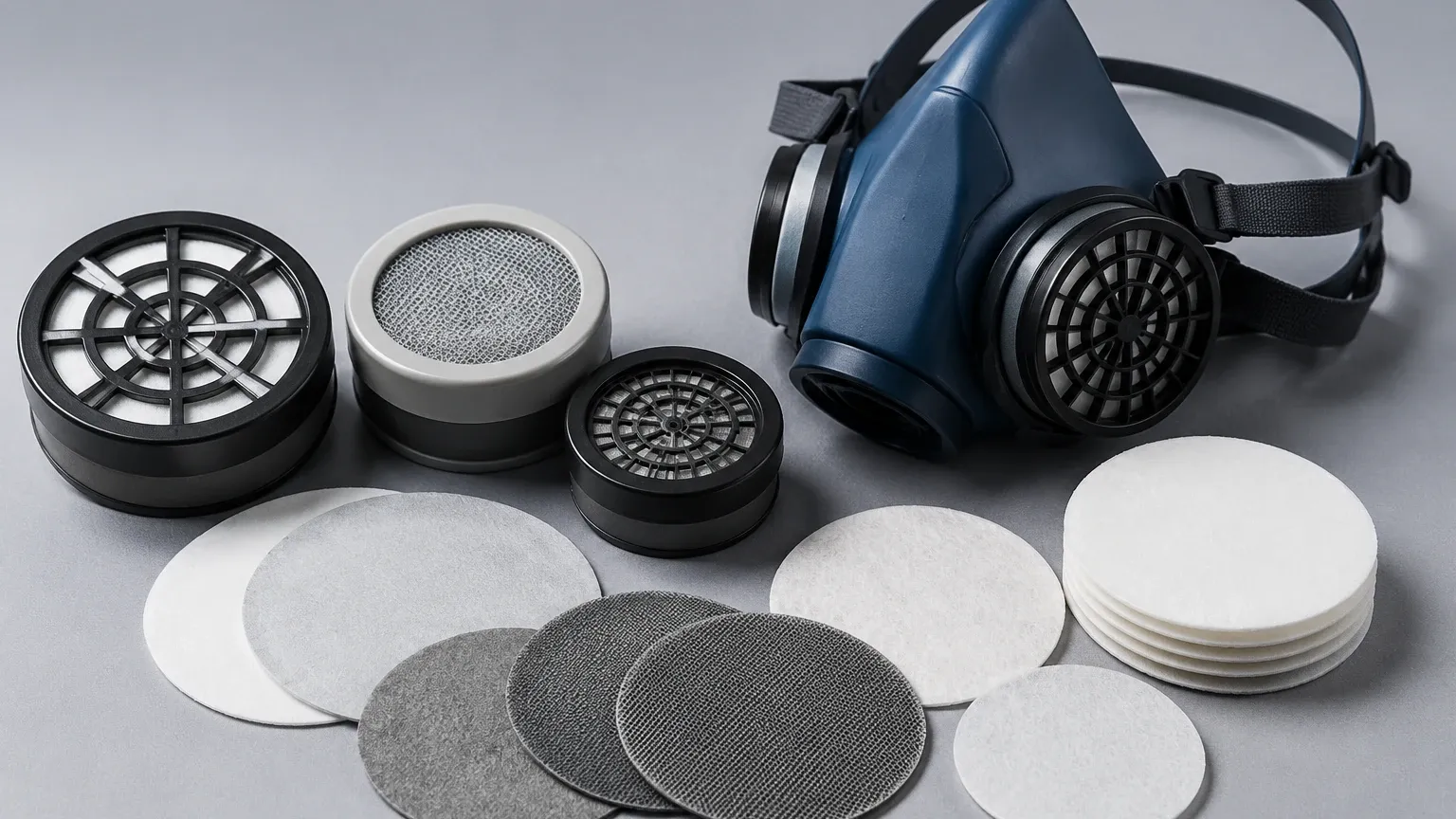
In industrial environments where air purity and gas filtration are paramount, the mechanical integrity of filtration components determines the efficiency and safety of the entire system. While the term "respirator" is frequently associated with personal protective equipment (PPE), in the context of heavy industrial processing, a filter pack respirator refers to the sophisticated multi-layer metal mesh assemblies used in tank breathers, gas purification lines, and high-temperature air intake systems. These components act as the "lungs" of industrial machinery, ensuring that contaminants are excluded while maintaining necessary flow rates.
For engineers and procurement specialists, selecting the correct Filter Discs & Packs is a critical decision that impacts equipment longevity, maintenance intervals, and operational costs. This guide explores the technical specifications, material science, and engineering considerations behind high-performance stainless steel filter packs used in industrial respiratory and ventilation applications.
The Engineering Behind Industrial Filter Packs
At its core, a filter pack is an assembly of one or more layers of wire mesh, designed to achieve a specific micron rating while providing structural stability. Unlike polymer-based filters, stainless steel filter packs are engineered for durability in demanding environments where pressure fluctuations, chemical exposure, and extreme temperatures are common.
Multi-Layer Construction
A high-quality filter pack respirator component typically utilizes a graduated density structure. This involves layering different mesh counts to optimize filtration performance:
1. The Filtration Layer: This is the primary layer responsible for capturing particles at the target micron size. It often utilizes a fine Dutch weave or twill weave to provide a precise pore size.
2. The Support Layer: Fine filtration mesh is inherently delicate. To prevent deformation under high differential pressure, one or more layers of coarser, high-strength mesh are added. These layers provide the mechanical backbone of the pack.
3. The Drainage Layer: In liquid-gas separation or complex air systems, a drainage layer helps manage the flow and prevents the "blinding" of the fine mesh by providing a clear path for the filtered medium.
By combining these layers through processes such as spot welding or sintering, manufacturers like Kaifil create a unified component that maintains its shape and filtration accuracy throughout its service life.
Material Selection: Why Stainless Steel is Essential
In the realm of industrial filtration, the choice of material is non-negotiable. While synthetic fibers may suffice for low-impact applications, a filter pack respirator designed for chemical processing or hydraulic systems requires the resilience of metal.
304 vs. 316L Stainless Steel
* Grade 304: This is the standard industrial grade, offering excellent strength and basic corrosion resistance. It is suitable for general air filtration and environments where moisture levels are controlled.
* Grade 316L: For applications involving corrosive gases, high humidity, or pharmaceutical standards, 316L is the preferred choice. The addition of molybdenum and a lower carbon content enhances its resistance to pitting and crevice corrosion, making it ideal for the most demanding "respiratory" functions in chemical plants.
Temperature and Chemical Compatibility
Stainless steel filter packs can operate at temperatures exceeding 500°C (932°F), far beyond the melting points of most polymer filters. Furthermore, they are inert to a wide range of solvents, acids, and alkaline solutions. This chemical stability ensures that the filter media does not leach contaminants into the process stream, a critical requirement for food, beverage, and pharmaceutical sectors.
Performance Metrics for Filter Pack Respirator Systems
When evaluating a filter pack for an industrial system, engineers must look beyond simple micron ratings. The interaction between the filter and the fluid (air or gas) is governed by several physical principles.
Pressure Drop (Delta P)
The pressure drop across a filter pack is a measure of the resistance to flow. A high initial pressure drop indicates that the system's fans or pumps must work harder, leading to increased energy consumption. Precision-engineered Filter Discs & Packs are designed to maximize the open area of the mesh, ensuring that filtration efficiency does not come at the cost of excessive energy loss.
Dirt Holding Capacity
This metric defines how much contaminant a filter can hold before the pressure drop reaches a critical limit requiring cleaning or replacement. Multi-layer packs generally offer superior dirt-holding capacity compared to single-layer discs because the coarser outer layers capture larger particles, preventing the fine inner layer from clogging prematurely.
Filtration Efficiency and Micron Rating
Industrial filter packs are rated by their ability to capture particles of a specific size. This can be expressed as an "absolute" rating (where 99.9% of particles are captured) or a "nominal" rating (a lower percentage). For critical applications like sterile air venting in pharmaceutical tanks, absolute ratings are mandatory to ensure system integrity.
Customization and OEM Capabilities
No two industrial applications are identical. A filter pack respirator used in a hydraulic breather has different requirements than one used in a high-speed plastic extrusion line. Customization is where technical expertise becomes a tangible advantage.
Geometric Variety
While circular filter discs are common, many systems require specialized shapes to fit into proprietary housings. Manufacturers can produce:
* Rectangular and Square Packs: Often used in HVAC and large-scale air intake vents.
* Ring and Kidney Shapes: Common in specialized hydraulic and pneumatic manifolds.
* Conical and Cylindrical Forms: Used when a larger surface area is required within a compact footprint.
Edge Treatments and Binding
To ensure a proper seal and prevent fraying of the wire mesh, the edges of the filter pack must be carefully treated. Options include:
* Aluminum or Stainless Steel Rimming: A metal U-shaped channel is compressed around the edge of the pack, providing a rigid frame and a clean sealing surface.
* Spot Welding: The layers are fused together at the periphery, which is cost-effective for internal components where a frame is not required.
* Sintering: The entire pack is heated in a vacuum furnace until the wire contact points bond together. This creates a monolithic structure that is virtually impossible to delaminate, ideal for high-pressure environments.
Maintenance and Total Cost of Ownership (TCO)
One of the primary B2B advantages of stainless steel filter packs is their cleanability. Unlike disposable paper or polymer filters, metal mesh can be restored to near-original performance through various cleaning methods.
Cleaning Protocols
* Ultrasonic Cleaning: High-frequency sound waves create cavitation bubbles that dislodge fine particles from deep within the mesh layers.
* Backwashing: Reversing the flow of fluid through the filter to push contaminants out of the pores.
* Chemical Cleaning: Using specific solvents to dissolve built-up resins or organic matter without damaging the stainless steel.
The Economics of Durability
While the initial purchase price of a stainless steel filter pack is higher than a disposable alternative, the TCO is significantly lower over the long term. By reducing the frequency of filter replacements, lowering disposal costs (which can be high for contaminated filters), and minimizing system downtime, metal filter packs represent a more sustainable and cost-effective investment for industrial facilities.
Key Questions for Engineering and Purchasing Teams
Before finalizing a specification for a filter pack respirator component, it is essential to confirm several operational variables with the manufacturer:
1. What is the maximum operating pressure and expected differential pressure? This determines the need for reinforced support layers.
2. What are the specific chemical constituents of the gas or air stream? This dictates whether 304, 316L, or a more exotic alloy is required.
3. Is the application subject to regulatory standards? (e.g., FDA compliance for food contact or ISO standards for hydraulic fluid cleanliness).
4. What is the preferred cleaning method? This ensures the filter pack design (such as rimming or sintering) is compatible with the intended maintenance cycle.
Conclusion
The reliability of an industrial system is only as strong as its weakest component. In applications requiring a filter pack respirator—whether for protecting sensitive machinery or ensuring gas purity—the quality of the filter media and the precision of the assembly are paramount.
Kaifil's expertise in manufacturing custom Filter Discs & Packs provides engineers with the technical assurance needed for demanding industrial environments. By focusing on material integrity, advanced weave patterns, and robust construction techniques, these filtration solutions deliver the performance, durability, and cost-efficiency required by modern B2B operations. When selecting a filtration partner, prioritize those who understand the engineering nuances of your specific application, ensuring that your "respiratory" systems remain clear, efficient, and reliable.
